U.S. DOT Pilot: Autonomous Delivery Fleets Q1 2025
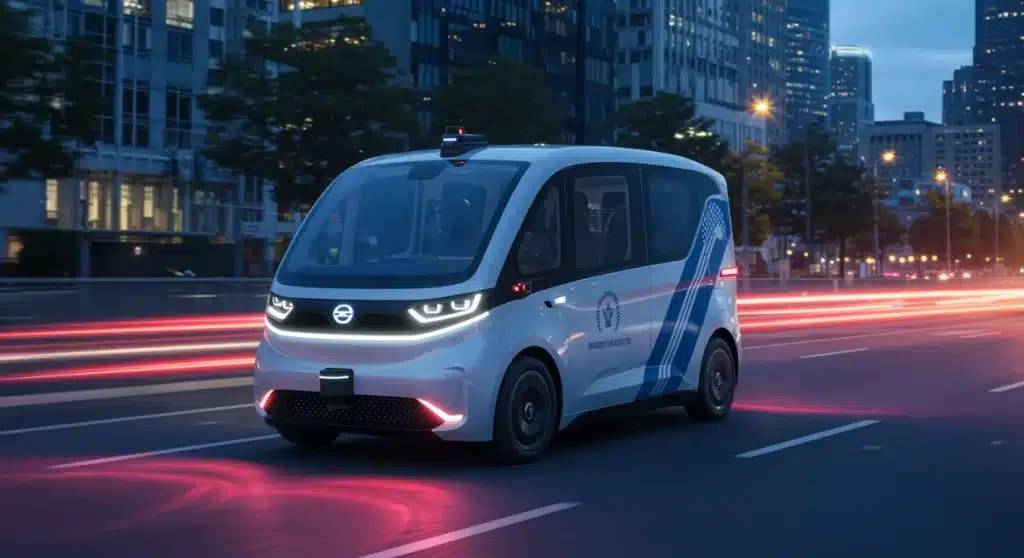
The U.S. Department of Transportation announced a 3-month pilot program for autonomous delivery fleets in Q1 2025, marking a significant step towards integrating self-driving technology into commercial logistics and urban last-mile delivery systems nationwide.
The landscape of logistics and urban mobility is on the cusp of a significant transformation. The U.S. Department of Transportation (DOT) has just announced a groundbreaking 3-month pilot program for autonomous delivery fleets, set to commence in the first quarter of 2025. This initiative represents a pivotal moment, pushing the boundaries of how goods are transported and delivered across the nation. It signals a clear commitment to exploring the potential of self-driving technology to enhance efficiency, safety, and sustainability in the delivery sector.
The Dawn of Autonomous Delivery: A New Era in Logistics
The announcement from the U.S. Department of Transportation (DOT) regarding a 3-month pilot program for autonomous delivery fleets in Q1 2025 is more than just a headline; it’s a profound declaration of intent. This program is poised to be a crucible for innovation, testing the practicalities and potential of self-driving technology in real-world commercial applications. It signifies a major stride towards integrating these advanced systems into the complex tapestry of American logistics, promising to reshape everything from last-mile delivery to long-haul freight.
The pilot is designed to gather crucial data, assess operational challenges, and evaluate the societal impact of these fleets. It’s an acknowledgment that while the technology is rapidly advancing, its widespread adoption requires careful consideration of regulatory frameworks, infrastructure adaptations, and public acceptance. This structured approach aims to build a solid foundation for future expansion, ensuring that the benefits of autonomous delivery can be realized safely and effectively.
Understanding the Pilot Program’s Scope
The DOT’s pilot program isn’t a mere theoretical exercise; it’s a practical deployment aimed at understanding the multifaceted implications of autonomous delivery. It will involve a select number of companies deploying self-driving vehicles in specific operational environments, allowing for a controlled yet realistic assessment.
- Geographic Focus: The program will likely target diverse urban and suburban environments to test adaptability across varying population densities and road conditions.
- Vehicle Types: Expect to see a range of autonomous vehicles, from smaller sidewalk delivery robots to larger vans, each designed for different delivery scales and contexts.
- Operational Metrics: Key performance indicators will include delivery efficiency, route optimization, safety incident rates, and customer satisfaction.
This comprehensive scope ensures that the data collected will be robust, providing insights into both the technological capabilities and the logistical integration challenges. The findings will be instrumental in shaping future policy and investment in this transformative sector.
Technological Underpinnings: How Autonomous Fleets Operate
At the heart of autonomous delivery fleets lies a sophisticated array of technologies that enable vehicles to perceive, process, and navigate their environments without direct human intervention. These systems are a testament to decades of research and development in artificial intelligence, robotics, and sensor fusion, culminating in vehicles capable of complex decision-making in dynamic settings.
The core components typically include a combination of sensors, advanced algorithms, and high-precision mapping. Each element plays a crucial role in ensuring the safe and efficient operation of these self-driving vehicles, transforming the concept of delivery.
Key Technologies Driving Autonomy
Autonomous vehicles rely on a diverse set of sensors to create a comprehensive understanding of their surroundings. This multi-modal approach is critical for redundancy and accuracy, allowing the vehicle to operate reliably even in challenging conditions.
- Lidar (Light Detection and Ranging): Generates detailed 3D maps of the environment by emitting pulsed laser light and measuring the time it takes for the light to return. This provides precise distance measurements and object recognition.
- Radar (Radio Detection and Ranging): Uses radio waves to detect objects and measure their speed and distance, particularly effective in adverse weather conditions where optical sensors might be limited.
- Cameras: Provide high-resolution visual data, essential for identifying traffic signs, lane markings, pedestrians, and other vehicles. Advanced computer vision algorithms process this data for object classification and scene understanding.
- Ultrasonic Sensors: Primarily used for short-range detection, aiding in parking maneuvers and avoiding close-proximity obstacles.
Beyond sensors, sophisticated AI algorithms interpret this vast amount of data in real-time, enabling the vehicle to make informed decisions. Machine learning models are trained on extensive datasets to recognize patterns, predict behaviors of other road users, and navigate complex traffic scenarios. This continuous learning process allows autonomous systems to improve their performance over time, adapting to new situations and refining their decision-making capabilities.

Anticipated Impact on Urban Mobility and Logistics
The integration of autonomous delivery fleets into urban environments is expected to usher in a new era of efficiency and convenience, fundamentally altering how goods move within cities. The potential benefits extend beyond mere speed, touching upon aspects of urban planning, environmental sustainability, and economic growth. This pilot program will offer critical insights into these transformative effects.
One of the most immediate impacts will be on the efficiency of delivery services. Autonomous vehicles, unconstrained by human fatigue or working hour regulations, can operate around the clock, potentially reducing delivery times and increasing throughput. This always-on capability could revolutionize e-commerce logistics, making same-day and even hourly deliveries more feasible for a wider range of products.
Reshaping the Last Mile and Beyond
The ‘last mile’ of delivery, often the most expensive and inefficient segment of the supply chain, stands to benefit immensely from autonomous technology. Smaller, purpose-built autonomous vehicles can navigate urban landscapes more effectively, reducing congestion and optimizing routes.
- Reduced Operational Costs: By minimizing labor costs and optimizing fuel consumption (especially with electric autonomous vehicles), businesses can achieve significant savings.
- Improved Delivery Speed and Reliability: Automated systems can follow optimal routes and schedules more consistently, leading to faster and more predictable delivery times.
- Decreased Traffic Congestion: A fleet of synchronized autonomous vehicles, potentially smaller in size, could lead to a reduction in the number of traditional delivery trucks on the road during peak hours.
- Enhanced Safety: Autonomous systems are designed to eliminate human error, which is a major contributor to road accidents. This could lead to a significant reduction in collisions involving delivery vehicles.
Beyond the last mile, the principles of autonomy could extend to larger freight movements, streamlining inter-city logistics and potentially creating more efficient hub-and-spoke distribution networks. The data gathered from the pilot will be crucial in understanding how these benefits can be scaled and integrated into existing infrastructure, providing a roadmap for a more intelligent and responsive logistical ecosystem.
Challenges and Regulatory Hurdles Ahead
While the promise of autonomous delivery fleets is substantial, their widespread adoption is not without significant challenges. The U.S. Department of Transportation’s pilot program will undoubtedly bring many of these hurdles to the forefront, providing valuable real-world data to inform future solutions. These challenges span technological, regulatory, and societal domains, requiring a multifaceted approach to overcome.
One of the primary concerns revolves around the technological maturity and reliability of autonomous systems in all possible scenarios. While impressive in controlled environments, the unpredictable nature of public roads, coupled with diverse weather conditions and human driving behavior, presents a complex challenge. Ensuring these vehicles can consistently perform safely and efficiently in every conceivable situation is paramount.
Navigating the Path to Widespread Adoption
The regulatory landscape for autonomous vehicles is still evolving, creating a patchwork of state and local laws that can hinder national deployment. The DOT pilot aims to help standardize some of these regulations.
- Legal Frameworks: Developing clear and consistent national regulations for autonomous vehicle operation, liability, and data privacy is essential.
- Infrastructure Adaptation: Roads, signage, and communication networks may require upgrades to fully support autonomous fleets, including V2X (vehicle-to-everything) communication capabilities.
- Public Perception and Acceptance: Overcoming public skepticism and building trust in autonomous technology is crucial. Demonstrating safety and reliability through pilots like this will be key.
- Cybersecurity Risks: Protecting autonomous systems from cyber threats is vital to prevent malicious attacks or system failures that could have catastrophic consequences.
Furthermore, the economic impact on the workforce, particularly delivery drivers, will need careful consideration. While autonomous fleets could create new jobs in maintenance, oversight, and data analysis, the displacement of existing roles requires thoughtful planning and investment in retraining programs. The pilot program will provide a crucial opportunity to observe these dynamics firsthand and inform strategies for a just transition.
Economic Implications and Job Market Shifts
The emergence of autonomous delivery fleets carries significant economic implications, potentially reshaping industries and creating new paradigms for employment. This transformation is not merely about replacing human drivers with machines; it’s about optimizing entire supply chains, reducing operational costs, and potentially unlocking new economic opportunities. The DOT pilot program will offer an early glimpse into these complex shifts.
From an economic standpoint, the most immediate benefit for businesses adopting autonomous delivery will be cost reduction. Labor costs, fuel expenses, and insurance premiums associated with human-driven fleets represent a substantial portion of operating budgets. Autonomous vehicles, particularly electric ones, promise to significantly lower these overheads, leading to more competitive pricing for consumers and increased profit margins for companies. This efficiency gain could stimulate economic growth by making logistics more affordable and accessible.
The Evolving Workforce Landscape
While some roles may be automated, autonomous technology is also expected to foster the creation of new jobs and demand for specialized skills.
- New Job Categories: The development, deployment, and maintenance of autonomous fleets will require engineers, AI specialists, data scientists, and specialized technicians.
- Upskilling and Reskilling: Existing workers in the logistics sector may need to transition into roles involving remote monitoring, fleet management, and technical support for autonomous systems.
- Economic Stimulus: Increased efficiency in logistics can lead to broader economic benefits, fostering growth in e-commerce and other sectors that rely on robust delivery networks.
The pilot program will be instrumental in identifying the specific skills gaps that emerge and the types of training programs that will be most effective in preparing the workforce for this new era. Understanding these dynamics early on is crucial for policymakers and educational institutions to proactively address the challenges and seize the opportunities presented by automation in delivery services.
The Path Forward: Scaling Autonomous Delivery Post-Pilot
The 3-month pilot program for autonomous delivery fleets in Q1 2025 is just the beginning of a longer journey. Its successful completion will pave the way for a more comprehensive strategy for scaling autonomous delivery across the United States. The insights gained from this initial phase will be critical in refining technologies, standardizing regulations, and building public confidence for broader deployment. The ultimate goal is to create a robust, efficient, and safe autonomous logistics ecosystem.
Following the pilot, the U.S. Department of Transportation will analyze the collected data thoroughly. This analysis will focus on key performance indicators such as safety records, operational efficiency, environmental impact, and economic viability. The findings will then inform policy recommendations, potential legislative changes, and guidelines for companies looking to integrate autonomous technology into their operations on a larger scale. This iterative process of testing, learning, and adapting is essential for responsible technological advancement.
Building a Sustainable Autonomous Future
Scaling autonomous delivery will require a collaborative effort between government, industry, and academia to address remaining challenges and maximize potential benefits.
- Standardization of Protocols: Developing universal communication protocols and safety standards will be crucial for interoperability and seamless operation across different manufacturers and regions.
- Investment in Infrastructure: Continued investment in smart city infrastructure, including 5G connectivity and digital mapping, will be necessary to support the advanced capabilities of autonomous fleets.
- Public Engagement and Education: Ongoing campaigns to inform the public about the benefits and safety measures of autonomous vehicles will be vital for fostering widespread acceptance.
- Ethical and Societal Considerations: Establishing clear ethical guidelines for autonomous decision-making and addressing concerns related to privacy and data security will be paramount as these systems become more integrated into daily life.
The vision for autonomous delivery extends beyond mere automation; it encompasses a future where logistics are more sustainable, urban environments are less congested, and access to goods and services is enhanced for all. The DOT’s pilot program is a foundational step towards realizing this future, setting a precedent for how technological innovation can be carefully and strategically integrated into society for maximum positive impact.
| Key Aspect | Brief Description |
|---|---|
| Pilot Program Launch | U.S. DOT to launch a 3-month pilot for autonomous delivery fleets in Q1 2025. |
| Core Technologies | Utilizes Lidar, Radar, Cameras, and AI for navigation and object detection. |
| Expected Impact | Aims for increased efficiency, reduced congestion, and improved safety in logistics. |
| Challenges Ahead | Regulatory hurdles, infrastructure needs, cybersecurity, and public acceptance are key. |
Frequently Asked Questions about Autonomous Delivery
The U.S. Department of Transportation’s 3-month pilot program for autonomous delivery fleets is scheduled to commence in the first quarter of 2025. This initiative represents a crucial step towards integrating self-driving technology into commercial logistics across the nation, paving the way for future developments.
The primary goal is to gather real-world data and evaluate the performance, safety, and operational efficiency of autonomous delivery fleets. This information will inform future regulatory frameworks, infrastructure requirements, and strategies for widespread adoption of this transformative technology in logistics.
Autonomous delivery vehicles rely on a combination of advanced technologies including Lidar (Light Detection and Ranging), Radar (Radio Detection and Ranging), high-resolution cameras, and sophisticated artificial intelligence (AI) algorithms for navigation, object detection, and decision-making in dynamic environments.
Autonomous fleets are expected to significantly improve logistics efficiency, reduce delivery times, and potentially decrease urban traffic congestion by optimizing routes and enabling 24/7 operations. They also promise enhanced safety by minimizing human error and could revolutionize last-mile delivery services.
Key challenges include developing consistent regulatory frameworks, adapting existing infrastructure, ensuring robust cybersecurity, and building public trust and acceptance. Economic implications on the workforce, requiring reskilling and new job creation, also represent a significant hurdle to overcome for full integration.
Conclusion
The U.S. Department of Transportation’s announcement of a 3-month pilot program for autonomous delivery fleets in Q1 2025 marks a definitive stride into the future of logistics and urban mobility. This initiative is more than a technical experiment; it’s a strategic move to meticulously evaluate the practicalities, benefits, and challenges of integrating self-driving technology into our daily lives. By gathering crucial data on safety, efficiency, and real-world applicability, the pilot will lay the groundwork for informed policy-making and responsible deployment. The journey towards a fully autonomous delivery ecosystem is complex, requiring careful navigation of technological, regulatory, and societal landscapes. However, this pilot program represents a critical and optimistic step, signaling a commitment to harnessing innovation for a more efficient, safer, and sustainable future for goods transportation across the United States.