E-commerce Growth Drives 20% US Warehouse Automation Investment
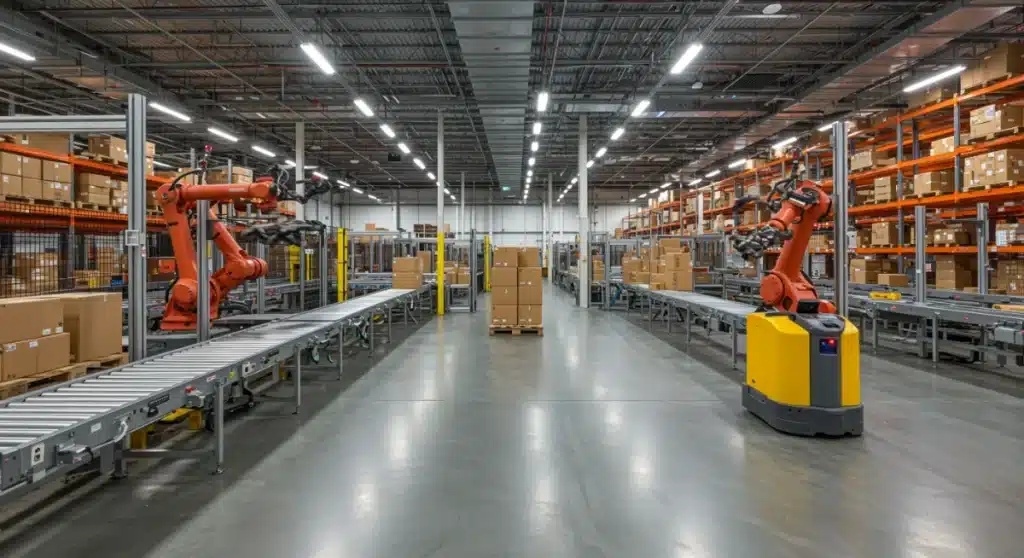
The U.S. warehousing sector anticipates a 20% surge in automation investments by mid-2025, directly attributed to the sustained and robust growth of the e-commerce industry, transforming operational paradigms.
A significant Market Shift Alert: E-commerce Growth Drives 20% Increase in U.S. Warehouse Automation Investments by Mid-2025, signaling a pivotal transformation within the nation’s logistics and supply chain infrastructure. This isn’t merely an incremental adjustment; it represents a fundamental reorientation of how goods are stored, managed, and dispatched across the United States. The accelerating pace of online retail demands unprecedented efficiency and speed, pushing companies to adopt advanced robotic and automated solutions at an accelerated rate. What does this mean for the future of logistics and the workforce?
The Unstoppable Rise of E-commerce and its Logistical Demands
The digital marketplace has fundamentally altered consumer expectations, making speed, accuracy, and convenience paramount. E-commerce platforms, once a niche segment, now dominate retail, necessitating a complete overhaul of traditional warehousing operations. This shift isn’t just about moving products faster; it’s about handling a vastly increased volume of smaller, more frequent orders, often with personalized delivery requirements.
The sheer scale of online shopping has exposed the limitations of manual labor in many warehouse environments. Human workers, while adaptable, cannot consistently match the speed and precision of automated systems, especially when dealing with repetitive tasks or processing thousands of unique SKUs daily. This operational bottleneck has become a primary driver for investment in automation.
Meeting Peak Demand Challenges
E-commerce inherently experiences significant fluctuations, with peak seasons like Black Friday and the holiday rush placing immense strain on logistics networks. Manual operations struggle to scale rapidly enough to meet these surges without incurring substantial overtime costs or risking order fulfillment delays. Automation offers a scalable solution.
- Increased Throughput: Automated systems can process significantly more items per hour than manual methods.
- 24/7 Operation: Robots do not require breaks or sleep, enabling continuous operation.
- Reduced Error Rates: Automated picking and sorting minimize human error, improving order accuracy.
- Scalability: Modular robotic solutions can be scaled up or down based on demand.
The relentless growth of e-commerce has not only increased demand but also compressed delivery windows. Next-day and even same-day delivery are becoming standard expectations, making efficient warehouse operations a competitive imperative. Companies that fail to adapt risk losing market share to more agile competitors.
Ultimately, the sustained growth of e-commerce serves as the foundational catalyst for the projected 20% increase in U.S. warehouse automation investments. This trend reflects a strategic necessity for businesses to remain competitive and meet evolving consumer demands in a rapidly digitizing world.
Key Technologies Driving the Automation Boom
The surge in warehouse automation investments isn’t fueled by a single technology but rather a synergistic blend of innovations working in concert. These technologies enhance every aspect of warehouse operations, from inbound receiving to outbound shipping, creating highly efficient and intelligent logistics hubs. Understanding these key technologies is crucial to grasping the scope of the current market shift.
Robotics, in particular, has seen a dramatic evolution, moving beyond simple pick-and-place functions to more complex, collaborative tasks. Artificial intelligence and machine learning are increasingly integrated, allowing systems to learn, adapt, and optimize processes in real-time, further boosting efficiency and reducing operational costs.
Advanced Robotic Systems
Modern warehouses are deploying a diverse range of robotic solutions to tackle various challenges:
- Autonomous Mobile Robots (AMRs): These robots navigate dynamic warehouse environments independently, transporting goods and assisting human workers without fixed paths.
- Automated Storage and Retrieval Systems (AS/RS): AS/RS solutions automatically place and retrieve items from storage locations with high density and speed, maximizing space utilization.
- Robotic Picking Systems: Equipped with advanced vision systems and grippers, these robots can identify, pick, and pack individual items with precision, handling a wide variety of products.
Beyond robotics, other critical technologies are making significant contributions. The integration of sophisticated software platforms is essential for orchestrating these complex systems, ensuring seamless communication and data flow across the entire warehouse ecosystem. This includes Warehouse Management Systems (WMS) and Warehouse Execution Systems (WES).
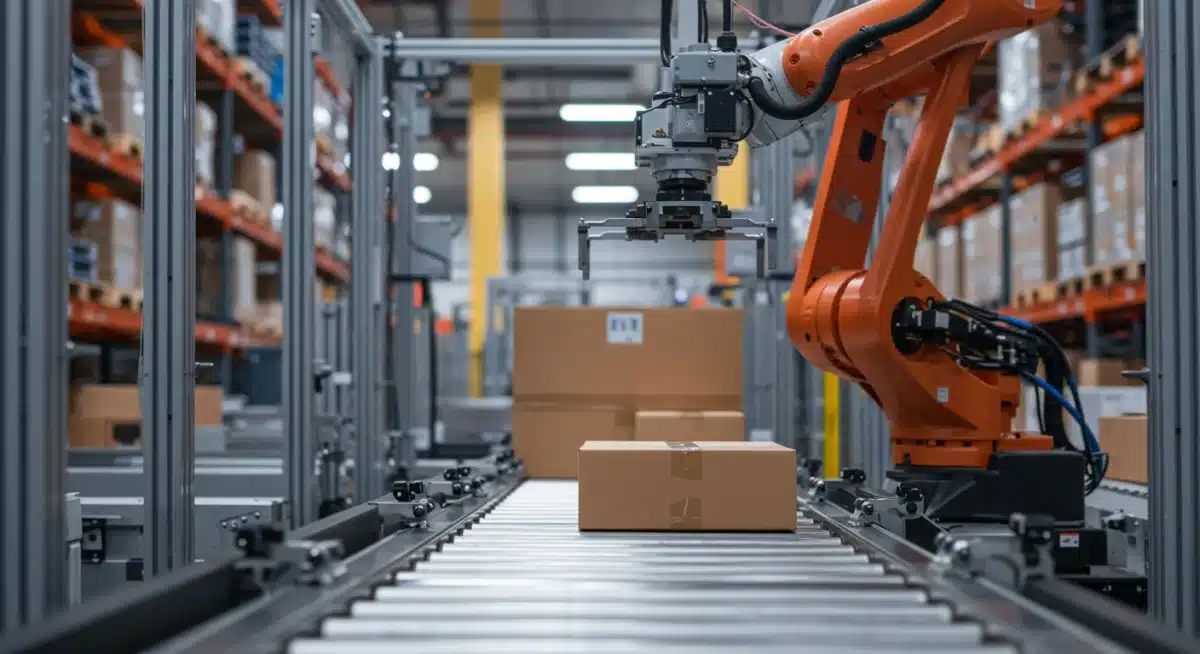
Data analytics and the Internet of Things (IoT) also play a crucial role. IoT sensors provide real-time data on inventory levels, equipment performance, and environmental conditions, while advanced analytics tools extract actionable insights, enabling continuous optimization and predictive maintenance. These combined technological advancements are making warehouses smarter, faster, and more resilient.
The convergence of these key technologies is creating a new generation of intelligent warehouses capable of meeting the rigorous demands of modern e-commerce. Investments are flowing into solutions that promise not just incremental improvements, but transformative operational capabilities.
Economic Impact and Investment Trends
The 20% projected increase in U.S. warehouse automation investments by mid-2025 carries substantial economic implications, signaling a robust sector eager to adapt and innovate. This surge in capital expenditure directly translates into job creation within the technology and engineering fields, alongside higher productivity rates for businesses. The investment trend is not uniform across all companies but shows a clear pattern among those striving for competitive advantage in a demanding market.
Companies are recognizing that initial automation costs are quickly offset by long-term savings in labor, increased efficiency, and reduced operational errors. Furthermore, the ability to scale operations rapidly to meet fluctuating demand offers a significant return on investment, particularly for businesses heavily reliant on e-commerce fulfillment.
Driving Factors for Increased Investment
Several economic factors underpin this significant investment trend:
- Labor Shortages and Rising Wages: A persistent shortage of warehouse labor combined with increasing minimum wages makes automation a more financially attractive alternative.
- Increased Productivity Demands: The need to process more orders faster, especially for e-commerce, directly drives automation adoption to boost throughput.
- Supply Chain Resilience: Automation enhances the ability of warehouses to withstand disruptions, making supply chains more robust and less susceptible to external shocks.
- Reduced Operational Costs: While initial investment is high, automation significantly lowers long-term operating costs by optimizing space, reducing errors, and decreasing labor dependency.
Beyond the direct financial benefits, there’s a strategic imperative. Businesses that fail to automate risk falling behind competitors who can offer faster, more reliable, and cheaper fulfillment options. This competitive pressure encourages rapid adoption and investment in cutting-edge solutions, fostering an environment of continuous innovation.
The economic impact extends beyond individual companies to the broader economy, supporting growth in the automation technology sector itself. This creates a positive feedback loop, where increased demand for automation drives further innovation and investment, solidifying the U.S. position as a leader in logistics technology. The economic outlook for warehouse automation remains highly positive, driven by these compelling trends.
Challenges and Opportunities in Automation Adoption
While the benefits of warehouse automation are clear, the path to widespread adoption is not without its challenges. Companies face significant hurdles, from the initial capital outlay to integrating complex systems and managing workforce transitions. However, for every challenge, there exists an opportunity for innovation and strategic advantage, especially for those who navigate these complexities effectively.
The initial investment required for advanced automation can be substantial, posing a barrier for smaller businesses. Beyond financial considerations, the technical complexity of integrating diverse robotic systems with existing IT infrastructure demands specialized expertise. This requires careful planning and often external consultancy.
Navigating the Automation Landscape
Key challenges and corresponding opportunities include:
- High Initial Capital Investment:
Opportunity: Explore flexible financing options, ‘robotics-as-a-service’ models, and phased implementation strategies to spread costs. - Integration Complexity:
Opportunity: Partner with experienced integrators and leverage modular, open-architecture systems for easier integration. - Workforce Retraining:
Opportunity: Invest in upskilling programs to transition existing employees into roles managing and maintaining automated systems, fostering a hybrid workforce. - Cybersecurity Risks:
Opportunity: Implement robust cybersecurity protocols and network segmentation to protect automated systems from threats.
Another significant challenge lies in the cultural shift required within an organization. Employees may harbor concerns about job displacement, necessitating clear communication and training initiatives to demonstrate how automation can create new, higher-skilled roles. Successful adoption hinges on a blend of technological prowess and effective change management.
Despite these challenges, the opportunities presented by automation are immense. Companies that successfully implement these technologies can achieve unparalleled levels of efficiency, accuracy, and scalability. This not only boosts profitability but also strengthens their position in a fiercely competitive market, allowing them to better serve customer needs and adapt to future market shifts.
Overcoming the inherent challenges in automation adoption requires a strategic, holistic approach. Businesses must view automation not just as a technological upgrade, but as a comprehensive business transformation that impacts operations, finance, and human capital.
The Future Workforce: Collaboration Between Humans and Robots
The increasing investment in warehouse automation does not necessarily mean an end to human labor in logistics. Instead, it heralds a new era of collaboration between humans and robots, reshaping job roles and creating demand for new skills. The future workforce in automated warehouses will be more focused on oversight, maintenance, and strategic planning, rather than repetitive manual tasks.
Rather than replacing humans entirely, robots are positioned to augment human capabilities, taking over strenuous, dangerous, or monotonous jobs. This allows human workers to engage in more complex problem-solving, quality control, and customer interaction, adding higher value to the supply chain. The nature of warehouse work is evolving, becoming more technical and analytical.
Evolving Job Roles and Skill Sets
The integration of automation will lead to a transformation in job requirements:
- Robot Operators and Technicians: Demand will grow for individuals who can operate, program, and maintain complex robotic systems.
- Data Analysts: Expertise in interpreting data from automated systems to optimize workflows and predict maintenance needs will be crucial.
- System Integrators: Professionals capable of designing, implementing, and managing the integration of various automation technologies will be in high demand.
- Supply Chain Strategists: Roles focused on leveraging automation insights to improve overall supply chain efficiency and resilience will become more prominent.
This shift necessitates a proactive approach to workforce development. Educational institutions and companies must collaborate to provide training programs that equip the current and future workforce with the necessary skills for this automated environment. Lifelong learning will become a critical component of career longevity in logistics.
The human element will remain indispensable in areas requiring cognitive flexibility, creative problem-solving, and interpersonal communication. While robots excel at predictable tasks, humans are adept at handling exceptions, unforeseen circumstances, and managing the overall strategic direction of operations. This symbiotic relationship promises a more efficient, safer, and ultimately more productive warehouse environment.
The future workforce in U.S. warehouses will feature an intricate dance between human ingenuity and robotic precision, creating a dynamic and highly specialized operational landscape. This collaborative model ensures that automation serves as a tool for empowerment rather than displacement.
Regulatory Landscape and Ethical Considerations
As U.S. warehouse automation investments surge, the regulatory landscape and associated ethical considerations are becoming increasingly pertinent. The rapid deployment of advanced robotics and AI brings forth new questions regarding worker safety, data privacy, and the responsible use of autonomous systems. Policymakers and industry leaders must work collaboratively to establish frameworks that foster innovation while protecting societal interests.
Current regulations, often designed for manual operations, may not adequately address the complexities introduced by AI-driven robotics. There is a growing need for clear guidelines on robot-human interaction, liability in case of accidents, and the ethical implications of using surveillance and data collection technologies within automated environments.
Addressing Key Concerns
- Worker Safety: Developing safety standards for human-robot collaborative workspaces (cobots) and ensuring robust emergency stop protocols for autonomous systems.
- Data Privacy: Establishing clear policies on the collection, storage, and usage of data generated by automated systems, especially concerning employee performance monitoring.
- Algorithmic Bias: Ensuring that AI algorithms used in automation do not perpetuate or create biases in hiring, task assignment, or resource allocation.
- Job Displacement: Proactive governmental and industry initiatives to support workforce retraining and provide safety nets for workers whose roles are significantly impacted.
The ethical implications extend to the broader societal impact of automation. Questions about economic inequality, the future of work, and the role of technology in shaping human society require thoughtful consideration. It is imperative to develop automation strategies that contribute to sustainable economic growth and social equity, rather than exacerbating existing disparities.
Furthermore, the legal framework for liability in the event of an autonomous system malfunction is still evolving. Who is responsible when a robot causes damage or injury? Manufacturers, operators, or programmers? Clear legal precedents and regulatory clarity are essential for the continued responsible growth of the automation industry.
Navigating the regulatory landscape and addressing ethical considerations will be crucial for the sustainable and responsible growth of warehouse automation in the U.S. A balanced approach that encourages technological advancement while ensuring safety, fairness, and accountability is paramount for long-term success.
| Key Point | Brief Description |
|---|---|
| E-commerce Growth | The primary driver for increased automation, pushing demand for faster, more accurate fulfillment. |
| 20% Investment Surge | Projected increase in U.S. warehouse automation investments by mid-2025, reflecting market urgency. |
| Key Technologies | AMRs, AS/RS, robotic picking, AI, and IoT are central to enhancing warehouse efficiency. |
| Workforce Evolution | Automation creates new roles, demanding skills in robot operation, data analysis, and system integration. |
Frequently Asked Questions About Warehouse Automation
E-commerce growth demands faster order fulfillment, higher accuracy, and scalability to manage fluctuating volumes. Traditional manual operations often struggle to meet these demands efficiently, making automation a critical solution for maintaining competitiveness and customer satisfaction in the rapidly expanding online retail sector.
Key technologies include Autonomous Mobile Robots (AMRs) for transport, Automated Storage and Retrieval Systems (AS/RS) for dense storage, and robotic picking systems for item handling. Artificial intelligence (AI) and the Internet of Things (IoT) are also crucial for optimizing operations, providing real-time data, and predictive maintenance capabilities.
Automation will shift job roles from manual labor to positions focused on robot operation, maintenance, data analysis, and system integration. While some repetitive tasks may be automated, new opportunities will emerge for skilled technicians, engineers, and strategic planners, necessitating workforce retraining and upskilling initiatives.
Challenges include the significant upfront capital investment, the complexity of integrating diverse technologies with existing infrastructure, and managing the cultural shift within the workforce. Additionally, ensuring system security and adhering to evolving regulatory frameworks for safety and data privacy are crucial considerations for successful implementation.
Long-term benefits include enhanced operational efficiency, reduced labor costs, improved order accuracy, and increased throughput capacity. Automation also provides greater supply chain resilience, better space utilization, and the ability to meet evolving customer delivery expectations, ultimately leading to higher profitability and competitive advantage.
Conclusion
The projected 20% increase in U.S. warehouse automation investments by mid-2025 underscores a critical juncture in the nation’s logistics sector, driven primarily by the relentless expansion of e-commerce. This market shift is not merely a response to growing demand but a strategic imperative for businesses aiming to remain competitive and efficient in a rapidly evolving retail landscape. While challenges such as initial investment and workforce adaptation exist, the long-term benefits of enhanced productivity, reduced operational costs, and improved supply chain resilience are compelling. The future of U.S. warehousing will be defined by intelligent automation, fostering a collaborative environment where human ingenuity and robotic precision converge to meet the complexities of modern commerce.