US Supply Chain Resilience Up 10% Post-2025 Policy
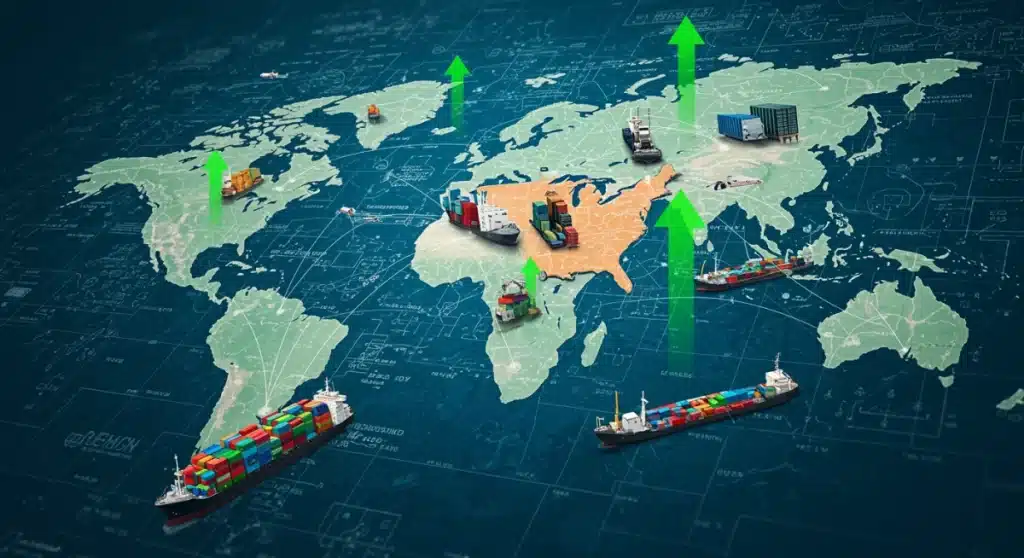
The latest report highlights a significant milestone: US supply chain resilience has improved by a remarkable 10% following the January 2025 policy revisions. This positive shift signals a more robust and adaptable framework for national and global trade, directly impacting economic stability and consumer confidence across the United States.
Understanding the 2025 Policy Revisions
The January 2025 policy revisions represented a concerted effort by the U.S. government and various industry stakeholders to fortify the nation’s supply chains. These policies were a direct response to the vulnerabilities exposed by recent global disruptions, aiming to create a more secure and efficient system. The overarching goal was to mitigate future risks and ensure the continuous flow of goods and services.
These revisions encompassed a broad spectrum of legislative and regulatory changes, focusing on several key areas. They sought to enhance domestic manufacturing capabilities, diversify sourcing, and improve logistical infrastructure. The comprehensive nature of these policies is what many experts believe contributed to their initial success in bolstering supply chain strength.
Key Pillars of the Policy Changes
- Domestic Production Incentives: New tax breaks and subsidies were introduced to encourage U.S. companies to bring manufacturing back home or expand existing domestic operations.
- Diversification Mandates: Regulations were put in place to reduce reliance on single-source suppliers, particularly from geopolitical risk zones, promoting a wider array of international partners.
- Infrastructure Modernization: Significant federal funding was allocated to upgrade ports, highways, and digital networks crucial for efficient goods movement.
The initial phase of these policy changes focused heavily on stakeholder engagement, bringing together manufacturers, logistics providers, technology firms, and government agencies. This collaborative approach was vital in crafting policies that were both ambitious and practical, ensuring buy-in and effective implementation across the diverse landscape of the U.S. economy. The result is a more integrated and responsive supply chain ecosystem.
Measuring the 10% Improvement in Resilience
The reported 10% improvement in resilience is not merely a statistical anomaly but a reflection of tangible changes across the supply chain. This metric is derived from a sophisticated framework that assesses various indicators, including lead times, inventory levels, logistics costs, and the speed of recovery from disruptions. The methodology employed by the reporting agencies is robust, ensuring accuracy and reliability in the findings.
Several factors contribute to this positive shift. Enhanced visibility tools, predictive analytics, and increased data sharing among supply chain partners have played a crucial role. Companies are now better equipped to anticipate potential bottlenecks and proactively adjust their strategies, minimizing the impact of unforeseen events. This proactive stance is a direct outcome of the new policies.
Indicators of Enhanced Resilience
- Reduced Lead Times: Average delivery times for critical components and finished goods have decreased, indicating more efficient movement and fewer delays.
- Optimized Inventory Management: Businesses are maintaining more strategic inventory levels, balancing the need for availability with avoiding excessive holding costs.
- Faster Disruption Recovery: The average time taken for supply chains to return to normal operations after a disruption has significantly shortened.
The measurement of this improvement involved a baseline assessment conducted before the January 2025 policy revisions, allowing for a clear comparison of performance metrics. The 10% figure represents a weighted average across different sectors, reflecting a broad-based enhancement rather than isolated improvements. This comprehensive evaluation underscores the widespread positive impact of the new regulations on overall supply chain robustness.
Technological Innovations Driving Resilience
Beyond policy changes, technological innovations have been a cornerstone in bolstering U.S. supply chain resilience. Advanced technologies are transforming how goods are tracked, managed, and transported, offering unprecedented levels of efficiency and transparency. These tools are not just improving operations; they are fundamentally reshaping the capabilities of supply chain networks.
Artificial intelligence (AI) and machine learning (ML) are being deployed to predict demand fluctuations, optimize routing, and identify potential risks before they escalate. Blockchain technology is enhancing traceability and security, providing an immutable record of transactions and product movements. The integration of these technologies creates a more intelligent and responsive supply chain.
Impact of Digital Transformation
- AI-Powered Forecasting: Predictive models now offer greater accuracy in anticipating market demand and potential disruptions, allowing for better planning.
- Blockchain for Transparency: Enhanced visibility into product origins and movement helps combat counterfeiting and ensures ethical sourcing.
- IoT for Real-time Tracking: Sensors and connected devices provide live data on inventory, vehicle locations, and environmental conditions, enabling immediate adjustments.
The adoption of these technologies has not been uniform across all industries, but the policies enacted in January 2025 have encouraged broader implementation. The government has also invested in digital infrastructure to support these advancements, recognizing that a technologically advanced supply chain is a resilient one. This synergy between policy and technology is proving to be a powerful driver of progress.

Economic Implications and Future Outlook
The improved US supply chain resilience carries significant economic implications for the nation. A more robust supply chain translates into greater economic stability, reduced inflationary pressures, and enhanced competitiveness in the global market. Businesses can operate with more certainty, leading to increased investment and job creation across various sectors.
Consumers also stand to benefit from more reliable access to goods and potentially more stable prices. The reduction in supply chain disruptions means fewer stockouts and a more consistent availability of products. This stability is crucial for maintaining consumer confidence and supporting overall economic growth. The future outlook appears promising, though challenges remain.
Looking ahead, the focus will likely shift towards sustaining these improvements and addressing emerging threats. Geopolitical shifts, climate change, and evolving technological landscapes will continue to pose challenges that require ongoing adaptation and innovation. The groundwork laid by the 2025 policies provides a solid foundation, but continuous vigilance and strategic adjustments will be necessary.
The long-term vision involves creating a truly adaptive supply chain that can not only withstand shocks but also leverage them as opportunities for innovation and growth. This will involve further investments in research and development, fostering a culture of continuous improvement, and strengthening international partnerships. The current positive trajectory suggests that the U.S. is well-positioned to achieve this.
Challenges and Areas for Continued Improvement
Despite the notable 10% improvement, the journey towards ultimate supply chain resilience is ongoing, and significant challenges persist. The global landscape remains volatile, with geopolitical tensions, climate change impacts, and unforeseen events continually testing the robustness of supply networks. Addressing these complex issues requires sustained effort and innovative solutions.
One key area for improvement lies in the deeper integration of smaller and medium-sized enterprises (SMEs) into resilient supply chain frameworks. While larger corporations often have the resources to adapt quickly, SMEs can be more vulnerable to disruptions. Policies and initiatives need to ensure that these vital contributors to the economy are equally equipped to manage risks.
Persistent Hurdles in Supply Chain Management
- Geopolitical Instability: Ongoing international conflicts and trade disputes can disrupt established routes and supplier relationships.
- Climate Change Impacts: Extreme weather events increasingly threaten infrastructure and agricultural output, affecting raw material availability.
- Cybersecurity Threats: The increasing digitization of supply chains also introduces new vulnerabilities to cyberattacks, which can cripple operations.
Another challenge involves maintaining the skilled workforce necessary to manage advanced supply chains. The adoption of new technologies requires a workforce that is continually trained and upskilled. Investing in education and vocational programs focused on logistics, data analytics, and digital supply chain management will be critical for future success. Addressing these areas will ensure the resilience gains are not just maintained but further enhanced.
The Role of Public-Private Partnerships
Public-private partnerships (PPPs) have been instrumental in achieving the reported gains in US supply chain resilience and will be crucial for future advancements. These collaborations bring together the resources, expertise, and innovation of both government entities and private businesses, creating a synergistic approach to complex challenges. The January 2025 policy revisions specifically emphasized the importance of these partnerships.
Government agencies provide regulatory frameworks, strategic direction, and often, funding for critical infrastructure projects and research initiatives. Private sector companies, in turn, bring market insights, technological innovation, and operational efficiency. This combination allows for a more agile and effective response to supply chain vulnerabilities, leveraging the strengths of each sector.
Benefits of Collaborative Models
- Shared Risk and Investment: PPPs allow for the distribution of financial and operational risks associated with large-scale infrastructure and technology projects.
- Accelerated Innovation: Collaboration fosters an environment where new ideas and technologies can be rapidly developed and deployed across the supply chain.
- Enhanced Data Sharing: Secure platforms for data exchange between public and private entities improve visibility and coordination during normal operations and crises.
Examples of successful PPPs include joint initiatives to develop resilient transportation corridors, co-funded research into advanced logistics technologies, and collaborative efforts to establish national standards for supply chain cybersecurity. These partnerships ensure that policies are not just theoretical but are implemented with practical, real-world applicability, leading to tangible improvements in resilience.
Looking Beyond 2025: Sustaining Resilience Growth
While the 10% improvement in US supply chain resilience following the January 2025 policy revisions is a significant achievement, the focus must now shift to sustaining and building upon this growth. Resilience is not a static state but an ongoing process that requires continuous adaptation and strategic investment. The future of U.S. supply chains will depend on proactive measures and a forward-thinking approach.
One critical aspect will be the continuous monitoring and evaluation of existing policies. Regular assessments will ensure that regulations remain relevant and effective in addressing evolving threats and opportunities. This adaptive policy-making will be essential to prevent complacency and to identify new areas where interventions might be necessary. The lessons learned from the 2025 revisions provide a valuable blueprint.
Furthermore, fostering a culture of resilience within corporations and government agencies is paramount. This involves continuous training, promoting innovation, and encouraging cross-sector collaboration. By embedding resilience into the operational DNA of organizations, the U.S. can ensure that its supply chains are not only reactive to disruptions but also inherently robust and capable of thriving in an unpredictable global environment.
Investing in next-generation technologies, such as advanced robotics, quantum computing for optimization, and sustainable logistics solutions, will also play a key role. These innovations promise to further enhance efficiency, reduce environmental impact, and provide new layers of protection against future shocks. The commitment to these long-term strategies will define the sustained growth of supply chain resilience in the coming decades.
| Key Aspect | Description |
|---|---|
| Policy Impact | January 2025 revisions led to a 10% improvement in US supply chain resilience. |
| Key Drivers | Domestic production incentives, diversification, infrastructure modernization. |
| Technological Role | AI, blockchain, and IoT enhance transparency, forecasting, and tracking. |
| Future Focus | Sustaining growth through continuous monitoring, PPPs, and next-gen tech. |
Frequently Asked Questions About Supply Chain Resilience
Supply chain resilience refers to the ability of a supply chain to anticipate, resist, adapt to, and recover from disruptions. It involves building robust systems that can withstand shocks, minimize impacts, and quickly return to normal operations, ensuring continuity of goods and services.
The 10% improvement was measured using a comprehensive framework that assessed various metrics, including reduced lead times, optimized inventory levels, and faster recovery rates from disruptions, compared to a baseline established before the January 2025 policy revisions.
Key policy changes included incentives for domestic manufacturing, mandates for supplier diversification to reduce single-source reliance, and significant federal funding allocated towards modernizing critical logistics infrastructure across the United States.
Technological innovations like AI for predictive analytics, blockchain for enhanced traceability, and IoT for real-time tracking provide greater visibility, efficiency, and security, allowing supply chains to better anticipate and respond to potential disruptions effectively.
Improved resilience leads to greater economic stability, reduced inflationary pressures, and enhanced global competitiveness. It also ensures more reliable access to goods for consumers and fosters increased business investment and job creation.
Conclusion
The latest report confirming a 10% improvement in US supply chain resilience following the January 2025 policy revisions marks a significant achievement in safeguarding the nation’s economic stability and operational continuity. This progress, driven by strategic policy, technological innovation, and robust public-private partnerships, demonstrates a proactive approach to mitigating future disruptions. While challenges persist, the established framework provides a strong foundation for ongoing adaptation and sustained growth, ensuring that U.S. supply chains remain robust and competitive in an ever-evolving global landscape.