US Logistics: $50,000 Annual Carbon Credit Revenue by 2026
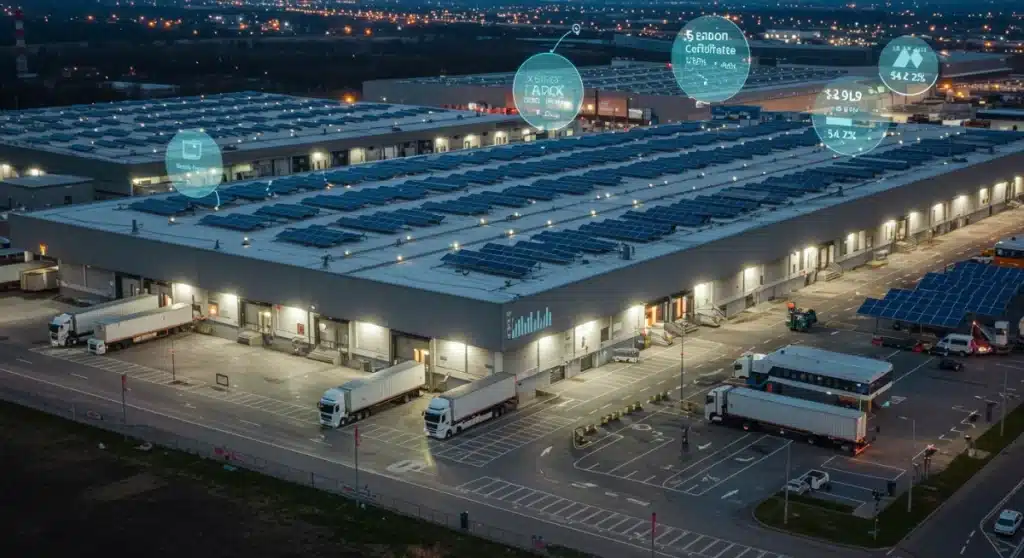
The 2026 US carbon credit market presents a tangible opportunity for logistics companies to generate up to $50,000 in annual revenue by actively reducing emissions and participating in credit trading.
The landscape of US logistics is undergoing a profound transformation, driven by an increasing focus on sustainability and environmental responsibility. For forward-thinking companies, this shift isn’t just about compliance; it’s about unlocking new revenue streams. By strategically engaging with the evolving Navigating the 2026 Carbon Credit Market for US Logistics: A Guide to Generating Up to $50,000 in Annual Revenue (FINANCIAL IMPACT), businesses can turn their green initiatives into significant financial gains.
Understanding the 2026 Carbon Credit Landscape in US Logistics
The year 2026 is poised to be a pivotal moment for carbon credits within the United States logistics sector. Regulations are tightening, and market mechanisms are maturing, creating both challenges and unparalleled opportunities. Companies that proactively understand and adapt to these changes will be best positioned to capitalize on the financial incentives available.
The primary driver behind this evolving market is the urgent need to mitigate climate change. Governments and industries alike are committed to reducing greenhouse gas emissions. Carbon credits serve as a market-based mechanism to achieve this, allowing entities that reduce their emissions below a certain threshold to earn credits. These credits can then be sold to other entities that are struggling to meet their reduction targets.
The Mechanics of Carbon Credit Generation
Generating carbon credits in logistics typically involves verifiable actions that reduce carbon dioxide equivalent (CO2e) emissions. This can range from fleet electrification to optimizing routes for fuel efficiency. The key is that these reductions must be measurable, reportable, and verifiable (MRV) according to established protocols.
- Fleet Electrification: Transitioning from diesel or gasoline-powered vehicles to electric vehicles (EVs) significantly reduces direct emissions.
- Alternative Fuels: Utilizing biofuels, renewable natural gas (RNG), or hydrogen in transportation operations can dramatically lower carbon footprints.
- Route Optimization: Advanced logistics software that minimizes mileage, reduces idling, and optimizes load capacities directly translates to fuel savings and emission reductions.
- Intermodal Transport: Shifting freight from less efficient modes (like trucking) to more efficient ones (like rail or sea) for long distances.
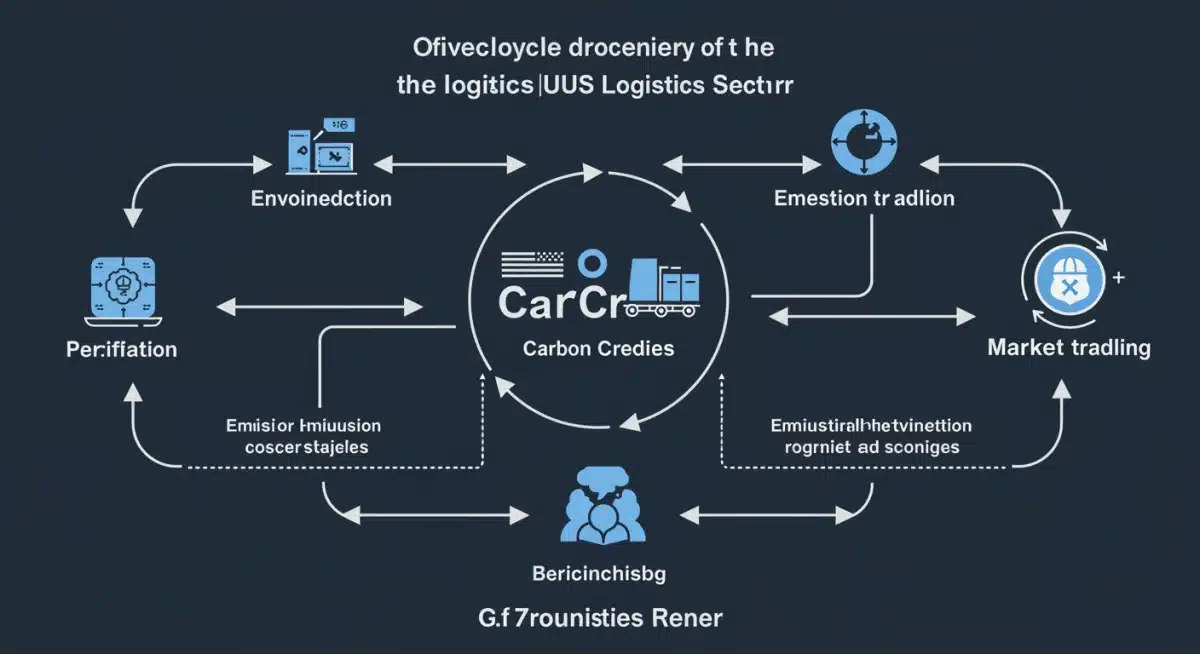
The process of earning credits involves rigorous measurement and third-party verification. Once verified, these credits are registered and can be traded on various carbon markets. For US logistics companies, understanding which protocols apply to their specific emission reduction projects is crucial for successful credit generation.
In conclusion, the 2026 carbon credit market for US logistics is not a distant concept but a present reality offering significant financial upside. Companies that invest in understanding the mechanisms, protocols, and opportunities will find themselves at a competitive advantage, transforming environmental responsibility into a tangible asset.
Identifying Eligible Emission Reduction Projects for Logistics
To effectively participate in the carbon credit market, US logistics companies must first identify and implement eligible emission reduction projects. Not all green initiatives qualify; projects must meet specific criteria for additionality, permanence, and measurability. This involves a strategic assessment of current operations and potential areas for improvement.
The concept of ‘additionality’ is paramount. A project is additional if the emission reductions would not have occurred in the absence of the carbon credit incentive. This prevents companies from earning credits for actions they would have taken anyway. Permanence ensures that the emission reductions are long-lasting and not easily reversed.
Key Project Categories and Examples
Several categories of projects are particularly relevant for the logistics sector:
- Vehicle Fleet Upgrades: Investing in newer, more fuel-efficient vehicles or converting existing fleets to run on cleaner fuels.
- Logistics Network Optimization: Implementing advanced planning systems to reduce empty miles, optimize delivery routes, and consolidate shipments.
- Warehouse Energy Efficiency: Upgrading warehouse lighting to LEDs, installing energy-efficient HVAC systems, or integrating renewable energy sources like solar panels at facilities.
- Driver Training Programs: Implementing eco-driving techniques that lead to significant fuel savings and reduced emissions.
For example, a logistics company that invests in a new fleet of electric delivery vans for urban routes could quantify the avoided emissions compared to their previous diesel fleet. This quantifiable reduction, once verified, becomes the basis for earning carbon credits. Similarly, a company that implements a sophisticated routing software that reduces total mileage by 10% across its fleet can claim credits for the associated fuel savings and emission reductions.
The selection of eligible projects requires careful planning and often involves consulting with carbon market experts. These experts can help navigate the complexities of project design, baseline setting, and monitoring methodologies. By focusing on projects with clear, measurable impacts, logistics companies can maximize their potential for credit generation and revenue.
Navigating US Carbon Market Mechanisms and Compliance
The US carbon credit market is not a single, monolithic entity; instead, it comprises several voluntary and compliance-based mechanisms. Understanding these distinctions is crucial for US logistics companies aiming to generate and sell carbon credits. Compliance markets, such as California’s Cap-and-Trade Program, are mandatory for certain high-emitting industries, while voluntary markets offer flexibility for companies to offset their emissions or generate credits from reduction projects.
For logistics, participation will often involve engaging with voluntary markets or state-specific programs that encourage emission reductions. The Environmental Protection Agency (EPA) also plays a role in setting standards and monitoring emissions, though a direct federal cap-and-trade program for transportation is not yet broadly established.
Key Market Players and Standards
Several organizations and standards govern the generation and trading of carbon credits:
- Verified Carbon Standard (VCS): One of the most widely used voluntary carbon programs globally, offering robust methodologies for various project types.
- American Carbon Registry (ACR): A leading carbon offset program in the US, developing and managing methodologies for a broad range of emission reduction and removal projects.
- Climate Action Reserve (CAR): Another prominent US-based registry that develops high-quality carbon offset projects and issues credits.
Compliance involves adhering to specific protocols for measurement, reporting, and verification (MRV). This includes establishing a baseline of emissions, meticulously tracking reductions, and undergoing independent third-party audits. Failure to comply with these standards can result in credits being deemed invalid, leading to financial losses and reputational damage.
Logistics companies must also be aware of evolving state-level regulations and incentives. Some states are implementing their own clean transportation initiatives that may overlap or integrate with carbon credit programs. Staying informed about these various regulatory frameworks is essential for successful participation in the market. By understanding the specific requirements of each market and adhering to stringent verification processes, logistics firms can confidently navigate the carbon credit landscape.
Monetizing Carbon Credits: Strategies for $50,000 Annual Revenue
Generating carbon credits is only half the battle; the other half is effectively monetizing them. For US logistics companies, the goal is to transform these environmental assets into a consistent revenue stream, potentially reaching up to $50,000 annually. This requires a strategic approach to selling credits, understanding market prices, and leveraging various trading platforms.
The value of a carbon credit fluctuates based on market demand, supply, and the specific attributes of the credit (e.g., project type, vintage). Companies need to monitor these dynamics to make informed decisions about when and how to sell their credits. Holding credits too long might risk price depreciation, while selling too early might miss peak value.
Selling Channels and Pricing Considerations
Logistics companies have several options for selling their carbon credits:
- Direct Sales to Buyers: Some companies prefer to sell credits directly to businesses looking to offset their emissions, often through brokers or consultants that facilitate these transactions.
- Carbon Market Exchanges: Platforms like the Chicago Climate Exchange (CCX, though largely inactive now, serves as a historical example) or newer, more active voluntary exchanges allow for transparent trading.
- Forward Contracts: Agreements to sell credits at a predetermined price at a future date can provide price certainty and help with financial planning.
To achieve the $50,000 annual revenue target, a logistics company would need to generate a significant volume of verifiable emission reductions. For example, if carbon credits trade at an average of $20-$50 per ton of CO2e, a company would need to reduce 1,000 to 2,500 tons of CO2e annually to reach the $50,000 mark. This highlights the importance of implementing impactful emission reduction projects and maximizing credit generation.
Another strategy involves bundling credits with other sustainability services or reporting, enhancing their appeal to buyers. Marketing the environmental benefits and the integrity of the reduction project can also command a premium. By combining robust emission reduction projects with smart market engagement, US logistics firms can unlock substantial financial rewards from their sustainability efforts.
Case Studies: Logistics Companies Profiting from Carbon Credits
Examining real-world examples provides valuable insights into how US logistics companies are successfully generating revenue from carbon credits. These case studies highlight diverse approaches, from significant fleet overhauls to incremental efficiency improvements, all contributing to both environmental benefits and financial gains. These examples serve as inspiration and practical blueprints for others looking to enter this market.
One notable example involves a regional trucking company that invested heavily in converting its fleet to run on renewable natural gas (RNG). By quantifying the emissions avoided compared to traditional diesel, the company was able to generate a substantial volume of carbon credits. They then partnered with a carbon broker to sell these credits to a large corporation seeking to meet its sustainability targets, thereby creating a new, consistent revenue stream that offset a portion of their initial investment.
Diverse Approaches to Credit Generation
- Large-Scale Fleet Electrification: A national parcel delivery service implemented a phased transition to electric vehicles in several major metropolitan areas. The verified emission reductions from these electric fleets generated millions of dollars in carbon credits over several years, reinvested into further green initiatives.
- Advanced Route Optimization and AI: A freight forwarding company adopted AI-driven route optimization software, leading to a 15% reduction in fuel consumption and associated emissions across its network. The company meticulously documented these savings and, through a qualified verifier, converted them into carbon credits, selling them on a voluntary market.
- Sustainable Warehouse Operations: While not directly transportation-related, a logistics firm that significantly reduced its warehouse energy consumption by installing solar panels and advanced HVAC systems was able to generate credits for its reduced scope 2 emissions, indirectly supporting its overall sustainability profile.
These examples demonstrate that successful carbon credit generation isn’t limited to a single strategy. It often involves a combination of technological upgrades, operational efficiencies, and a deep understanding of the carbon market. The key takeaway is the importance of a clear strategy, meticulous data collection, and leveraging expert guidance to navigate the verification and selling processes. These companies prove that environmental responsibility can indeed lead to tangible financial rewards.
Future Outlook and Maximizing Long-Term Benefits
The carbon credit market for US logistics is not static; it is a dynamic and evolving landscape. Looking beyond 2026, companies need to consider long-term strategies to maximize their benefits and stay ahead of regulatory changes. Continuous innovation, adaptability, and a commitment to deeper decarbonization will be critical for sustained success and increased revenue potential.
Expect to see an expansion of compliance markets, potentially at the federal level, and increasing demand for high-quality, verifiable carbon credits. This growing demand will likely drive up credit prices, further enhancing the financial incentives for emission reduction. However, it will also mean stricter verification standards and potentially more complex reporting requirements.
Anticipating Future Trends
- Enhanced Data Analytics: The ability to precisely measure and report emissions will become even more critical. Investments in advanced telematics and data analytics platforms will be paramount.
- Emergence of New Technologies: Hydrogen fuel cell vehicles, advanced battery technologies, and sustainable aviation fuels (SAFs) will play a larger role, opening new avenues for credit generation.
- Increased Corporate Demand: More corporations are setting ambitious net-zero targets, driving up their demand for credible carbon offsets to meet these goals.
- Policy Evolution: Federal and state policies will continue to evolve, potentially introducing new incentives, mandates, or carbon pricing mechanisms that directly impact logistics operations.
To maximize long-term benefits, logistics companies should adopt a continuous improvement mindset regarding their sustainability efforts. This means not just meeting current standards but anticipating future ones. Regularly reassessing fleet composition, optimizing supply chain networks, and exploring emerging green technologies will ensure a steady pipeline of emission reduction projects.
Furthermore, building a strong reputation as a sustainable logistics provider can attract environmentally conscious clients, opening up new business opportunities beyond just credit sales. By integrating sustainability deeply into their core business strategy, US logistics firms can secure a competitive edge and ensure a profitable future in a decarbonizing economy.
| Key Aspect | Brief Description |
|---|---|
| Market Opportunity | US logistics firms can generate up to $50,000 annually by participating in the 2026 carbon credit market. |
| Eligible Projects | Fleet electrification, route optimization, alternative fuels, and energy-efficient warehouses qualify for credits. |
| Compliance & Standards | Adherence to MRV protocols (VCS, ACR, CAR) is crucial for credit validity and market acceptance. |
| Monetization Strategies | Direct sales, market exchanges, and forward contracts are key for maximizing credit revenue. |
Frequently Asked Questions About Carbon Credits in US Logistics
Carbon credits represent a measurable reduction of one metric ton of carbon dioxide equivalent (CO2e) from the atmosphere. For US logistics, these apply to actions like fleet electrification, route optimization, or using alternative fuels, turning emission reductions into tradable assets.
Achieving $50,000 annually requires significant, verifiable emission reductions. This typically involves investing in green fleets, optimizing operations, and adhering to strict MRV protocols. Selling credits on voluntary or compliance markets at favorable prices is also key.
Eligible projects include transitioning to electric or alternative fuel vehicles, implementing advanced route optimization software, upgrading warehouse energy efficiency, and adopting eco-driving practices. Projects must demonstrate ‘additionality’ and measurable impact.
Logistics companies typically engage with voluntary carbon markets regulated by standards like VCS, ACR, or CAR. Some may also participate in state-specific compliance programs, such as California’s Cap-and-Trade, if their operations fall under relevant thresholds.
Key challenges include the complexity of measurement, reporting, and verification (MRV), fluctuating market prices, and navigating various regulatory frameworks. Ensuring project additionality and finding reliable buyers are also critical hurdles to overcome.
Conclusion
The 2026 carbon credit market presents a compelling financial incentive for US logistics companies to accelerate their sustainability journeys. By understanding the evolving landscape, identifying eligible emission reduction projects, and strategically navigating market mechanisms, businesses can transform environmental responsibility into a significant revenue stream, potentially generating up to $50,000 annually. This is not merely about compliance; it’s about building a more resilient, profitable, and environmentally conscious future for the entire logistics sector.