Biofuels in US Aviation: 2026 SAF Production & Decarbonization
The Rise of Biofuels in US Aviation: A 2026 Analysis of Sustainable Aviation Fuel (SAF) Production and its Role in Decarbonizing Air Travel
The global aviation industry faces an unprecedented challenge: achieving significant decarbonization while meeting ever-growing demand for air travel. Within this critical context, biofuels, particularly Sustainable Aviation Fuel (SAF), have emerged as a cornerstone of the strategy to reduce aviation’s carbon footprint. The United States, a major player in both aviation and energy innovation, is at the forefront of this transformation. This comprehensive analysis delves into the current state and future prospects of US Aviation Biofuels, examining 2026 production targets, the ambition for 2% market penetration, and the broader implications for decarbonizing air travel.
The urgency for sustainable solutions in aviation cannot be overstated. Air travel, while connecting people and economies, is a significant contributor to global greenhouse gas emissions. Traditional jet fuel, derived from fossil sources, releases substantial amounts of CO2 into the atmosphere. Sustainable Aviation Fuel offers a compelling alternative, capable of reducing lifecycle carbon emissions by up to 80% compared to conventional jet fuel. This makes SAF not just an option, but a necessity for the industry’s long-term environmental viability.
Our exploration will cover the technological advancements driving SAF production, the policy landscape designed to accelerate its adoption, the economic hurdles that need to be overcome, and the collaborative efforts between governments, airlines, and fuel producers. By focusing on the ambitious 2026 target for US Aviation Biofuels, we aim to provide a clear picture of the progress, challenges, and the path forward for sustainable air travel.
Understanding Sustainable Aviation Fuel (SAF): The Core of US Aviation Biofuels Strategy
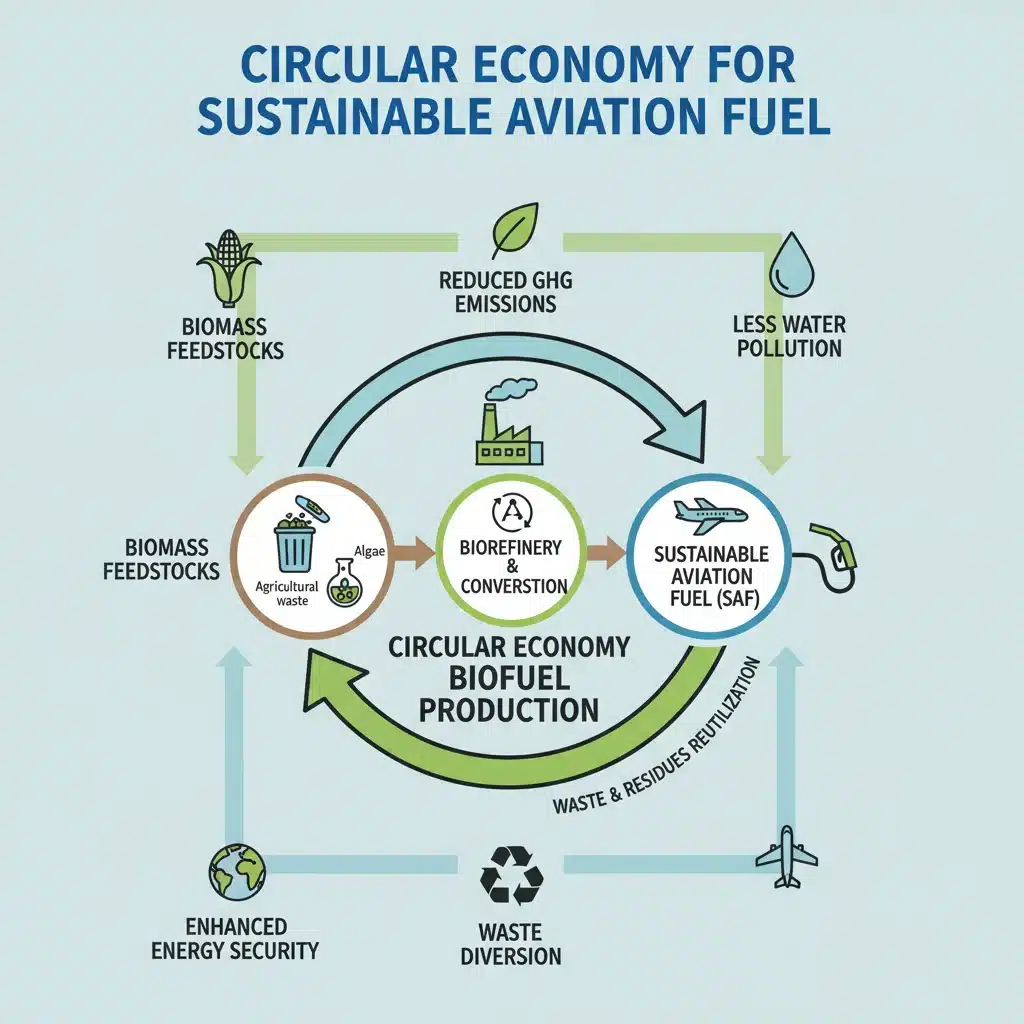
At the heart of the decarbonization effort for US Aviation Biofuels lies Sustainable Aviation Fuel. But what exactly is SAF, and what makes it ‘sustainable’? Unlike conventional jet fuel, SAF is produced from renewable raw materials, known as feedstocks. These can include used cooking oil, municipal solid waste, agricultural waste, forestry residues, and even dedicated energy crops like algae. The key differentiator is that these feedstocks are not competing with food production and are sourced in a manner that minimizes environmental impact.
The production pathways for SAF are diverse and constantly evolving. Currently, the most commercially mature pathway is the Hydroprocessed Esters and Fatty Acids (HEFA) process, which converts fats, oils, and greases into aviation fuel. Other promising pathways include Alcohol-to-Jet (AtJ), which uses alcohols like ethanol as a feedstock, and Fischer-Tropsch (FT) synthesis, which can convert biomass or waste gases into synthetic fuel. Each pathway has its own advantages, challenges, and feedstock requirements, contributing to a diversified approach for US Aviation Biofuels production.
The ‘sustainable’ aspect of SAF is rigorously defined. It’s not just about using renewable resources; it’s also about ensuring that those resources are sourced responsibly. This includes considerations for land use change, water consumption, biodiversity, and social impacts. Certifications from organizations like the Roundtable on Sustainable Biomaterials (RSB) and the International Sustainability and Carbon Certification (ISCC) play a crucial role in verifying the sustainability credentials of SAF. These certifications provide assurance to airlines, regulators, and consumers that the fuel meets stringent environmental and social standards, reinforcing the integrity of the US Aviation Biofuels initiative.
Moreover, SAF is a ‘drop-in’ fuel, meaning it can be blended with conventional jet fuel without requiring any modifications to aircraft engines or existing airport infrastructure. This compatibility is a significant advantage, as it allows for a gradual transition to sustainable aviation without the need for costly and time-consuming fleet overhauls. This seamless integration is vital for the widespread adoption of US Aviation Biofuels across the entire aviation ecosystem.
The lifecycle emissions reduction achieved by SAF is a critical metric. While burning SAF in an aircraft produces CO2, the carbon released is roughly equivalent to the carbon absorbed by the feedstock during its growth. This creates a near closed-loop carbon cycle, dramatically reducing net greenhouse gas emissions compared to fossil fuels, where new carbon is constantly introduced into the atmosphere. This fundamental difference is what positions SAF as a game-changer for aviation decarbonization and a central pillar of the US Aviation Biofuels strategy.
The 2026 Target: Paving the Way for 2% SAF Market Penetration
The United States has set ambitious goals for the adoption of Sustainable Aviation Fuel. A key milestone in this journey is the target of achieving 2% SAF market penetration by 2026. This might seem like a modest figure, but it represents a significant leap from current usage levels and lays the groundwork for much larger scale-up in the future. This 2% target for US Aviation Biofuels translates into approximately 3 billion gallons of SAF production annually, a monumental undertaking that requires concerted efforts from various stakeholders.
Achieving this 2% market share by 2026 is crucial for several reasons. Firstly, it demonstrates the viability of SAF production at a commercially relevant scale. It proves that the technology and supply chains can support a significant portion of aviation fuel demand. Secondly, it signals to investors and developers that there is a strong and growing market for SAF, encouraging further investment in production facilities and feedstock development. Thirdly, it provides valuable experience in integrating SAF into the existing aviation fuel supply chain, identifying and addressing any logistical or operational challenges that may arise.
The Biden administration’s SAF Grand Challenge, launched in 2021, is a central policy initiative aimed at catalyzing this growth. The Grand Challenge sets a target of 3 billion gallons of SAF production by 2030, with an interim goal of 2026 contributing significantly to this trajectory. This initiative brings together government agencies, industry leaders, and research institutions to overcome the technical, economic, and logistical barriers to widespread SAF adoption. It emphasizes collaboration and innovation to accelerate the scaling of US Aviation Biofuels.
Several policy mechanisms are being deployed to support the 2026 target. These include tax credits, grants for research and development, and infrastructure investments. The Inflation Reduction Act (IRA) of 2022, for instance, includes a blender’s tax credit for SAF, providing a financial incentive for producers and blenders to increase SAF volumes. This type of fiscal support is critical for bridging the price gap between conventional jet fuel and SAF, which is currently more expensive to produce. Without these incentives, achieving the 2% market penetration for US Aviation Biofuels by 2026 would be significantly more challenging.
Furthermore, voluntary commitments from airlines and corporate buyers are playing a vital role. Many major US airlines have set their own ambitious SAF usage targets, often exceeding regulatory requirements. These commitments create demand certainty, which is essential for attracting investment in SAF production capacity. The collective ambition of government, industry, and consumers is creating a powerful momentum towards a more sustainable future for US Aviation Biofuels.
Challenges and Opportunities in Scaling US Aviation Biofuels Production
While the 2026 target for US Aviation Biofuels is ambitious and necessary, it is not without its challenges. The journey to widespread SAF adoption involves navigating complex technical, economic, and logistical hurdles. Understanding these challenges and identifying corresponding opportunities is crucial for successful implementation.
Feedstock Availability and Sustainability
One of the primary challenges lies in securing sufficient quantities of sustainable feedstocks. The demand for SAF is projected to grow exponentially, requiring a massive increase in the supply of eligible feedstocks. While used cooking oil is a readily available source, its supply is limited. Expanding the use of agricultural residues, forestry waste, and municipal solid waste presents significant potential, but also requires robust collection, processing, and transportation infrastructure. Ensuring these feedstocks are truly sustainable and do not compete with food production or lead to deforestation is paramount. Innovation in cultivating dedicated energy crops like algae, which can grow on non-arable land and utilize wastewater, offers a long-term opportunity for expanding feedstock diversity for US Aviation Biofuels.
Production Costs and Economics
Currently, SAF is more expensive to produce than conventional jet fuel. This price differential is a major barrier to widespread adoption. The higher cost stems from the nascent stage of SAF production technologies, the capital intensity of building new biorefineries, and the cost of sustainable feedstocks. Government incentives, as mentioned with the IRA tax credits, are vital for making SAF economically competitive. Further research and development are needed to drive down production costs through technological advancements and process optimization. The long-term opportunity lies in achieving economies of scale and technological maturity, which will eventually reduce the cost of US Aviation Biofuels to a more competitive level.
Infrastructure Development and Logistics
Integrating SAF into the existing fuel supply chain requires significant investment in infrastructure. This includes upgrading pipelines, storage facilities, and fueling systems at airports. While SAF is a ‘drop-in’ fuel, the blending and distribution logistics need to be carefully managed to ensure consistent quality and availability. The vast geographical spread of the US aviation network adds another layer of complexity. Opportunities exist in developing regional SAF hubs, co-locating production facilities near feedstock sources and major airports, and leveraging existing petroleum infrastructure where feasible. Smart logistical planning is essential for the efficient deployment of US Aviation Biofuels.
Technological Advancement and Diversification
While HEFA is the most mature pathway, continued investment in advanced SAF technologies is crucial. Pathways like power-to-liquid (PtL), which uses renewable electricity, water, and captured CO2 to produce synthetic fuels, offer the potential for even lower lifecycle emissions and reduced reliance on biomass feedstocks. Developing a diverse portfolio of SAF production pathways will enhance resilience and allow the industry to adapt to evolving feedstock availability and technological breakthroughs. Research and development in these areas represent significant opportunities for the future of US Aviation Biofuels.
Policy Certainty and Long-Term Vision
Consistent and long-term policy support is paramount for de-risking investments in SAF production. The industry needs clear signals and stable regulatory frameworks to commit the necessary capital for building new facilities. The SAF Grand Challenge and the IRA are positive steps, but sustained political will and a clear roadmap beyond 2026 are essential for achieving the ambitious decarbonization targets. Opportunities lie in establishing predictable carbon pricing mechanisms and international standards that harmonize SAF adoption globally, further accelerating the growth of US Aviation Biofuels.
The Role of Government and Industry Collaboration
The ambitious goals for US Aviation Biofuels, particularly the 2% market penetration by 2026, cannot be achieved by any single entity. It requires an unprecedented level of collaboration between government bodies, the aviation industry, fuel producers, researchers, and environmental organizations. This multi-stakeholder approach is fundamental to overcoming the complex challenges and unlocking the vast potential of SAF.
Government Initiatives and Support
The US government has taken a proactive stance in fostering the growth of SAF. The Department of Energy (DOE), Department of Transportation (DOT), and Environmental Protection Agency (EPA) are working in concert to provide funding for research and development, streamline regulatory processes, and offer financial incentives. The SAF Grand Challenge, as previously mentioned, exemplifies this collaborative spirit, aiming to accelerate technological innovation and overcome deployment barriers. This initiative focuses on a holistic approach, addressing everything from feedstock development to end-use infrastructure. Furthermore, loan guarantees and grants through various federal programs are helping to de-risk commercial-scale SAF projects, making them more attractive to private investors. Such robust governmental backing is indispensable for the nascent US Aviation Biofuels industry.
Airline Commitments and Investment
Airlines are at the forefront of driving demand for US Aviation Biofuels. Major carriers like United, American, Delta, and Southwest have all made significant commitments to incorporate SAF into their operations, often setting targets far beyond the initial 2% by 2026. These commitments are not just aspirational; they are backed by off-take agreements and direct investments in SAF production facilities. By providing long-term purchase agreements, airlines offer crucial revenue certainty to SAF producers, enabling them to secure financing for new plants. This demand signal is a powerful catalyst for scaling up production capacity and is a testament to the industry’s dedication to decarbonization.
Fuel Producers and Technology Developers
The innovation and engineering expertise of fuel producers and technology developers are central to the success of US Aviation Biofuels. Companies like World Energy, Neste, LanzaJet, and Gevo are investing heavily in new production facilities and advanced conversion technologies. These companies are not only scaling up existing HEFA production but also pioneering new pathways such as Alcohol-to-Jet and Power-to-Liquid. Their ability to innovate, optimize processes, and bring down production costs will be critical for the long-term viability of SAF. Collaboration between these producers and research institutions is accelerating the development of next-generation biofuels and improving the efficiency of existing technologies.
Research and Academic Institutions
Universities and national laboratories play a vital role in fundamental research and development, feedstock assessment, and sustainability analysis for US Aviation Biofuels. They contribute to understanding the environmental impacts of different feedstocks, optimizing conversion processes, and developing new catalysts. Their independent research provides the scientific basis for policy decisions and helps ensure that SAF development proceeds in an environmentally responsible manner. Knowledge sharing and technology transfer from academia to industry are essential for rapid advancement.
Cross-Sectoral Partnerships
The complexity of the SAF supply chain necessitates cross-sectoral partnerships. This includes collaborations with agriculture for feedstock supply, waste management companies for municipal solid waste conversion, and energy companies for infrastructure and distribution. For example, partnerships between airlines and agricultural cooperatives can help establish sustainable feedstock supply chains, while alliances with energy infrastructure companies can facilitate efficient SAF blending and delivery to airports. These diverse collaborations are creating a robust ecosystem for US Aviation Biofuels.
Economic Impact and Job Creation
Beyond its environmental benefits, the growth of US Aviation Biofuels is poised to deliver significant economic advantages, including job creation and regional development. The transition to a sustainable aviation fuel economy represents a new industrial frontier, stimulating investment and innovation across various sectors.
New Manufacturing and Construction Jobs
The development and construction of new SAF production facilities, biorefineries, and associated infrastructure will necessitate a substantial workforce. This includes engineers, construction workers, project managers, and skilled technicians. These jobs will be distributed across different regions, particularly in areas rich in sustainable feedstocks, leading to economic revitalization in rural communities. The demand for specialized equipment and components will also foster growth in related manufacturing industries, creating a ripple effect throughout the economy.
Agricultural and Forestry Sector Growth
The need for diverse sustainable feedstocks will create new market opportunities for farmers and foresters. Cultivating energy crops, collecting agricultural residues, and sustainably managing forest biomass will become increasingly important. This can provide new revenue streams for rural economies, promoting sustainable land management practices and potentially offsetting traditional agricultural volatility. The development of advanced cultivation and harvesting techniques for these feedstocks will also drive innovation in these sectors, further solidifying the economic impact of US Aviation Biofuels.
Research, Development, and Innovation Jobs
The continuous drive for more efficient and cost-effective SAF production pathways will fuel demand for scientists, researchers, and engineers. Jobs in biochemical engineering, materials science, environmental science, and sustainable logistics will expand as the industry seeks to optimize processes and develop next-generation fuels. This intellectual capital will not only advance SAF technology but also contribute to the broader US leadership in renewable energy innovation.
Supply Chain and Logistics Employment
The entire SAF supply chain, from feedstock collection and transportation to fuel blending and distribution, will generate numerous employment opportunities. This includes truck drivers, pipeline operators, storage facility managers, and logistics coordinators. The complexity of managing a sustainable and efficient supply chain for US Aviation Biofuels will require skilled professionals and innovative solutions, creating a dynamic job market.
Global Competitiveness
By investing in US Aviation Biofuels, the United States is positioning itself as a global leader in sustainable aviation. This leadership can translate into export opportunities for SAF technologies, expertise, and potentially even the fuel itself. Developing a robust domestic SAF industry enhances national energy security by diversifying fuel sources and reducing reliance on fossil fuels from volatile regions. This strategic advantage contributes to long-term economic stability and competitiveness on the international stage.
The economic benefits extend beyond direct job creation, encompassing increased tax revenues, local business growth around SAF production sites, and a more resilient, environmentally responsible economy. The investment in US Aviation Biofuels is not just an environmental imperative but also a significant economic opportunity.
The Future Outlook: Beyond 2026 for US Aviation Biofuels
While the 2026 target of 2% market penetration for US Aviation Biofuels is a critical near-term goal, the long-term vision extends far beyond this initial milestone. The ultimate aim is to achieve widespread adoption of SAF, leading to a significant reduction in aviation’s carbon emissions and paving the way for net-zero air travel. This future outlook involves continued innovation, policy evolution, and sustained investment.
Ambitious Long-Term Targets
The US government’s SAF Grand Challenge aims for 3 billion gallons of SAF production annually by 2030, and ultimately 35 billion gallons by 2050, which would meet 100% of projected US aviation fuel demand. These ambitious targets underscore the commitment to fully decarbonizing air travel. Achieving these goals will require a continuous scaling of production capacity, a significant expansion of sustainable feedstock supply, and the commercialization of advanced SAF technologies like Power-to-Liquid (PtL) and direct air capture (DAC) integration.
Technological Breakthroughs and Diversification
The reliance on current SAF pathways will gradually shift towards a more diversified portfolio. Future advancements will likely see a greater emphasis on novel feedstocks and conversion processes that offer even higher carbon reduction potential and lower costs. This includes cellulosic biofuels, algae-based fuels, and synthetic fuels produced from renewable electricity and captured carbon. Research into alternative energy sources for aviation, such as hydrogen and electric propulsion for shorter routes, will also complement the SAF strategy, creating a multi-faceted approach to aviation decarbonization.
Global Harmonization and International Cooperation
Aviation is an inherently global industry. The success of US Aviation Biofuels efforts will be enhanced by international cooperation and the harmonization of standards and policies. Collaborative initiatives with organizations like ICAO (International Civil Aviation Organization) and other nations are crucial for establishing a global framework for SAF production, certification, and deployment. This will create a level playing field, prevent market fragmentation, and accelerate the transition to sustainable aviation worldwide.
Consumer Awareness and Demand
As SAF becomes more prevalent, increasing consumer awareness and demand for sustainable air travel will play a significant role. Airlines are already communicating their SAF initiatives to passengers, and voluntary carbon offsetting programs that include SAF purchases are gaining traction. Educating the public about the benefits of SAF and offering transparent choices will empower consumers to support airlines committed to decarbonization, further driving the market for US Aviation Biofuels.
Investment and Funding Mechanisms
Sustained private and public investment will be essential for the long-term growth of the SAF industry. Innovative funding mechanisms, such as green bonds, carbon credits, and public-private partnerships, will be critical for financing the massive capital expenditures required for new biorefineries and infrastructure. The continued evolution of policy incentives, including long-term tax credits and grants, will provide the necessary stability for investors to commit to large-scale projects, securing the future of US Aviation Biofuels.
The journey to fully decarbonize US aviation is a marathon, not a sprint. The 2026 target for US Aviation Biofuels is a vital early stride, building momentum and proving capability. The vision for a sustainable aviation future is achievable, but it demands persistent innovation, robust policy support, and unwavering collaboration across all sectors. The environmental and economic benefits of this transformation will be profound, securing a cleaner, more resilient future for air travel.
Conclusion: Charting a Sustainable Course for US Aviation
The analysis of US Aviation Biofuels, with a specific focus on Sustainable Aviation Fuel (SAF) production and the ambitious 2% market penetration target by 2026, reveals a dynamic and transformative period for the American aviation industry. The urgency to decarbonize air travel is undeniable, and SAF stands out as the most viable and immediate solution for significantly reducing greenhouse gas emissions without requiring fundamental changes to existing aircraft or infrastructure.
The path to achieving the 2026 goal is paved with both significant opportunities and formidable challenges. From securing diverse and truly sustainable feedstocks to bringing down production costs and developing robust logistical infrastructure, each aspect requires dedicated effort and innovative solutions. However, the collective commitment from the US government, major airlines, pioneering fuel producers, and research institutions demonstrates a powerful alignment towards a common objective: a greener future for aviation.
Policy frameworks like the SAF Grand Challenge and the Inflation Reduction Act are providing crucial incentives and strategic direction, fostering an environment conducive to investment and growth in the SAF sector. The increasing number of off-take agreements and direct investments from airlines signals a strong market demand, which is essential for scaling production. Furthermore, the economic benefits, including job creation in manufacturing, agriculture, and R&D, underscore the broader positive impact of this transition.
Looking beyond 2026, the vision for US Aviation Biofuels is even more ambitious, aiming for a complete decarbonization of the sector by 2050. This long-term trajectory will necessitate continuous technological advancements, the commercialization of next-generation SAF pathways, and deeper international collaboration. It will also rely on growing consumer awareness and demand for sustainable travel options, reinforcing the market for environmentally responsible aviation.
In essence, the rise of biofuels in US aviation is not merely an environmental initiative; it is a comprehensive industrial transformation. It represents a strategic investment in energy security, economic growth, and global climate leadership. While the 2% target by 2026 is an important milestone, it is just the beginning of a much larger journey towards a sustainable and carbon-neutral future for air travel. The commitment to US Aviation Biofuels is a testament to the industry’s determination to meet its climate responsibilities while continuing to provide the essential connectivity that defines our modern world.
The success in achieving these targets will not only secure a sustainable future for US aviation but will also serve as a powerful model for other nations and industries grappling with similar decarbonization challenges. The journey is complex, but the destination—a world where air travel leaves a minimal environmental footprint—is within reach, driven by the relentless pursuit of innovation and sustainability in US Aviation Biofuels.