The Evolution of Reverse Logistics in the US: Handling Returns and Waste

The evolution of reverse logistics in the US involves managing returns and waste, focusing on efficiency and sustainability to reduce environmental impact and optimize resource use.
The modern landscape of commerce increasingly acknowledges a critical component often unseen: the journey of products back from consumers. This is where the evolution of reverse logistics: handling returns and waste in the US comes into greater focus, transforming waste streams into assets and fostering a more sustainable economic model.
Understanding the Basics of Reverse Logistics
Reverse logistics is a critical component of supply chain management that focuses on the flow of goods from the customer back to the seller or manufacturer. This process includes managing returns, repairs, recycling, and disposal of products. Understanding the basics of reverse logistics is essential for businesses to optimize their operations, reduce costs, and improve customer satisfaction.
Key Components of Reverse Logistics
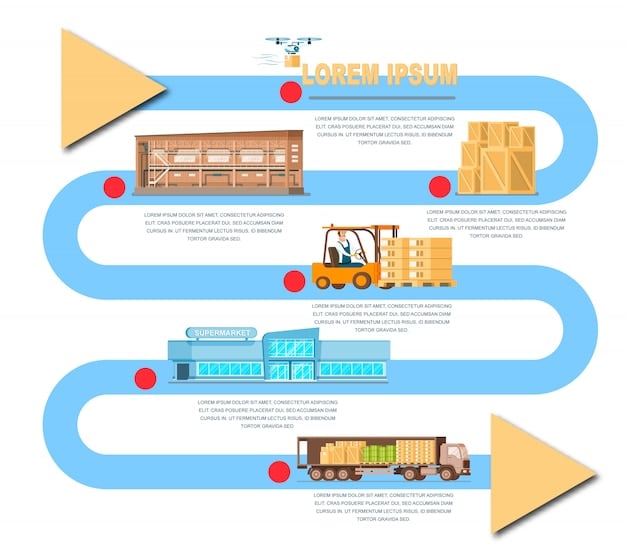
Reverse logistics involves several key components, each designed to handle different aspects of the return and waste management process. These components include the collection of returned goods, inspection and sorting, repair and refurbishment, and recycling or disposal.
- Collection: Gathering returned products from customers via various channels such as retail stores, mail, or specialized pick-up services.
- Inspection and Sorting: Assessing the condition of returned items to determine the appropriate course of action, such as repair, resale, or recycling.
- Repair and Refurbishment: Restoring products to a usable condition for resale or reuse, extending their lifecycle and reducing waste.
- Recycling and Disposal: Processing materials from unsalvageable products to recover valuable resources or disposing of them responsibly.
Efficient reverse logistics can significantly impact a company’s bottom line and environmental footprint. By effectively managing returns and waste, businesses can reduce costs, improve resource utilization, and enhance their brand image.
Historical Context of Reverse Logistics in the US
The concept of reverse logistics is not new, but its importance has grown significantly over the years. In the US, the evolution of reverse logistics has been shaped by changing consumer behaviors, regulatory requirements, and technological advancements. The historical context of reverse logistics provides valuable insights into the current state and future trends of this field.
Early Stages of Reverse Logistics
Initially, reverse logistics was primarily focused on handling product recalls and warranty returns. Companies often viewed returns as a necessary evil and did not prioritize optimizing the process. However, as consumer expectations and environmental awareness increased, businesses began to recognize the strategic value of reverse logistics.
The rise of e-commerce has further accelerated the demand for efficient reverse logistics. Online retailers face higher return rates compared to brick-and-mortar stores, making it crucial to have robust systems in place to manage these returns effectively.
- Increased consumer expectations: Customers expect hassle-free returns and refunds, driving businesses to improve their reverse logistics processes.
- Environmental concerns: Growing awareness of waste reduction and resource conservation has led to greater emphasis on recycling and reuse in reverse logistics.
- Technological advancements: Innovations in technology, such as tracking and tracing systems, have enabled more efficient and transparent reverse logistics operations.
Understanding the historical context of reverse logistics helps businesses appreciate the importance of investing in effective return and waste management strategies. As the industry continues to evolve, companies that embrace innovation and sustainability will be best positioned for success.
The Impact of E-commerce on Reverse Logistics
E-commerce has revolutionized the way consumers shop, but it has also brought about unique challenges for reverse logistics. The convenience of online shopping often leads to higher return rates, placing increased pressure on businesses to manage returns efficiently. Understanding the impact of e-commerce on reverse logistics is crucial for businesses to adapt and thrive in the digital age.
Challenges Posed by E-commerce Returns
One of the primary challenges of e-commerce is the high volume of returns. Customers often purchase multiple items with the intention of returning some, leading to significant logistical complexities. Managing these returns requires efficient processes for collection, inspection, and processing.
The cost of processing e-commerce returns can be substantial, including expenses for shipping, handling, and restocking. Businesses must find ways to minimize these costs while still providing a seamless returns experience for customers.
- Higher return rates: Online sales typically have higher return rates compared to physical stores, increasing the workload for reverse logistics operations.
- Cost of returns: Shipping, handling, and restocking costs can significantly impact profitability, making it essential to optimize the returns process.
- Customer expectations: Online shoppers expect easy and hassle-free returns, requiring businesses to provide flexible and convenient options.
To address these challenges, businesses are investing in innovative solutions such as automated return systems, advanced data analytics, and improved customer service. By leveraging technology and data, companies can streamline their reverse logistics operations and enhance the overall customer experience.
Sustainable Practices in Reverse Logistics
Sustainability has become a major focus in all aspects of business, and reverse logistics is no exception. Implementing sustainable practices in reverse logistics can help companies reduce their environmental impact, improve resource utilization, and enhance their brand reputation. Exploring sustainable practices in reverse logistics is essential for businesses committed to environmental responsibility.
Reducing Waste and Promoting Recycling
One of the key goals of sustainable reverse logistics is to minimize waste and promote recycling. This involves implementing processes to recover valuable materials from returned products and divert them from landfills. Recycling programs can significantly reduce the environmental footprint of a company’s operations.
Another important aspect of sustainable reverse logistics is extending the lifecycle of products through repair and refurbishment. By restoring products to a usable condition, companies can reduce the demand for new resources and minimize waste.
- Waste reduction strategies: Implementing measures to minimize waste generation at all stages of the reverse logistics process.
- Recycling programs: Establishing systems to recover valuable materials from returned products and recycle them into new products.
- Product lifecycle extension: Repairing and refurbishing products to extend their usable lifespan, reducing the need for new production.
Companies that prioritize sustainability in their reverse logistics operations can achieve significant environmental and economic benefits. By adopting innovative practices and technologies, businesses can create a more sustainable and resilient supply chain.
The Role of Technology in Modern Reverse Logistics
Technology plays a crucial role in modern reverse logistics, enabling businesses to streamline their operations, improve efficiency, and enhance customer satisfaction. From tracking and tracing systems to automated return processes, technology is transforming the way companies manage returns and waste. Examining the role of technology in modern reverse logistics is essential for businesses looking to stay competitive.
Tracking and Tracing Systems
One of the most important technological advancements in reverse logistics is the use of tracking and tracing systems. These systems allow companies to monitor the movement of returned products throughout the supply chain, providing real-time visibility and control. Tracking systems can also help businesses identify bottlenecks and inefficiencies in the reverse logistics process.
Another key technology in modern reverse logistics is data analytics. By analyzing data on returns, companies can gain valuable insights into customer behavior, product quality, and operational performance. Data analytics can help businesses identify trends, predict future returns, and optimize their reverse logistics strategies.
- Real-time visibility: Tracking and tracing systems provide real-time information on the location and status of returned products.
- Data-driven insights: Data analytics help businesses understand customer behavior and optimize their reverse logistics processes.
- Automation of returns: Automated systems streamline the returns process, reducing manual effort and improving efficiency.
By leveraging technology, businesses can create a more efficient, transparent, and customer-friendly reverse logistics process. As technology continues to evolve, companies that embrace innovation will be best positioned to succeed in the rapidly changing world of e-commerce.
Future Trends in Reverse Logistics
The field of reverse logistics is constantly evolving, driven by changing consumer expectations and advancements in technology. Looking ahead, several key trends are expected to shape the future of reverse logistics in the US. Understanding these trends is essential for businesses to prepare for the challenges and opportunities that lie ahead.
Artificial Intelligence and Automation
One of the most significant trends in reverse logistics is the increasing use of artificial intelligence (AI) and automation. AI can be used to optimize return routes, predict return volumes, and automate the inspection and sorting of returned products. Automation can streamline the returns process, reduce manual effort, and improve efficiency.
Another important trend is the growing emphasis on circular economy principles. The circular economy aims to minimize waste and maximize resource utilization by keeping products and materials in use for as long as possible. Reverse logistics plays a critical role in the circular economy by enabling the reuse, repair, and recycling of products.
- AI-driven optimization: Artificial intelligence is used to optimize return routes, predict return volumes, and automate inspection processes.
- Circular economy principles: A focus on minimizing waste and maximizing resource utilization through reuse, repair, and recycling.
- Enhanced customer experience: Streamlined and convenient returns processes improve customer satisfaction and loyalty.
As the industry continues to evolve, businesses that embrace innovation and sustainability will be best positioned for success. By staying informed about future trends and investing in cutting-edge technologies, companies can create a more efficient, resilient, and customer-friendly reverse logistics operation.
| Key Point | Brief Description |
|---|---|
| 📦 E-commerce Impact | Higher return rates force businesses to improve reverse logistics processes. |
| ♻️ Sustainability | Focus on waste reduction, recycling, and extending product lifecycles. |
| 🤖 Technology | Tracking systems, data analytics, and automation enhance efficiency. |
| 🔮 Future Trends | AI, circular economy, and improved customer experiences. |
FAQ Section
▼
Reverse logistics is the process of moving goods from the customer back to the seller for various reasons, including returns, repairs, or recycling.
▼
It helps businesses manage returns efficiently, reduce waste, improve customer satisfaction, and enhance sustainability practices.
▼
E-commerce increases return rates, requiring businesses to optimize return processes and manage higher volumes of returned goods.
▼
Tracking systems, data analytics, and automated systems improve efficiency and transparency in the reverse logistics process.
▼
AI, circular economy principles, and enhanced customer experiences are shaping the future of reverse logistics, driving innovation and sustainability.
Conclusion
In conclusion, the evolution of reverse logistics in the US is crucial for businesses to handle returns and waste efficiently, promoting sustainability and improving customer satisfaction in the face of ever increasing complexities in waste and environmental concerns.