Sustainable Urban Logistics: Micro-Hubs & Cargo Bikes for 2025
Micro-hubs and cargo bikes are emerging as pivotal components of sustainable urban logistics, poised to reduce delivery emissions by 30% in major US cities by 2025 through optimized last-mile operations and eco-friendly transportation.
The landscape of urban delivery is undergoing a profound transformation, driven by an urgent need for sustainability and efficiency. The promise of sustainable urban logistics, powered by innovative solutions like micro-hubs and cargo bikes, is not just a distant dream but a rapidly approaching reality, set to dramatically cut delivery emissions by 30% in major US cities by 2025.
the rise of sustainable urban logistics
Urban centers are grappling with the dual challenges of increasing e-commerce demand and the imperative to reduce environmental impact. Traditional logistics models, heavily reliant on large diesel vans, contribute significantly to air pollution, noise, and traffic congestion. This unsustainable trajectory necessitates a paradigm shift towards greener, more efficient delivery methods.
The concept of sustainable urban logistics addresses these issues head-on, seeking to optimize the movement of goods within cities while minimizing ecological footprints. It encompasses a range of strategies, from route optimization and electric vehicles to the strategic deployment of micro-hubs and the integration of cargo bikes. This holistic approach aims to create a more livable and breathable urban environment for everyone.
environmental imperative and urban challenges
- Air Quality Improvement: Reducing reliance on fossil fuels directly leads to cleaner air, combating respiratory illnesses in urban populations.
- Noise Pollution Reduction: Electric cargo bikes and smaller electric vehicles operate silently, greatly diminishing urban noise.
- Traffic Congestion Alleviation: Shifting to smaller, more agile delivery methods helps free up road space and eases traffic flow.
The shift towards sustainability is not just an environmental choice but an economic necessity. Cities are increasingly implementing regulations to curb emissions and incentivize green logistics, making sustainable practices a competitive advantage for businesses. This push from both environmental and regulatory fronts is accelerating the adoption of innovative solutions.
Ultimately, the rise of sustainable urban logistics represents a critical evolution in how cities function, ensuring that the convenience of modern commerce does not come at the expense of public health or planetary well-being. It is about creating resilient, future-proof urban delivery systems that serve both people and the planet.
micro-hubs: the strategic nerve centers of urban delivery
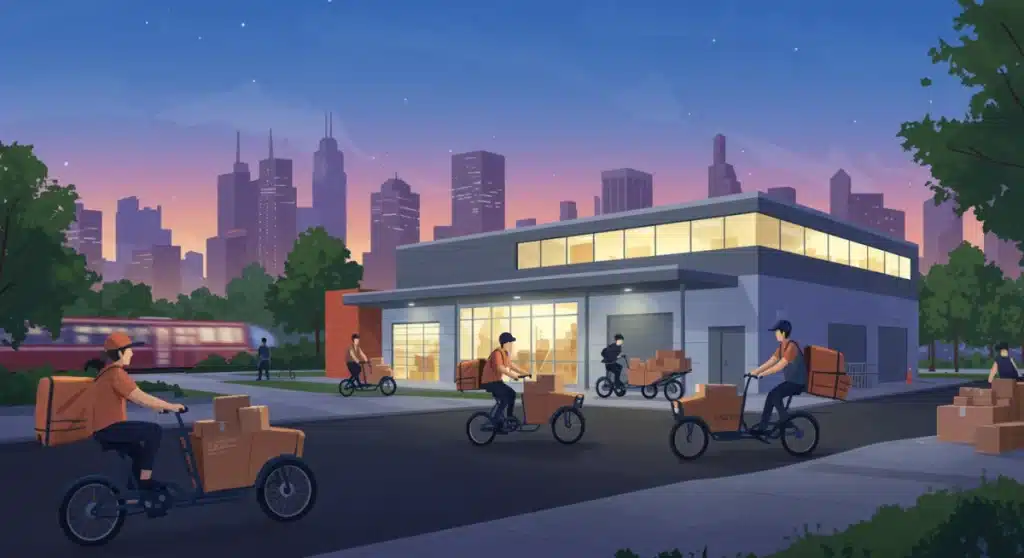
Micro-hubs are compact, strategically located urban depots that serve as intermediate points for packages between larger distribution centers and final delivery points. These facilities are fundamental to the success of sustainable urban logistics, allowing for the deconsolidation of goods and their transfer to smaller, eco-friendly vehicles like cargo bikes for the last mile.
By bringing goods closer to their final destination, micro-hubs drastically reduce the distance that larger, more polluting vehicles need to travel within congested urban areas. This not only cuts down on emissions but also improves delivery efficiency and speed, offering a win-win for both businesses and the environment.

These hubs can take various forms, from repurposed shipping containers and vacant retail spaces to dedicated urban logistics centers. Their adaptability and ability to integrate seamlessly into the urban fabric make them an ideal solution for optimizing last-mile delivery.
optimizing last-mile efficiency
- Reduced Vehicle Miles Traveled (VMT): Larger vehicles spend less time in urban cores, minimizing fuel consumption and emissions.
- Faster Deliveries: Proximity to customers allows for quicker last-mile delivery times, enhancing customer satisfaction.
- Improved Route Planning: Micro-hubs enable more granular and efficient route optimization for cargo bikes and smaller electric vehicles.
The implementation of micro-hubs requires careful planning and collaboration between logistics companies, city planners, and local communities. Identifying suitable locations, securing permits, and integrating these facilities into existing urban infrastructure are key steps in their successful deployment.
In essence, micro-hubs act as the critical link in the chain of sustainable urban logistics, bridging the gap between large-scale distribution and hyper-local delivery. They are transforming the urban delivery landscape, making it more agile, efficient, and environmentally responsible.
the power of cargo bikes in last-mile delivery
Cargo bikes are quickly becoming the unsung heroes of sustainable urban logistics. These versatile, emission-free vehicles are perfectly suited for navigating congested city streets, accessing pedestrianized areas, and delivering packages directly to customers’ doorsteps. Their adoption is a cornerstone of the projected 30% emission reduction in major US cities by 2025.
Unlike traditional delivery vans, cargo bikes produce zero tailpipe emissions, contribute minimally to noise pollution, and require less road and parking space. This makes them an ideal solution for the last mile, especially in dense urban environments where efficiency and environmental considerations are paramount.
advantages of cargo bike fleets
The benefits of integrating cargo bikes into delivery fleets extend beyond environmental gains. They offer significant operational advantages that contribute to overall efficiency and cost savings.
- Zero Emissions: Directly addresses air quality concerns and helps cities meet carbon reduction targets.
- Cost-Effective: Lower operational costs compared to vans, including fuel, maintenance, and parking.
- Urban Agility: Can bypass traffic, use bike lanes, and access areas restricted to motor vehicles, leading to faster delivery times.
- Reduced Congestion: Less impact on road infrastructure and traffic flow compared to larger vehicles.
Many logistics providers are already leveraging cargo bikes for a variety of goods, from groceries and parcels to prepared meals. Their capacity continues to evolve with innovations in design, including electric-assist models that allow riders to carry heavier loads over longer distances with less effort.
The widespread adoption of cargo bikes represents a tangible step towards a more sustainable and efficient urban future. By embracing these innovative vehicles, cities and businesses are paving the way for a cleaner, quieter, and more accessible urban environment, solidifying their role in sustainable urban logistics.
case studies: us cities leading the charge
Several major US cities are already demonstrating the transformative potential of micro-hubs and cargo bikes in their pursuit of sustainable urban logistics. These pioneering efforts provide valuable insights and blueprints for other urban centers looking to reduce delivery emissions and enhance urban livability.
Cities like New York, Portland, and Seattle have initiated pilot programs and invested in infrastructure to support these green delivery solutions. Their experiences highlight both the successes and the challenges involved in implementing such ambitious sustainable transportation strategies.
innovative urban partnerships
In New York City, initiatives like the ‘Freight NYC’ plan are actively promoting the use of cargo bikes and micro-hubs, with designated loading zones and incentives for businesses. This public-private partnership approach is crucial for scaling up these solutions effectively.
- New York City: Piloting micro-hubs and cargo bike delivery in commercial districts, aiming to reduce truck traffic and emissions.
- Portland, OR: A leader in bike infrastructure, Portland has seen significant growth in cargo bike delivery services, supported by local policies.
- Seattle, WA: Exploring innovative last-mile solutions, including electric cargo bikes and strategically placed urban consolidation centers.
These case studies underscore the importance of tailored approaches, recognizing that each city has unique geographical and logistical challenges. However, common threads emerge, such as the need for robust cycling infrastructure, supportive regulatory frameworks, and collaborative planning.
The success stories from these cities offer compelling evidence that the ambitious goal of a 30% reduction in delivery emissions by 2025 is not only achievable but already underway. They serve as powerful examples of how strategic investment in sustainable urban logistics can yield significant environmental and economic benefits.
overcoming challenges and fostering adoption
While the benefits of micro-hubs and cargo bikes for sustainable urban logistics are clear, their widespread adoption is not without challenges. Addressing these hurdles is crucial for achieving the ambitious emission reduction targets set for major US cities by 2025.
One significant challenge is the availability and cost of suitable urban real estate for micro-hubs. Space in dense city centers is at a premium, requiring creative solutions and potential public-private partnerships to secure appropriate locations. Additionally, integrating cargo bike fleets into existing logistics operations demands careful planning and investment in new equipment and training.
key adoption barriers
Overcoming these barriers requires a multi-faceted approach, involving policy, technology, and community engagement.
- Infrastructure Gaps: Insufficient dedicated bike lanes and safe storage facilities for cargo bikes can hinder adoption.
- Regulatory Frameworks: Existing regulations may not always be conducive to micro-hub operations or cargo bike usage, requiring updates.
- Initial Investment: The upfront cost of establishing micro-hubs and acquiring cargo bike fleets can be a deterrent for some businesses.
- Public Perception: Shifting consumer expectations about delivery methods and times is also a factor.
Governments and urban planners play a vital role in creating an enabling environment. This includes investing in cycling infrastructure, offering incentives for businesses to adopt green logistics, and streamlining permitting processes for micro-hubs. Technological advancements, such as sophisticated route optimization software tailored for cargo bikes, are also essential.
Ultimately, fostering adoption hinges on demonstrating the long-term economic and environmental advantages of these solutions. As more cities and businesses successfully implement micro-hubs and cargo bikes, the path towards truly sustainable urban logistics becomes clearer and more accessible for all.
the future outlook: a greener, more efficient urban future
The trajectory for sustainable urban logistics in major US cities points towards a greener, more efficient future, with micro-hubs and cargo bikes at its core. The projected 30% reduction in delivery emissions by 2025 is not merely an aspiration but a tangible goal supported by ongoing innovations and strategic investments.
As technology continues to advance, we can expect to see even more sophisticated cargo bikes, potentially integrated with autonomous features or enhanced battery life. Micro-hubs will evolve, becoming smarter and more automated, further streamlining the last-mile delivery process. The synergy between these two components will only grow stronger.
innovations driving future growth
The continuous evolution of technology and urban planning will further solidify the role of sustainable practices in logistics.
- Advanced Battery Technology: Longer ranges and faster charging for electric cargo bikes and small electric vehicles.
- AI-Powered Route Optimization: More efficient planning, considering real-time traffic, weather, and delivery schedules.
- Modular Micro-Hubs: Easily deployable and scalable facilities that adapt to changing urban needs.
- Integrated Urban Planning: Seamless incorporation of logistics infrastructure into city development plans.
Beyond technology, there’s a growing awareness among consumers and businesses about the importance of sustainable practices. This shift in mindset will drive demand for eco-friendly delivery options, further accelerating the transition away from traditional, emission-heavy logistics models.
The future of urban delivery is one where efficiency and environmental responsibility go hand-in-hand. By embracing and continuously innovating within the realm of sustainable urban logistics, major US cities are not just reducing emissions; they are building more resilient, livable, and future-proof communities for generations to come.
| Key Aspect | Brief Description |
|---|---|
| Emission Reduction Goal | Target of 30% reduction in delivery emissions in major US cities by 2025. |
| Role of Micro-Hubs | Strategic urban depots for efficient last-mile package transfer to smaller vehicles. |
| Impact of Cargo Bikes | Zero-emission vehicles ideal for navigating congested urban areas and direct deliveries. |
| Key Benefits | Improved air quality, reduced noise, decreased traffic congestion, and operational cost savings. |
frequently asked questions about sustainable urban logistics
Micro-hubs are small urban depots strategically located within cities. They serve as transfer points, allowing packages from larger vehicles to be sorted and loaded onto smaller, eco-friendly transport like cargo bikes for the final leg of delivery, significantly reducing urban vehicle mileage and emissions.
Cargo bikes are pedal-powered, often with electric assist, producing zero tailpipe emissions. By replacing traditional delivery vans for last-mile deliveries, they directly reduce air pollution and greenhouse gas emissions, contributing to cleaner urban air and quieter streets.
The ambitious target is to reduce delivery emissions by 30% in major US cities by 2025. This goal is driven by the growing urgency to combat climate change and improve urban air quality, leveraging innovations in sustainable logistics.
Absolutely. Beyond environmental gains, sustainable urban logistics can lead to significant operational cost savings. These include reduced fuel expenses, lower maintenance costs for greener fleets, decreased parking fines, and improved delivery efficiency, enhancing profitability for businesses.
Challenges include the high cost and availability of urban real estate for micro-hubs, the need for robust cycling infrastructure, initial investment in new fleets, and adapting regulatory frameworks. Overcoming these requires collaboration between public and private sectors.
conclusion
The journey towards sustainable urban logistics, spearheaded by the strategic deployment of micro-hubs and cargo bikes, is not just a trend but a fundamental shift in how cities approach delivery and transportation. With a clear target of reducing delivery emissions by 30% in major US cities by 2025, the collective efforts of urban planners, logistics companies, and communities are paving the way for a healthier, more efficient, and environmentally responsible urban future. This evolution promises not only cleaner air and less congestion but also a more resilient and sustainable operational model for the demands of modern commerce.