Sustainable Urban Logistics: 5 US Trends for 2026
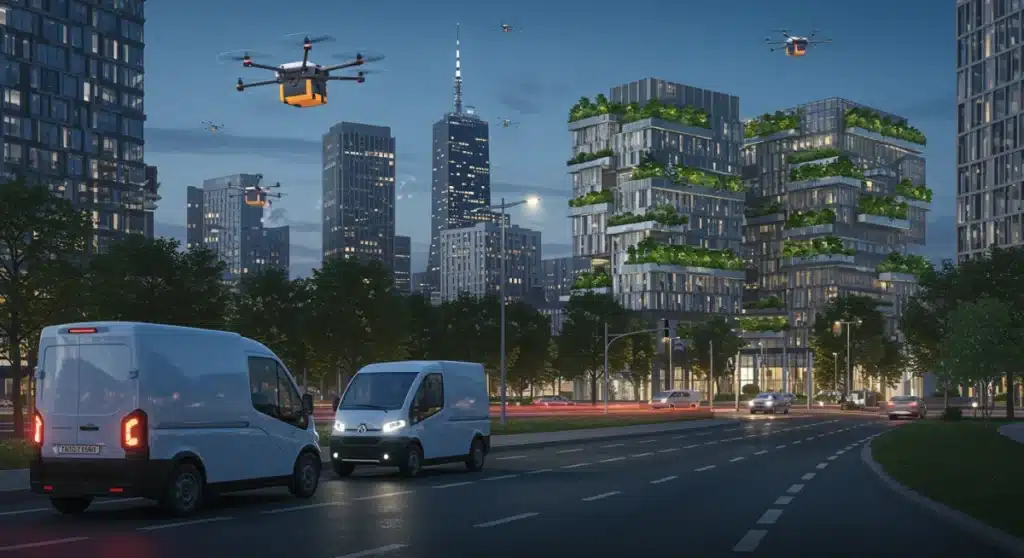
The future of sustainable urban logistics in the US is rapidly evolving, driven by technological advancements and environmental imperatives, demanding that businesses adapt to new delivery paradigms for efficiency and ecological responsibility.
As urban centers in the United States continue to grow and consumer expectations for rapid delivery intensify, the pressure on logistics operations to become both efficient and environmentally responsible has never been greater. Understanding sustainable urban logistics is no longer an option but a necessity for businesses aiming to thrive and meet evolving regulatory and consumer demands. This article delves into the five most crucial trends expected to redefine the landscape of urban delivery by 2026, providing insights for US businesses looking to stay ahead.
Electrification of last-mile delivery fleets
The push for decarbonization is fundamentally transforming how goods are transported within cities. Electric vehicles (EVs) are quickly becoming the preferred choice for last-mile delivery, offering a cleaner, quieter, and often more cost-effective solution in the long run. This shift is not merely about environmental compliance; it’s about operational resilience and public perception.
The adoption of electric vans, bikes, and even specialized electric cargo vehicles is accelerating across major US cities. Companies are investing heavily in charging infrastructure and optimizing routes to maximize the efficiency of their EV fleets. This trend is bolstered by government incentives and a growing consumer preference for brands that demonstrate environmental stewardship.
Benefits of electric fleets
- Reduced emissions: Significantly lowers carbon footprint and improves urban air quality.
- Lower operating costs: Electricity is often cheaper than gasoline, and EVs require less maintenance.
- Noise reduction: Quieter operation is beneficial for urban environments and nighttime deliveries.
- Brand reputation: Enhances a company’s image as environmentally conscious.
The transition to electric fleets presents a multifaceted challenge, including initial investment costs and range anxiety. However, advancements in battery technology and the expansion of charging networks are rapidly mitigating these hurdles, making electrification an increasingly viable and attractive option for urban logistics.
Hyperlocal micro-fulfillment centers
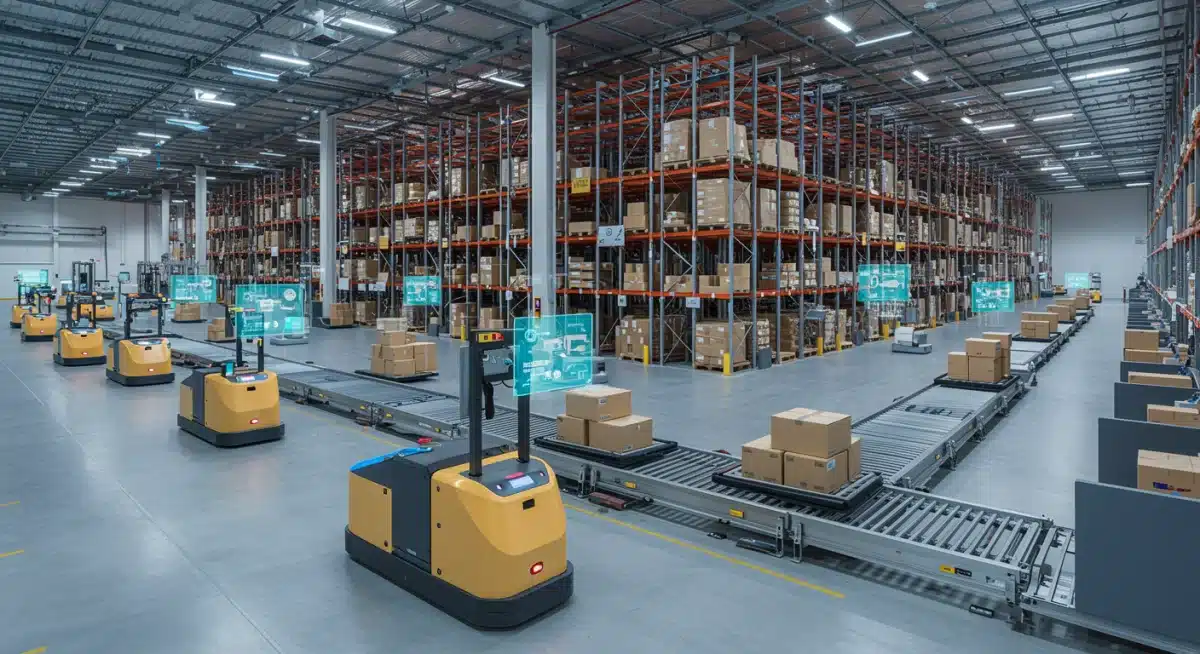
To meet the demand for same-day and even hourly delivery, businesses are strategically decentralizing their inventory closer to urban consumers. Hyperlocal micro-fulfillment centers (MFCs) are compact, automated facilities often located within existing retail spaces or repurposed urban properties. These centers drastically reduce transit times and improve delivery efficiency.
MFCs leverage automation, including robotics and AI, to quickly process orders and prepare them for last-mile delivery. This model not only speeds up delivery but also reduces the mileage covered by delivery vehicles, thereby contributing to lower emissions and less traffic congestion. It’s a critical component of a truly sustainable urban logistics strategy.
Strategic advantages of MFCs
- Faster delivery times: Enables same-day and ultra-fast delivery options.
- Reduced transportation costs: Shorter distances for last-mile delivery.
- Optimized inventory management: Better stock allocation based on local demand.
- Lower environmental impact: Less vehicle mileage and associated emissions.
The integration of MFCs into urban logistics networks requires careful planning and significant capital investment. However, the operational efficiencies and enhanced customer satisfaction they offer are proving to be a compelling return on investment for many forward-thinking businesses.
Advanced data analytics and AI for route optimization
The complexity of urban logistics, with its unpredictable traffic, diverse delivery points, and tight schedules, makes efficient route planning paramount. Advanced data analytics and artificial intelligence (AI) are revolutionizing this aspect, enabling dynamic and predictive route optimization that significantly enhances sustainability and operational performance.
AI-powered algorithms can process vast amounts of real-time data, including traffic conditions, weather forecasts, delivery windows, and vehicle capacities, to create the most efficient delivery routes. This not only saves fuel and reduces emissions but also minimizes driver hours and increases the number of successful deliveries per route.
Furthermore, predictive analytics can anticipate demand fluctuations and potential disruptions, allowing logistics managers to proactively adjust their strategies. This level of insight is crucial for maintaining agility and responsiveness in a constantly changing urban environment.
The continuous optimization of routes directly translates into a reduction in vehicle miles traveled (VMT), a key metric for environmental impact. By avoiding unnecessary detours and idling, businesses can make substantial strides towards their sustainability goals while simultaneously boosting their bottom line.
Integration of drone and robotic delivery systems
While still in their nascent stages, drone and robotic delivery systems are poised to play a significant role in the future of urban logistics, particularly for specialized or urgent deliveries. These autonomous solutions offer the potential for highly efficient and emission-free last-mile transportation, bypassing traditional traffic congestion.
Drones are being tested for air delivery of small packages, especially in areas with challenging terrain or limited road access. Ground-based delivery robots, on the other hand, are navigating sidewalks and pedestrian zones, bringing goods directly to consumers’ doorsteps. Both technologies aim to reduce reliance on conventional vehicles, offering a greener alternative.
Regulatory hurdles and public acceptance remain key challenges for widespread adoption. However, pilot programs across the US are demonstrating the feasibility and benefits of these innovative delivery methods, hinting at a future where our skies and sidewalks are shared with autonomous couriers.
Challenges and opportunities
- Regulatory frameworks: Developing clear rules for safe operation in urban areas.
- Public perception: Gaining trust and acceptance from residents.
- Infrastructure requirements: Establishing landing zones and charging stations.
- Scalability: Expanding operations to handle larger volumes of deliveries.
Despite these challenges, the long-term potential for these technologies to revolutionize last-mile delivery and contribute to sustainable urban logistics is undeniable. As technology advances and regulations adapt, we can expect to see an increasing integration of drones and robots into urban delivery networks.
Circular economy principles in packaging and returns
Sustainable urban logistics extends beyond transportation to encompass the entire lifecycle of goods, including packaging and returns. The adoption of circular economy principles is becoming increasingly important, aiming to minimize waste and maximize resource utilization within the supply chain.
This trend involves a shift towards reusable, recyclable, or biodegradable packaging materials, reducing the environmental impact associated with single-use plastics and excessive cardboard. Companies are exploring innovative packaging designs that are both protective and eco-friendly, often incorporating closed-loop systems where packaging is returned and reused.
Furthermore, efficient and sustainable reverse logistics for returns are gaining prominence. This includes optimizing routes for collecting returned items, refurbishing or recycling products, and minimizing landfill waste. A well-managed returns process is not only good for the environment but also enhances customer loyalty and reduces costs.
Key aspects of circular logistics
- Eco-friendly packaging: Utilizing materials that are reusable, recyclable, or compostable.
- Packaging take-back programs: Encouraging customers to return packaging for reuse.
- Optimized reverse logistics: Efficient collection and processing of returned goods.
- Waste reduction: Minimizing landfill waste through repair, refurbishment, and recycling.
Embracing circular economy principles in packaging and returns signifies a holistic approach to sustainable urban logistics, addressing environmental concerns at every stage of the product journey from manufacturer to consumer and back.
Collaborative logistics and shared infrastructure
The concept of collaborative logistics is gaining significant traction as businesses seek to optimize resources and reduce their environmental footprint. This involves companies sharing transportation assets, warehouse space, or even entire delivery networks to achieve greater efficiency and sustainability.
In densely populated urban areas, where space is at a premium and traffic congestion is a constant challenge, shared infrastructure can offer substantial benefits. For instance, multiple businesses might utilize a common micro-fulfillment center or share a fleet of electric delivery vehicles, reducing the number of individual trips and overall emissions.
This collaborative approach can also extend to pooling demand for freight, allowing for fuller trucks and more efficient routes. By working together, businesses can achieve economies of scale and environmental benefits that would be difficult to realize individually. This trend is particularly relevant in the US, where urban sprawl and diverse business needs often lead to fragmented logistics operations.
Advantages of collaborative models
- Reduced operational costs: Sharing resources lowers individual overheads.
- Decreased environmental impact: Fewer vehicles, less mileage, and lower emissions.
- Improved efficiency: Optimized routes and better asset utilization.
- Enhanced urban planning: Contributes to less traffic and noise pollution in cities.
While collaborative logistics requires a degree of trust and coordination among competitors, the undeniable benefits in terms of cost savings and environmental performance are driving its adoption. Platforms facilitating such partnerships are emerging, making it easier for businesses to connect and share resources for a more sustainable future.
| Key Trend | Brief Description |
|---|---|
| Electrification of Fleets | Transition to electric vehicles for last-mile delivery to reduce emissions and operating costs. |
| Micro-Fulfillment Centers | Decentralized, automated hubs closer to customers for faster, more efficient deliveries. |
| AI Route Optimization | Using advanced data and AI to create dynamic, eco-friendly delivery routes, minimizing VMT. |
| Circular Economy Logistics | Focus on reusable packaging and efficient reverse logistics to reduce waste. |
Frequently asked questions about sustainable urban logistics
Sustainable urban logistics is crucial for US businesses to reduce environmental impact, comply with stricter regulations, lower operational costs through efficiency, and meet growing consumer demand for eco-friendly practices. It also enhances brand reputation and contributes to healthier urban environments.
Micro-fulfillment centers reduce the distance goods need to travel for last-mile delivery, leading to less fuel consumption and fewer emissions. By bringing inventory closer to customers, they also decrease traffic congestion and can facilitate the use of smaller, more sustainable delivery vehicles like electric bikes.
AI optimizes delivery routes by analyzing real-time data such as traffic, weather, and delivery windows. This leads to reduced mileage, lower fuel consumption, and decreased carbon emissions. AI also helps in predictive planning, minimizing inefficiencies and enhancing overall logistical sustainability.
Yes, drones and robotic deliveries offer significant potential for sustainability. They are typically electric, producing zero direct emissions, and can bypass traffic, reducing congestion. While regulatory and operational challenges exist, their ability to perform highly efficient, targeted deliveries makes them promising for a greener future.
Businesses can implement circular economy principles by using reusable or recyclable packaging, establishing take-back programs for packaging, and optimizing reverse logistics for returns. This includes repairing, refurbishing, or recycling returned products to minimize waste and maximize resource utilization throughout the supply chain.
Conclusion
The journey towards a fully sustainable urban logistics ecosystem in the US is complex, yet the trends outlined here demonstrate a clear path forward. From the electrification of fleets and the strategic deployment of micro-fulfillment centers to the transformative power of AI, drone technology, and circular economy principles, businesses have a multitude of opportunities to innovate. Embracing these trends is not just about environmental responsibility; it’s about building resilient, efficient, and future-proof supply chains that can meet the demands of an evolving urban landscape. The businesses that proactively adapt to these changes will undoubtedly be the leaders in the sustainable urban logistics of tomorrow.