Sustainable Last-Mile Delivery US: E-Cargo Bikes & Carbon Reduction

Revolutionizing Deliveries: Sustainable Last-Mile Delivery in the US with E-Cargo Bikes
The landscape of commerce is undergoing a profound transformation, driven by an ever-increasing demand for swift and convenient delivery. In the United States, this surge in e-commerce has placed unprecedented strain on traditional logistics models, particularly in the critical final leg of the journey: the last mile. This segment, often the most expensive and environmentally impactful, has become a focal point for innovation. Businesses are now actively seeking and implementing sustainable last-mile delivery solutions, with a keen eye on reducing their environmental footprint and enhancing operational efficiency. The ambitious goal for many is a significant 20% reduction in carbon emissions by 2026, and a key player in achieving this objective is the electric cargo bike, or e-cargo bike.
The concept of sustainable last-mile delivery is not merely a buzzword; it’s an imperative for businesses striving for long-term viability and brand reputation in an increasingly eco-conscious market. Consumers are more aware than ever of the environmental impact of their purchases, and companies that demonstrate a commitment to sustainability are often rewarded with increased loyalty and market share. This article delves deep into the strategies and benefits associated with adopting sustainable last-mile delivery practices in the US, with a particular emphasis on the transformative role of e-cargo bikes.
The Growing Imperative for Sustainable Last-Mile Delivery
The last mile represents the final leg of a product’s journey from a distribution center to the customer’s doorstep. While seemingly short, this segment is disproportionately costly and inefficient. It accounts for a significant portion of total shipping costs, often due to traffic congestion, parking difficulties, and frequent stops. Furthermore, the reliance on traditional fossil-fuel-powered vehicles in urban environments contributes substantially to air pollution and greenhouse gas emissions. As urban populations continue to grow and e-commerce accelerates, these challenges are only set to intensify.
Environmental Impact of Traditional Last-Mile Delivery
Traditional delivery methods, heavily reliant on vans and trucks, are major contributors to urban air pollution. Exhaust fumes contain harmful pollutants such as nitrogen oxides (NOx), particulate matter (PM), and volatile organic compounds (VOCs), all of which have detrimental effects on public health and air quality. Beyond local pollution, these vehicles also emit significant amounts of carbon dioxide (CO2), a primary greenhouse gas responsible for climate change. Addressing these environmental concerns is paramount for creating healthier, more livable cities and mitigating the broader impacts of global warming. The push for sustainable last-mile delivery is a direct response to this urgent need.
Economic Pressures and Operational Inefficiencies
Beyond environmental considerations, businesses face considerable economic pressures in the last mile. Fuel costs, vehicle maintenance, labor expenses, and the inefficiencies caused by traffic and parking all add up. The drive for faster delivery times, often same-day or next-day, further exacerbates these challenges, pushing companies to explore more agile and cost-effective solutions. By optimizing last-mile operations through sustainable approaches, businesses can not only reduce their carbon footprint but also achieve substantial cost savings and improve overall logistical efficiency. This dual benefit makes sustainable last-mile delivery an attractive proposition for forward-thinking companies.
E-Cargo Bikes: A Game-Changer for Urban Logistics
Among the various sustainable options emerging, e-cargo bikes have rapidly gained traction as a highly effective solution for sustainable last-mile delivery in urban and suburban areas. These electric-assisted bicycles are designed to carry substantial loads, often comparable to small vans, while offering significant advantages over traditional vehicles.
What are E-Cargo Bikes?
E-cargo bikes are bicycles equipped with an electric motor that provides assistance to the rider, making it easier to transport heavy goods or navigate challenging terrain. They come in various configurations, including two-wheeled, three-wheeled, and even four-wheeled models, with cargo capacities ranging from a few hundred pounds to over 500 pounds. Their design often includes large front or rear cargo boxes, platforms, or trailers, specifically engineered for commercial use.
Key Advantages of E-Cargo Bikes for Last-Mile Delivery
- Zero Emissions: E-cargo bikes produce zero tailpipe emissions, directly contributing to improved air quality and reduced carbon footprint in urban areas. This is a cornerstone of sustainable last-mile delivery.
- Traffic Congestion Bypass: Their ability to use bicycle lanes, navigate narrow streets, and often bypass traffic jams means faster and more predictable delivery times, especially in densely populated cities.
- Lower Operating Costs: E-cargo bikes have significantly lower fuel (electricity) costs compared to gasoline-powered vehicles. Maintenance is also generally less expensive.
- Reduced Parking Hassles: Finding parking for large delivery vans in urban areas is a constant challenge. E-cargo bikes require less space and can often park closer to delivery points, saving time and reducing fines.
- Increased Agility and Flexibility: They can access areas restricted to larger vehicles, such as pedestrian zones or parks, expanding delivery reach.
- Positive Brand Image: Utilizing e-cargo bikes demonstrates a company’s commitment to environmental responsibility, enhancing its public image and appealing to eco-conscious consumers.
- Health and Wellness for Riders: While electric-assisted, riding an e-cargo bike still involves physical activity, contributing to the health and well-being of delivery personnel.
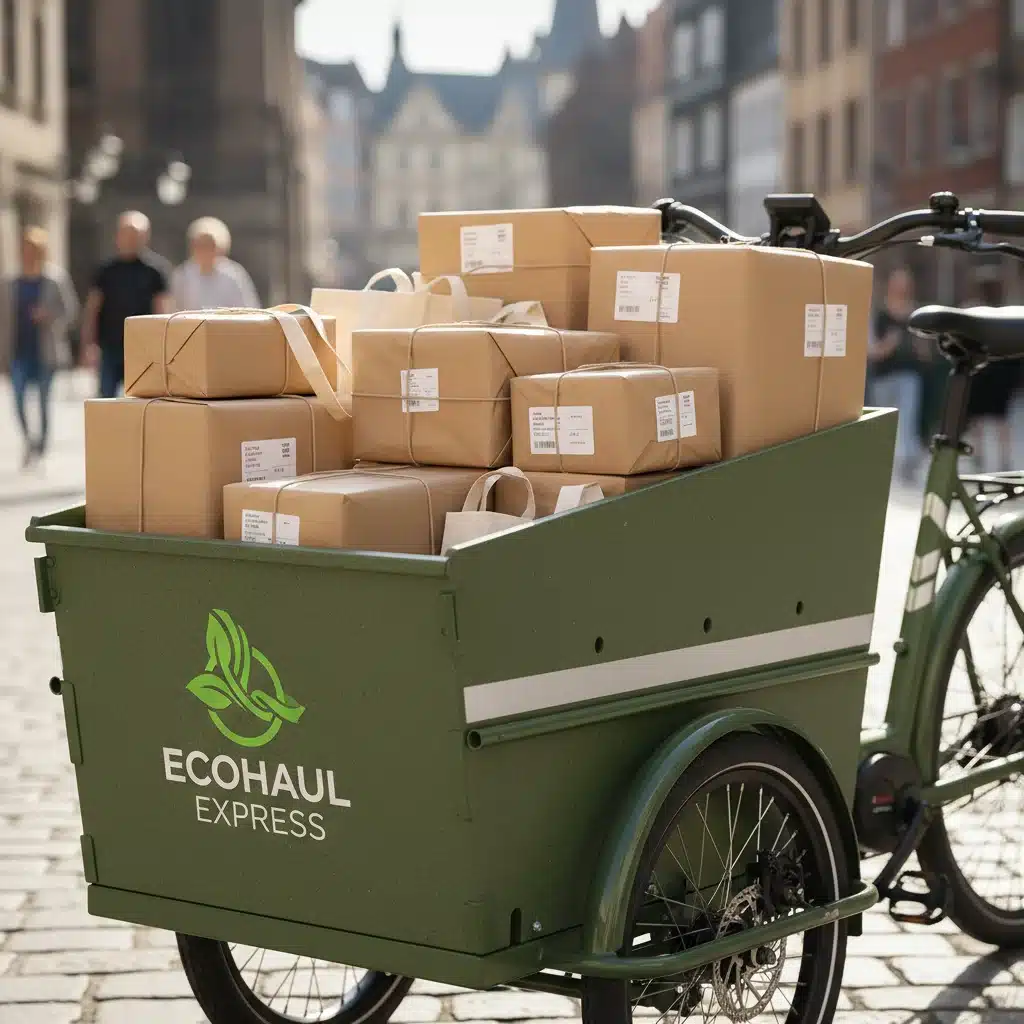
Case Studies: US Businesses Embracing E-Cargo Bikes
Across the United States, a growing number of businesses are successfully integrating e-cargo bikes into their sustainable last-mile delivery operations. These early adopters are not only seeing environmental benefits but also tangible improvements in efficiency and customer satisfaction.
Major Retailers and Food Delivery Services
Several prominent retailers and food delivery platforms have launched pilot programs and expanded their e-cargo bike fleets in major cities like New York, Portland, and San Francisco. Companies like Amazon, UPS, and FedEx have explored or implemented e-cargo bike solutions for urban deliveries, particularly for smaller packages and dense residential areas. Food delivery services, recognizing the speed and agility benefits, are also increasingly adopting e-cargo bikes for faster, fresher deliveries while reducing their carbon footprint.
Local Businesses and Specialized Services
Beyond large corporations, local businesses, from florists to pharmacies and even plumbers, are discovering the utility of e-cargo bikes. For example, a local bakery might use an e-cargo bike to deliver fresh goods to nearby cafes, reducing fuel costs and delivery times. Specialized services, such as mobile repair technicians or even librarians delivering books, are also finding e-cargo bikes to be an ideal, cost-effective, and environmentally friendly mode of transport. This widespread adoption underscores the versatility and broad applicability of e-cargo bikes in achieving sustainable last-mile delivery.
Practical Strategies for Implementation: Achieving 20% Carbon Reduction by 2026
Achieving a 20% reduction in carbon footprint by 2026 through sustainable last-mile delivery requires a strategic and multi-faceted approach. Businesses need to consider various factors, from initial investment to operational adjustments and policy advocacy.
1. Pilot Programs and Phased Rollouts
Before a full-scale transition, it’s advisable to initiate pilot programs in specific urban areas or for particular delivery types. This allows businesses to test the viability of e-cargo bikes, gather data on efficiency and cost savings, and train personnel without significant upfront risk. A phased rollout based on successful pilot results can then lead to broader adoption.
2. Infrastructure Development and Support
The success of e-cargo bike fleets is heavily reliant on adequate infrastructure. This includes:
- Charging Stations: Establishing accessible and secure charging points at distribution hubs and potentially along delivery routes.
- Secure Parking: Providing safe and secure parking facilities to prevent theft and damage to the bikes.
- Maintenance Facilities: Setting up in-house or outsourced maintenance services to keep the fleet in optimal condition.
- Dedicated Bike Lanes: Advocating for and utilizing existing dedicated bike infrastructure in cities to ensure rider safety and efficiency.
3. Route Optimization and Logistics Planning
Sophisticated route optimization software is crucial for maximizing the efficiency of e-cargo bike deliveries. These tools can account for traffic patterns, delivery windows, cargo capacity, and rider capabilities to generate the most efficient routes. Integrating e-cargo bikes into existing logistics networks requires careful planning to ensure seamless handoffs and efficient utilization of all delivery assets. This is a critical component of effective sustainable last-mile delivery.
4. Rider Training and Safety
Investing in comprehensive training for e-cargo bike riders is essential. This should cover:
- Safe Riding Practices: Emphasizing defensive riding, adherence to traffic laws, and awareness of urban hazards.
- Cargo Management: Proper loading, securing, and balancing of cargo to ensure stability and safety.
- Bike Maintenance Basics: Empowering riders to perform minor repairs and identify potential issues.
- Customer Service: Training riders to be brand ambassadors, providing excellent service at the point of delivery.
5. Policy and Regulatory Advocacy
Businesses can also play a role in advocating for policies that support sustainable last-mile delivery. This includes lobbying for:
- Incentives for E-Cargo Bike Adoption: Tax credits, subsidies, or grants for businesses investing in e-cargo bike fleets.
- Expansion of Bike Infrastructure: More dedicated bike lanes, secure parking, and urban planning that prioritizes active transport.
- Relaxation of Delivery Restrictions: Allowing e-cargo bikes access to areas where traditional vehicles are restricted.

Measuring Impact and Achieving Goals
To ensure progress towards the 20% carbon reduction goal by 2026, businesses must establish clear metrics and regularly monitor their performance. This involves tracking:
Carbon Emissions Reductions
Quantifying the reduction in CO2 and other pollutant emissions by comparing e-cargo bike operations to previous traditional delivery methods. This can be done by tracking fuel consumption saved and calculating equivalent emissions avoided.
Operational Efficiency Gains
Monitoring key performance indicators (KPIs) such as:
- Delivery Speed: Average time from dispatch to delivery.
- Delivery Success Rate: Percentage of successful first-attempt deliveries.
- Cost Savings: Reductions in fuel, maintenance, and parking costs.
- Route Density: Number of deliveries per route or per hour.
Customer Satisfaction
Gathering feedback from customers on their experience with e-cargo bike deliveries. Positive feedback can reinforce the value of sustainable last-mile delivery and strengthen brand loyalty.
The Future of Last-Mile Delivery: Beyond 2026
The trajectory towards sustainable last-mile delivery is not a temporary trend but a fundamental shift. Beyond 2026, we can expect further advancements and integration of various sustainable technologies:
Autonomous E-Cargo Bikes and Drones
While still in developmental stages, autonomous e-cargo bikes and delivery drones could complement human-operated fleets, particularly for specific types of deliveries or in less congested areas. These technologies promise even greater efficiency and reduced labor costs, further enhancing the sustainability of last-mile logistics.
Micro-Hubs and Urban Consolidation Centers
The establishment of urban micro-hubs or consolidation centers, strategically located within cities, will become increasingly important. These hubs serve as transfer points where goods are offloaded from larger vehicles and then distributed to their final destinations by e-cargo bikes or other sustainable modes. This significantly reduces the number of large, polluting vehicles entering city centers.
Integration with Public Transport and Shared Mobility
Future sustainable last-mile delivery models may see tighter integration with existing public transport networks and shared mobility services. This could involve using public transport for certain segments of a delivery or leveraging shared e-cargo bike fleets for multiple businesses.
Smarter Packaging and Reverse Logistics
Innovation in packaging design, focusing on reusability and biodegradability, will further reduce the environmental impact of deliveries. Additionally, efficient reverse logistics systems for returns and recycling will become integral to a truly sustainable supply chain.
Conclusion: Paving the Way for a Greener Tomorrow
The journey towards sustainable last-mile delivery in the US is well underway, with e-cargo bikes emerging as a powerful tool in achieving significant carbon footprint reductions. By strategically implementing these solutions, businesses can not only meet ambitious environmental targets, such as a 20% carbon reduction by 2026, but also unlock substantial operational efficiencies, cost savings, and enhanced brand reputation. The transition requires careful planning, investment in infrastructure and training, and a commitment to continuous improvement. As we look beyond 2026, the evolution of sustainable logistics will continue to shape our urban environments, creating healthier cities and a more resilient, environmentally responsible economy. Embracing these changes is not just good for the planet; it’s good for business.