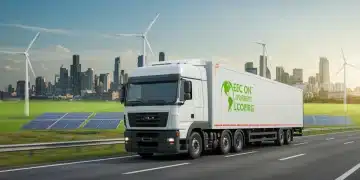
Federal Incentives: Driving Sustainable Freight in US Logistics by 2026
The Impact of New Federal Incentives on Sustainable Freight Transportation in 2026: Achieving a 10% Reduction in Emissions for US Logistics
The landscape of US logistics is on the cusp of a transformative shift, driven by a powerful combination of environmental imperatives and strategic federal policy. As the nation grapples with the urgent need to mitigate climate change, the transportation sector, a significant contributor to greenhouse gas emissions, has come under intense scrutiny. In response, the US government has unveiled a series of ambitious federal incentives designed to accelerate the adoption of sustainable freight practices, with a monumental goal: achieving a 10% reduction in emissions from US logistics by 2026. This target is not merely an aspiration; it represents a concrete commitment to fostering a greener, more efficient, and resilient supply chain. The introduction of these sustainable freight incentives marks a pivotal moment, signaling a clear direction for the industry.
For decades, the freight transportation industry has been the backbone of the American economy, facilitating the movement of goods across vast distances. However, this efficiency has often come at an environmental cost. Traditional diesel-powered trucks, ships, and trains have been major sources of air pollution and carbon emissions. Recognizing this challenge, policymakers have crafted a comprehensive suite of incentives aimed at shifting the industry towards cleaner technologies and operational methodologies. These incentives are not just about compliance; they are about fostering innovation, creating economic opportunities, and ensuring the long-term viability of US logistics in a carbon-constrained world. Understanding the nuances of these policy updates and their potential impact is crucial for businesses operating within the freight sector, from small trucking companies to large multinational corporations.
This article will delve deep into the specifics of these new federal incentives, exploring their mechanisms, the technologies they aim to promote, and the strategic adjustments businesses must consider to capitalize on these opportunities. We will examine how these policies are expected to reshape the competitive landscape, drive technological innovation, and ultimately contribute to a more sustainable future for freight transportation. The journey towards a 10% emission reduction by 2026 is ambitious, but with the right blend of policy support, industry commitment, and technological advancement, it is an achievable and necessary undertaking for the health of our planet and the prosperity of our economy.
The Mandate: A 10% Emission Reduction by 2026
The overarching objective of the new federal incentives is straightforward yet profound: to cut greenhouse gas emissions from US logistics by 10% by the year 2026. This target is not arbitrary; it is a carefully calculated step towards the nation’s broader climate goals, aligning with international efforts to combat global warming. The 2026 deadline creates a sense of urgency, compelling freight companies to act swiftly in adopting more sustainable practices. This reduction will primarily focus on carbon dioxide (CO2) emissions, but also includes other harmful pollutants associated with traditional fossil fuel combustion.
Why 10%? Understanding the Strategic Importance
A 10% reduction, while seemingly modest, represents a significant initial stride in a sector known for its heavy reliance on fossil fuels. This target is designed to be achievable within a relatively short timeframe, providing a tangible benchmark for progress and demonstrating the government’s commitment to climate action without imposing an immediate, insurmountable burden on the industry. It serves as a catalyst, encouraging early adoption of green technologies and practices that can then be scaled up for even greater reductions in the future. Moreover, achieving this goal will not only improve air quality and reduce the carbon footprint of transportation but also enhance the energy security of the nation by diversifying fuel sources and reducing dependence on volatile global oil markets.
Measuring Success: Metrics and Reporting
To ensure accountability and track progress, robust mechanisms for measuring and reporting emissions will be put in place. Companies benefiting from these sustainable freight incentives will likely be required to submit detailed data on their fuel consumption, fleet composition, and operational emissions. This data will be crucial for assessing the overall effectiveness of the policies and making necessary adjustments. The transparency fostered by such reporting will also allow for public scrutiny and encourage a race to the top among logistics providers, as consumers and businesses increasingly prioritize environmentally responsible partners.
The 10% target also serves as a strong signal to investors and technology developers, indicating a growing market for sustainable solutions in freight transportation. This can spur private sector investment in research and development, leading to even more innovative and cost-effective green technologies. The synergy between government incentives and private sector innovation is critical for achieving such ambitious environmental goals. The success of these federal policy updates will ultimately hinge on the widespread adoption of these new standards and technologies across the diverse landscape of US logistics.
Key Federal Incentives Unveiled for Sustainable Freight
The new federal incentives for sustainable freight transportation encompass a broad range of programs, each designed to address specific barriers to adoption and encourage investment in greener alternatives. These initiatives are multifaceted, targeting various aspects of the logistics ecosystem, from vehicle acquisition to infrastructure development and operational efficiency.
Tax Credits and Rebates for Zero-Emission Vehicles
One of the cornerstone incentives is the provision of substantial tax credits and rebates for the purchase and deployment of zero-emission vehicles (ZEVs), particularly electric trucks and hydrogen fuel cell vehicles. These financial incentives aim to offset the higher upfront costs associated with these advanced technologies, making them more competitive with traditional diesel vehicles. For example, companies investing in new electric heavy-duty trucks might receive a significant tax credit that can drastically reduce the total cost of ownership over the vehicle’s lifespan. This direct financial support is critical for accelerating the transition to a ZEV fleet, a key component of reducing overall emissions from freight operations. These zero-emission vehicle incentives are designed to make the green choice the economically smart choice.
Grants for Alternative Fuel Infrastructure Development
The transition to ZEVs is only possible with a robust charging and refueling infrastructure. Recognizing this, federal programs are offering grants to support the development of alternative fuel infrastructure, including electric charging stations for heavy-duty trucks and hydrogen refueling stations across major freight corridors. These grants will help alleviate range anxiety and ensure that logistics companies have the necessary support systems to operate their green fleets efficiently. Investments in infrastructure are long-term commitments that pave the way for sustained emission reductions. The availability of reliable infrastructure is a critical enabler for widespread adoption of sustainable freight technologies.
Research and Development Funding for Advanced Technologies
Innovation is at the heart of sustainable transportation. Federal funding is being directed towards research and development (R&D) initiatives focused on next-generation sustainable freight technologies. This includes advancements in battery technology, hydrogen production and storage, aerodynamic designs for trucks, and intelligent transportation systems that optimize routes and reduce fuel consumption. By investing in R&D, the government aims to foster breakthroughs that will further reduce costs, improve performance, and expand the range of sustainable options available to the industry. These R&D investments are crucial for achieving the ambitious 10% emission reduction target and setting the stage for future advancements.
Incentives for Intermodal and Multimodal Transport
Beyond individual vehicle technologies, the incentives also promote a shift towards more efficient transportation modes. Programs are being established to encourage the greater use of intermodal and multimodal transport, which combines different modes (e.g., rail and truck) to optimize efficiency and reduce emissions. For instance, incentives might be offered for companies that switch from long-haul trucking to rail for certain segments of their journey, as rail transport is generally more fuel-efficient per ton-mile. This holistic approach recognizes that achieving sustainable freight incentives requires optimizing the entire supply chain, not just individual components.
Efficiency Programs and Smart Logistics Solutions
Finally, federal programs are also supporting the adoption of smart logistics solutions and efficiency improvements. This includes incentives for technologies like advanced telematics, route optimization software, and predictive analytics that can reduce empty miles, improve load factors, and minimize idling time. These operational efficiencies, while not always involving new vehicle technologies, can significantly contribute to emission reductions and cost savings for logistics providers. The focus on efficiency underscores the comprehensive nature of these new federal incentives for logistics, aiming to optimize every aspect of freight movement.
Technological Advancements Driving the Shift in US Logistics
The ambitious goal of a 10% emission reduction in US logistics by 2026 is inextricably linked to the rapid evolution and adoption of cutting-edge technologies. These technological advancements are not only making sustainable freight possible but also increasingly economically viable. The federal incentives are strategically designed to accelerate the deployment of these innovations across the supply chain.
Electric Commercial Vehicles: The Silent Revolution
Electric commercial vehicles (ECVs), particularly heavy-duty trucks, are at the forefront of this technological revolution. Advances in battery technology have significantly increased range and reduced charging times, making ECVs a practical alternative for a growing number of freight applications. The federal incentives provide crucial support for the purchase of these vehicles, mitigating the higher initial investment. Companies like Tesla Semi, Volvo, Daimler, and Nikola are pushing the boundaries of what’s possible, with their electric trucks offering not only zero tailpipe emissions but also lower operating costs due to reduced fuel and maintenance expenses. The expansion of charging infrastructure, supported by federal grants, is further solidifying the feasibility of widespread ECV adoption, directly contributing to the emission reduction goals.
Hydrogen Fuel Cell Technology: A Long-Haul Solution
For longer-haul freight routes where battery electric vehicles might face range limitations, hydrogen fuel cell technology offers a compelling solution. Fuel cell electric vehicles (FCEVs) combine hydrogen and oxygen to produce electricity, with water as the only byproduct. This offers rapid refueling times and extended ranges comparable to traditional diesel trucks, without any emissions. Federal R&D funding is accelerating advancements in hydrogen production (especially green hydrogen produced from renewable energy) and the development of a robust refueling network. This dual approach with both battery electric and hydrogen fuel cell technologies ensures that the freight industry has diverse options to meet its varied operational needs, all contributing to sustainable freight transportation.
Advanced Aerodynamics and Lightweight Materials
Beyond powertrain technologies, innovations in vehicle design are also playing a significant role. Advanced aerodynamics, such as trailer skirts, boat tails, and optimized cab designs, can significantly reduce drag and improve fuel efficiency for both traditional and electric trucks. Similarly, the use of lightweight materials like aluminum alloys and carbon fiber composites reduces the overall weight of vehicles, allowing for larger payloads or further fuel savings. While these improvements might seem incremental individually, their cumulative effect across a large fleet can lead to substantial emission reductions, supporting the broader objective of sustainable logistics by 2026.
Smart Logistics and AI-Powered Optimization
The digital revolution is also transforming freight operations. Artificial intelligence (AI) and machine learning are being leveraged to optimize everything from route planning and load consolidation to predictive maintenance. AI-powered algorithms can analyze real-time traffic data, weather conditions, and delivery schedules to identify the most fuel-efficient routes, minimizing mileage and idling time. Predictive analytics can anticipate equipment failures, allowing for proactive maintenance that prevents breakdowns and ensures optimal vehicle performance. These smart logistics solutions contribute not only to emission reductions but also to increased operational efficiency and cost savings, making them attractive investments for companies committed to green supply chain practices.
Intermodal Innovations and Port Electrification
The push for sustainability extends beyond road transport to other modes of freight. Innovations in intermodal transport, such as automated cargo handling systems and electric port equipment, are making the transfer of goods between ships, trains, and trucks more efficient and less polluting. Electrification of port cranes, yard trucks, and other terminal equipment significantly reduces emissions in these critical logistics hubs. These comprehensive technological advancements are essential for achieving the ambitious 10% emission reduction target and ensuring a holistic approach to sustainable freight incentives.
Strategic Adjustments for Logistics Providers
The new federal incentives and the ambitious 10% emission reduction target by 2026 necessitate significant strategic adjustments for logistics providers across the United States. Companies that proactively adapt to these changes will not only comply with new regulations but also gain a competitive edge in a rapidly evolving market. This requires a comprehensive approach, touching upon fleet management, operational planning, and workforce development.
Fleet Electrification and Diversification
The most direct strategic adjustment involves accelerating fleet electrification. Logistics companies must develop a clear roadmap for transitioning their diesel-powered vehicles to electric or hydrogen fuel cell alternatives. This includes conducting thorough cost-benefit analyses, taking into account federal incentives, lower operating costs, and potential for higher resale values of ZEVs. Diversification of the fleet, incorporating a mix of battery electric for shorter hauls and hydrogen FCEVs for longer distances, will be crucial. This strategy requires significant capital investment, but the federal incentives are designed to make this transition more financially palatable. Early adopters of electric truck fleets will be well-positioned for the future.
Investing in Charging and Refueling Infrastructure
Beyond vehicle acquisition, logistics providers must also invest in their own charging and refueling infrastructure, or strategically partner with third-party providers. This involves assessing current depot capabilities, planning for future energy needs, and leveraging federal grants for infrastructure development. For large fleets, establishing dedicated electric charging hubs or hydrogen refueling stations will be essential to maintain operational efficiency and minimize downtime. The availability of reliable and accessible infrastructure is a bottleneck that early planning can mitigate, ensuring smooth operations for sustainable freight operations.
Optimizing Routes and Load Efficiency
Even with advanced ZEVs, operational efficiency remains paramount. Companies must leverage advanced telematics, AI-powered route optimization software, and real-time data analytics to minimize empty miles, improve load factors, and reduce idling. This means moving away from traditional, static route planning to dynamic, data-driven approaches that adapt to changing conditions. Consolidating shipments, utilizing backhaul opportunities, and collaborating with other logistics providers can further enhance efficiency and reduce overall fuel consumption, thereby contributing significantly to the emission reduction goals.
Embracing Intermodal and Multimodal Solutions
A strategic shift towards greater utilization of intermodal and multimodal transport is another key adjustment. For certain routes and cargo types, combining rail, sea, and road transport can be more environmentally friendly and cost-effective than relying solely on long-haul trucking. Logistics providers should re-evaluate their supply chain networks to identify opportunities for intermodal integration, leveraging federal incentives designed to promote these transitions. This requires collaboration with rail and port operators and a willingness to rethink traditional logistics paradigms, ultimately leading to more efficient supply chains.
Workforce Training and Development
The transition to sustainable freight also necessitates significant investment in workforce training. Drivers will need to be trained on operating electric and hydrogen fuel cell vehicles, while mechanics will require new skills to maintain and repair these advanced systems. Companies must proactively develop training programs or partner with educational institutions to ensure their workforce is equipped for the future of logistics. This human capital investment is critical for the successful implementation of new technologies and maintaining high operational standards, bolstering the overall effectiveness of sustainable freight incentives.
Data-Driven Decision Making and ESG Reporting
Finally, logistics providers must embrace data-driven decision-making and prepare for enhanced environmental, social, and governance (ESG) reporting. Tracking emissions, fuel consumption, and the impact of sustainability initiatives will not only be a regulatory requirement but also a crucial tool for demonstrating commitment to sustainability to clients and investors. Companies that can transparently report on their environmental performance will build trust and enhance their brand reputation in a market increasingly valuing environmental sustainability.
Challenges and Opportunities on the Road to 2026
While the new federal incentives present a clear path towards a more sustainable future for US logistics, the journey to a 10% emission reduction by 2026 is not without its challenges. However, these challenges also unveil significant opportunities for innovation, growth, and competitive differentiation within the industry.
Navigating the Challenges
One of the primary challenges is the initial capital investment required for fleet electrification and infrastructure development. Despite federal incentives, the upfront cost of electric trucks and charging stations can still be substantial, especially for smaller carriers. Supply chain constraints for batteries and other critical components could also impact the pace of adoption. Furthermore, the availability of skilled labor to maintain and operate these new technologies is a growing concern. The transition also requires a significant shift in operational planning, including managing charging schedules, optimizing routes for charging availability, and dealing with potential range limitations in certain applications. The scalability of renewable energy sources to power the expanded electric fleet is another long-term consideration. Addressing these freight challenges requires a concerted effort from all stakeholders.
Seizing the Opportunities
Despite the hurdles, the opportunities presented by these sustainable freight incentives are immense. Early adopters who invest in green technologies and practices can gain a significant competitive advantage. Many shippers are increasingly prioritizing logistics partners with strong environmental credentials, leading to new business opportunities and stronger client relationships. Reduced operating costs, driven by lower fuel and maintenance expenses for ZEVs, offer long-term financial benefits. Companies can also leverage these initiatives to enhance their brand image, attract top talent, and meet evolving stakeholder expectations for corporate social responsibility. The development of new business models, such as ‘as-a-service’ offerings for charging infrastructure or fleet management, could also emerge. Moreover, the focus on efficiency and optimization naturally leads to more streamlined and resilient supply chains, a benefit that extends beyond environmental impact. The drive towards emission reduction by 2026 is not just an environmental imperative but also an economic opportunity.
The Future of US Logistics: Beyond 2026
The 10% emission reduction target for US logistics by 2026 is merely a stepping stone towards a much broader vision of a fully sustainable freight transportation system. The federal incentives, while currently focused on this near-term goal, are laying the groundwork for continuous improvement and deeper decarbonization in the decades to come. The policies enacted today will have ripple effects, shaping the industry’s trajectory for years, if not decades.
Continuous Innovation and Policy Evolution
Beyond 2026, we can anticipate a continued emphasis on innovation. Federal R&D funding will likely shift to even more advanced technologies, such as autonomous electric trucks, advanced biofuels, and potentially even new forms of propulsion. Policy will also evolve, with future incentives potentially targeting higher emission reduction percentages, mandating certain ZEV adoption rates, or introducing carbon pricing mechanisms. The regulatory framework will adapt as technology matures and the industry gains more experience with sustainable practices. This iterative process of policy and technological advancement is crucial for achieving long-term sustainable freight goals.
Integrated Sustainable Supply Chains
The future of US logistics will see increasingly integrated and sustainable supply chains. This means not just greening individual transport modes, but optimizing the entire flow of goods from source to consumer with sustainability in mind. This includes sustainable packaging, localized production, circular economy principles, and highly efficient warehousing powered by renewable energy. The focus will be on holistic solutions that minimize environmental impact at every stage, creating a truly green logistics future. The incentives introduced now are catalyzing this broader transformation.
Global Leadership in Green Logistics
By aggressively pursuing emission reductions in freight, the US has the opportunity to establish itself as a global leader in green logistics. The experience gained and technologies developed through these initiatives can be exported, influencing international standards and practices. This not only benefits the environment but also strengthens the US economy through the creation of new industries and jobs in the sustainable technology sector. The success of the 2026 target will serve as a powerful testament to the nation’s commitment to environmental stewardship and economic innovation.
The new federal incentives for sustainable freight incentives are more than just financial inducements; they are a strategic investment in the future of US logistics and the planet. Achieving a 10% emission reduction by 2026 is an ambitious but attainable goal that will require concerted effort from government, industry, and technology developers. By embracing these changes, logistics providers can not only contribute to a healthier environment but also build more resilient, efficient, and profitable businesses for the long term. The road ahead is challenging, but the destination—a sustainable and thriving US logistics sector—is well worth the journey.