Top 5 Supply Chain Technologies for US Freight in 2026: Boosting Efficiency
The landscape of US freight and logistics is undergoing a profound transformation, driven by an accelerating pace of technological innovation. As we approach 2026, businesses are not just seeking incremental improvements but rather revolutionary shifts that promise unprecedented levels of efficiency, transparency, and resilience. The complexities of global trade, coupled with consumer demands for faster and more reliable deliveries, necessitate a proactive embrace of cutting-edge supply chain technologies. This article delves into the five key supply chain technologies that are poised to reshape US freight operations, offering practical solutions for the challenges of tomorrow.
From the intricate dance of artificial intelligence optimizing routes to the immutable ledgers of blockchain securing transactions, these technologies are not merely trends; they are foundational pillars for a more robust and responsive supply chain. Understanding and strategically implementing these innovations will be paramount for any enterprise aiming to maintain a competitive edge and navigate the ever-evolving demands of the market.
1. Artificial Intelligence (AI) and Machine Learning (ML) in Supply Chain Optimization
Artificial Intelligence (AI) and Machine Learning (ML) are not new concepts, but their application within the supply chain, particularly in US freight, is reaching unprecedented levels of sophistication. These technologies are moving beyond simple automation to enable predictive analytics, intelligent decision-making, and dynamic optimization across the entire logistics network. The impact of AI and ML on supply chain technologies is truly transformative.
Predictive Analytics for Demand Forecasting
One of the most significant contributions of AI and ML to freight logistics is their ability to enhance demand forecasting. Traditional forecasting methods often rely on historical data and can struggle with volatility and unforeseen events. AI algorithms, however, can process vast datasets from various sources – including economic indicators, social media trends, weather patterns, and even competitor activity – to identify complex patterns and make highly accurate predictions. This allows businesses to anticipate demand with greater precision, optimizing inventory levels and reducing the risk of stockouts or overstock. For US freight, this means fewer expedited shipments, better utilization of truckload capacities, and ultimately, lower transportation costs.
Optimized Route Planning and Fleet Management
AI-powered route optimization software takes into account a multitude of variables that human planners simply cannot process simultaneously. These include real-time traffic conditions, weather forecasts, road closures, driver availability, vehicle capacity, delivery windows, and even fuel prices. ML algorithms continuously learn from past performance, refining routes and schedules to minimize transit times, reduce fuel consumption, and maximize delivery efficiency. For large US freight carriers, this translates into substantial operational savings and improved service levels. Furthermore, AI can assist in proactive fleet maintenance by predicting potential equipment failures, thus minimizing costly downtime and ensuring the smooth flow of goods.
Automated Warehousing and Inventory Management
Within warehouses and distribution centers, AI and ML are driving advancements in automation. Robotic process automation (RPA) handles repetitive tasks, while AI-powered vision systems improve picking accuracy and speed. ML algorithms analyze inventory movement patterns to optimize storage layouts, slotting strategies, and order fulfillment processes. This not only increases throughput but also reduces labor costs and errors. The integration of AI with warehouse management systems (WMS) allows for a more dynamic and responsive inventory system, crucial for managing the diverse and often rapidly changing product lines common in US freight.
Risk Management and Anomaly Detection
The US freight industry is susceptible to various risks, from natural disasters to geopolitical events and cyber threats. AI and ML can play a crucial role in identifying potential disruptions before they escalate. By continuously monitoring external data sources and internal operational metrics, AI systems can detect anomalies and predict potential supply chain vulnerabilities. This enables businesses to implement contingency plans proactively, reroute shipments, or adjust production schedules, thereby enhancing the resilience of the entire supply chain. This predictive capability is a game-changer for maintaining continuity in complex freight operations.
2. Internet of Things (IoT) for Real-time Visibility and Tracking
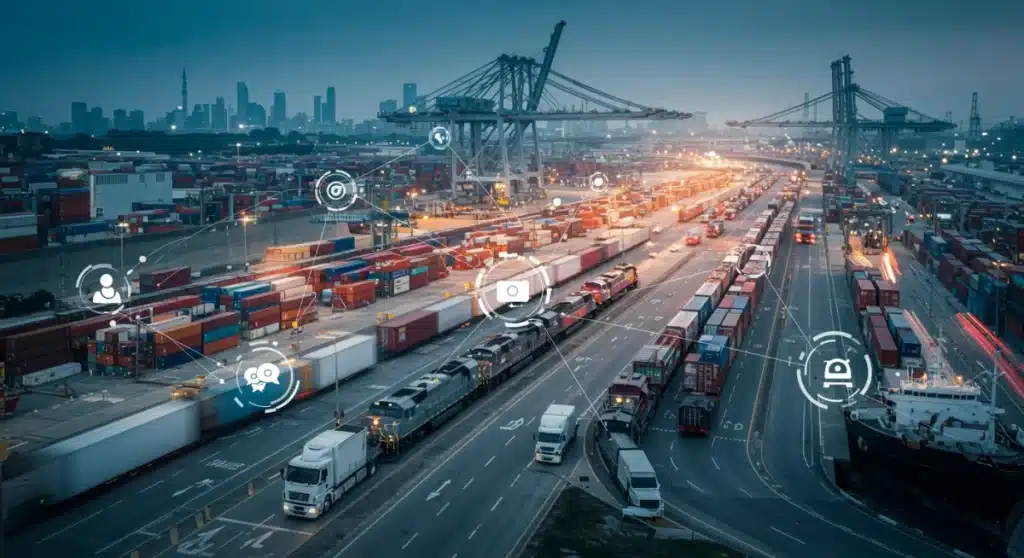
The Internet of Things (IoT) is revolutionizing supply chain visibility by providing real-time data on the location, condition, and environment of goods in transit. For US freight, where goods traverse vast distances and multiple modes of transportation, IoT sensors are becoming indispensable. These supply chain technologies offer an unprecedented level of insight into every stage of the journey.
Enhanced Asset Tracking and Location Services
IoT devices, such as GPS trackers and RFID tags, allow for precise, real-time tracking of individual packages, pallets, containers, and vehicles. This eliminates blind spots in the supply chain, enabling businesses to know exactly where their freight is at any given moment. For high-value or time-sensitive shipments, this level of visibility is critical. It also provides customers with accurate estimated times of arrival (ETAs), improving customer satisfaction and reducing inquiries. In the event of delays or diversions, businesses can react swiftly, minimizing potential disruptions.
Condition Monitoring for Perishable and Sensitive Goods
Beyond location, IoT sensors can monitor a range of environmental conditions critical for sensitive freight. Temperature, humidity, light exposure, shock, and vibration sensors can be attached to packages or integrated into containers. This is particularly vital for the transportation of pharmaceuticals, fresh produce, and delicate electronics. If conditions deviate from predefined thresholds, alerts are triggered, allowing for immediate intervention. This proactive monitoring helps prevent spoilage, damage, and ensures product quality upon arrival, a significant advantage for US freight companies handling diverse cargo.
Optimized Fleet Utilization and Maintenance
IoT sensors integrated into vehicles provide a wealth of data on engine performance, fuel consumption, tire pressure, and driver behavior. This data can be analyzed to optimize fleet utilization, identify inefficiencies, and schedule preventive maintenance more effectively. By predicting when a vehicle might need servicing, companies can avoid costly breakdowns and extend the lifespan of their assets. This contributes directly to the operational efficiency and cost-effectiveness of US freight operations.
Warehouse and Yard Management
Within warehouses and freight yards, IoT sensors can track the movement of equipment, personnel, and inventory. This helps optimize layout, reduce search times, and improve safety. Automated gates and smart docks equipped with IoT can streamline the loading and unloading process, reducing turnaround times for trucks. The data collected by these sensors provides valuable insights for continuous process improvement within the logistics infrastructure. These supply chain technologies are transforming the physical spaces of freight.
3. Blockchain for Enhanced Transparency and Security
Blockchain technology, often associated with cryptocurrencies, offers a decentralized, immutable ledger system that holds immense potential for transforming the transparency and security of US freight operations. Its inherent characteristics make it ideal for creating trustworthy and verifiable records across a complex supply chain, addressing common pain points related to trust and data integrity. Among the emerging supply chain technologies, blockchain stands out for its security features.
Immutable and Transparent Transaction Records
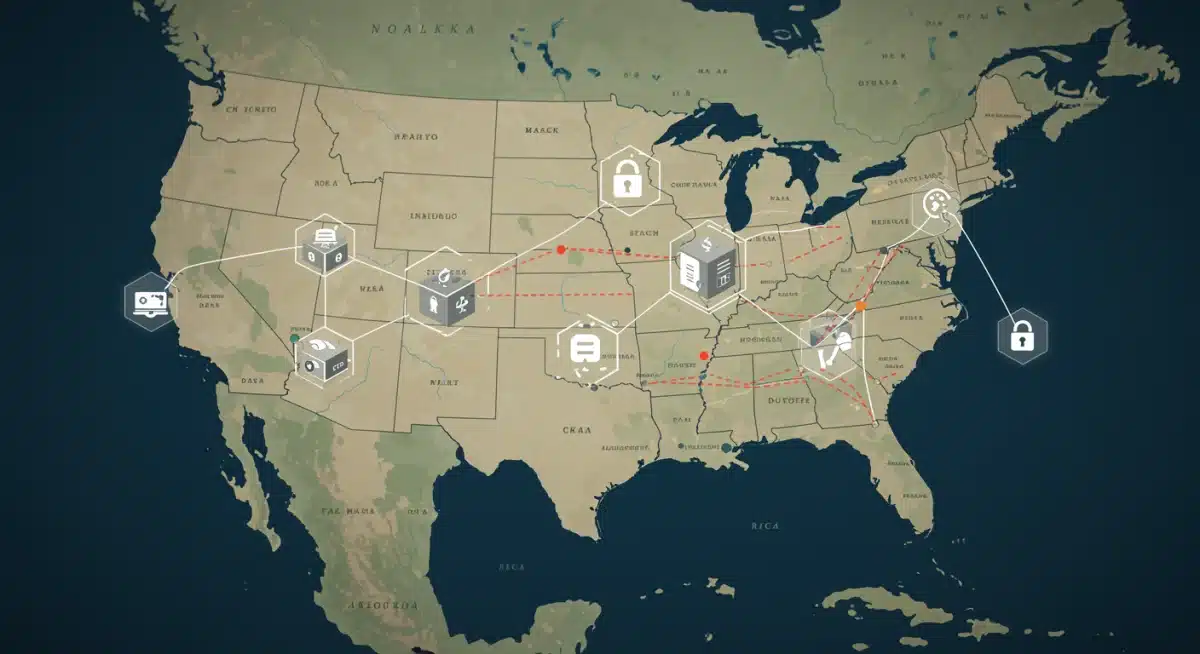
Every transaction, movement, or event recorded on a blockchain is time-stamped and cryptographically linked to the previous one, forming an unalterable chain. This means that once data is entered, it cannot be changed or deleted, providing an unprecedented level of transparency and trust. For US freight, this can include recording each handover of goods, customs clearances, quality checks, and payment milestones. All authorized parties in the supply chain – shippers, carriers, customs, and receivers – can access the same, single source of truth, reducing disputes and streamlining communication.
Streamlined Documentation and Reduced Fraud
The freight industry is notoriously paper-intensive, leading to delays, errors, and opportunities for fraud. Blockchain can digitize and secure critical documents such as bills of lading, customs declarations, and certificates of origin. Smart contracts, self-executing agreements stored on the blockchain, can automate payments upon successful delivery or completion of specific conditions, significantly reducing administrative overhead and the risk of payment delays or non-payment. This level of automation and security is a game-changer for the efficiency of US freight.
Enhanced Traceability and Authenticity
For goods where authenticity and origin are paramount – such as luxury items, pharmaceuticals, or organic produce – blockchain provides an irrefutable record of their journey from source to destination. Consumers and businesses can trace products back through every stage of the supply chain, verifying their provenance and ensuring compliance with regulations. This not only builds consumer trust but also helps combat counterfeiting, a significant issue in many industries that rely on US freight networks.
Improved Trust and Collaboration Among Stakeholders
The fragmented nature of the US freight industry often leads to a lack of trust among various participants. Blockchain fosters a more collaborative environment by providing a shared, secure, and transparent platform for data exchange. This can lead to more efficient partnerships, faster problem resolution, and a reduction in the need for intermediaries, ultimately lowering costs and improving overall supply chain performance. The adoption of these supply chain technologies will strengthen industry relationships.
4. Robotics and Automation for Labor Efficiency
The integration of robotics and automation is rapidly transforming warehouses, distribution centers, and even last-mile delivery within the US freight sector. Faced with labor shortages, rising wages, and the need for faster fulfillment, businesses are increasingly turning to automated solutions to enhance labor efficiency, improve accuracy, and accelerate operational processes. These supply chain technologies are redefining the physical handling of goods.
Automated Guided Vehicles (AGVs) and Autonomous Mobile Robots (AMRs)
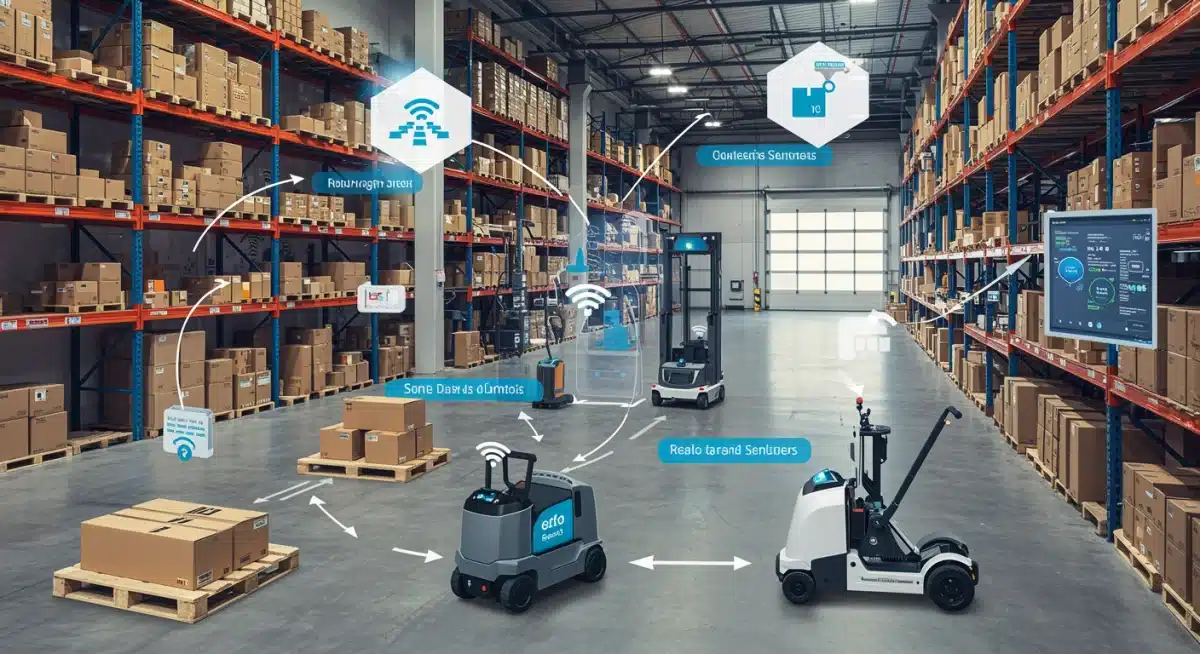
AGVs and AMRs are becoming commonplace in modern warehouses. AGVs follow predefined paths, transporting goods between different areas, while more advanced AMRs navigate dynamically, avoiding obstacles and optimizing their routes in real-time. These robots can handle tasks such as pallet movement, order picking, and sorting, significantly reducing the manual labor required and increasing throughput. This is particularly valuable in large-scale US freight operations where high volumes of goods need to be moved efficiently.
Automated Storage and Retrieval Systems (AS/RS)
AS/RS solutions utilize robots and specialized equipment to automatically place and retrieve items from storage locations. These systems maximize storage density by using vertical space more effectively and can operate 24/7, dramatically increasing the speed and accuracy of inventory management. For e-commerce fulfillment, where rapid picking and packing are essential, AS/RS is a critical component for maintaining competitive delivery times within the US freight market.
Robotic Process Automation (RPA) for Administrative Tasks
Beyond physical robots, Robotic Process Automation (RPA) focuses on automating repetitive, rule-based administrative tasks. In freight logistics, this can include data entry, invoice processing, order tracking updates, and communication with suppliers or customers. RPA bots can perform these tasks faster and with fewer errors than humans, freeing up staff to focus on more complex, value-added activities. This administrative efficiency directly supports the physical movement of US freight.
Drone Technology for Inventory and Inspections
While still emerging, drones are finding niche applications in freight logistics. They can be used for rapid inventory counting in large warehouses, performing visual inspections of high shelves or hard-to-reach areas, and even for security surveillance. In some cases, drones are being piloted for last-mile delivery in remote or less densely populated areas, potentially offering a new avenue for efficient package delivery in the US freight landscape.
5. Advanced Analytics and Big Data for Strategic Insights
The proliferation of digital supply chain technologies generates an immense volume of data – from IoT sensors, TMS, WMS, and ERP systems. Advanced analytics and big data capabilities are essential for transforming this raw data into actionable insights, enabling businesses to make more informed strategic and operational decisions across the US freight network. This is where the true power of data-driven logistics lies.
Real-time Performance Monitoring and Dashboards
Advanced analytics platforms aggregate data from various sources to provide real-time dashboards and reports on key performance indicators (KPIs). This allows logistics managers to monitor freight movements, inventory levels, delivery performance, and operational costs at a glance. Early detection of deviations from planned performance enables prompt corrective action, preventing minor issues from escalating into major disruptions. This proactive approach is vital for maintaining efficiency in the dynamic US freight environment.
Root Cause Analysis and Problem Solving
When problems arise – such as delivery delays, damaged goods, or unexpected cost increases – advanced analytics can quickly pinpoint the root causes. By correlating data from multiple systems, businesses can identify patterns and underlying issues that might otherwise remain hidden. This deep dive into operational data facilitates effective problem-solving and continuous process improvement, leading to more resilient and efficient US freight operations over time.
Strategic Network Design and Optimization
Big data analytics can be used to model and simulate different supply chain scenarios, helping businesses optimize their network design. This includes determining the ideal locations for warehouses and distribution centers, optimizing transportation lanes, and assessing the impact of various strategies on costs and service levels. For US freight, where geographical spread is vast, strategic network planning based on data-driven insights can yield significant competitive advantages.
Supplier Performance Management
By analyzing data related to supplier delivery times, quality, compliance, and responsiveness, businesses can gain a comprehensive understanding of their supplier performance. This enables them to make informed decisions about supplier selection, negotiation, and relationship management. A robust supplier network is crucial for the stability and efficiency of any US freight operation, and advanced analytics provides the tools to build and maintain it.
Customer Behavior Analysis and Personalization
While often associated with marketing, analyzing customer behavior data can significantly impact freight logistics. Understanding customer preferences for delivery speed, tracking information, and communication channels allows businesses to tailor their logistics services accordingly. This can lead to increased customer satisfaction and loyalty, a critical differentiator in the competitive US freight market. The insights derived from these supply chain technologies empower businesses to cater to evolving customer needs.
Integrating the Technologies for Maximum Impact
While each of these supply chain technologies offers distinct advantages, their true power is unleashed when they are integrated into a cohesive ecosystem. For instance, IoT sensors collect real-time data, which is then fed into AI/ML algorithms for predictive analysis and optimization. Blockchain secures these data transactions and ensures their integrity, while robotics and automation execute the physical tasks based on the insights derived. Advanced analytics provides the overarching intelligence to monitor, evaluate, and continuously improve the entire integrated system.
The journey towards a fully optimized and technologically advanced US freight supply chain is not without its challenges. Companies must address issues such as data interoperability, cybersecurity, the need for skilled talent, and the significant initial investment required. However, the benefits – including substantial cost savings, improved operational efficiency, enhanced customer satisfaction, and greater resilience against disruptions – far outweigh these hurdles.
The Future of US Freight: A Technologically Driven Horizon
As we look towards 2026 and beyond, the US freight industry will be characterized by hyper-connectivity, real-time intelligence, and unparalleled automation. Businesses that proactively invest in and strategically implement these five key supply chain technologies – Artificial Intelligence, Internet of Things, Blockchain, Robotics and Automation, and Advanced Analytics – will be best positioned to thrive in this evolving landscape. They will not only meet the demands of a dynamic market but also set new benchmarks for efficiency, transparency, and reliability in logistics. The future of US freight is digital, intelligent, and highly integrated, offering immense opportunities for those willing to embrace the technological revolution.
The synergy between these innovations will create a self-optimizing, self-correcting supply chain that can respond to disruptions with agility and deliver goods with unprecedented precision. For businesses operating within or relying on the US freight network, understanding and adopting these supply chain technologies is no longer an option but a strategic imperative for sustained success.
The path forward involves a continuous evaluation of emerging technologies, a commitment to digital transformation, and a willingness to foster collaboration across the entire supply chain ecosystem. By embracing these advancements, US freight can not only overcome current challenges but also unlock new possibilities, driving economic growth and delivering superior value to customers nationwide.