Supply Chain Resilience Updates Q1 2025: US Operations

Q1 2025 supply chain resilience updates emphasize leveraging advanced analytics and diversified sourcing to fortify US operations against unforeseen disruptions, ensuring continuous flow and competitive advantage.
The landscape of global commerce is perpetually shifting, presenting both challenges and opportunities for businesses operating within the United States. As we move into Q1 2025, understanding supply chain resilience updates is paramount for safeguarding US operations from the myriad of potential disruptions, ranging from geopolitical tensions to natural disasters and cyber threats. This article delves into the critical strategies and insights necessary to navigate this complex environment.
Understanding the Current State of Supply Chain Resilience
The past few years have undeniably reshaped our perception of supply chains, transforming them from often-overlooked operational components into strategic imperatives. Businesses have learned harsh lessons about the vulnerabilities inherent in lean, cost-optimized models. As a result, the focus has dramatically shifted towards building robust, adaptable, and resilient supply chain networks. This evolution isn’t merely about reacting to crises; it’s about proactively designing systems that can withstand and recover from shocks.
The current state of supply chain resilience in Q1 2025 reflects a blend of heightened awareness and ongoing implementation efforts. Many US companies are still in various stages of maturity when it comes to their resilience strategies. While some have made significant strides, others are grappling with the complexities of integrating new technologies and fostering a culture of adaptability. The challenge lies not just in identifying risks but in developing actionable frameworks that translate into tangible protective measures for operations.
Key Resilience Drivers in Q1 2025
Several factors are driving the urgency for enhanced supply chain resilience. Geopolitical instability continues to be a major concern, with trade policies and international relations directly impacting sourcing and distribution. Climate change also presents increasingly frequent and severe weather events, disrupting logistics hubs and transportation routes. Furthermore, the rapid pace of technological change introduces both opportunities for improvement and new vectors for risk, particularly in cybersecurity.
- Geopolitical Volatility: Shifting trade alliances and conflicts demand agile sourcing and market diversification.
- Climate Change Impacts: Increased frequency of extreme weather events requires robust contingency planning.
- Technological Advancements: While offering solutions, new tech also introduces complex cyber risks.
- Consumer Expectations: Demand for faster, more transparent, and ethical supply chains puts pressure on businesses.
Ultimately, a resilient supply chain in this era is one that can not only absorb disruptions but also transform them into opportunities for innovation and competitive advantage. It requires a holistic view, moving beyond simple risk mitigation to encompass strategic foresight and continuous improvement.
Strategy 1: Advanced Data Analytics and AI for Predictive Insights
One of the most transformative strategies for enhancing supply chain resilience in Q1 2025 is the judicious application of advanced data analytics and artificial intelligence (AI). In an increasingly data-rich world, the ability to collect, process, and interpret vast amounts of information in real-time is no longer a luxury but a necessity. These technologies provide unparalleled visibility into the entire supply chain, enabling businesses to move from reactive problem-solving to proactive risk management and predictive optimization.
Advanced analytics allows companies to identify patterns, forecast demand with greater accuracy, and pinpoint potential bottlenecks or disruptions before they materialize. By analyzing historical data alongside real-time feeds from various sources—such as weather patterns, geopolitical news, supplier performance, and market trends—AI algorithms can generate predictive insights that inform strategic decisions. This foresight is critical for US operations, allowing them to pre-emptively adjust inventory levels, reroute shipments, or even activate alternative suppliers.
Implementing AI-Powered Risk Sensing
Effective implementation of AI for predictive insights involves more than just purchasing software; it requires a strategic approach to data integration and model development. Companies must ensure their data infrastructure is robust enough to handle the volume and velocity of information. Furthermore, investing in data scientists and AI specialists, or partnering with external experts, becomes crucial for developing and maintaining sophisticated predictive models tailored to specific supply chain needs.
- Real-time Monitoring: AI systems can continuously scan global events, news, and social media for early warning signs of disruption.
- Demand Forecasting: Machine learning algorithms improve forecast accuracy, reducing overstocking and stockouts.
- Supplier Risk Assessment: AI can analyze supplier performance, financial stability, and geopolitical exposure to identify high-risk partners.
- Route Optimization: Dynamic routing algorithms can adapt to real-time traffic, weather, and geopolitical conditions to maintain delivery schedules.
The integration of AI also extends to simulating various disruption scenarios, allowing companies to test their resilience strategies in a virtual environment. This ‘what-if’ analysis helps refine contingency plans and optimize resource allocation, ensuring that when a real disruption occurs, the response is swift and effective. The ultimate goal is to create an intelligent supply chain that can literally think ahead, minimizing the impact of unforeseen events on US operations.
Strategy 2: Diversified Sourcing and Nearshoring/Reshoring Initiatives
The vulnerabilities exposed by over-reliance on single-source suppliers or geographically concentrated manufacturing hubs have made diversified sourcing a cornerstone of modern supply chain resilience. For US operations, this strategy is particularly vital, as it reduces exposure to localized disruptions, trade disputes, and geopolitical risks. Diversification isn’t just about having multiple suppliers; it’s about strategically spreading risk across different regions, countries, and even types of suppliers.
Nearshoring and reshoring initiatives are gaining significant traction as integral components of this diversification strategy. Nearshoring involves relocating production or sourcing to closer geographical regions, often within North America for US companies. This reduces transit times, simplifies logistics, and often aligns with more stable regulatory environments. Reshoring, on the other hand, brings production back to the United States, offering benefits such as enhanced control over quality, reduced lead times, and strengthened domestic economic stability.
While these strategies may sometimes involve higher initial costs compared to traditional offshore models, the long-term benefits in terms of reduced risk, increased agility, and improved responsiveness often outweigh these considerations. The ability to pivot quickly in response to disruptions can save millions in lost revenue and reputational damage.
Benefits of Nearshoring and Reshoring
The decision to nearshore or reshore is complex, involving careful analysis of costs, labor availability, infrastructure, and regulatory frameworks. However, the strategic advantages for US operations are increasingly clear. Beyond mitigating supply chain risks, these initiatives can foster innovation through closer collaboration between R&D and manufacturing, and they can also improve sustainability by reducing carbon footprints associated with long-distance shipping.
- Reduced Lead Times: Shorter distances mean faster delivery and greater responsiveness to market changes.
- Enhanced Control: Closer proximity allows for better oversight of production quality and ethical practices.
- Lower Transportation Costs: Decreased shipping distances can lead to significant cost savings over time.
- Mitigated Geopolitical Risk: Less exposure to international trade disputes and political instability.
- Improved Sustainability: Reduced carbon emissions from shorter supply routes.
Ultimately, a balanced approach to sourcing, incorporating a mix of domestic, nearshore, and carefully selected offshore partners, will define the most resilient supply chains in Q1 2025. This multi-pronged strategy ensures that even if one node in the network is compromised, US operations can continue largely unimpeded.
Strategy 3: Implementing Digital Twin Technology for Supply Chain Visualization
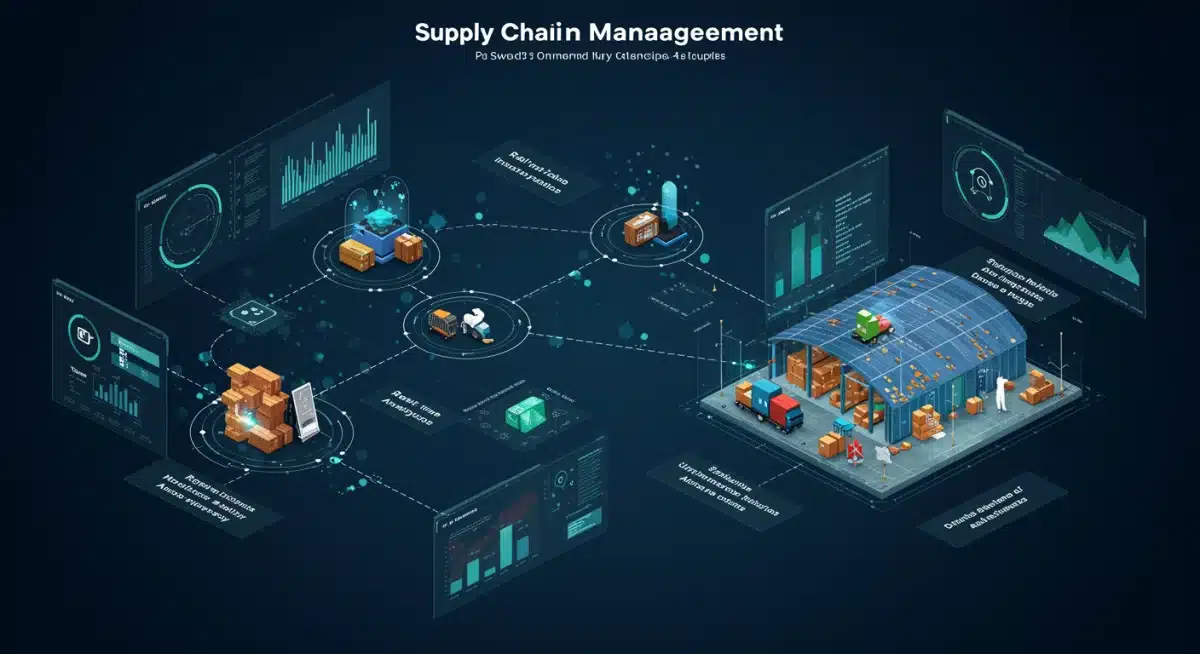
Digital twin technology represents a revolutionary leap in supply chain management, offering an unprecedented level of visualization and control. A digital twin is essentially a virtual replica of a physical supply chain, encompassing everything from manufacturing plants and warehouses to transportation routes and inventory levels. This dynamic model is continuously updated with real-time data, providing a comprehensive and accurate representation of the supply chain’s current state and potential future scenarios.
For US operations, implementing digital twin technology means gaining 360-degree visibility across their entire network. This allows decision-makers to monitor performance, identify anomalies, and simulate the impact of various events—whether it’s a sudden surge in demand, a supplier outage, or a natural disaster. The ability to visualize these scenarios in a virtual environment enables companies to test different responses and optimize their strategies without disrupting actual operations.
Advantages of Digital Twins in Resilience
The primary advantage of a digital twin for supply chain resilience is its capacity for predictive modeling and scenario planning. By feeding the digital twin with historical data and current conditions, businesses can forecast potential disruptions and their cascading effects. This proactive capability allows for the development of robust contingency plans, ensuring that when a disruption occurs, the response is not only swift but also strategically informed.
- Real-time Visibility: Constant updates provide an accurate picture of the supply chain’s current status.
- Scenario Planning: Simulate various disruptions (e.g., port closures, factory shutdowns) to test responses.
- Performance Optimization: Identify inefficiencies and bottlenecks to improve overall operational flow.
- Predictive Maintenance: Anticipate equipment failures in logistics infrastructure or manufacturing.
- Collaborative Platform: Provides a shared, accurate view for all stakeholders, improving decision-making.
Furthermore, digital twins facilitate enhanced collaboration across departments and with external partners. All stakeholders can access the same real-time data and simulations, fostering a shared understanding of challenges and solutions. This unified approach is critical for complex supply chains, ensuring that decisions are coordinated and effective. As we look at Q1 2025, digital twin technology is rapidly moving from an innovative concept to a fundamental tool for maintaining resilient and agile US operations.
Integrating Sustainability into Resilience Planning
Beyond the immediate concerns of disruption mitigation, a critical aspect of long-term supply chain resilience in Q1 2025 involves integrating sustainability into core planning. Sustainable practices are no longer just about corporate social responsibility; they are becoming intrinsically linked to operational stability and risk reduction. For US operations, this means considering environmental, social, and governance (ESG) factors throughout the supply chain lifecycle.
A sustainable supply chain is often inherently more resilient. For example, reducing reliance on fossil fuels in transportation not only lessens environmental impact but also mitigates exposure to volatile energy prices. Similarly, ethical sourcing practices can reduce reputational risk and ensure a more stable labor force. Investing in greener technologies and processes can lead to operational efficiencies and compliance with evolving regulations, which in turn reduces the risk of penalties or supply chain interruptions due to non-compliance.
Sustainable Practices for Enhanced Resilience
Implementing sustainability within supply chain resilience requires a comprehensive approach. It begins with assessing the environmental and social impact of current operations and then identifying opportunities for improvement. This might involve adopting renewable energy sources, optimizing logistics for reduced emissions, partnering with ethically certified suppliers, or investing in circular economy principles that minimize waste and maximize resource utilization.
- Eco-friendly Logistics: Prioritizing electric vehicles, optimized routes, and intermodal transport to reduce carbon footprint.
- Ethical Sourcing: Partnering with suppliers committed to fair labor practices and environmental stewardship.
- Circular Economy Models: Designing products and processes for reuse, repair, and recycling, reducing reliance on virgin materials.
- Renewable Energy Adoption: Powering facilities with solar, wind, or other sustainable energy sources.
The integration of sustainability also extends to transparency. Consumers and regulators are increasingly demanding to know the origins and environmental impact of products. A transparent, sustainable supply chain builds consumer trust and enhances brand reputation, which can be a significant competitive advantage. As US operations navigate the complexities of Q1 2025, embracing sustainability is not just good for the planet, but essential for building truly enduring and resilient supply chains.
The Role of Collaboration and Ecosystem Thinking
In the intricate world of modern supply chains, no single entity operates in isolation. The resilience of US operations increasingly depends on the strength of their entire ecosystem, encompassing suppliers, logistics partners, technology providers, and even competitors. This necessitates a shift towards greater collaboration and ecosystem thinking, moving beyond traditional transactional relationships to foster symbiotic partnerships built on mutual trust and shared objectives.
Collaboration can take many forms, from sharing real-time data with key partners to jointly developing contingency plans and investing in shared infrastructure. When disruptions occur, a well-established collaborative network can react with greater agility and collective intelligence. For example, if a primary supplier faces an outage, pre-arranged agreements with secondary suppliers or even industry peers can ensure continuity of supply, minimizing the impact on end consumers. This collective approach to risk management is far more effective than individual companies trying to weather storms alone.
Building Collaborative Supply Chain Ecosystems
Fostering a collaborative ecosystem requires open communication, standardized data exchange protocols, and a willingness to share insights and resources. It also involves establishing clear governance structures and trust frameworks. Technology plays a crucial role here, with platforms that enable secure data sharing and collaborative planning becoming increasingly important for US operations. Blockchain, for instance, offers a decentralized and immutable ledger for tracking goods and transactions, enhancing transparency and trust among partners.
- Information Sharing: Establishing secure platforms for real-time data exchange with suppliers and partners.
- Joint Planning: Collaborating on demand forecasting, inventory management, and contingency strategies.
- Shared Investments: Pooling resources for infrastructure improvements or technology adoption that benefits the entire network.
- Standardized Protocols: Implementing common standards for data, processes, and communication to streamline interactions.
Ecosystem thinking also extends to engaging with government agencies and industry associations. These bodies can provide valuable insights into emerging risks, facilitate regulatory compliance, and even coordinate industry-wide responses to major disruptions. By actively participating in these broader networks, US businesses can tap into collective intelligence and resources, significantly bolstering their overall supply chain resilience. In Q1 2025, the strength of a company’s supply chain will largely be determined by the strength of its collaborative network.
Future-Proofing US Operations Beyond Q1 2025
While the focus of these strategies is on Q1 2025, true supply chain resilience is not a static achievement but an ongoing journey. Future-proofing US operations against an ever-evolving landscape of risks requires a commitment to continuous improvement, innovation, and adaptability. The strategies discussed—advanced analytics, diversified sourcing, digital twins, sustainability integration, and collaboration—form a robust foundation, but their effectiveness depends on continuous refinement and evolution.
Looking beyond Q1 2025, businesses must remain vigilant to emerging trends and potential disruptions. This includes closely monitoring technological advancements, such as quantum computing and advanced robotics, which could further transform logistics and manufacturing. It also means staying abreast of geopolitical shifts, climate science, and evolving consumer behaviors. A proactive approach to scanning the horizon for new risks and opportunities is paramount for maintaining a competitive edge and ensuring long-term operational stability.
Embracing Agility and Learning
The ability to adapt quickly to unforeseen circumstances, often referred to as agility, is a hallmark of a future-proof supply chain. This involves fostering a culture of continuous learning within organizations, encouraging experimentation, and embracing failure as a learning opportunity. Companies that can quickly pivot their strategies, recalibrate their operations, and leverage new technologies will be best positioned to thrive in an uncertain future.
- Continuous Risk Assessment: Regularly evaluating new and evolving threats to the supply chain.
- Investment in R&D: Exploring and adopting cutting-edge technologies to enhance resilience.
- Talent Development: Training the workforce in new skills related to data analytics, AI, and digital tools.
- Scenario Planning: Regularly updating and testing contingency plans against a wider range of potential disruptions.
Ultimately, future-proofing US operations involves building a supply chain that is not only resilient but also anti-fragile—one that doesn’t just withstand shocks but actually gets stronger and more capable in their wake. This ambitious goal requires strategic investment, technological integration, and a deep understanding of the interconnectedness of global logistics. The insights from Q1 2025 are merely stepping stones on this path towards enduring supply chain excellence.
| Key Strategy | Brief Description |
|---|---|
| Advanced Analytics & AI | Leveraging data for predictive insights, risk sensing, and optimized decision-making across the supply chain. |
| Diversified Sourcing | Reducing reliance on single points of failure through nearshoring, reshoring, and geographical supplier distribution. |
| Digital Twin Technology | Creating virtual replicas of supply chains for real-time visibility, scenario planning, and operational optimization. |
| Ecosystem Collaboration | Fostering strong partnerships with suppliers, logistics, and industry peers for collective risk management. |
Frequently Asked Questions About Supply Chain Resilience
Supply chain resilience in Q1 2025 refers to the ability of US operations to anticipate, withstand, and recover from disruptions, adapting to new realities like geopolitical shifts and technological advancements. It emphasizes proactive strategies over reactive measures to maintain continuous flow.
AI significantly enhances resilience by providing predictive insights through data analytics. It forecasts demand, assesses supplier risks, and optimizes routes in real-time, allowing businesses to proactively manage potential disruptions and make informed decisions before they impact operations.
Nearshoring and reshoring are crucial for US supply chains as they reduce lead times, enhance control over production, and mitigate geopolitical risks associated with distant manufacturing. These strategies improve responsiveness and overall supply chain stability for domestic operations.
Digital twin technology creates a virtual replica of a physical supply chain, updated with real-time data. In logistics, it provides comprehensive visibility, enables scenario planning for disruptions, and optimizes performance, allowing for proactive adjustments to maintain operational efficiency.
Sustainability is integral to resilience by reducing exposure to environmental and social risks. Practices like eco-friendly logistics, ethical sourcing, and circular economy models not only mitigate carbon footprint but also enhance operational stability, reduce costs, and improve brand reputation.
Conclusion
The imperative to build resilient supply chains for US operations has never been more critical. As we navigate Q1 2025 and beyond, the strategies outlined—leveraging advanced data analytics and AI, diversifying sourcing through nearshoring and reshoring, and implementing digital twin technology—form the bedrock of robust logistical frameworks. Integrating sustainability and fostering collaborative ecosystems further strengthens these foundations, enabling businesses to not only withstand disruptions but to emerge stronger and more adaptable. The future of logistics demands proactive, intelligent, and interconnected approaches to safeguard the continuous flow of goods and services, ensuring enduring success in a dynamic global marketplace.