Smart Waste Management: 25% Cost Reduction in US Urban Areas

Smart waste management systems are revolutionizing U.S. urban areas by leveraging advanced technologies like IoT and AI to optimize collection routes and schedules, ultimately leading to significant operational cost reductions of up to 25%.
Imagine a city where waste collection isn’t a guessing game, but a precisely orchestrated operation. This vision is rapidly becoming a reality in U.S. urban areas, thanks to the transformative power of smart waste management. By integrating cutting-edge technologies, municipalities are not just making their cities cleaner, but also achieving remarkable financial efficiencies, with some reporting operational cost reductions of up to 25%. This isn’t merely an environmental initiative; it’s a strategic financial imperative for modern urban centers.
The Genesis of Smart Waste Management: A Paradigm Shift
For decades, waste collection has largely relied on static schedules and reactive responses, leading to inefficiencies and unnecessary expenses. Trucks often collected half-empty bins, or worse, arrived too late to overflowing ones. This traditional approach was not only costly in terms of fuel and labor but also contributed to traffic congestion and environmental strain.
The advent of smart city technologies has ushered in a new era. Smart waste management systems leverage the Internet of Things (IoT), artificial intelligence (AI), and data analytics to provide real-time insights into waste levels and collection needs. This fundamental shift from reactive to proactive management is at the core of its financial impact.
From Fixed Routes to Dynamic Optimization
- Sensor-Equipped Bins: Bins are fitted with ultrasonic sensors that monitor fill levels, transmitting data wirelessly to a central platform.
- Data Analytics: AI algorithms analyze this data, predicting optimal collection times and routes based on historical patterns and current fill levels.
- Real-Time Adjustments: Routes can be dynamically adjusted throughout the day, responding to unexpected changes or higher-than-anticipated waste generation in specific areas.
This dynamic optimization ensures that collection vehicles only visit bins that are full or nearing capacity, eliminating wasted trips and significantly reducing fuel consumption. The initial investment in these technologies is quickly recouped through sustained operational savings, making it an attractive proposition for fiscals-conscious urban planners.
The transition from a fixed, calendar-based collection system to a data-driven, demand-responsive model represents a significant leap forward. It’s not just about technology; it’s about a smarter way of thinking about urban logistics and resource allocation, directly impacting the bottom line for municipalities.
Leveraging IoT and AI for Enhanced Efficiency
At the heart of smart waste management’s success lies the seamless integration of IoT and AI. These technologies provide the intelligence necessary to transform a cumbersome process into a highly efficient operation. IoT sensors collect vast amounts of data, while AI processes this data to generate actionable insights.
Imagine thousands of waste bins across a city, each acting as a data point, continuously reporting its status. This real-time visibility allows city managers to have an unprecedented understanding of their waste infrastructure. The implications for route optimization and resource allocation are profound.
The Role of Data in Decision-Making
AI algorithms take the raw data from IoT sensors and transform it into predictive models. These models consider various factors, including:
- Fill Levels: Current waste volume in each bin.
- Historical Patterns: Seasonal variations, event-driven waste spikes, and weekly trends.
- Traffic Conditions: Real-time traffic data to avoid congested routes.
- Vehicle Capacity: Ensuring trucks are loaded efficiently without exceeding limits.
By processing these variables, AI can recommend the most efficient routes and schedules, minimizing travel distance, fuel consumption, and labor hours. This intelligent decision-making process directly contributes to the reported 25% reduction in operational costs.
Furthermore, AI can identify patterns of waste generation, helping cities strategically place new bins or adjust collection frequencies in specific neighborhoods. This proactive planning minimizes overflow incidents, enhances public health, and improves the overall aesthetic of urban environments. The synergy between IoT and AI creates a powerful engine for efficiency and cost savings.
Quantifying the Savings: The 25% Reduction Breakdown
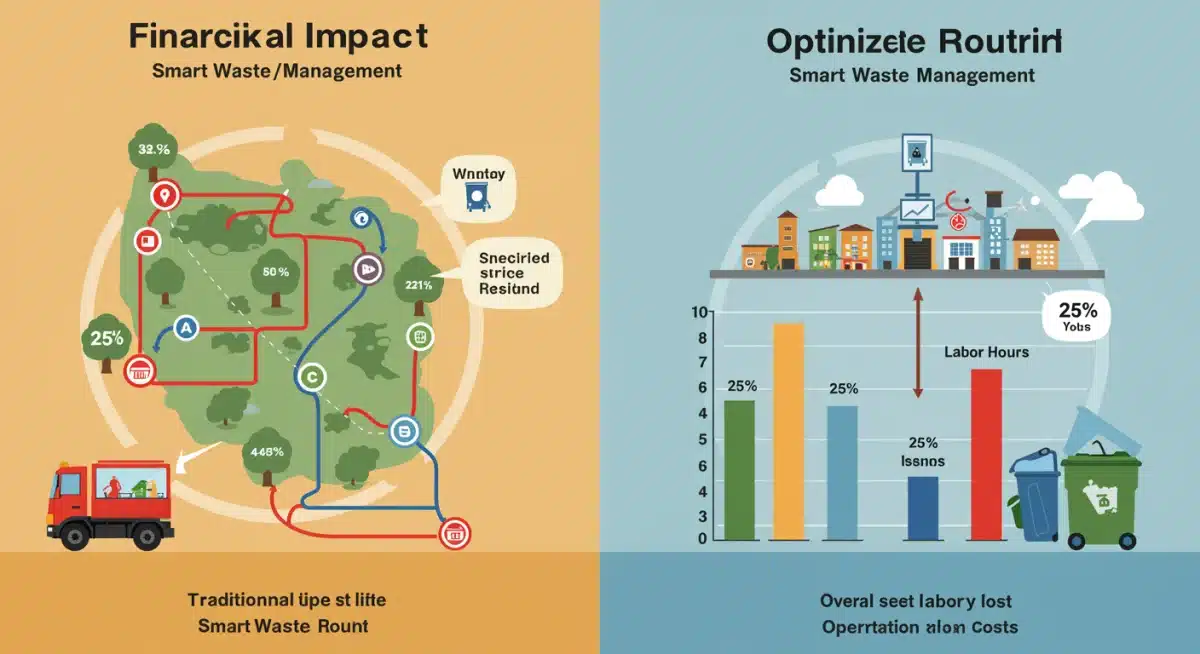
The claim of a 25% reduction in operational costs is not merely anecdotal; it’s backed by numerous case studies from U.S. urban areas that have adopted smart waste management solutions. This significant saving stems from several key areas, demonstrating the comprehensive financial benefits of these systems.
Understanding where these savings come from helps illustrate the multi-faceted impact of smart technology. It’s not just one big change, but a series of interconnected efficiencies that collectively lead to substantial economic advantages for municipal budgets.
Key Areas of Cost Reduction
- Fuel Consumption: Optimized routes mean fewer miles driven, directly translating to less fuel burned. This is often the largest single contributor to savings, especially with fluctuating fuel prices.
- Labor Costs: Fewer, more efficient routes require less driver time and overtime, reducing personnel expenses while often improving working conditions due to better planning.
- Vehicle Maintenance: Reduced mileage and less wear-and-tear on collection vehicles lead to lower maintenance costs and extended vehicle lifespans.
- Reduced Overflow Incidents: Proactive collection prevents overflowing bins, which typically incur additional cleanup costs and potential fines.
- Administrative Overhead: Automated data collection and route planning reduce the administrative burden associated with manual scheduling and reporting.
Collectively, these efficiencies create a powerful financial incentive for cities to invest in smart waste infrastructure. The initial capital expenditure for sensors and software is offset by rapid and sustained operational savings, making it a fiscally responsible choice for long-term urban planning.
Beyond Cost Savings: Environmental and Social Benefits
While the financial impact of smart waste management is a primary driver for adoption, its benefits extend far beyond the balance sheet. These systems contribute significantly to environmental sustainability and enhance the quality of life for urban residents, aligning with broader smart city objectives.
The holistic advantages make smart waste management a truly compelling proposition, demonstrating that economic efficiency and ecological responsibility can go hand-in-hand. Cities are increasingly recognizing that investments in smart infrastructure yield dividends across multiple domains.
A Greener, Cleaner Urban Landscape
The environmental advantages are substantial:
- Reduced Carbon Emissions: Fewer truck miles mean a direct reduction in greenhouse gas emissions, contributing to cleaner air and combating climate change.
- Less Noise Pollution: Fewer trucks on the road, especially at off-peak hours, reduce noise disturbances in residential areas.
- Improved Public Health: Preventing overflowing bins minimizes pest infestations, reduces foul odors, and enhances overall urban hygiene.
- Increased Recycling Rates: Some smart bins can incentivize proper sorting, and data can identify areas with low recycling participation, allowing for targeted educational campaigns.
Socially, residents experience a cleaner, more pleasant environment. The reduced presence of overflowing bins improves aesthetic appeal and public perception of city services. This enhanced living experience is an intangible but invaluable benefit, fostering greater civic pride and well-being.
Ultimately, smart waste management represents a win-win scenario, delivering tangible financial returns while simultaneously advancing environmental stewardship and improving urban livability. It’s a testament to how technology can be harnessed for the greater good of both the planet and its inhabitants.
Implementation Challenges and Solutions in U.S. Cities
Despite the clear advantages, the adoption of smart waste management systems in U.S. urban areas is not without its challenges. Municipalities often face hurdles related to initial investment, technological integration, and public acceptance. Addressing these challenges is crucial for successful implementation and realizing the full potential of these systems.
Understanding these obstacles allows for proactive planning and the development of strategies to overcome them, ensuring a smoother transition to a smarter, more efficient waste collection paradigm.
Navigating the Road to Smart Waste
- Initial Capital Outlay: The cost of sensors, smart bins, software platforms, and necessary training can be significant.
- Data Security and Privacy: Ensuring the secure transmission and storage of data, and addressing public concerns about data privacy.
- Integration with Existing Infrastructure: Seamlessly incorporating new smart systems with legacy waste management operations and IT infrastructure.
- Public Engagement and Education: Informing residents about the new systems, how they work, and their benefits to foster cooperation and understanding.
- Scalability: Designing systems that can grow and adapt with the city’s evolving needs and population changes.
To mitigate these challenges, many cities are exploring various funding models, including public-private partnerships, grants, and phased implementation strategies. Pilot programs in specific districts can demonstrate efficacy and build public and political support before a city-wide rollout.
Furthermore, robust cybersecurity measures and transparent communication about data handling are essential to build trust. Education campaigns can highlight the environmental and financial benefits, encouraging residents to embrace the change. By proactively addressing these issues, U.S. cities can pave the way for successful and sustainable smart waste management adoption.
The Future Outlook: Continuous Innovation and Expansion
The trajectory of smart waste management in U.S. urban areas points towards continuous innovation and broader adoption. As technologies mature and become more cost-effective, even more sophisticated solutions are expected to emerge, further optimizing waste collection and resource recovery.
The vision for the future extends beyond just efficient collection; it encompasses a fully integrated waste ecosystem that contributes to a circular economy model. This evolution holds the promise of even greater financial and environmental dividends for cities.
Next-Generation Smart Waste Solutions
Looking ahead, we can anticipate several advancements:
- Advanced Material Sorting: AI-powered robotic sorting systems at transfer stations will increase recycling efficiency and purity.
- Waste-to-Energy Optimization: Data analytics will optimize the flow of non-recyclable waste to energy conversion facilities, maximizing energy generation.
- Predictive Maintenance for Bins and Trucks: Sensors will monitor the health of bins and collection vehicles, predicting maintenance needs before failures occur, reducing downtime.
- Citizen Engagement Platforms: Mobile apps and platforms will allow citizens to report issues, track collection, and receive personalized recycling information.
- Integration with Broader Smart City Grids: Waste data will feed into larger smart city platforms, informing urban planning decisions related to public health, infrastructure, and resource management.
These innovations will not only deepen the financial savings already being realized but also position cities at the forefront of sustainable urban development. The expansion of smart waste management is an integral part of creating truly intelligent, resilient, and resource-efficient urban environments for the future.
The journey towards fully optimized waste management is ongoing, but the foundation laid by current smart systems is proving to be a powerful catalyst for change, promising cleaner cities and healthier municipal budgets.
| Key Aspect | Brief Description |
|---|---|
| Operational Cost Reduction | U.S. urban areas are achieving up to 25% savings by optimizing routes and schedules. |
| Technology Integration | IoT sensors and AI analytics provide real-time data for efficient decision-making. |
| Environmental Impact | Reduced fuel consumption lowers carbon emissions and improves urban air quality. |
| Future Outlook | Continuous innovation in AI sorting, waste-to-energy, and citizen engagement. |
Frequently Asked Questions About Smart Waste Management
Smart waste management utilizes IoT sensors in bins and AI-driven platforms to monitor fill levels and optimize collection routes. This data-driven approach replaces traditional fixed schedules, ensuring waste is collected only when necessary, leading to greater efficiency and reduced costs.
Cost reductions stem primarily from optimized collection routes, leading to less fuel consumption, fewer labor hours, and reduced wear-and-tear on vehicles. By avoiding unnecessary trips, cities save on direct operational expenses, contributing to significant budget efficiencies.
Key technologies include ultrasonic sensors for real-time fill-level monitoring, the Internet of Things (IoT) for data transmission, and artificial intelligence (AI) for data analysis, predictive modeling, and dynamic route optimization. Cloud-based platforms integrate these components for comprehensive management.
Absolutely. Reduced truck mileage directly lowers carbon emissions and noise pollution. Preventing overflowing bins improves public hygiene and reduces pest issues, creating a cleaner and healthier urban environment for residents. It’s a key component of sustainable urban development.
Challenges include initial capital investment, integrating new tech with existing infrastructure, ensuring data security, and gaining public acceptance. Cities often overcome these through pilot programs, public-private partnerships, and clear communication about the long-term benefits.
Conclusion
The integration of smart waste management systems represents a pivotal advancement for U.S. urban areas, offering a compelling blend of financial prudence and environmental responsibility. The documented ability to reduce operational costs by as much as 25% provides a strong economic incentive, freeing up municipal funds for other critical services. Beyond the tangible savings in fuel, labor, and maintenance, these systems foster cleaner, healthier, and more livable cities. As technology continues to evolve, the future promises even more integrated and intelligent waste solutions, solidifying smart waste management’s role as a cornerstone of sustainable and efficient urban development.