Smart Warehousing Technologies: 2025 Automation for 25% Faster US Fulfillment
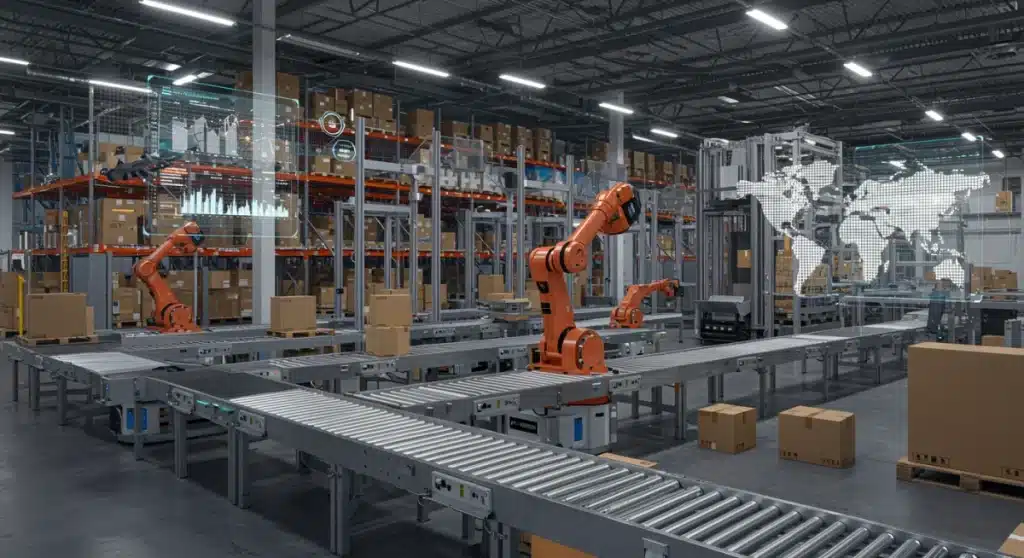
By 2025, advanced smart warehousing technologies are set to transform US logistics, with automated systems significantly accelerating order fulfillment by 25% through enhanced efficiency and precision in operations.
The landscape of logistics is undergoing a profound transformation, driven by the relentless demand for speed and efficiency. By 2025, smart warehousing technologies are poised to redefine order fulfillment in the United States, promising a remarkable 25% increase in speed through sophisticated automated systems. This evolution is not merely about adopting new tools, but about fundamentally reimagining how goods move from storage to customer.
The Dawn of Autonomous Mobile Robots (AMRs) in Warehousing
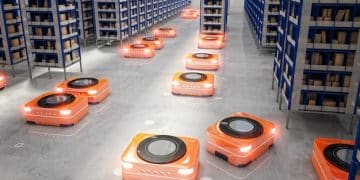
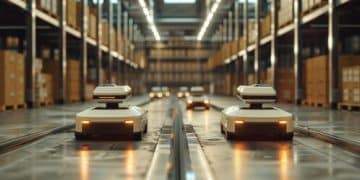
Autonomous Mobile Robots (AMRs) are rapidly becoming the cornerstone of modern smart warehousing. These intelligent machines navigate warehouse floors independently, optimizing routes and collaborating with human workers to streamline processes. Unlike their Automated Guided Vehicle (AGV) predecessors, AMRs do not require fixed pathways, offering unparalleled flexibility and adaptability to changing warehouse layouts and demands.
The integration of AMRs is already demonstrating significant impacts on efficiency. Their ability to transport goods, assist with picking, and even perform inventory checks autonomously reduces manual labor requirements and minimizes errors. This shift allows human employees to focus on more complex, value-added tasks, thereby enhancing overall productivity and job satisfaction.
Enhanced Picking and Sorting Capabilities
AMRs excel in optimizing the picking and sorting processes, which are traditionally labor-intensive. By guiding workers to specific locations or directly transporting items, they cut down on travel time and improve accuracy.
- Goods-to-Person Systems: AMRs bring shelves or bins directly to pickers, eliminating the need for extensive walking.
- Collaborative Picking: Robots work alongside human pickers, handling heavy lifting and repetitive tasks.
- Dynamic Routing: Real-time adjustments to routes based on traffic and order priority ensure optimal flow.
- Automated Sorting: AMRs can sort packages for dispatch, reducing human intervention and speeding up outbound logistics.
The flexibility and intelligence of AMRs are key drivers in achieving faster order fulfillment. Their ability to learn and adapt to dynamic environments makes them indispensable for warehouses aiming for a 25% acceleration in their operations by 2025, particularly within the competitive US market.
Automated Storage and Retrieval Systems (AS/RS) Evolution
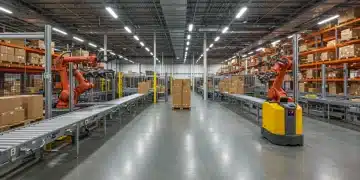
Automated Storage and Retrieval Systems (AS/RS) represent another critical pillar of smart warehousing technologies. These systems are designed for high-density storage and rapid, automated retrieval of items, significantly maximizing space utilization and throughput. From towering vertical lift modules to sophisticated shuttle systems, AS/RS solutions are evolving to meet the escalating demands of e-commerce and just-in-time inventory management.
The principal advantage of AS/RS lies in its ability to operate around the clock with minimal human intervention, ensuring consistent performance and reducing labor costs. This automation is vital for warehouses processing high volumes of orders, where every second saved translates into substantial operational gains and a direct contribution to achieving faster fulfillment targets.
Diverse AS/RS Implementations
The variety of AS/RS available allows businesses to tailor solutions to their specific needs, whether for small parts, oversized items, or high-throughput requirements.
- Unit-Load AS/RS: Ideal for storing and retrieving full pallets or large containers.
- Mini-Load AS/RS: Designed for smaller items, typically in totes or cartons, offering high-speed access.
- Shuttle Systems: Highly flexible and scalable, using independent shuttles to move items within racking structures.
- Vertical Lift Modules (VLMs): Space-saving solutions that store items vertically, presenting requested items to an operator.
By leveraging advanced AS/RS, US warehouses can dramatically improve their storage density and retrieval speeds. This technology is instrumental in reducing the time from order placement to dispatch, making a 25% faster order fulfillment goal a tangible reality for many businesses across the nation.
The Rise of AI and Machine Learning in Warehouse Optimization
Artificial Intelligence (AI) and Machine Learning (ML) are no longer futuristic concepts but integral components of contemporary smart warehousing technologies. These advanced analytics capabilities enable warehouses to move beyond simple automation, introducing predictive intelligence and continuous optimization across all operations. AI algorithms can analyze vast datasets, identifying patterns and making real-time decisions that improve efficiency, reduce waste, and enhance overall performance.
From demand forecasting to inventory placement and route optimization for AMRs, AI and ML provide the computational power needed to fine-tune every aspect of warehouse management. This intelligent layer ensures that resources are utilized optimally, bottlenecks are anticipated and resolved proactively, and the entire fulfillment process operates with unprecedented precision and speed.
Predictive Analytics for Demand and Inventory
AI-driven predictive analytics transform inventory management from reactive to proactive, ensuring optimal stock levels and minimizing costly overstocking or stockouts.
- Accurate Demand Forecasting: ML models analyze historical data, market trends, and external factors to predict future demand with high accuracy.
- Dynamic Inventory Slotting: AI optimizes the placement of products within the warehouse based on demand, size, and picking frequency.
- Automated Replenishment: Systems automatically trigger reorder points based on predicted consumption, preventing delays.
- Anomaly Detection: AI identifies unusual patterns in inventory or operations that might indicate issues, allowing for quick intervention.
The integration of AI and ML is critical for achieving the ambitious target of 25% faster order fulfillment. These technologies provide the intelligence needed to orchestrate complex warehouse operations seamlessly, making smarter decisions that directly translate into quicker and more efficient processing of orders in the US.
Robotics and Vision Systems for Precision and Speed
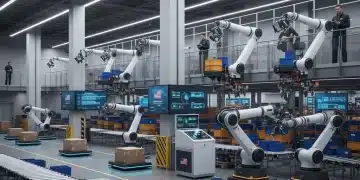
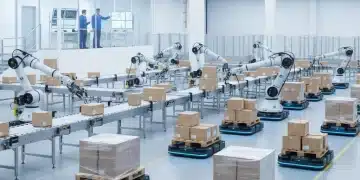
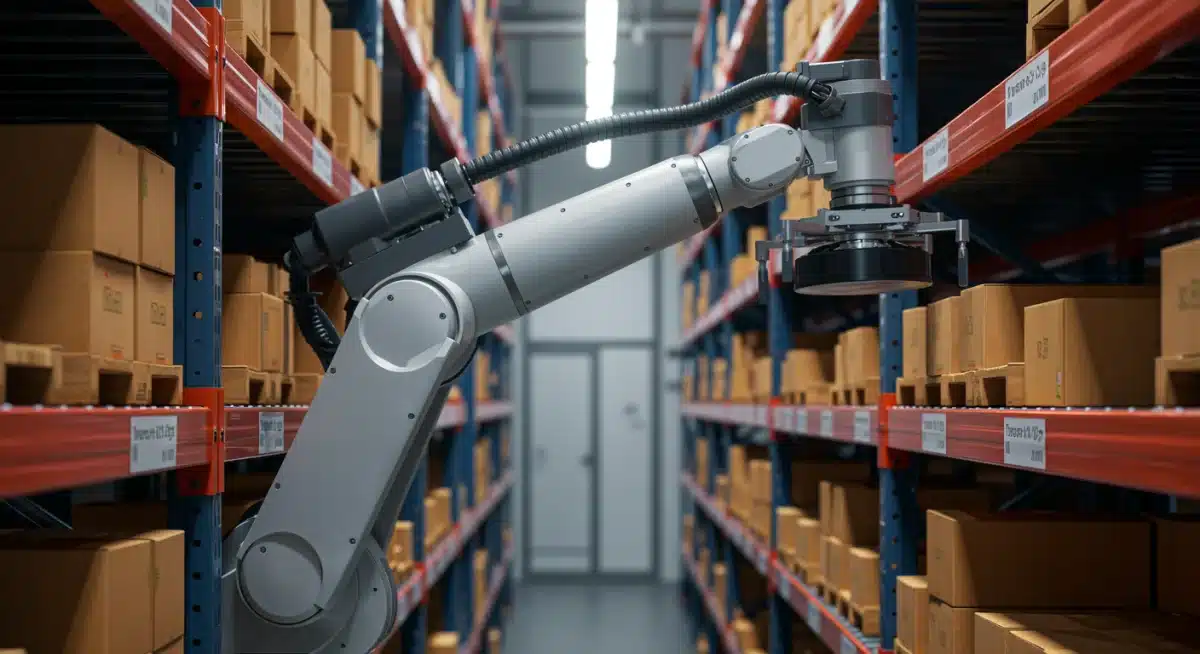
Beyond AMRs, advanced robotics, particularly those equipped with sophisticated vision systems, are revolutionizing specific tasks within the smart warehouse. These robotic systems are designed for high-precision manipulation, inspection, and assembly, often performing tasks that are repetitive, dangerous, or require extreme accuracy. Their integration significantly reduces errors and increases throughput in critical areas like item picking, packing, and quality control.
Vision systems, powered by AI, allow robots to identify, locate, and even assess the quality of products with human-like discernment but at machine speeds. This combination of robotic dexterity and visual intelligence is paramount for handling diverse product ranges and ensuring that every order is fulfilled correctly and efficiently, contributing directly to the 25% faster fulfillment goal.
Applications of Vision-Guided Robotics
Vision systems empower robots to perform intricate tasks with accuracy, adapting to variations in product presentation and environmental conditions.
- Item Picking: Robots can identify and pick individual items from mixed bins, even in unstructured environments.
- Quality Inspection: Vision systems detect defects or inconsistencies in products, ensuring only high-quality items are shipped.
- Automated Packing: Robots can select appropriate packaging, orient products correctly, and seal packages efficiently.
- Palletizing and Depalletizing: Vision-guided robots precisely stack and unstack items, optimizing space and reducing manual effort.
The synergy between robotics and vision systems elevates the capabilities of smart warehousing technologies, enabling unprecedented levels of precision and speed. For US businesses, this means fewer errors, faster processing times, and a more robust fulfillment operation capable of meeting aggressive delivery schedules.
IoT and Digital Twins for Real-Time Operational Visibility
The Internet of Things (IoT) and Digital Twins are transforming warehouse management by providing real-time operational visibility and predictive insights. IoT sensors, embedded in everything from equipment to inventory, collect vast amounts of data on location, status, and performance. This data feeds into a digital twin – a virtual replica of the physical warehouse – allowing managers to monitor operations, simulate changes, and predict outcomes without disrupting physical processes.
This level of real-time insight is invaluable for optimizing workflows, identifying potential issues before they arise, and making data-driven decisions that enhance efficiency. For US warehouses striving for 25% faster order fulfillment, IoT and Digital Twins offer the intelligence needed to operate at peak performance, ensuring every component of the system is synchronized and optimized.
Benefits of IoT and Digital Twins
These technologies create a connected and intelligent warehouse environment, enabling proactive management and continuous improvement.
- Real-time Asset Tracking: Pinpoint the exact location of inventory, equipment, and personnel.
- Predictive Maintenance: Monitor machine health and predict failures, scheduling maintenance proactively to avoid downtime.
- Workflow Optimization: Analyze real-time data to identify bottlenecks and optimize material flow paths.
- Environmental Monitoring: Ensure optimal temperature and humidity for sensitive goods, reducing spoilage.
By providing a comprehensive, real-time view of warehouse operations, IoT and Digital Twins empower managers to make agile decisions. This responsiveness is crucial for accelerating order fulfillment, as it allows for immediate adjustments and continuous improvements, pushing US logistics closer to the 25% speed increase target.
Challenges and Future Outlook for Smart Warehousing
While the benefits of smart warehousing technologies are undeniable, their widespread adoption in the US also presents several challenges. The initial capital investment for implementing advanced automation can be substantial, posing a barrier for smaller and medium-sized enterprises. Furthermore, integrating diverse systems from different vendors requires robust IT infrastructure and skilled personnel capable of managing complex interconnected technologies. Cybersecurity also emerges as a critical concern, as highly automated and connected systems become potential targets for cyber threats.
Despite these hurdles, the future outlook for smart warehousing in the US remains exceptionally bright. Continuous innovation, coupled with decreasing technology costs and increasing labor pressures, will drive further adoption. The focus will shift towards more flexible, modular, and AI-driven solutions that can adapt to rapid market changes and consumer demands. Collaborative robots (cobots) will become even more prevalent, working seamlessly alongside humans to enhance productivity and safety.
Navigating the Path to a Smarter Future
Addressing the challenges requires strategic planning, investment in training, and a focus on scalable solutions.
- Workforce Reskilling: Training employees for new roles in managing and maintaining automated systems.
- Scalable Solutions: Implementing modular automation that can grow with business needs, reducing upfront risk.
- Cybersecurity Protocols: Developing robust defenses to protect sensitive data and operational integrity.
- Interoperability Standards: Promoting industry standards to ensure seamless integration of different technologies.
The journey towards fully optimized smart warehouses, delivering 25% faster order fulfillment in the US, is an ongoing evolution. Overcoming current challenges through innovation and strategic investment will unlock the full potential of these transformative technologies, solidifying their role as the backbone of modern logistics.
| Key Technology | Impact on Fulfillment |
|---|---|
| Autonomous Mobile Robots (AMRs) | Enhance picking/sorting, reduce travel time, and increase labor efficiency. |
| Automated Storage & Retrieval Systems (AS/RS) | Maximize storage density and accelerate item retrieval speed. |
| AI & Machine Learning | Optimize demand forecasting, inventory placement, and operational decisions. |
| IoT & Digital Twins | Provide real-time visibility and predictive insights for proactive management. |
Frequently Asked Questions About Smart Warehousing
Smart warehousing technologies encompass a range of automated and intelligent systems, including robotics, AI, IoT, and advanced software, designed to optimize storage, retrieval, and fulfillment processes in a warehouse environment. Their goal is to enhance efficiency, accuracy, and speed, often reducing manual labor.
Achieving 25% faster order fulfillment is possible through automation that reduces human travel time, minimizes errors, and optimizes routes. Technologies like AMRs and AS/RS accelerate picking and sorting, while AI-driven analytics provide predictive insights to streamline inventory and demand management, leading to significant time savings.
AI and Machine Learning are crucial for optimizing warehouse operations by providing predictive analytics for demand forecasting, dynamic inventory slotting, and automated replenishment. They enable systems to learn from data, make real-time decisions, and continuously improve efficiency, moving beyond simple automation to intelligent orchestration.
While large enterprises often lead in adoption due to significant capital investment, smart warehousing technologies are becoming increasingly accessible to smaller businesses. Modular solutions, flexible robotics, and cloud-based software are lowering entry barriers, allowing companies of various sizes to benefit from enhanced efficiency and competitive advantages.
The main benefits include significantly faster order fulfillment, reduced operational costs, improved accuracy, optimized space utilization, and enhanced worker safety. These advantages contribute to greater customer satisfaction, increased competitiveness, and a more resilient supply chain, vital for the dynamic US market.
Conclusion
The trajectory of logistics in the US is undeniably moving towards greater automation and intelligence. By 2025, the widespread integration of smart warehousing technologies, from AMRs and AS/RS to AI-driven optimization and IoT, will not only meet but exceed the demand for 25% faster order fulfillment. These innovations promise a future where warehouses are not just storage facilities, but highly efficient, data-driven hubs that are critical to the speed and reliability of the global supply chain. Embracing these advancements is no longer an option but a strategic imperative for businesses aiming to thrive in an increasingly competitive landscape.