Smart Street Lighting ROI: 10-Year Financial Impact for U.S. Cities
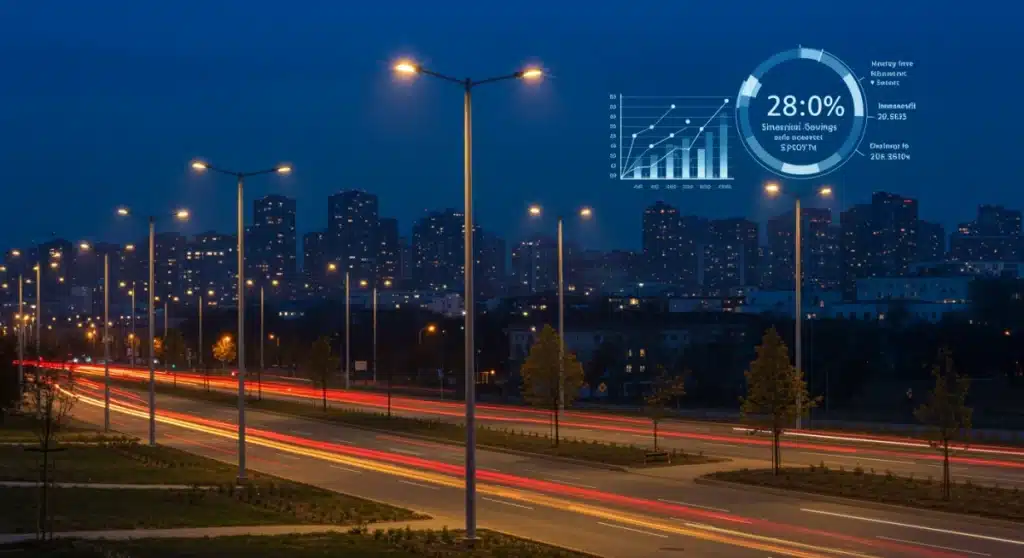
Smart street lighting offers U.S. municipalities a compelling return on investment driven by substantial energy conservation, reduced operational expenditures, and enhanced public safety within a 10-year financial projection.
In an era where urban centers across the United States are increasingly seeking innovative solutions to enhance infrastructure and optimize public services, the discussion around smart street lighting ROI has taken center stage. This article delves into the financial impact and long-term benefits U.S. municipalities can anticipate from adopting these advanced systems over a decade, exploring how such investments translate into tangible economic advantages.
understanding smart street lighting technology
Smart street lighting represents a significant leap beyond traditional illumination systems. It integrates LED technology with advanced control systems, sensors, and communication networks, transforming static light poles into dynamic, interconnected assets. This technological convergence allows for unprecedented levels of efficiency, control, and data collection, fundamentally altering how cities manage their public lighting infrastructure. The move from high-pressure sodium (HPS) lamps to LED-based smart systems is not merely an upgrade in light quality but a foundational shift towards a more intelligent urban environment.
These systems typically incorporate features like dimming capabilities, adaptive lighting based on real-time conditions, and remote monitoring. Such functionalities contribute directly to operational efficiency and energy reduction, which are critical components of the financial return on investment. Furthermore, the ability to integrate with other smart city applications positions smart street lighting as a central nervous system for urban data, offering additional layers of value beyond mere illumination.
components of a smart street light system
- LED Luminaires: Energy-efficient light sources that significantly reduce power consumption compared to traditional bulbs.
- Sensors: Motion sensors, ambient light sensors, and even environmental sensors that gather data for adaptive lighting and other smart city applications.
- Communication Modules: Often wireless (e.g., LoRaWAN, cellular, Wi-Fi mesh) to enable remote control and data transmission.
- Central Management System (CMS): Software platform for monitoring, controlling, and analyzing the entire street lighting network.
The comprehensive nature of smart street lighting systems means that their benefits extend far beyond simply providing light. They become platforms for innovation, fostering new services and enhancing urban resilience. Understanding these technological underpinnings is crucial to appreciating the full scope of their financial contributions to U.S. municipalities.
In conclusion, smart street lighting technology is a multifaceted system designed to optimize energy use, reduce operational burdens, and provide a flexible platform for future urban development. Its integrated components work in concert to deliver significant improvements over conventional lighting, laying the groundwork for substantial long-term financial benefits.
initial investment and implementation costs
Embarking on a smart street lighting project requires a substantial initial investment, which can often be a major hurdle for municipalities. These costs encompass several key areas, including the purchase of new LED luminaires, smart controls, communication infrastructure, and the labor associated with installation. The scale of the project, from a small town upgrading a few hundred lights to a major city replacing tens of thousands, directly influences the total upfront expenditure. It’s not just about buying hardware; there’s also the cost of software licenses for the Central Management System (CMS) and potential training for municipal staff.
However, many cities are finding innovative ways to finance these projects, such as through Energy Savings Performance Contracts (ESPCs), grants, or municipal bonds. These financing mechanisms can help mitigate the immediate financial burden, making the transition more feasible. Strategic planning and detailed cost analysis are essential to accurately project the initial outlay and ensure the project remains financially viable from the outset. Understanding the full scope of these costs is the first step in calculating the potential ROI.
key cost components for deployment
- Hardware Procurement: LED fixtures, smart controllers, sensors, and networking equipment.
- Installation Labor: Costs associated with removing old fixtures and installing new smart lighting systems.
- Software and Integration: Licenses for CMS, software customization, and integration with existing municipal systems.
- Project Management: Planning, oversight, and coordination of the entire deployment process.
The upfront costs, while significant, should be viewed as an investment rather than an expense. They lay the groundwork for years of operational savings and enhanced services. Careful budgeting and exploring various funding options are crucial to successfully navigating this initial phase and setting the stage for a positive financial return.
Ultimately, the initial investment in smart street lighting is a critical factor that municipalities must meticulously plan for. By considering all cost components and leveraging appropriate financing strategies, cities can manage the upfront financial commitment and pave the way for long-term economic and operational gains.
energy savings: the primary financial driver
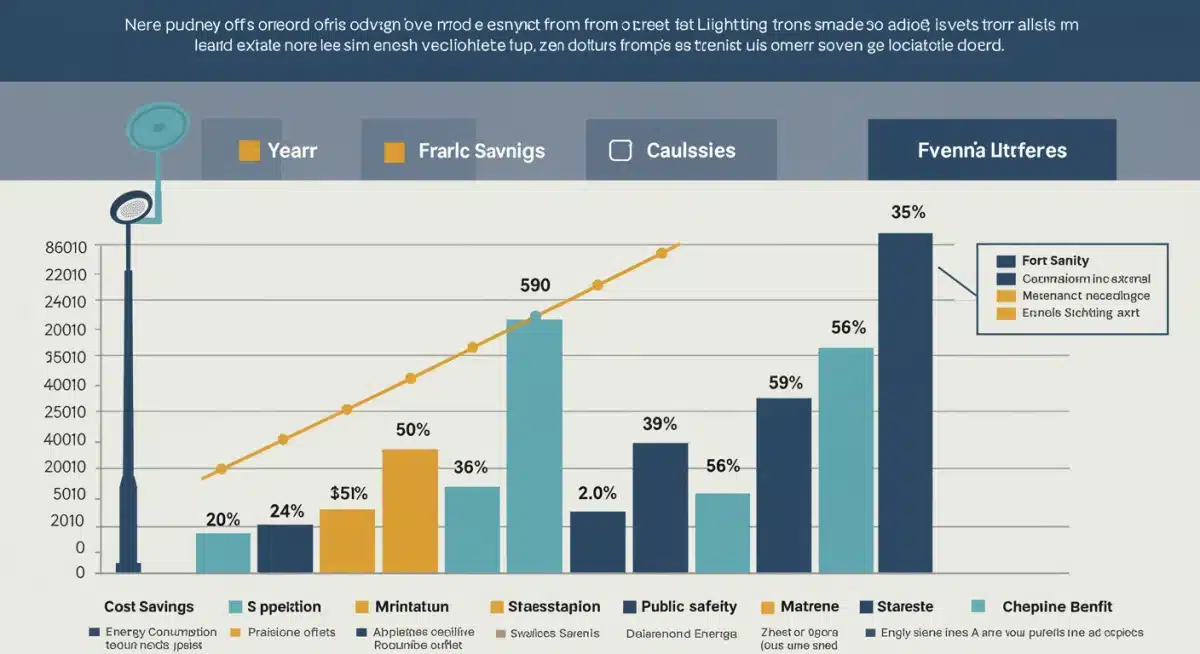
The most immediate and significant financial benefit of smart street lighting for U.S. municipalities is the dramatic reduction in energy consumption. Traditional streetlights, particularly older high-pressure sodium (HPS) lamps, are notoriously inefficient and consume vast amounts of electricity. Switching to LED luminaires alone can cut energy usage by 50-70%, but when combined with smart controls, these savings can soar even higher, often reaching 75-80% or more. Smart controls enable features like adaptive dimming, where light levels are adjusted based on real-time traffic, pedestrian activity, or natural light conditions, ensuring that energy is only consumed when and where it is truly needed.
These energy reductions translate directly into lower utility bills for municipalities, freeing up significant portions of their operational budgets. Over a 10-year projection, these cumulative savings can amount to millions of dollars, providing a consistent and predictable revenue stream that helps offset the initial investment. Furthermore, the environmental benefits of reduced energy consumption, such as lower carbon emissions, align with broader sustainability goals, adding another layer of value beyond pure financial returns.
how smart controls maximize energy efficiency
- Dimming Schedules: Pre-programmed light levels that adjust throughout the night based on typical usage patterns.
- Adaptive Lighting: Real-time adjustments using sensors to brighten or dim lights in response to detected activity or ambient light.
- Remote Monitoring: Identification of outages or inefficiencies, allowing for prompt corrective action and preventing wasted energy.
- Load Shedding: Ability to temporarily reduce power consumption across the network during peak demand times or grid emergencies.
The ability to precisely control and optimize light output means that municipalities are no longer paying for unnecessary illumination. This intelligent approach to energy management is a cornerstone of the financial viability of smart street lighting projects, ensuring that the investment pays dividends year after year.
In essence, energy savings are not just a benefit but the cornerstone of the financial case for smart street lighting. By drastically reducing electricity consumption through LED conversion and intelligent controls, municipalities unlock substantial and ongoing cost reductions that significantly contribute to the overall return on investment over a decade.
reduced maintenance and operational efficiencies
Beyond energy savings, smart street lighting systems deliver substantial financial benefits through significantly reduced maintenance and enhanced operational efficiencies. Traditional streetlights require frequent inspections, bulb replacements, and costly truck rolls for repairs. The lifespan of conventional bulbs is relatively short, leading to high labor and material costs. Smart LED luminaires, however, boast a much longer operational life, often exceeding 100,000 hours, which translates to decades of service without needing replacement. This extended lifespan dramatically lowers the recurring costs associated with bulb changes.
Moreover, smart street lighting networks incorporate advanced diagnostics and remote monitoring capabilities. Instead of relying on citizen reports or scheduled patrols to identify outages, the Central Management System (CMS) can pinpoint a malfunctioning light in real-time. This proactive approach allows maintenance crews to be dispatched precisely where and when they are needed, reducing unnecessary trips and optimizing resource allocation. The ability to remotely diagnose issues can even eliminate the need for a physical visit in some cases, further streamlining operations and cutting costs.
operational advantages of smart lighting
- Proactive Maintenance: Real-time alerts for outages or performance issues, enabling targeted repairs.
- Reduced Truck Rolls: Fewer physical inspections and repairs due to longer component lifespans and remote diagnostics.
- Optimized Labor: Maintenance crews can focus on critical tasks rather than routine checks, improving productivity.
- Inventory Management: Better forecasting of replacement needs due to predictable component lifespans.
These operational efficiencies extend beyond just fixing lights. The data collected by smart lighting systems can inform broader infrastructure management decisions, leading to more efficient urban planning and resource utilization. The cumulative effect of these maintenance and operational savings over a 10-year period significantly boosts the overall ROI for municipalities.
To summarize, the reduction in maintenance requirements and the boost in operational efficiencies are critical financial components of smart street lighting. These systems minimize labor, material, and logistical costs, allowing municipalities to reallocate resources more effectively and achieve a stronger financial position over the long term.
enhanced public safety and community benefits
While often harder to quantify in direct monetary terms, the enhanced public safety and community benefits derived from smart street lighting contribute significantly to a municipality’s overall value proposition and indirectly impact its financial health. Well-lit streets are consistently linked to a reduction in crime rates, as improved visibility deters illicit activities and makes residents feel safer. This perception of safety can lead to increased pedestrian activity, fostering a more vibrant local economy and improving community cohesion. Smart lighting’s adaptive capabilities, such as brightening in response to unusual activity detected by integrated sensors, can further enhance safety and provide valuable data for law enforcement.
Beyond crime prevention, improved visibility on roadways and sidewalks can lead to a decrease in traffic accidents and pedestrian-related incidents. This reduces potential liability for the municipality and lowers healthcare and emergency service costs associated with accidents. The ability to integrate other smart city sensors onto lighting poles, such as air quality monitors or public Wi-Fi transmitters, also creates a broader ecosystem of community benefits, enhancing the quality of life for residents and potentially attracting new businesses and residents to the area.
indirect financial impacts from improved safety
- Reduced Crime: Lower crime rates can decrease municipal law enforcement expenses and improve property values.
- Fewer Accidents: Better visibility reduces traffic accidents, potentially lowering insurance premiums and liability costs.
- Economic Vitality: Safer, more inviting public spaces encourage economic activity and tourism.
- Enhanced Quality of Life: Attracts residents and businesses, increasing tax revenue and local investment.
These intangible benefits, while not direct line items on a budget, create a more desirable urban environment, which in turn supports economic growth and reduces societal costs. Over a 10-year horizon, these cumulative effects can have a profound positive financial ripple effect on a municipality.
In conclusion, the contributions of smart street lighting to public safety and community well-being, though often indirect, are invaluable. By fostering safer and more attractive urban spaces, these systems enhance economic vitality and reduce long-term municipal costs, solidifying their comprehensive financial impact.
projecting the 10-year ROI for municipalities
Calculating the 10-year Return on Investment (ROI) for smart street lighting involves a comprehensive analysis of initial capital expenditure against projected energy savings, maintenance reductions, and indirect benefits. On average, U.S. municipalities can expect a payback period of 5 to 8 years for a full smart street lighting deployment. After this initial period, the system continues to generate significant savings, leading to a substantial positive ROI over the subsequent years of its operational life. Typical projections show cumulative savings often exceeding the initial investment by a factor of two or three over a decade.
Consider a hypothetical mid-sized U.S. city. An investment of $5-10 million in smart street lighting could yield annual energy savings of $500,000 to $1 million, coupled with maintenance savings of $200,000 to $400,000 annually. Over ten years, this translates to $7-14 million in combined direct savings, easily covering the initial investment and generating a net positive return. It’s crucial for municipalities to conduct thorough cost-benefit analyses, factoring in their specific energy rates, labor costs, and existing infrastructure to derive accurate, localized ROI projections.
factors influencing 10-year ROI
- Energy Costs: Fluctuations in electricity prices directly impact the value of energy savings.
- System Scale: Larger deployments often achieve greater economies of scale in procurement and management.
- Maintenance Labor Rates: Local labor costs influence the magnitude of maintenance savings.
- Financing Options: The terms of loans or grants can affect the net financial return.
- Integration Opportunities: The extent to which smart lighting integrates with other smart city initiatives can unlock additional value.
The long-term financial health of a municipality is significantly bolstered by such a consistent and substantial return. The freed-up budget can then be reallocated to other critical public services, infrastructure upgrades, or community programs, creating a compounding positive effect on urban development and resident welfare.
In summary, the 10-year ROI for smart street lighting is robust and compelling for U.S. municipalities. By meticulously calculating direct savings and considering indirect benefits, cities can confidently project substantial financial returns that not only recoup the initial investment but also generate significant net positive value, fostering sustainable urban growth.
challenges and considerations for implementation
While the financial benefits of smart street lighting are clear, municipalities face several challenges and crucial considerations during implementation. One primary hurdle is the complexity of integrating new smart lighting systems with existing urban infrastructure and legacy IT systems. This often requires significant technical expertise and careful planning to ensure seamless operation and data flow. Interoperability standards are still evolving, and choosing systems that can communicate effectively with other smart city platforms is vital for long-term success.
Another significant consideration is cybersecurity. As streetlights become interconnected nodes in a vast network, they also become potential points of vulnerability. Protecting this infrastructure from cyber threats is paramount to maintaining system integrity and public trust. Municipalities must invest in robust security protocols and ongoing monitoring. Furthermore, public acceptance and engagement are key; educating residents about the benefits and addressing concerns about privacy, particularly regarding sensor data collection, is essential for a smooth transition and sustained support.
key implementation challenges
- Cybersecurity Risks: Protecting interconnected systems from potential breaches and data theft.
- Data Management: Handling the vast amounts of data generated by sensors and ensuring its effective use.
- Vendor Lock-in: Avoiding dependence on proprietary systems that limit future flexibility and competition.
- Staff Training: Ensuring municipal employees have the skills to manage and maintain the new technology.
- Public Privacy Concerns: Addressing anxieties related to data collection and surveillance capabilities.
Navigating these challenges requires a strategic, multi-faceted approach that involves technical expertise, financial acumen, and strong community engagement. Proactive planning and a willingness to adapt are crucial for overcoming potential obstacles and realizing the full potential of smart street lighting.
To conclude, implementing smart street lighting, despite its clear advantages, comes with a unique set of challenges ranging from technical integration to cybersecurity and public perception. Addressing these considerations proactively through careful planning and strategic partnerships is essential for municipalities to maximize their investment and ensure a successful, sustainable deployment.
| Key Point | Brief Description |
|---|---|
| Energy Savings | Up to 80% reduction in electricity costs via LED and smart controls. |
| Maintenance Reduction | Longer LED lifespan and remote diagnostics cut labor and material costs. |
| Public Safety | Improved visibility and adaptive lighting deter crime and reduce accidents. |
| 10-Year ROI | Typical payback 5-8 years, with significant net positive returns over a decade. |
Frequently asked questions about smart street lighting ROI
The average payback period for smart street lighting investments in U.S. municipalities generally ranges from 5 to 8 years. This timeframe accounts for initial capital expenditures offset by substantial savings in energy consumption and maintenance costs. Factors like system scale and local energy rates can influence this duration.
Municipalities can achieve significant energy reductions, typically between 60% and 80%, by transitioning to smart street lighting. This is primarily due to the efficiency of LED luminaires combined with intelligent controls that enable adaptive dimming and real-time adjustments based on environmental conditions and activity levels.
Yes, smart street lighting significantly enhances public safety. Improved, consistent illumination deters criminal activity and increases visibility for drivers and pedestrians, leading to fewer accidents. Adaptive lighting features can also respond to real-time events, further contributing to a safer urban environment.
The primary operational cost reductions come from extended LED lifespan, minimizing the need for frequent bulb replacements. Additionally, remote monitoring and diagnostics enable proactive maintenance, drastically reducing truck rolls and labor costs associated with identifying and repairing outages compared to traditional systems.
Yes, as smart street lighting systems are interconnected networks, cybersecurity is a critical concern. Municipalities must implement robust security protocols to protect against potential cyber threats and ensure data integrity. Selecting secure systems and regular monitoring are essential to mitigate these risks effectively.
Conclusion
The journey towards smarter cities inevitably leads U.S. municipalities to consider the profound financial advantages of smart street lighting. Over a 10-year projection, the investment in these advanced systems yields a compelling return, primarily driven by substantial energy savings and drastically reduced maintenance costs. Beyond the direct financial gains, the enhanced public safety, improved urban aesthetics, and potential for integration with broader smart city initiatives contribute to a higher quality of life for residents and a more sustainable urban future. While initial investment and implementation challenges exist, strategic planning, innovative financing, and a clear understanding of long-term benefits firmly establish smart street lighting as a financially astute decision for any forward-thinking municipality aiming for efficiency and progress.