Smart City Sensor Networks: 15% Urban Efficiency by 2026
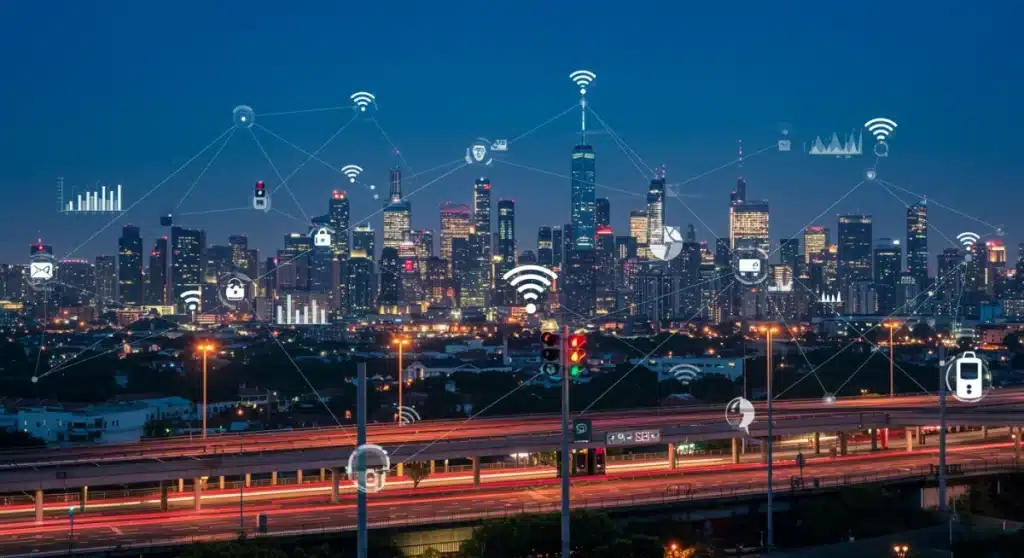
Advanced smart city sensor networks are instrumental in achieving a projected 15% increase in urban efficiency by 2026, primarily through sophisticated data integration that optimizes municipal operations and resource allocation.
Imagine a city that breathes, reacts, and adapts in real-time, constantly optimizing its own functions to serve its inhabitants better. This isn’t a futuristic fantasy; it’s the tangible promise of smart city sensor networks. As urban populations continue to grow, the demand for more efficient and sustainable cities becomes paramount. These interconnected systems are not just about collecting data; they are about transforming raw information into actionable insights that drive significant improvements in urban living. By 2026, experts predict these networks will boost urban efficiency by a remarkable 15% through advanced data integration, presenting practical solutions to long-standing municipal challenges.
The foundational role of smart city sensor networks
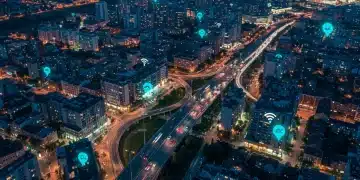
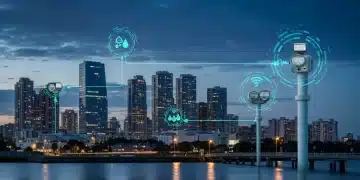
Smart city sensor networks form the backbone of modern urban infrastructure, quietly collecting vast amounts of data across various domains. These networks are not merely collections of individual sensors; rather, they are integrated ecosystems designed to provide a comprehensive understanding of urban dynamics. From monitoring traffic patterns to assessing air quality, these sensors offer real-time insights that were previously unattainable.
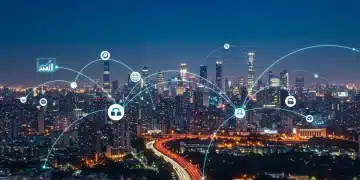
The true power of these networks lies in their ability to connect disparate data points, creating a holistic view of city operations. This interconnectedness allows for predictive analytics and proactive decision-making, moving municipalities beyond reactive problem-solving. Understanding how these systems interact is crucial for unlocking their full potential.
diverse sensor applications in urban environments
The applications for smart city sensors are incredibly diverse, touching almost every aspect of urban life. These applications range from public safety to environmental management, each contributing to the overall efficiency and livability of a city.
- Traffic management: Sensors monitor vehicle flow, identify congestion points, and optimize traffic light timings.
- Environmental monitoring: Air quality, noise levels, and water usage are tracked to ensure resident well-being and resource conservation.
- Waste management: Smart bins signal when they are full, optimizing collection routes and reducing operational costs.
- Public safety: Surveillance cameras and gunshot detectors enhance emergency response times and deter crime.
The integration of these diverse sensor applications provides a synergistic effect, where the sum is greater than its individual parts. For instance, combining traffic data with air quality readings can highlight areas where vehicle emissions are highest, enabling targeted interventions. This multi-faceted approach is what truly defines a smart city.
Ultimately, the foundational role of smart city sensor networks is to provide the critical data infrastructure needed for intelligent urban planning and management. Without these networks, the vision of a truly smart and efficient city would remain largely theoretical, lacking the real-time feedback loops necessary for continuous improvement and adaptation.
Advanced data integration: the key to 15% efficiency gains
Achieving a 15% urban efficiency gain by 2026 isn’t just about deploying more sensors; it’s fundamentally about how the data from these sensors is integrated and analyzed. Raw data, in isolation, holds limited value. Its true power is unlocked when it’s combined, correlated, and processed through advanced analytical platforms. This integration transforms scattered information into coherent, actionable intelligence.
Consider the complexity of managing a large city: countless systems operating independently, often in silos. Advanced data integration breaks down these barriers, creating a unified operational picture. This allows city planners and operators to see patterns, predict outcomes, and optimize resource allocation in ways previously impossible.
unifying disparate data streams
The challenge of data integration lies in bringing together information from a multitude of sources, each with its own data format, protocols, and latency. Smart city platforms are designed to ingest, normalize, and unify these disparate data streams, creating a common operational language.
- Standardized APIs: Essential for seamless data exchange between different sensor types and municipal systems.
- Cloud-based platforms: Provide the scalability and processing power needed to handle vast volumes of real-time data.
- Edge computing: Processes data closer to the source, reducing latency and bandwidth requirements for critical applications.
- Data lakes and warehouses: Store integrated data for historical analysis, trend identification, and machine learning model training.
By unifying these data streams, cities can move beyond reactive responses to proactive management. For example, traffic sensor data can be integrated with public transport schedules and weather forecasts to predict potential disruptions and adjust services accordingly. This level of predictive capability is a direct result of effective data integration.
The efficiency gains from advanced data integration are manifold. They include reduced operational costs, optimized resource utilization, improved public services, and enhanced citizen satisfaction. This integrated approach is not merely an upgrade; it’s a fundamental shift in how cities operate and evolve, positioning them for sustainable growth and resilience.
Practical solutions for optimizing urban mobility
Urban mobility is a critical aspect of city life, directly impacting economic productivity, environmental quality, and citizen well-being. Smart city sensor networks offer practical, data-driven solutions to optimize how people and goods move through the urban landscape. These solutions aim to reduce congestion, improve safety, and promote sustainable transport options.
The integration of various sensor types, from traffic cameras to GPS trackers on public transport, provides a real-time pulse of the city’s movement. This comprehensive view enables precise interventions and strategic planning, moving away from generalized solutions to highly targeted ones.
intelligent traffic management systems
One of the most immediate impacts of smart city sensors is on traffic management. Traditional traffic systems often operate on fixed schedules, which can exacerbate congestion during unusual events. Intelligent systems, however, are dynamic and responsive.
- Adaptive traffic signals: Sensors detect vehicle volume and adjust signal timings in real-time to optimize flow.
- Parking guidance systems: Sensors in parking spots direct drivers to available spaces, reducing search time and congestion.
- Congestion pricing zones: Data from entry/exit sensors can support dynamic pricing strategies to manage demand.
- Incident detection: Cameras and sensors quickly identify accidents or breakdowns, allowing for rapid response and rerouting.
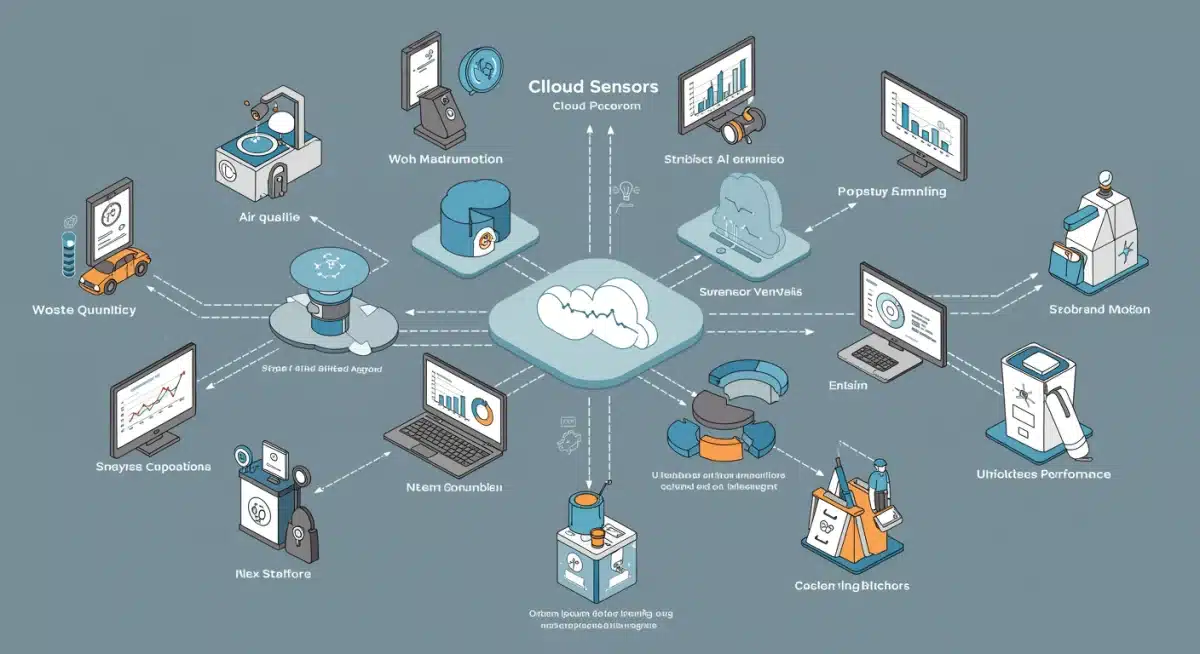
These systems don’t just alleviate current traffic problems; they also provide valuable data for long-term urban planning, such as identifying areas needing infrastructure upgrades or new public transport routes. The continuous feedback loop ensures ongoing optimization.
Beyond traffic, smart solutions extend to public transportation, micro-mobility, and even pedestrian flow. By integrating data from all these sources, cities can create a truly multimodal and efficient transport ecosystem. This holistic approach to urban mobility is vital for creating cities that are not only efficient but also enjoyable and accessible for everyone.
Environmental sustainability through sensor data
Environmental challenges are among the most pressing issues facing modern cities, from air pollution to water scarcity. Smart city sensor networks provide indispensable tools for monitoring, understanding, and mitigating these environmental impacts. By offering granular, real-time data, these networks empower cities to make informed decisions that foster greater sustainability.
The ability to track environmental metrics continuously allows for early detection of issues, pinpointing pollution sources, and assessing the effectiveness of environmental policies. This data-driven approach is crucial for achieving ambitious sustainability goals and improving public health.
monitoring air and water quality
Air and water quality are fundamental to urban health and ecological balance. Smart sensors provide the means to keep these vital resources under constant surveillance, offering insights that traditional methods cannot match.
- Air quality sensors: Monitor pollutants like particulate matter (PM2.5, PM10), nitrogen dioxide, and ozone, providing localized pollution maps.
- Water quality sensors: Detect contaminants, pH levels, and temperature in reservoirs, rivers, and distribution networks.
- Noise sensors: Measure ambient noise levels to identify noise pollution hotspots and inform urban planning.
- Waste level sensors: Optimize collection routes, reducing fuel consumption and emissions from waste management vehicles.
The data collected from these sensors can be integrated with meteorological data and traffic information to build predictive models for environmental conditions. For instance, understanding how traffic patterns affect localized air quality allows for targeted interventions, such as rerouting heavy vehicles or promoting public transport during peak pollution events.
Furthermore, sensor networks contribute to efficient resource management. Smart irrigation systems, for example, use soil moisture sensors and weather data to water public spaces only when necessary, conserving significant amounts of water. This proactive and precise management of environmental resources is a cornerstone of sustainable urban development, leading to healthier and more resilient cities.
Enhancing public safety and emergency response
Public safety is a paramount concern for any city, and smart city sensor networks are revolutionizing how urban areas address this challenge. By providing real-time situational awareness and enabling faster, more coordinated responses, these networks significantly enhance the safety and security of residents. This technological integration moves beyond traditional surveillance to create a truly proactive safety infrastructure.
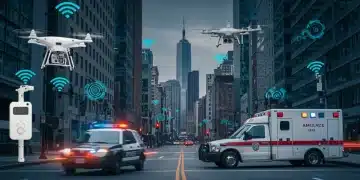
The ability to detect incidents rapidly and accurately is critical in emergency situations. Smart sensors, combined with advanced analytics, can identify potential threats or emergencies, alerting authorities much faster than human observation alone.
intelligent surveillance and incident detection
Modern surveillance systems go far beyond simple video recording. They are integrated with AI-powered analytics to detect anomalies and specific events, transforming them into intelligent incident detection platforms.
- AI-powered cameras: Detect unusual activities, suspicious packages, or even aggressive behavior in public spaces.
- Gunshot detection systems: Immediately pinpoint the location of gunfire, enabling rapid police deployment.
- Emergency call boxes: Integrated with sensors and cameras, providing direct communication and visual context to dispatchers.
- Crowd monitoring: Sensors analyze crowd density and movement, helping manage large events and prevent stampedes.
Beyond detection, these networks facilitate a more efficient emergency response. Data from various sensors can be fed into a central command center, providing responders with critical information before they even arrive on the scene. This includes real-time traffic conditions for optimal routing, building layouts for fire departments, and even health data for medical emergencies when integrated with wearable devices or smart home systems.
The integration of these safety and emergency response solutions creates a safer urban environment, not just by deterring crime but also by minimizing the impact of accidents and natural disasters. The predictive capabilities and rapid response afforded by smart sensor networks are invaluable for protecting lives and property, contributing significantly to overall urban well-being.
Challenges and future outlook for smart city sensor networks
While the benefits of smart city sensor networks are undeniable, their implementation and widespread adoption come with a unique set of challenges. Addressing these hurdles is crucial for realizing the projected 15% urban efficiency gains by 2026 and ensuring the sustainable evolution of smart cities. These challenges span technological, ethical, and financial dimensions.
Overcoming these obstacles requires a collaborative effort involving governments, technology providers, and citizens. The future outlook, however, remains overwhelmingly positive, with continuous innovation driving new solutions and expanding the capabilities of these networks.
data privacy and cybersecurity concerns
One of the most significant challenges pertains to data privacy and cybersecurity. The vast amount of data collected by smart city sensors, much of which can be personal or sensitive, raises legitimate concerns among citizens and regulators.
- Data anonymization: Implementing robust techniques to remove personally identifiable information from collected data.
- Secure data transmission: Ensuring encrypted communication channels to protect data from interception.
- Cybersecurity protocols: Developing and enforcing strict security measures to prevent unauthorized access and cyberattacks.
- Ethical guidelines: Establishing clear policies on data usage, retention, and access to build public trust.
Beyond privacy, the sheer scale of deployment and integration presents technical complexities. Ensuring interoperability between different sensor types and platforms from various vendors is a continuous challenge. Furthermore, the energy consumption of massive sensor networks requires innovative solutions, such as low-power wide-area networks (LPWAN) and energy harvesting technologies.
Looking ahead, the future of smart city sensor networks involves even greater levels of intelligence and autonomy. The integration of artificial intelligence and machine learning will enable more sophisticated predictive analytics and automated decision-making. We can expect to see self-healing networks, hyper-personalized urban services, and even more seamless integration with IoT devices in homes and businesses. The journey towards a fully optimized smart city is ongoing, but the trajectory is clear: increasingly efficient, sustainable, and livable urban environments powered by intelligent sensor networks.
| Key Point | Brief Description |
|---|---|
| Urban Efficiency Goal | Targeting a 15% increase in urban efficiency by 2026 through sensor networks. |
| Data Integration | Advanced integration of diverse sensor data is crucial for actionable insights. |
| Mobility Optimization | Sensors enable intelligent traffic management and public transport solutions. |
| Sustainability Focus | Environmental monitoring for improved air/water quality and resource management. |
Frequently asked questions about smart city sensor networks
Smart city sensor networks are interconnected systems of devices that collect data on various urban parameters like traffic, air quality, and waste levels. They use this data to inform real-time decision-making, optimize city services, and improve the overall efficiency and livability of urban environments.
By providing real-time data, sensor networks enable cities to optimize resource allocation, manage traffic flow dynamically, and enhance public services. This data-driven approach leads to reduced congestion, lower energy consumption, improved environmental quality, and more responsive municipal operations, directly boosting efficiency.
Smart city sensors collect a wide array of data, including traffic volume and speed, air pollutant concentrations, noise levels, water usage, waste bin fill levels, and even public safety metrics through intelligent surveillance. This diverse data pool is then integrated for comprehensive urban analysis.
Key challenges include ensuring data privacy and cybersecurity, achieving interoperability between different sensor systems and platforms, managing the vast amounts of data generated, and securing adequate funding for deployment and maintenance. Building public trust and addressing ethical concerns are also vital.
By 2026, smart city sensor networks are projected to deliver a 15% increase in urban efficiency. This will translate into smarter traffic, cleaner environments, enhanced public safety, and more responsive city services, making urban living significantly more convenient, sustainable, and enjoyable for residents.
Conclusion
The journey towards smarter, more efficient cities is well underway, with smart city sensor networks at its core. The projected 15% urban efficiency gain by 2026 is not merely an ambitious target but a tangible outcome driven by the intelligent integration and analysis of vast datasets. From optimizing traffic flow and enhancing public safety to fostering environmental sustainability, these networks are fundamentally transforming how urban environments function. While challenges related to data privacy, cybersecurity, and interoperability persist, ongoing innovation and collaborative efforts are paving the way for increasingly sophisticated and beneficial applications. The future of urban living promises to be more responsive, resilient, and remarkably efficient, thanks to the continuous evolution of these vital technological ecosystems.