Securing Smart City Infrastructure: Top 3 Cybersecurity Measures for U.S. by 2026

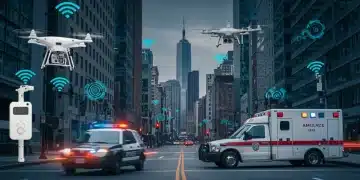
The vision of a smart city – where technology seamlessly integrates into urban living, enhancing efficiency, sustainability, and quality of life – is rapidly becoming a reality across the United States. From intelligent transportation systems and optimized energy grids to connected public safety networks and smart waste management, these innovations promise a brighter, more efficient future. However, this interconnectedness, while offering immense benefits, also introduces a complex web of vulnerabilities. The very digital fabric that makes a city ‘smart’ also makes it a prime target for increasingly sophisticated cyber threats. As we look towards 2026, the imperative for robust Smart City Cybersecurity is not just a recommendation; it’s a critical national security and public safety concern.
The stakes are incredibly high. A successful cyberattack on a smart city could lead to widespread disruption of essential services, economic paralysis, data breaches compromising citizen privacy, and even physical harm. Imagine traffic lights being manipulated, power grids being shut down, or emergency services being incapacitated. These aren’t far-fetched scenarios; they represent real and present dangers that U.S. cities must proactively address. This article delves into the three critical cybersecurity measures that U.S. smart cities must implement by 2026 to safeguard their infrastructure, drawing on insider knowledge and best practices to provide a comprehensive roadmap for protection.
The Evolving Threat Landscape for Smart City Cybersecurity
Before we outline the solutions, it’s crucial to understand the nature of the threats. Smart cities are built upon an intricate ecosystem of Internet of Things (IoT) devices, sensors, cloud platforms, artificial intelligence (AI) systems, and vast networks of data. Each component, if not properly secured, can serve as an entry point for malicious actors. The attackers range from individual hackers and organized cybercriminal groups seeking financial gain, to state-sponsored entities aiming for espionage or sabotage, and even hacktivists with ideological motivations.
Common attack vectors include:
- IoT Device Vulnerabilities: Many IoT devices are designed with minimal security features, often due to cost-cutting or rapid deployment cycles. Default passwords, unpatched firmware, and insecure communication protocols are rampant.
- Supply Chain Attacks: Compromising a vendor or supplier in the smart city’s technological supply chain can grant attackers access to multiple systems simultaneously.
- Ransomware: Holding critical city systems hostage for a ransom payment is a lucrative and increasingly common attack, capable of crippling operations.
- Data Breaches: Smart cities collect vast amounts of personal and operational data, making them attractive targets for data theft.
- Denial of Service (DoS/DDoS) Attacks: Overwhelming city networks or services to render them unavailable.
- Physical Tampering: While often overlooked in digital security discussions, physical access to devices can bypass digital controls.
The dynamic and interconnected nature of smart city infrastructure means that a vulnerability in one system can quickly propagate, creating a cascading failure across multiple services. This highlights the need for a holistic, layered approach to Smart City Cybersecurity.
Measure 1: Implementing a Unified, AI-Driven Security Operations Center (SOC) with Proactive Threat Intelligence
The first and arguably most critical measure for U.S. smart cities by 2026 is the establishment of a sophisticated, unified, and AI-driven Security Operations Center (SOC) coupled with robust proactive threat intelligence capabilities. Traditional, siloed security approaches simply cannot keep pace with the volume and complexity of threats targeting smart city environments.
The Need for Unification and Centralization
Smart cities often have disparate systems managed by different departments – transportation, utilities, public safety, etc. Each might have its own security protocols, tools, and monitoring. This fragmented approach creates blind spots and delays in incident response. A unified SOC consolidates security monitoring, incident detection, and response across all smart city domains. This means:
- Centralized Visibility: A single pane of glass for monitoring security events across all IoT devices, networks, cloud platforms, and applications.
- Standardized Protocols: Implementing consistent security policies and procedures across all city agencies and smart infrastructure components.
- Shared Intelligence: Enabling real-time sharing of threat indicators and incident data among all stakeholders.
The Power of AI and Machine Learning
The sheer volume of data generated by smart city infrastructure makes manual security analysis impossible. AI and Machine Learning (ML) are indispensable for:
- Anomaly Detection: Identifying unusual patterns or behaviors that could indicate a cyberattack, such as abnormal data flows, unauthorized device access, or deviations from normal operational parameters.
- Predictive Analytics: Leveraging historical data and current threat intelligence to anticipate potential attacks and vulnerabilities before they are exploited.
- Automated Response: Triggering automated alerts, isolating compromised devices, or blocking malicious traffic in real-time, significantly reducing response times.
- Threat Prioritization: Helping security analysts focus on the most critical threats by filtering out noise and false positives.
Proactive Threat Intelligence Integration
A reactive security posture is no longer sufficient. Smart cities need to be proactive. This means integrating real-time, actionable threat intelligence into the SOC. This includes:
- Dark Web Monitoring: Tracking discussions and activities on dark web forums for mentions of city infrastructure, vulnerabilities, or planned attacks.
- Vulnerability Feeds: Subscribing to and acting upon up-to-date information on newly discovered vulnerabilities in software, hardware, and IoT devices.
- Geopolitical Threat Analysis: Understanding the motivations and capabilities of state-sponsored actors who might target critical infrastructure.
- Industry-Specific Intelligence: Collaborating with other smart cities and industry groups to share threat indicators and best practices.
By 2026, a truly effective Smart City Cybersecurity strategy will hinge on a SOC that not only detects and responds to threats but actively anticipates and mitigates them, powered by the intelligence and speed of AI.
Measure 2: Adopting a Zero Trust Architecture and Robust Identity & Access Management (IAM)
The second critical measure is a fundamental shift in security philosophy: moving from a perimeter-based defense to a Zero Trust Architecture (ZTA), coupled with a robust Identity and Access Management (IAM) framework. The traditional ‘trust but verify’ model is obsolete in the highly interconnected and distributed environment of a smart city. Zero Trust, in contrast, operates on the principle of ‘never trust, always verify.’
The Principles of Zero Trust Architecture
A ZTA assumes that no user, device, or application, whether inside or outside the network perimeter, should be implicitly trusted. Every access request must be authenticated, authorized, and continuously validated. Key components include:
- Micro-segmentation: Dividing the network into smaller, isolated segments, limiting lateral movement for attackers even if they breach one segment. This means that an attack on a smart parking sensor doesn’t automatically grant access to the city’s financial systems.
- Least Privilege Access: Granting users and devices only the minimum necessary permissions to perform their specific tasks. This minimizes the potential damage if an account or device is compromised.
- Continuous Verification: Access decisions are not one-time events. User and device identities, context (location, time, device posture), and resource attributes are continuously evaluated throughout a session.
- Multi-Factor Authentication (MFA) Everywhere: Implementing MFA for all users and, where technically feasible, for critical devices accessing sensitive systems.
- Device Posture Checks: Ensuring that devices accessing the network (e.g., city employee laptops, smart sensors) are compliant with security policies, patched, and free of malware before granting access.
Robust Identity and Access Management (IAM)
IAM is the backbone of a successful ZTA in a smart city. It encompasses the processes and technologies for managing digital identities and controlling access to resources. For smart cities, IAM must extend beyond human users to include the vast array of IoT devices, applications, and services. This involves:
- Device Identity Management: Assigning unique, verifiable identities to every smart city device, from traffic cameras to environmental sensors. This allows for tracking, authentication, and policy enforcement.
- Automated Provisioning and De-provisioning: Streamlining the process of granting and revoking access for users and devices based on their roles and lifecycle.
- Centralized Directory Services: A unified system for managing all identities, simplifying administration and improving consistency.
- Attribute-Based Access Control (ABAC): Instead of just roles, access decisions are based on a set of attributes associated with the user, device, and the resource being accessed, providing more granular control.
Implementing ZTA and robust IAM will necessitate significant architectural changes and investment, but it is an indispensable step towards creating a truly resilient Smart City Cybersecurity posture by 2026. It moves away from the flawed assumption that everything inside the network is safe, a critical paradigm shift for securing highly distributed smart city ecosystems.

Measure 3: Establishing Comprehensive Data Governance, Privacy Frameworks, and Encryption-in-Transit/Rest
The third critical measure focuses on the lifeblood of smart cities: data. Protecting the vast amounts of data collected, processed, and stored is paramount, not just for operational integrity but also for maintaining citizen trust and complying with evolving privacy regulations. By 2026, U.S. smart cities must have comprehensive data governance policies, robust privacy frameworks, and ubiquitous encryption strategies in place.
Comprehensive Data Governance
Data governance establishes the policies, procedures, and roles for managing data assets. For smart cities, this means:
- Data Classification: Categorizing data based on its sensitivity (e.g., personal identifiable information, critical infrastructure operational data, public data) to apply appropriate security controls.
- Data Lifecycle Management: Defining how data is collected, stored, processed, used, archived, and ultimately disposed of, ensuring compliance and minimizing retention risks.
- Data Ownership and Accountability: Clearly defining who is responsible for different data sets and ensuring accountability for their protection.
- Regular Audits and Assessments: Periodically reviewing data handling practices, security controls, and compliance with policies and regulations.
Robust Privacy Frameworks (e.g., Privacy by Design)
Smart cities gather extensive personal data, from movement patterns to energy consumption. Protecting citizen privacy is not just a regulatory requirement (e.g., GDPR-like regulations potentially emerging in the U.S. or existing state-level laws like CCPA); it’s a moral imperative. Implementing a privacy-by-design approach means:
- Privacy by Design (PbD): Integrating privacy considerations into the design and architecture of all smart city systems from the outset, rather than as an afterthought. This includes minimizing data collection, anonymization, and pseudonymization.
- Transparency and User Control: Clearly communicating to citizens what data is being collected, why, and how it’s being used. Providing mechanisms for citizens to access, correct, or delete their personal data where appropriate.
- Impact Assessments: Conducting Privacy Impact Assessments (PIAs) for new smart city projects to identify and mitigate potential privacy risks.
Ubiquitous Encryption: Data in Transit and Data at Rest
Encryption is the cornerstone of data protection. For Smart City Cybersecurity, encryption must be applied comprehensively:
- Encryption in Transit: All data transmitted across smart city networks, whether between IoT devices and gateways, or between cloud services, must be encrypted using strong, modern cryptographic protocols (e.g., TLS 1.3). This prevents eavesdropping and man-in-the-middle attacks.
- Encryption at Rest: All sensitive data stored on servers, databases, cloud storage, and even on IoT devices themselves (where feasible) must be encrypted. This protects data even if storage devices are physically stolen or compromised.
- Key Management: Implementing robust key management systems to securely generate, store, distribute, and revoke encryption keys. Weak key management can undermine even the strongest encryption.
- Homomorphic Encryption and Secure Multi-Party Computation: Exploring advanced encryption techniques that allow computations on encrypted data without decrypting it, offering enhanced privacy for sensitive analytics. While still maturing, these technologies hold significant promise for future smart city applications.
By prioritizing data governance, privacy, and encryption, U.S. smart cities can build a foundation of trust and resilience, ensuring that the benefits of technological advancement do not come at the cost of citizen privacy or data security.
The Path Forward: Overcoming Challenges and Fostering Collaboration
Implementing these three critical measures for robust Smart City Cybersecurity by 2026 is not without its challenges. Cities face constraints in budget, skilled personnel, and the sheer complexity of integrating legacy systems with new technologies. However, these challenges are not insurmountable and can be addressed through strategic planning, investment, and collaboration.
Addressing Budgetary Constraints
Cybersecurity should be viewed not as an expense, but as an essential investment in the city’s future and resilience. Funding can be secured through:
- Federal Grants: Leveraging federal programs aimed at critical infrastructure protection and smart city development.
- Public-Private Partnerships (PPPs): Collaborating with cybersecurity firms and technology providers to share costs, expertise, and resources.
- Prioritization and Phased Implementation: Identifying the most critical assets and vulnerabilities for immediate attention, then rolling out comprehensive solutions in phases.
Developing a Skilled Cybersecurity Workforce
There’s a significant shortage of cybersecurity professionals. Cities can address this by:
- Training and Upskilling Existing Staff: Investing in training programs for current IT and operational technology (OT) personnel.
- Academic Partnerships: Collaborating with universities and community colleges to develop specialized curricula and internship programs.
- Recruitment Incentives: Offering competitive salaries and benefits to attract top talent.
Fostering Collaboration and Information Sharing
No city can tackle the cybersecurity challenge alone. Collaboration is key:
- Inter-Agency Cooperation: Ensuring seamless communication and coordination between different city departments, law enforcement, and emergency services.
- National and International Partnerships: Sharing threat intelligence and best practices with federal agencies (e.g., CISA), other cities, and international organizations.
- Industry Collaboration: Working closely with technology vendors and cybersecurity experts to ensure solutions are secure by design and aligned with evolving threats.
- Citizen Engagement: Educating citizens about their role in cybersecurity, such as strong password practices and recognizing phishing attempts, especially concerning city-provided services.
The establishment of clear governance structures, cross-functional teams, and incident response plans that are regularly tested and updated are also foundational elements for success. Regular penetration testing and vulnerability assessments are not optional; they are vital to continuously identify and remediate weaknesses before adversaries exploit them. Compliance with emerging industry standards and frameworks (e.g., NIST Cybersecurity Framework) provides a structured approach to managing cyber risk.

Conclusion: A Secure Future for Smart Cities
The digital transformation of U.S. cities holds immense promise, but its success is inextricably linked to the strength of its Smart City Cybersecurity posture. By 2026, the implementation of a unified, AI-driven SOC with proactive threat intelligence, the adoption of Zero Trust Architecture with robust IAM, and the establishment of comprehensive data governance, privacy frameworks, and ubiquitous encryption are not merely aspirational goals; they are non-negotiable requirements.
These three critical measures form a robust defense-in-depth strategy, creating multiple layers of security that make it significantly harder for attackers to succeed. They move cities from a reactive stance to a proactive and resilient one, safeguarding critical infrastructure, protecting citizen data, and ensuring the continued functionality and trust in smart city services. The journey to a truly secure smart city is ongoing, demanding continuous adaptation and vigilance, but by prioritizing these foundational cybersecurity pillars, U.S. cities can confidently build a smart, safe, and resilient future for all their inhabitants.
The time for action is now. Proactive investment and strategic implementation of these cybersecurity measures will define the security landscape of U.S. smart cities for decades to come, ensuring that the promise of intelligent urban living is realized without succumbing to the perils of an insecure digital frontier.