Cybersecurity for Smart Cities: 2025 Threat Protection

Smart city cybersecurity is crucial for protecting critical urban systems from sophisticated 2025 threats, ensuring the continuity of essential services and the safety of residents.
As urban environments become increasingly interconnected and reliant on digital infrastructure, the imperative for robust smart city cybersecurity has never been greater. The promise of smart cities—enhanced efficiency, improved quality of life, and sustainable development—hinges entirely on the security of their underlying technological frameworks. However, this interconnectedness also presents a vast and tempting target for cyber threats, which are projected to grow significantly in sophistication and frequency by 2025. Protecting critical urban systems is not merely a technical challenge; it’s a societal imperative that demands proactive strategies and practical solutions.
Understanding the Evolving Threat Landscape for Smart Cities
The digital backbone of a smart city, encompassing everything from traffic management systems to public utilities and emergency services, creates an extensive attack surface. This intricate web of sensors, IoT devices, data centers, and communication networks is constantly exposed to a myriad of cyber threats. By 2025, these threats are expected to be more advanced, leveraging artificial intelligence, machine learning, and increasingly sophisticated social engineering tactics.
Cybercriminals, state-sponsored actors, and even hacktivists are constantly seeking vulnerabilities to exploit, aiming to disrupt services, steal sensitive data, or cause physical damage. The potential consequences of a successful attack on a smart city system are severe, ranging from widespread power outages and transportation chaos to compromised public safety and loss of citizen trust. Therefore, a comprehensive understanding of this evolving threat landscape is the first step toward effective defense.
Key Threat Vectors by 2025
The nature of cyber threats is dynamic, and smart cities must anticipate specific vectors that will pose significant risks in the near future. These vectors often exploit the very characteristics that make smart cities efficient: pervasive connectivity and vast data collection.
- IoT Device Vulnerabilities: Millions of interconnected IoT devices often lack robust security features, making them easy entry points for attackers.
- Supply Chain Attacks: Compromised hardware or software components introduced at any stage of the supply chain can create backdoors into critical systems.
- AI-Powered Attacks: Adversaries will use AI to automate attacks, identify zero-day vulnerabilities faster, and craft more convincing phishing attempts.
- Ransomware 2.0: More aggressive and targeted ransomware strains will not just encrypt data but also disrupt operational technology (OT) systems, demanding higher ransoms.
Understanding these specific threat vectors allows city planners and cybersecurity professionals to prioritize defensive measures and allocate resources effectively. The sheer volume of data generated and processed by smart cities also makes them prime targets for data breaches, affecting citizen privacy and city operations.
Establishing a Resilient Cybersecurity Framework
Building a resilient cybersecurity framework for smart cities requires a multi-layered approach that integrates technology, policy, and human expertise. It’s not enough to implement point solutions; a holistic strategy is essential to protect against the diverse and evolving threat landscape. This framework must be dynamic, capable of adapting to new threats and incorporating emerging security technologies.
A robust framework begins with a thorough risk assessment, identifying critical assets, potential vulnerabilities, and the likelihood and impact of various cyber-attacks. This assessment provides the foundation for developing tailored security policies and implementing appropriate controls. Furthermore, continuous monitoring and regular audits are crucial to ensure the framework remains effective over time.
Core Components of a Strong Framework
Several foundational elements are indispensable for any smart city aiming to establish strong cybersecurity. These components work in concert to create a robust defense posture.
- Policy & Governance: Clear cybersecurity policies, regulatory compliance, and a dedicated governance structure are essential for guiding security efforts. This includes defining roles, responsibilities, and accountability for cybersecurity across all city departments.
- Technical Controls: Implementation of advanced firewalls, intrusion detection/prevention systems (IDPS), encryption, multi-factor authentication (MFA), and secure network segmentation. These technical safeguards form the first line of defense against external and internal threats.
- Incident Response Plan: A well-defined and regularly tested incident response plan is critical for quickly detecting, containing, and recovering from cyber incidents, minimizing their impact. This plan should include communication protocols and stakeholder engagement strategies.
- Cybersecurity Awareness Training: Human error remains a significant vulnerability. Regular training for city employees and contractors on cybersecurity best practices is vital to build a security-aware culture.
The integration of these components ensures that security is embedded into every aspect of smart city operations, from initial design to daily maintenance. Without a strong, adaptable framework, even the most advanced technologies can fall short in protecting urban systems.
Securing Critical Infrastructure and IoT Devices
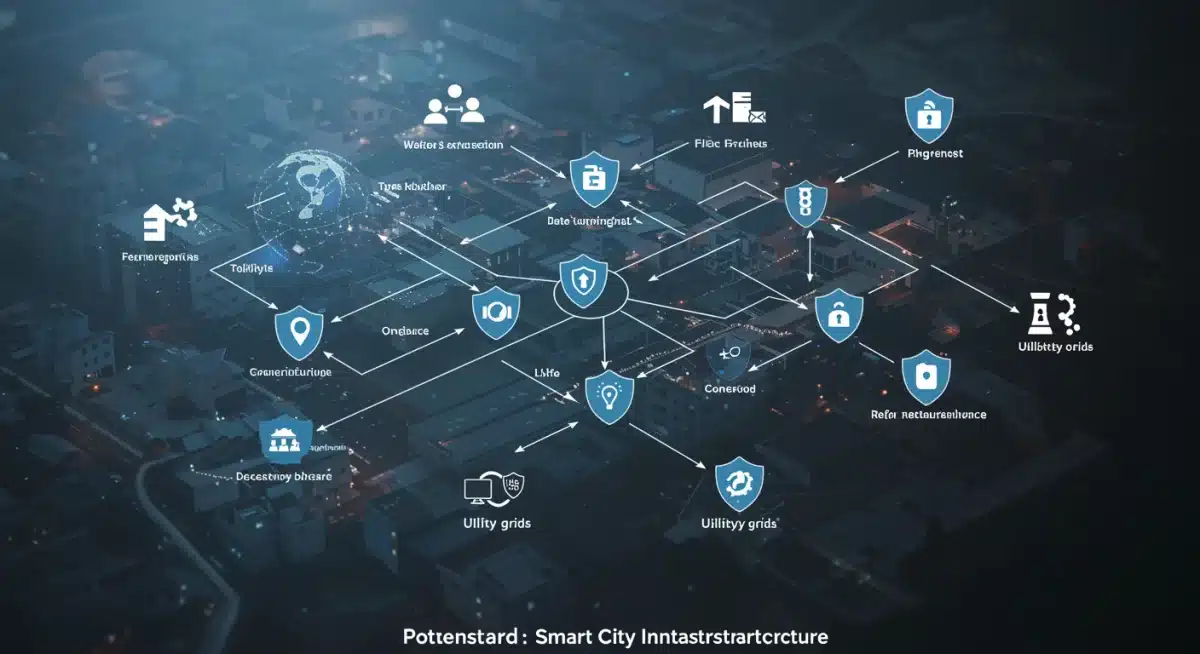
The critical infrastructure of a smart city—power grids, water supply, transportation networks, and communication systems—are the lifeblood of urban life. Any disruption to these systems due to cyber-attacks can have catastrophic consequences. Similarly, the proliferation of IoT devices, from smart streetlights to environmental sensors, introduces countless potential entry points for adversaries. Securing these elements is paramount for maintaining urban functionality and citizen safety.
Effective security for critical infrastructure involves a blend of IT (Information Technology) and OT (Operational Technology) security practices. OT systems, which control physical processes, often have unique vulnerabilities and require specialized security approaches. For IoT devices, security must be considered from the design phase, not as an afterthought.
Practical Solutions for Infrastructure and IoT
Implementing specific, actionable solutions is key to strengthening the defenses around critical infrastructure and IoT. These solutions often involve a combination of hardware, software, and procedural controls.
- Network Segmentation: Isolating critical OT networks from general IT networks significantly reduces the attack surface and prevents lateral movement by attackers. This means creating separate zones for different types of systems.
- Regular Patching & Updates: Ensuring all software and firmware on critical infrastructure and IoT devices are regularly updated with the latest security patches closes known vulnerabilities. This requires a robust patch management system.
- Device Authentication & Authorization: Implementing strong authentication mechanisms for all IoT devices and ensuring strict authorization policies to control access to critical functions and data. Default passwords must be eliminated.
- Anomaly Detection: Utilizing AI-powered anomaly detection systems to monitor network traffic and device behavior for unusual patterns that could indicate a cyber-attack in progress. This allows for early detection and response.
The convergence of IT and OT security practices is crucial here, recognizing that physical and digital vulnerabilities are often intertwined. Proactive monitoring and rapid response capabilities are non-negotiable for these essential systems.

Data Privacy and Ethical Considerations in Smart Cities
Smart cities leverage vast amounts of data, from traffic patterns and energy consumption to public safety incidents and individual citizen behaviors. While this data is invaluable for optimizing urban services, it also raises significant concerns regarding data privacy and ethical use. Protecting this sensitive information from unauthorized access, misuse, or breach is a core responsibility of any smart city initiative.
The ethical implications extend beyond mere compliance with privacy regulations. Cities must consider how data is collected, stored, analyzed, and shared, ensuring that it genuinely serves the public good without infringing on individual rights. Transparency and accountability in data handling are paramount to building and maintaining citizen trust, which is fundamental to the success of any smart city. Moreover, the potential for algorithmic bias in data-driven decision-making requires careful consideration and mitigation.
Ensuring Data Protection and Ethical Use
Addressing data privacy and ethical concerns requires a multi-faceted approach that combines technical safeguards with clear policy and public engagement. It’s about creating a framework where data use is both secure and socially responsible.
- Privacy-by-Design: Integrating privacy considerations into the design and architecture of all smart city systems from the outset, rather than trying to add them later. This includes data minimization and pseudonymization.
- Strong Encryption: Encrypting sensitive data both in transit and at rest to protect it from unauthorized access, even if a system is breached. End-to-end encryption should be prioritized where possible.
- Clear Data Governance Policies: Establishing explicit policies for data collection, storage, retention, use, and sharing, ensuring transparency and adherence to relevant privacy regulations (e.g., GDPR, CCPA).
- Independent Oversight: Establishing independent bodies or committees to oversee smart city data practices, ensuring ethical guidelines are met and providing an avenue for public accountability.
Navigating the complex landscape of data privacy and ethics is crucial for smart cities to foster trust and ensure that technological advancements truly benefit all residents without compromising fundamental rights. Public consultation and education play a vital role in this process.
Collaboration and Information Sharing for Enhanced Security
Cybersecurity is not a problem that any single entity can solve in isolation. For smart cities, effective defense against sophisticated threats requires robust collaboration and proactive information sharing among various stakeholders. This includes city departments, private sector partners, academic institutions, and even other municipalities. The interconnected nature of smart city infrastructure means that a vulnerability in one area can quickly impact others.
Establishing formal and informal channels for sharing threat intelligence, best practices, and incident response strategies significantly enhances the collective security posture. By learning from each other’s experiences and pooling resources, smart cities can develop more resilient defenses and respond more effectively to emerging threats. This collaborative ecosystem fosters a stronger, more informed defense against common adversaries.
Building Collaborative Cybersecurity Networks
Practical steps can be taken to foster a collaborative environment that strengthens smart city cybersecurity. These initiatives aim to break down silos and create a unified front against cyber threats.
- Public-Private Partnerships (PPPs): Engaging with private cybersecurity firms and technology providers to leverage their expertise, tools, and threat intelligence. PPPs can bring advanced capabilities that cities might not possess internally.
- Information Sharing and Analysis Centers (ISACs): Participating in or establishing ISACs focused on critical infrastructure or smart city technologies to share real-time threat indicators and defensive strategies with trusted partners.
- Cross-Jurisdictional Cooperation: Collaborating with neighboring cities, state, and federal agencies to develop regional cybersecurity strategies and coordinate responses to widespread incidents. Cyber threats often don’t respect municipal boundaries.
- Academic & Research Engagement: Partnering with universities and research institutions to explore emerging threats, develop innovative security solutions, and conduct vulnerability assessments. This brings cutting-edge knowledge into practical application.
Through these collaborative efforts, smart cities can move beyond individual defense mechanisms to create a collective shield, making the entire urban ecosystem more resistant to cyber-attacks. Shared intelligence is a powerful weapon in the fight against cybercrime.
Future-Proofing Smart City Cybersecurity Strategies
The landscape of cyber threats is constantly evolving, meaning that static security strategies will quickly become obsolete. To effectively protect critical urban systems from 2025 threats and beyond, smart cities must adopt a mindset of continuous adaptation and innovation. Future-proofing cybersecurity involves not just reacting to current threats but anticipating future ones and building in the flexibility to integrate new defensive technologies and methodologies.
This forward-looking approach requires investment in research and development, fostering a culture of innovation within city cybersecurity teams, and regularly reassessing the effectiveness of existing controls against emerging attack techniques. It also means embracing technologies like AI and machine learning not just as potential targets, but as powerful tools for defense.
Key Elements for Long-Term Security
To ensure smart city cybersecurity remains effective in the face of future challenges, several strategic elements are crucial for long-term planning and implementation.
- AI and Machine Learning for Defense: Deploying AI-driven security tools for advanced threat detection, behavioral analytics, and automated incident response, moving beyond signature-based detection.
- Quantum-Resistant Cryptography: Beginning to explore and implement quantum-resistant cryptographic solutions to protect data from future quantum computing attacks, which could break current encryption standards.
- Zero Trust Architecture: Adopting a ‘never trust, always verify’ security model where every user, device, and application must be authenticated and authorized, regardless of its location within the network.
- Regular Threat Modeling and Red Teaming: Continuously conducting sophisticated threat modeling exercises and ‘red teaming’ simulations to identify weaknesses in systems before adversaries do, mimicking real-world attack scenarios.
By integrating these forward-thinking strategies, smart cities can build resilience that extends far beyond immediate concerns, positioning themselves to effectively counter the cyber threats of 2025 and the decades to come. This proactive stance is essential for sustained urban security and functionality.
| Key Aspect | Brief Description |
|---|---|
| Threat Landscape | Evolving cyber threats by 2025 targeting IoT, supply chains, and leveraging AI for advanced attacks. |
| Resilient Framework | Multi-layered security integrating policy, technical controls, incident response, and awareness training. |
| Data & Ethics | Prioritizing privacy-by-design, strong encryption, clear governance, and independent oversight for citizen trust. |
| Future-Proofing | Adopting AI for defense, quantum-resistant crypto, Zero Trust, and continuous threat modeling. |
Frequently Asked Questions About Smart City Cybersecurity
By 2025, primary targets will include critical infrastructure like power grids and transportation, vulnerable IoT devices, and city data centers holding sensitive citizen information. Attackers will aim to disrupt services, steal data, or cause physical damage, often exploiting supply chain weaknesses and automated attack tools.
Protection against AI-powered threats involves deploying AI-driven defense mechanisms for anomaly detection and behavioral analytics. Cities should also implement robust network segmentation, continuously update systems, and conduct regular penetration testing to identify and patch vulnerabilities before adversaries can exploit them.
Data privacy is critical because smart cities collect vast amounts of personal and operational data. Breaches can lead to identity theft, surveillance, and loss of public trust. Implementing privacy-by-design principles, strong encryption, and transparent data governance policies are essential to safeguard citizen information and maintain ethical standards.
Collaboration is vital for smart city cybersecurity as it allows for shared threat intelligence, best practices, and coordinated incident response. Public-private partnerships, information sharing centers (ISACs), and cross-jurisdictional cooperation enhance collective defense and create a more resilient urban ecosystem against common adversaries.
Zero Trust architecture operates on the principle of ‘never trust, always verify.’ In smart cities, it means every user, device, and application attempting to access resources must be authenticated and authorized, regardless of their location. This significantly reduces the risk of unauthorized access and lateral movement within the network, bolstering overall security.
Conclusion
The journey toward truly smart cities is inextricably linked with the strength of their cybersecurity defenses. As we approach 2025, the sophistication of cyber threats continues to escalate, making proactive and comprehensive strategies non-negotiable. By understanding the evolving threat landscape, establishing resilient frameworks, securing critical infrastructure and IoT, prioritizing data privacy and ethics, fostering robust collaboration, and future-proofing strategies, smart cities can effectively protect their vital urban systems. The commitment to strong smart city cybersecurity ensures not only the continuity of essential services but also the sustained trust and well-being of their citizens, paving the way for a secure and prosperous urban future.