Achieving 15% Faster Deliveries: Predictive AI for US Logistics in 2026

In an era defined by instant gratification and ever-increasing customer expectations, the logistics industry stands at a critical juncture. U.S. logistics firms, in particular, face immense pressure to deliver goods faster, more reliably, and at a lower cost. The promise of cutting delivery times by a significant 15% by 2026 might seem ambitious, but with the rapid advancements in technology, especially in predictive artificial intelligence (AI), this goal is not only achievable but also essential for competitive survival. This comprehensive guide will delve into how U.S. logistics firms can harness the power of predictive AI to revolutionize their operations, streamline their supply chains, and ultimately, achieve this ambitious target.
The Imperative for Speed: Why 15% Matters
The global e-commerce boom has fundamentally reshaped consumer behavior. Customers now expect next-day or even same-day delivery as a standard, not a luxury. This shift places immense strain on traditional logistics models, which often struggle with inefficiencies, unforeseen delays, and suboptimal resource allocation. A 15% reduction in delivery times translates directly into several critical advantages for U.S. logistics firms:
- Enhanced Customer Satisfaction: Faster deliveries lead to happier customers, fostering loyalty and repeat business. In a crowded market, superior service is a key differentiator.
- Competitive Edge: Firms that can consistently deliver faster than their rivals will capture a larger market share and solidify their position as industry leaders.
- Reduced Operational Costs: Optimized routes, fewer delays, and better resource utilization lead to significant savings in fuel, labor, and maintenance.
- Improved Inventory Management: Faster turnover means less capital tied up in warehousing and reduced risk of obsolescence.
- Increased Supply Chain Resilience: The ability to adapt quickly to disruptions, such as adverse weather or traffic incidents, becomes paramount.
Achieving this 15% goal by 2026 requires a proactive and strategic embrace of cutting-edge technologies, with predictive AI at the forefront. The competitive landscape will not wait for those who hesitate; innovation is the key to thriving.
Understanding Predictive AI: The Game Changer for Logistics
At its core, predictive AI logistics involves using advanced algorithms and machine learning models to analyze vast datasets and forecast future events or outcomes with a high degree of accuracy. In the context of logistics, this means predicting everything from demand fluctuations and optimal routes to potential equipment failures and traffic congestion. Unlike traditional rule-based systems, predictive AI learns from historical data, identifies complex patterns, and continuously refines its predictions, becoming smarter over time.
Key Components of Predictive AI in Logistics:
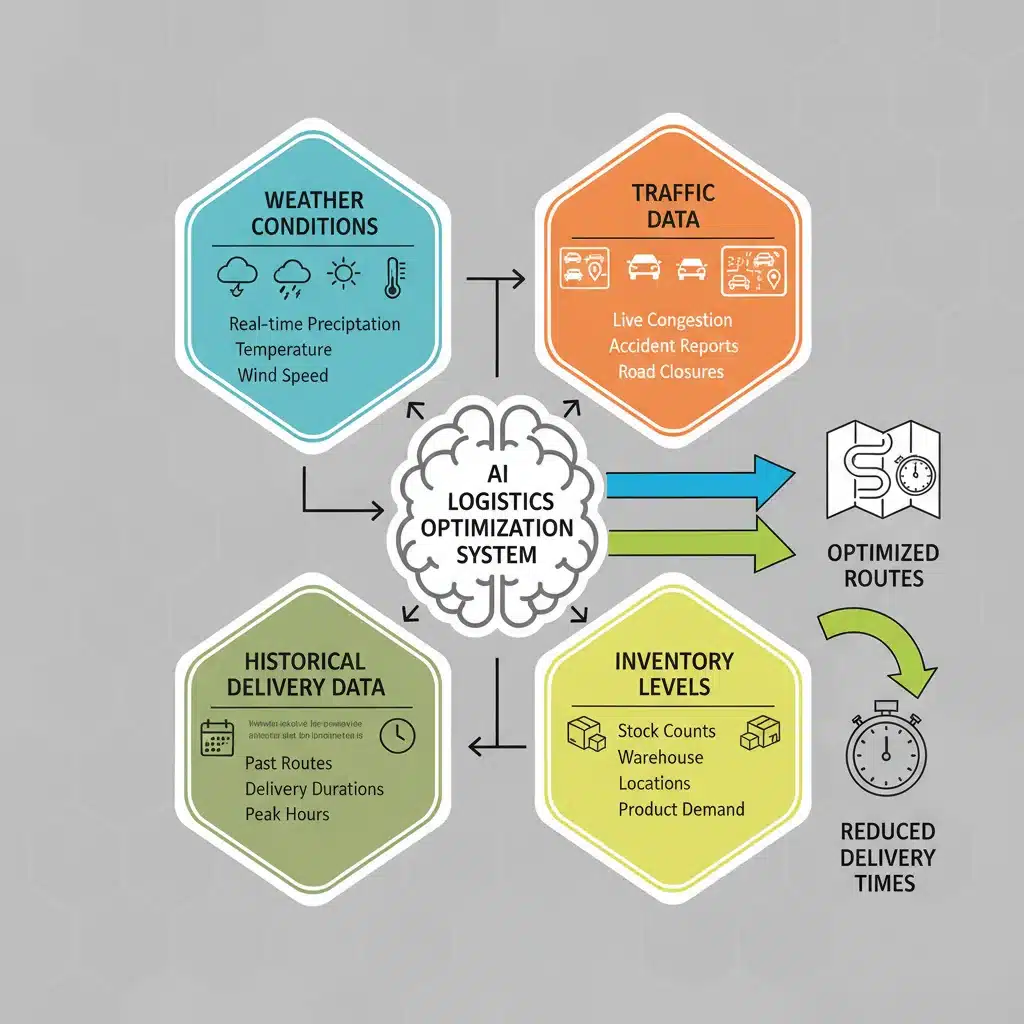
The effectiveness of predictive AI hinges on its ability to process and interpret diverse data sources:
- Historical Data: Past delivery times, traffic patterns, weather conditions, order volumes, and equipment maintenance records.
- Real-time Data: GPS tracking of vehicles, current weather reports, live traffic updates, sensor data from assets, and immediate order inflows.
- External Data: Economic indicators, social media trends, news events, and seasonal patterns that might influence demand or supply chain operations.
By integrating and analyzing these disparate data points, predictive AI systems can generate actionable insights that empower logistics firms to make more informed decisions, leading to significant reductions in delivery times and overall operational improvements.
Strategic Pillars: How Predictive AI Drives Faster Deliveries
To achieve the ambitious 15% reduction in delivery times, U.S. logistics firms must strategically deploy predictive AI across several critical operational areas. Each application contributes to a more efficient, responsive, and resilient supply chain.
1. Demand Forecasting and Inventory Optimization
One of the most significant bottlenecks in logistics is inaccurate demand forecasting, leading to either stockouts (and delayed orders) or overstocking (and increased carrying costs). Predictive AI excels at analyzing historical sales data, seasonal trends, promotional impacts, and external factors (like economic forecasts or social media sentiment) to generate highly accurate demand predictions. This allows firms to:
- Optimize Inventory Levels: Ensure the right products are in the right place at the right time, minimizing the need for expedited shipping due to unexpected demand.
- Proactive Stock Replenishment: Automate reorder points and quantities, preventing delays caused by insufficient stock.
- Reduce Warehouse Congestion: Better inventory flow means less time spent locating and picking items.
By leveraging predictive AI for demand forecasting, logistics firms can significantly reduce the initial lead time from order placement to dispatch, laying the groundwork for faster overall delivery.
2. Dynamic Route Optimization
Traditional route planning often relies on static maps and historical data, failing to account for real-time changes. Predictive AI revolutionizes this by offering dynamic route optimization, continuously adjusting routes based on live data such as:
- Traffic Conditions: Predicting congestion hotspots and suggesting alternative, faster routes.
- Weather Patterns: Rerouting around adverse weather events that could cause delays.
- Vehicle Breakdowns: Adjusting delivery schedules and reassigning loads in case of unexpected vehicle issues.
- New Orders/Cancellations: Integrating new requests or removals into existing routes for maximum efficiency.
This dynamic capability ensures that delivery vehicles are always on the most efficient path, minimizing travel time and fuel consumption, and directly contributing to faster delivery times. A 15% reduction in delivery times becomes far more attainable when every route is optimally planned and continuously adapted.
3. Predictive Maintenance for Fleets and Equipment
Unexpected equipment breakdowns are a major cause of delivery delays. Predictive AI can analyze sensor data from vehicles, machinery, and other logistics assets to forecast potential failures before they occur. By monitoring parameters like engine performance, tire pressure, and component wear, AI algorithms can identify anomalies and recommend maintenance actions. This leads to:
- Reduced Downtime: Scheduled maintenance replaces reactive repairs, keeping vehicles on the road.
- Improved Reliability: Fewer breakdowns mean fewer missed delivery windows and frustrated customers.
- Optimized Maintenance Schedules: Performing maintenance only when necessary, saving costs and resources.
Minimizing unforeseen operational disruptions is a direct pathway to more consistent and faster delivery performance, supporting the goal of cutting delivery times by 15%.
4. Real-time Visibility and Proactive Issue Resolution
Predictive AI enhances end-to-end supply chain visibility by integrating data from various sources – GPS trackers, IoT sensors, warehouse management systems, and carrier networks. This comprehensive view allows firms to:
- Monitor Shipments in Real-time: Track the exact location and estimated time of arrival (ETA) of every package.
- Predict Delays: AI can flag potential delays due to traffic, weather, or customs issues, often before they even occur.
- Proactive Interventions: With early warning, logistics managers can take corrective actions, such as rerouting or notifying customers, mitigating the impact of delays.
This proactive approach significantly reduces the impact of unforeseen events, ensuring that even when problems arise, solutions are implemented swiftly to maintain delivery schedules.
5. Automated Warehouse Operations
The warehouse is a critical link in the delivery chain. Predictive AI can optimize various warehouse processes, from inbound receiving to outbound shipping:
- Optimized Picking Paths: AI can determine the most efficient routes for order pickers, reducing travel time within the warehouse.
- Automated Sorting and Packing: AI-powered robots and systems can sort and pack items with greater speed and accuracy.
- Space Utilization: Predictive models can optimize storage layouts based on anticipated demand, ensuring frequently accessed items are easily reachable.
By speeding up internal warehouse operations, firms can reduce the time from order receipt to vehicle loading, directly contributing to faster overall delivery times.
The Implementation Roadmap: Integrating Predictive AI into Your Logistics Operations
Achieving a 15% reduction in delivery times through predictive AI is a journey that requires careful planning, investment, and a phased approach. Here’s a potential roadmap for U.S. logistics firms:
Phase 1: Assessment and Strategy (6-12 months)
- Define Clear Objectives: Beyond the 15% target, identify specific KPIs (e.g., reduction in late deliveries, fuel savings, increased customer satisfaction).
- Data Audit: Evaluate existing data infrastructure. Identify available data sources, their quality, and any gaps that need addressing. Data is the fuel for AI.
- Technology Assessment: Research available predictive AI solutions, platforms, and vendors. Consider build vs. buy decisions.
- Pilot Project Identification: Select a specific, manageable area for a pilot program (e.g., optimizing routes for a single region or improving demand forecasting for a specific product line).
- Talent Acquisition/Training: Identify the need for data scientists, AI engineers, and logistics professionals trained in AI tools.
- Budget Allocation: Secure the necessary financial resources for technology, talent, and infrastructure upgrades.
Phase 2: Pilot Implementation and Testing (12-18 months)
- Data Integration and Cleaning: Consolidate data from various sources into a unified platform. Ensure data quality and consistency.
- Model Development and Training: Develop or configure AI models using historical data. This is where the predictive AI logistics capabilities are truly built.
- Pilot Deployment: Implement the AI solution in the chosen pilot area. Run it in parallel with existing systems initially.
- Performance Monitoring and Iteration: Closely track the pilot’s performance against defined KPIs. Gather feedback, identify areas for improvement, and refine the AI models.
- Scalability Planning: Based on pilot success, begin planning for broader deployment, considering infrastructure requirements.
Phase 3: Phased Rollout and Continuous Optimization (18-24 months and beyond)
- Broader Deployment: Gradually expand the predictive AI solution across more operational areas, regions, or product lines.
- Integration with Existing Systems: Ensure seamless integration with TMS, WMS, ERP, and other critical logistics software.
- Training and Change Management: Provide comprehensive training for all personnel affected by the new technology. Address concerns and manage the transition effectively.
- Continuous Learning and Improvement: Predictive AI is not a set-it-and-forget-it solution. Continuously feed new data, monitor model performance, and retrain models to adapt to changing market conditions and operational realities.
- KPI Tracking and Reporting: Maintain robust monitoring of key performance indicators to demonstrate ROI and identify further optimization opportunities.
By following this structured approach, U.S. logistics firms can systematically integrate predictive AI, paving the way for achieving and even exceeding the 15% reduction in delivery times by 2026.
Challenges and Considerations for Adoption
While the benefits of predictive AI are immense, its adoption is not without challenges:
- Data Quality and Availability: Poor quality or fragmented data can severely hamper AI model performance. Investing in data governance and integration is crucial.
- Talent Gap: A shortage of skilled data scientists and AI engineers can make implementation difficult. Firms may need to invest in training existing staff or partner with external experts.
- Integration Complexities: Integrating new AI systems with legacy IT infrastructure can be a significant hurdle.
- Cost of Investment: Initial investment in AI technology, infrastructure, and talent can be substantial, requiring a clear ROI justification.
- Change Management: Employees may resist new technologies. Effective communication, training, and demonstrating the benefits are key to successful adoption.
- Ethical Considerations: Ensuring fairness, transparency, and accountability in AI decision-making is paramount, especially in areas like driver scheduling or resource allocation.
Addressing these challenges proactively will be critical for U.S. logistics firms looking to successfully implement predictive AI logistics solutions.

The Future is Now: Beyond 2026
Achieving a 15% reduction in delivery times by 2026 is an ambitious yet entirely realistic goal with predictive AI. However, the evolution of AI in logistics won’t stop there. Beyond 2026, we can anticipate even more sophisticated applications:
- Hyper-Personalized Deliveries: AI could predict individual customer preferences for delivery windows, locations, and even packaging, offering highly customized services.
- Autonomous Logistics Networks: Integration of predictive AI with autonomous vehicles, drones, and robots will create fully self-optimizing delivery networks.
- Proactive Risk Management: AI will move beyond predicting delays to proactively identifying and mitigating risks across the entire supply chain, from geopolitical events to natural disasters.
- Sustainable Logistics: AI will play a crucial role in optimizing routes for reduced carbon emissions, identifying opportunities for consolidation, and managing reverse logistics more efficiently.
The journey towards an AI-powered logistics future is just beginning. U.S. logistics firms that embrace predictive AI now will not only meet the 2026 target but also position themselves as leaders in a rapidly transforming industry.
Conclusion
The quest for faster, more efficient, and more reliable delivery services is ceaseless. For U.S. logistics firms, the opportunity to cut delivery times by 15% by 2026 is a tangible goal, made possible by the transformative power of predictive AI. By strategically implementing AI for demand forecasting, dynamic route optimization, predictive maintenance, real-time visibility, and automated warehouse operations, companies can unlock unprecedented levels of efficiency and customer satisfaction.
The path requires a commitment to data quality, technological investment, and a willingness to embrace change. However, the rewards – a significant competitive advantage, reduced operational costs, and a more resilient supply chain – far outweigh the challenges. The future of logistics is intelligent, data-driven, and predictive. U.S. logistics firms that seize this opportunity will not only thrive but also redefine what’s possible in the world of delivery.
It’s time to move beyond reactive logistics and step into the proactive, insight-driven world of predictive AI logistics. The 15% reduction in delivery times is not just a target; it’s a testament to the power of innovation in shaping the future of commerce.