Next-Gen Alternative Fuels: US Transportation’s 25% Efficiency Gains by 2026
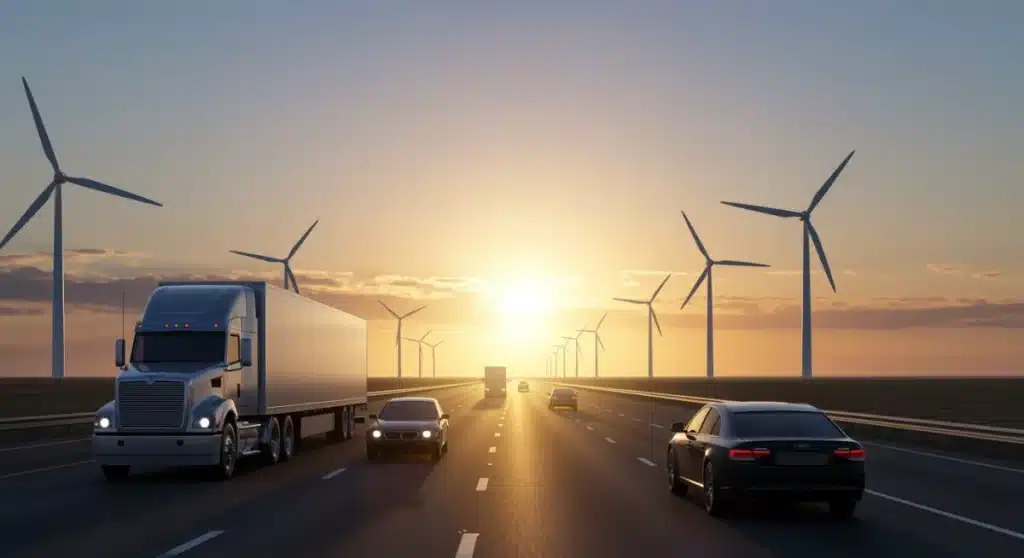
Three next-gen alternative fuels are set to redefine US transportation by 2026, promising up to 25% efficiency gains beyond current electric vehicle capabilities, signaling a pivotal shift in sustainable mobility strategies.
The landscape of transportation in the United States is continuously evolving, pushing past conventional notions and even the current dominance of electric vehicles. As we approach 2026, an insider look reveals that the focus is expanding to include groundbreaking next-gen alternative fuels, promising not just sustainability but also remarkable efficiency gains of up to 25%. This shift signifies a crucial step in decarbonizing the sector and meeting the nation’s ambitious environmental goals.
The Drive Towards Diversification: Why Alternative Fuels Matter
The pursuit of sustainable transportation solutions is more urgent than ever, driven by climate change concerns, energy security, and the need for economic resilience. While electric vehicles (EVs) have rightfully taken center stage, the reality is that a single solution cannot address the diverse needs of the entire transportation sector, especially heavy-duty trucking, aviation, and maritime shipping. This necessitates a diversified approach, exploring a portfolio of advanced fuels that can complement EVs.
The push for alternative fuels is not merely about reducing carbon emissions; it’s also about optimizing performance and operational costs. For industries reliant on constant movement, efficiency gains directly translate into significant economic benefits, reducing fuel consumption and extending operational ranges. This holistic view considers the entire lifecycle of fuels, from production to consumption, ensuring true sustainability.
Furthermore, the development of these next-gen fuels fosters innovation and creates new economic opportunities. It encourages research and development, supports job creation in green industries, and positions the US as a leader in sustainable energy technologies. The strategic importance of these fuels extends beyond environmental impact, touching upon national security and global competitiveness.
Advanced Biofuels: Powering the Future from Nature’s Bounty
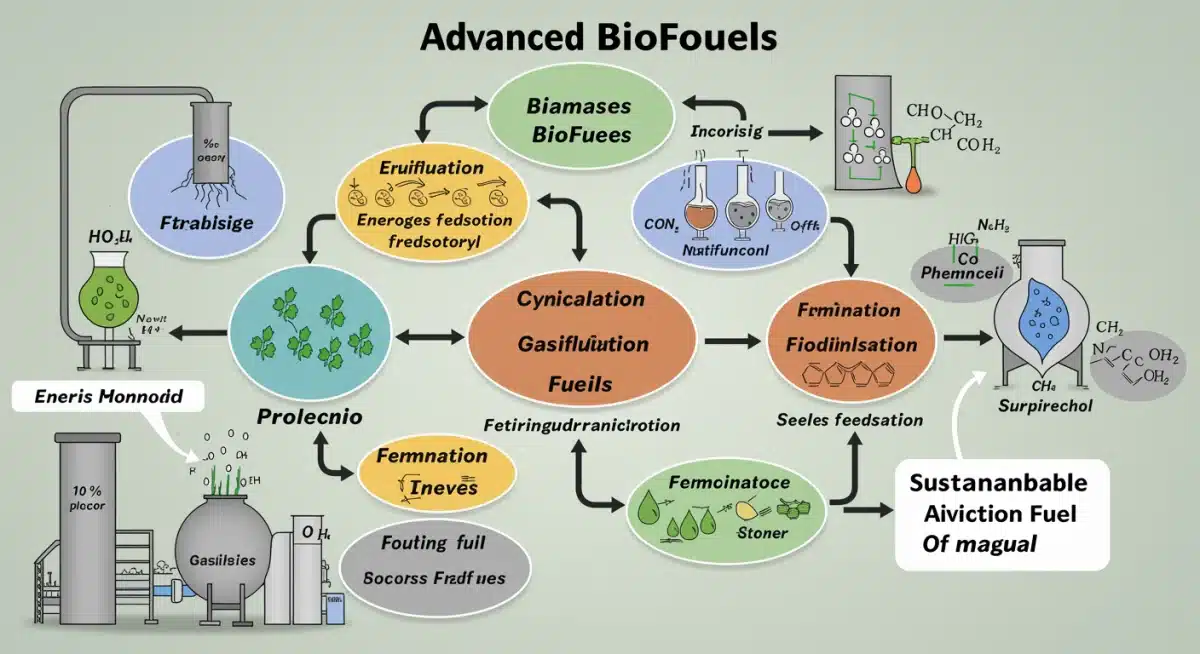
Advanced biofuels represent a significant leap forward from first-generation biofuels like corn ethanol. These next-gen variants are produced from non-food feedstocks such as agricultural waste, algae, and dedicated energy crops, avoiding competition with food supplies. Their potential for carbon reduction is substantial, offering a closed-loop system where carbon absorbed by plants during growth is released during combustion, effectively recycling atmospheric carbon.
The efficiency gains with advanced biofuels are particularly compelling. Researchers are developing processes that can yield higher energy density and improved combustion characteristics, leading to enhanced engine performance and up to 20% better fuel economy compared to traditional fossil fuels. This makes them a highly attractive option for sectors where electrification is challenging, such as heavy-duty transport and aviation.
Innovative Production Pathways
The production of advanced biofuels is becoming increasingly sophisticated, utilizing various biochemical and thermochemical conversion technologies. These methods ensure that a wide range of biomass resources can be efficiently transformed into usable fuels, maximizing resource utilization.
- Hydrotreated Vegetable Oil (HVO): A ‘drop-in’ fuel made from vegetable oils or animal fats, chemically identical to diesel, requiring no engine modifications.
- Cellulosic Ethanol: Derived from the cellulose in plant cell walls, offering a more sustainable source than corn-based ethanol.
- Algae-based Biofuels: Algae can grow rapidly and produce high oil yields, making them a promising future feedstock for various fuel types.
The scalability of advanced biofuel production remains a key area of focus. Investments in infrastructure and technological advancements are crucial to bringing these fuels to widespread commercialization. Government incentives and private sector partnerships are accelerating this transition, ensuring that sustainable feedstocks are readily available and processing facilities are optimized for efficiency.

Green Hydrogen: The Ultimate Clean Energy Carrier
Green hydrogen, produced through electrolysis powered by renewable energy, stands out as a zero-emission fuel with immense potential. When used in fuel cell electric vehicles (FCEVs), hydrogen generates electricity, with water as the only byproduct. This makes it an incredibly clean alternative, particularly for long-haul transportation and industrial applications that require high power and rapid refueling.
The efficiency of hydrogen fuel cells is a major advantage, often exceeding 50% in converting hydrogen to electricity. When considering the overall energy chain from renewable electricity generation to hydrogen production and then to vehicle propulsion, advancements are continuously improving the system’s efficiency. By 2026, projected improvements in electrolyzer technology and fuel cell stacks could see overall system efficiencies reach new heights, offering comparable or even superior operational economics to traditional internal combustion engines.
Challenges and Infrastructure Development
Despite its promise, green hydrogen faces challenges, primarily in production cost, storage, and distribution infrastructure. However, significant investments are being made to overcome these hurdles, with government and private sectors collaborating on large-scale projects.
- Electrolyzer Advancements: New materials and designs are reducing the energy input required for hydrogen production, lowering costs.
- Storage Solutions: Research into solid-state hydrogen storage and advanced cryo-compressed tanks is improving safety and density.
- Refueling Network: Expansion of hydrogen refueling stations across key transportation corridors is critical for widespread adoption.
The strategic deployment of hydrogen hubs in the US is designed to create regional ecosystems for hydrogen production, distribution, and consumption, fostering economies of scale and accelerating market penetration. These hubs are vital for demonstrating the viability and benefits of hydrogen across various applications.
e-Fuels (Synthetic Fuels): Carbon-Neutral Solutions for Existing Fleets
e-Fuels, or electrofuels, are synthetic fuels produced using renewable electricity to synthesize hydrogen and then combine it with captured carbon dioxide. The result is a liquid or gaseous fuel that is chemically identical to conventional gasoline, diesel, or jet fuel. This ‘drop-in’ capability means e-fuels can be used in existing internal combustion engines and infrastructure without modifications, offering a carbon-neutral solution for current fleets.
The efficiency of e-fuels comes from their ability to leverage existing infrastructure, minimizing the need for costly vehicle replacements or extensive overhauls. While the production process itself can be energy-intensive, ongoing research is focused on improving the efficiency of carbon capture and hydrogen synthesis, aiming for overall energy efficiency gains of up to 25% by 2026. This makes them particularly appealing for hard-to-decarbonize sectors like aviation and maritime shipping.
Synergy with Renewable Energy
The production of e-fuels is intrinsically linked to the expansion of renewable energy sources. Large-scale e-fuel facilities require substantial amounts of green electricity, thus driving further investment in wind, solar, and other clean power generation. This synergy creates a powerful feedback loop, accelerating the transition to a fully renewable energy system.
- Power-to-Liquid (PtL) Technology: This process converts renewable electricity into liquid fuels, effectively storing intermittent renewable energy in a stable, transportable form.
- Carbon Capture Utilization (CCU): Advances in CCU technologies are making it more feasible to source the necessary CO2 for e-fuel production, often directly from industrial emissions or even the atmosphere.
- Diverse Applications: e-Fuels can be tailored to produce various fuel types, including synthetic kerosene for aviation, synthetic diesel for heavy trucks, and synthetic gasoline for passenger vehicles.
The development of e-fuels offers a pragmatic pathway to decarbonization for sectors that cannot easily transition to direct electrification. Their ‘drop-in’ nature provides a bridge solution, allowing for immediate carbon reduction without necessitating a complete overhaul of the global transportation fleet.
Policy and Economic Incentives Driving Adoption
The widespread adoption of next-gen alternative fuels in the US transportation sector by 2026 is heavily reliant on supportive policy frameworks and robust economic incentives. Government initiatives play a pivotal role in de-risking investments, fostering innovation, and creating a level playing field for these nascent technologies. These policies often include tax credits, grants for research and development, and mandates for renewable fuel usage.
For instance, the Inflation Reduction Act (IRA) in the US provides significant incentives for clean energy technologies, including those related to hydrogen production and sustainable aviation fuels (SAF), which encompass advanced biofuels and e-fuels. These legislative measures are designed to accelerate the commercialization and deployment of these fuels, making them more competitive with traditional fossil fuels. The long-term economic benefits, including job creation and energy independence, further bolster the case for these investments.
Beyond federal policies, state-level initiatives and private sector commitments are also vital. Many states are setting their own aggressive decarbonization targets, which often include provisions for alternative fuels. Corporate sustainability goals are also driving demand, with major logistics companies and airlines exploring and investing in these fuels to reduce their carbon footprint and meet stakeholder expectations. This multi-faceted approach ensures a robust ecosystem for growth and innovation.
The Path to 25% Efficiency Gains and Beyond
Achieving and surpassing the projected 25% efficiency gains by 2026 for next-gen alternative fuels is not a singular event but a continuous process of innovation and integration. This involves optimizing every stage of the fuel lifecycle, from feedstock sourcing and production processes to distribution and end-use in vehicles. For advanced biofuels, this means developing more efficient conversion technologies and cultivating higher-yield energy crops. For green hydrogen, it entails enhancing electrolyzer performance and improving fuel cell durability and power density. For e-fuels, the focus is on increasing the efficiency of carbon capture and hydrogen synthesis, while also integrating these processes with reliable renewable energy sources.
Furthermore, the efficiency gains extend beyond just the fuel itself to the broader operational context. For instance, the use of ‘drop-in’ e-fuels in existing infrastructure minimizes capital expenditure on new vehicles and distribution networks, which is an efficiency gain in terms of resource allocation. Similarly, the rapid refueling capabilities of hydrogen FCEVs reduce downtime for commercial fleets, translating into higher operational efficiency. The integration of digital technologies, such as AI-driven logistics and predictive maintenance, will further amplify these efficiency benefits, ensuring that vehicles powered by these alternative fuels operate at their peak performance. The synergy between these advanced fuels and smart mobility solutions is crucial for realizing the full potential of a 25% efficiency increase and setting the stage for even greater improvements in the future.
| Key Fuel Type | Brief Description & Benefit |
|---|---|
| Advanced Biofuels | Derived from non-food biomass, offering up to 20% better fuel economy and significant carbon reduction for heavy-duty transport and aviation. |
| Green Hydrogen | Produced via renewable energy, powering FCEVs with zero emissions (water vapor), ideal for long-haul and industrial applications with high efficiency. |
| e-Fuels (Synthetic Fuels) | Carbon-neutral synthetic fuels made from captured CO2 and renewable hydrogen, compatible with existing engines and infrastructure, offering up to 25% efficiency gains. |
| Policy & Incentives | Government support and private investments are accelerating adoption and infrastructure development, crucial for market growth and competitiveness. |
Frequently Asked Questions About Next-Gen Alternative Fuels
Next-gen alternative fuels are advanced energy sources beyond traditional fossil fuels and first-generation biofuels. They include advanced biofuels, green hydrogen, and e-fuels, designed to offer higher efficiency, lower emissions, and greater sustainability for diverse transportation needs, especially where electrification is challenging.
The 25% efficiency gains come from a combination of factors. This includes improved energy density, optimized combustion in advanced engines, more efficient production processes, and leveraging existing infrastructure. For instance, advanced biofuels and e-fuels can be ‘drop-in,’ minimizing conversion costs, while hydrogen fuel cells offer high intrinsic efficiency.
Yes, these fuels are designed with sustainability in mind. Advanced biofuels use non-food feedstocks, green hydrogen is produced with renewable electricity, and e-fuels utilize captured carbon. Their lifecycle emissions are significantly lower than fossil fuels, contributing to decarbonization goals and reducing reliance on finite resources.
Sectors facing challenges with full electrification, such as heavy-duty trucking, aviation, and maritime shipping, stand to benefit most. These fuels offer high energy density and rapid refueling, crucial for long-haul operations, enabling these industries to significantly reduce their carbon footprint without compromising operational efficiency or range.
Government policies are critical for driving adoption. Incentives like tax credits, grants for R&D, and renewable fuel mandates help de-risk investments and make these fuels competitive. Legislation like the Inflation Reduction Act in the US is actively accelerating the commercialization and deployment of next-gen alternative fuels, fostering a supportive market environment.
Conclusion
The journey beyond electric vehicles to embrace a more diverse and resilient transportation future is well underway in the United States. By 2026, next-gen alternative fuels such as advanced biofuels, green hydrogen, and e-fuels are poised to play an indispensable role in decarbonizing hard-to-abate sectors, offering up to 25% efficiency gains and significantly contributing to environmental sustainability. The convergence of technological innovation, strategic policy support, and growing private sector investment underscores a collective commitment to a cleaner, more efficient, and ultimately, more sustainable mobility ecosystem for all.