Maximize EV Charging Tax Credits: 90-Day Window Before Q3 2026
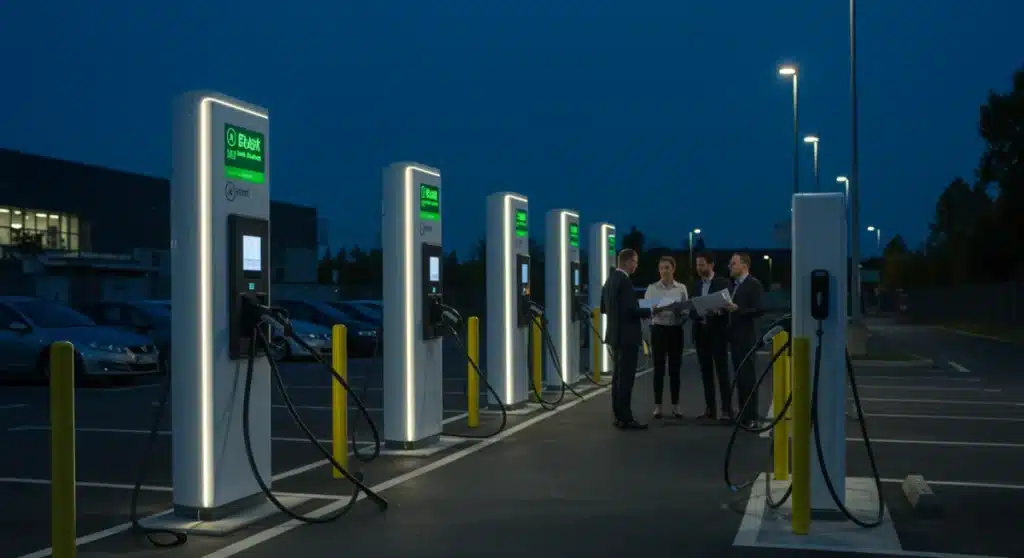
Businesses must strategically leverage federal tax credits for commercial electric vehicle charging infrastructure within a crucial 90-day window preceding Q3 2026 to capitalize on expiring incentives and accelerate sustainable fleet transitions.
The landscape of sustainable transportation is rapidly evolving, and for businesses in the US, a significant opportunity is present right now. We are entering the critical 90-day window: maximizing tax credits for commercial EV charging infrastructure in the US before Q3 2026 (time-sensitive). This period offers unparalleled incentives for companies looking to electrify their fleets and embrace a greener future, but understanding the nuances and acting swiftly is paramount.
Understanding the Federal EV Charging Tax Credits Landscape
The federal government has introduced various incentives to accelerate the adoption of electric vehicles and the necessary supporting infrastructure. These tax credits are designed to offset the significant upfront costs associated with installing commercial EV charging stations, making the transition more financially viable for businesses of all sizes. Navigating these incentives requires a clear understanding of the relevant legislation and their specific provisions.
Several key pieces of legislation underpin these tax credits, primarily the Inflation Reduction Act (IRA) of 2022. This act significantly expanded and extended tax credits for clean energy technologies, including those related to EV charging infrastructure. Businesses can benefit from credits that cover a percentage of the project cost, provided certain criteria are met. These criteria often relate to the charger’s capacity, the location of the installation, and prevailing wage requirements for construction.
Key Tax Credit Programs
Understanding the specific programs available is the first step toward maximizing your benefits. The most prominent includes the Alternative Fuel Vehicle Refueling Property Credit (IRC Section 30C), which offers a substantial credit for qualified alternative fuel vehicle refueling property. This credit has seen significant enhancements under the IRA, increasing both the credit amount and the types of projects eligible.
- IRC Section 30C: Offers a credit of up to 30% of the cost of qualified alternative fuel vehicle refueling property, capped at $100,000 per item of property.
- Prevailing Wage and Apprenticeship Requirements: To qualify for the full 30% credit, projects must adhere to prevailing wage and apprenticeship requirements. Failure to meet these could reduce the credit significantly to 6%.
- Eligible Property: Includes EV charging equipment for vehicles with at least two wheels, capable of recharging a battery with at least 4 kilowatt-hours.
- Geographic Location Requirements: The IRA specified that property must be placed in service within eligible census tracts, which are generally low-income communities or non-urban areas.
The scope of eligible projects is broad, encompassing everything from Level 2 chargers suitable for employee and customer use to DC fast chargers critical for fleet operations. Businesses must carefully review the specific requirements for each credit to ensure their planned installations qualify. This initial due diligence is crucial to avoid any surprises down the line and to accurately project potential savings.
In conclusion, the federal EV charging tax credit landscape is rich with opportunities for businesses committed to electrification. A thorough understanding of programs like IRC Section 30C, along with their associated requirements, forms the foundation for a successful strategy. Paying close attention to prevailing wage stipulations and geographic eligibility will be key to unlocking the maximum financial incentives available.
The Critical 90-Day Window: Why Time is of the Essence
The urgency surrounding these tax credits cannot be overstated, particularly as we approach Q3 2026. While the Inflation Reduction Act made many clean energy credits available for an extended period, specific provisions and interpretations can evolve, and the market dynamics often shift rapidly. The “90-day window” refers to the rapidly approaching timeframe where businesses need to finalize plans, secure financing, and initiate projects to ensure they can claim the most advantageous credits before potential changes or expirations.
This period is especially critical because the IRS often issues guidance and clarifications that can impact eligibility or the application process. Waiting too long could mean missing out on certain benefits or facing more stringent requirements. Early action allows businesses to lock in current incentives and avoid the rush that typically occurs as deadlines approach, ensuring smoother project execution and credit application.
Impending Regulatory Changes and Market Shifts
Regulatory frameworks are dynamic, and while the IRA provided long-term certainty for many incentives, the specifics can be refined or altered. Changes in congressional priorities or economic conditions could influence the availability or structure of these credits post-Q3 2026. Furthermore, the market for EV charging infrastructure is experiencing rapid growth, which could lead to increased demand for equipment and installation services, potentially driving up costs.
- IRS Guidance Updates: The IRS frequently releases new guidance that can clarify or modify existing tax credit rules. Staying ahead of these updates is crucial.
- Congressional Reviews: While the IRA provides stability, future legislative sessions could introduce amendments or new bills impacting clean energy incentives.
- Supply Chain Pressures: As EV adoption accelerates, demand for charging equipment and skilled labor will increase, potentially leading to longer lead times and higher prices.
- Competitive Landscape: Businesses that act now can gain a competitive advantage by offering EV charging amenities sooner, attracting environmentally conscious customers and employees.
Moreover, the Q3 2026 timeframe is often a benchmark for when many development cycles and project phases conclude. Aligning project initiation within this window ensures that the installation and operational phases are completed in time to meet any “placed in service” deadlines for claiming credits. Missing this window might not mean complete forfeiture of all incentives, but it could result in a less favorable financial outcome.
In summary, the 90-day window leading up to Q3 2026 represents a strategic inflection point for businesses considering EV charging infrastructure. Acting decisively during this period can secure current, robust tax credits, mitigate risks from future regulatory shifts, and capitalize on favorable market conditions, ultimately maximizing the return on investment for sustainable transportation initiatives.
Strategic Planning for Maximizing Benefits
Successful utilization of EV charging tax credits hinges on meticulous strategic planning. This involves more than just identifying eligible credits; it requires a comprehensive approach that integrates financial forecasting, project management, and a deep understanding of compliance requirements. Businesses need to develop a roadmap that outlines every step from initial assessment to final credit application.
A critical first step is a thorough needs assessment. This includes evaluating current and projected EV fleet sizes, daily charging demands, and the optimal locations for charging stations. Understanding your energy needs and site constraints will inform the type and number of chargers required, directly impacting project costs and potential tax credit amounts.
Key Planning Considerations
Financial modeling plays a significant role in strategic planning. Businesses should calculate the total project cost, factoring in equipment, installation, permitting, and ongoing maintenance. By accurately estimating the potential tax credit, they can determine the net investment and project the return on investment (ROI) over time. This financial clarity is essential for securing internal approval and external financing.
- Financial Modeling: Develop detailed cost projections and ROI analyses to justify the investment.
- Site Assessment: Evaluate electrical capacity, space availability, and future expansion possibilities for charging infrastructure.
- Vendor Selection: Choose reputable EV charging equipment providers and certified installers familiar with federal tax credit requirements.
- Permitting and Compliance: Understand local zoning laws, electrical codes, and federal prevailing wage requirements to ensure compliance.
- Documentation Management: Maintain meticulous records of all project expenses, contracts, and certifications for tax credit application.
Engaging with tax professionals and consultants specializing in clean energy incentives is highly recommended. These experts can provide invaluable guidance on navigating complex IRS regulations, ensuring that all eligibility criteria are met, and identifying any additional state or local incentives that can be stacked with federal credits. Their expertise can help optimize the credit amount and minimize the risk of audit.
Ultimately, strategic planning for maximizing EV charging tax credits is about proactive engagement. By meticulously planning every aspect of the project, from initial assessment to documentation, businesses can confidently leverage these incentives. This foresight ensures not only compliance but also the realization of the full financial benefits available, making the transition to electric fleets a more attractive and sustainable endeavor.
Navigating Eligibility and Compliance Requirements
Eligibility and compliance are the bedrock of successfully claiming EV charging tax credits. The federal incentives, while generous, come with a detailed set of rules that must be meticulously followed. Any oversight in these areas can lead to a reduction or even forfeiture of the credit, turning a promising investment into a financial burden. Therefore, understanding and adhering to these requirements from the outset is paramount.
A primary aspect of compliance under the Inflation Reduction Act (IRA) for the Alternative Fuel Vehicle Refueling Property Credit (Section 30C) involves meeting prevailing wage and apprenticeship requirements. For projects beginning construction on or after January 29, 2023, and placed in service after December 31, 2022, failure to meet these labor standards can reduce the credit from 30% to a mere 6%. This significant difference underscores the importance of working with contractors who are well-versed in these federal labor laws.
Key Compliance Factors
Beyond labor standards, the location of the charging infrastructure is another critical determinant of eligibility. The IRA introduced a geographic requirement, stipulating that the property must be placed in service within an eligible census tract. These tracts are generally defined as low-income communities or non-urban areas. Businesses must verify their proposed installation sites against these criteria to ensure eligibility for the full credit.
- Prevailing Wage: Ensure all laborers and mechanics are paid wages no less than those determined by the Secretary of Labor for corresponding classes of laborers and mechanics.
- Apprenticeship Requirements: A certain percentage of total labor hours must be performed by qualified apprentices, varying by project size and year.
- Eligible Census Tracts: Confirm the installation site is located within a qualifying low-income community or non-urban area as defined by the IRS.
- Qualified Property: Verify that the charging equipment itself meets the technical specifications, including power output and safety standards, to be considered “qualified alternative fuel vehicle refueling property.”
Documentation is another non-negotiable aspect of compliance. Businesses must maintain comprehensive records of all expenses, contractor agreements, proof of prevailing wage payments, apprenticeship utilization, and location verification. These documents will be essential during the tax filing process and in the event of an IRS audit. A robust record-keeping system can streamline the application process and provide peace of mind.
In conclusion, navigating the eligibility and compliance requirements for EV charging tax credits demands a proactive and detailed approach. From adhering to prevailing wage and apprenticeship rules to verifying geographic eligibility and maintaining meticulous documentation, every step contributes to securing the maximum available credit. Engaging with experienced professionals can significantly de-risk this process and ensure full compliance.
Implementing EV Charging Infrastructure: Best Practices
Implementing commercial EV charging infrastructure effectively goes beyond simply installing chargers; it involves adopting best practices that ensure efficiency, scalability, and long-term viability. A well-executed implementation strategy not only maximizes the benefits of tax credits but also enhances the user experience and supports the overall transition to electric fleets. This requires careful consideration of technology, site preparation, and operational management.
One primary best practice is to select the right charging technology. The choice between Level 2 chargers and DC fast chargers depends heavily on the specific needs of your fleet and the dwell time of vehicles. For overnight charging or employee vehicles, Level 2 might suffice, while high-utilization commercial fleets or public-facing stations often require the speed of DC fast charging. Future-proofing your investment by considering expandable infrastructure is also wise.
Operational Excellence and User Experience
Site preparation is another critical component. This includes assessing existing electrical infrastructure, planning for trenching and conduit installation, and ensuring adequate power supply. It’s also important to consider charger placement for optimal accessibility and user convenience, factoring in vehicle types, parking flow, and potential for future expansion. Compliance with local building codes and safety regulations must be integrated into the design phase.
- Technology Selection: Match charger type (Level 2 vs. DC Fast) to fleet needs and expected usage patterns.
- Scalability Planning: Design infrastructure with future growth in mind, allowing for easy expansion as EV adoption increases.
- Software Integration: Implement smart charging software for load management, billing, and data analytics to optimize energy use and operational costs.
- Maintenance and Support: Establish a robust maintenance schedule and support system to ensure charger uptime and reliability.
- User Training: Provide clear instructions and support for drivers on how to use the charging stations effectively.
Beyond the physical installation, operational best practices are crucial for maximizing the return on investment. This includes implementing smart charging solutions that manage energy demand, potentially integrating with renewable energy sources, and setting up efficient payment and access systems. Regular maintenance and prompt technical support are also vital to ensure high uptime and user satisfaction.
In conclusion, successful implementation of EV charging infrastructure hinges on a holistic approach that embraces best practices in technology selection, site preparation, and ongoing operations. By focusing on efficiency, scalability, and user experience, businesses can create a robust charging ecosystem that not only leverages tax credits but also truly supports their sustainable transportation goals, ensuring long-term success and environmental benefit.
The Long-Term Benefits of Electrification for Businesses
While the immediate financial incentives offered by tax credits are a powerful motivator, the long-term benefits of electrifying commercial fleets extend far beyond initial cost savings. Embracing electric vehicles and robust charging infrastructure positions businesses for sustainable growth, operational efficiency, and enhanced brand reputation in an increasingly environmentally conscious market. This strategic shift offers a multitude of advantages that contribute to enduring success.
One significant long-term benefit is reduced operating costs. Electric vehicles typically have lower fuel and maintenance expenses compared to their gasoline-powered counterparts. Electricity is generally cheaper and more stable in price than fossil fuels, and EVs have fewer moving parts, leading to less frequent and less costly maintenance. These savings accumulate significantly over the lifespan of a fleet, directly impacting the bottom line.
Enhanced Brand Image and Sustainability Goals
Electrification also plays a crucial role in enhancing a company’s brand image and meeting corporate sustainability goals. Consumers and business partners increasingly prioritize environmental responsibility. By transitioning to EVs, companies demonstrate a tangible commitment to reducing their carbon footprint, which can attract new customers, improve employee morale, and satisfy stakeholder demands for greener operations.
- Reduced Operating Expenses: Lower fuel and maintenance costs contribute to significant long-term savings.
- Environmental Stewardship: Decreased emissions align with corporate sustainability objectives and improve public perception.
- Energy Independence: Reduced reliance on volatile fossil fuel markets and increased use of renewable energy sources.
- Future-Proofing Operations: Adapting to evolving environmental regulations and consumer preferences for sustainable practices.
- Employee Attraction and Retention: Offering modern, environmentally friendly fleets can be a draw for talent.
Furthermore, investing in EV charging infrastructure positions businesses to capitalize on future trends and regulatory mandates. As more cities and states implement stricter emission standards and promote EV adoption, companies with established charging networks will be ahead of the curve. This foresight can prevent costly retrofits down the line and ensure seamless compliance with evolving environmental policies, providing a competitive edge.
In conclusion, the long-term benefits of electrifying commercial fleets are compelling and multifaceted. From substantial reductions in operating costs to a strengthened brand image and future-proofed operations, the strategic investment in EV charging infrastructure yields sustained advantages. Leveraging current tax credits within the critical 90-day window is not just about immediate savings; it’s about building a resilient, efficient, and environmentally responsible business for decades to come.
The Future of Commercial EV Charging and Policy Outlook
The future of commercial EV charging in the US is poised for significant expansion, driven by technological advancements, increasing EV adoption rates, and a supportive policy outlook. Understanding these trajectories is crucial for businesses making long-term infrastructure investments. The period beyond Q3 2026 will likely see continued evolution in charging technology, grid integration, and government incentives, requiring businesses to remain adaptable and informed.
Technological innovation will continue to shape the charging landscape. Expect to see faster charging speeds, more efficient energy transfer, and smarter charging management systems. Vehicle-to-grid (V2G) technology, which allows EVs to send power back to the grid during peak demand, holds immense potential for fleet operators to generate revenue and enhance grid stability. These advancements will make EV charging more integrated and economically beneficial.
Anticipated Policy Developments
The policy outlook remains generally favorable for EV charging infrastructure. While the current tax credit structure may evolve, the overarching federal commitment to electrification is expected to persist. Future policies could focus on enhancing grid resilience, supporting domestic manufacturing of charging equipment, and incentivizing charging in underserved communities. State and local governments are also likely to introduce complementary programs.
- V2G Integration: Expect increased focus on vehicle-to-grid capabilities for energy management and revenue generation.
- Enhanced Grid Infrastructure: Policies will likely support upgrades to the electrical grid to accommodate increased EV charging demand.
- Domestic Manufacturing Incentives: Further tax credits or grants could emerge to boost US-based production of charging components.
- Standardization Efforts: Continued push for interoperability and standardized charging protocols to improve user experience.
- Continued Federal Support: Despite potential changes, broad federal backing for EV adoption and infrastructure is expected to remain strong.
Furthermore, the integration of EV charging with broader smart city initiatives will become more prevalent. This includes seamless payment systems, real-time availability data, and optimized routing for EV fleets. Data analytics derived from charging station usage will provide valuable insights for businesses to refine their operations, manage energy consumption, and identify new opportunities.
In conclusion, the future of commercial EV charging is bright and dynamic, characterized by continuous technological innovation and a supportive policy environment. While the current 90-day window is critical for immediate tax credit maximization, businesses should also look ahead, anticipating advancements like V2G technology and evolving policy landscapes. Staying informed and adaptable will ensure long-term success in the burgeoning electric mobility sector.
| Key Aspect | Brief Description |
|---|---|
| 90-Day Window Urgency | Critical period before Q3 2026 to secure current, robust federal tax credits for EV charging infrastructure. |
| Federal Tax Credits | IRC Section 30C offers up to 30% credit for qualified property, with caps and specific requirements. |
| Compliance Essentials | Adherence to prevailing wage, apprenticeship rules, and eligible census tract location is mandatory for full credit. |
| Long-Term Benefits | Beyond credits, electrification reduces operating costs, enhances brand image, and future-proofs operations. |
Frequently Asked Questions About EV Charging Tax Credits
The main federal incentive is the Alternative Fuel Vehicle Refueling Property Credit, under IRC Section 30C. It provides up to a 30% tax credit for the cost of qualified charging equipment, capped at $100,000 per project, provided specific prevailing wage and geographic requirements are met.
The period leading up to Q3 2026 is critical as it represents the current window to finalize projects and secure the most advantageous tax credits. Regulatory interpretations can change, and market demand for equipment and installation services may increase, potentially impacting future eligibility or costs.
To receive the full 30% credit, businesses must adhere to prevailing wage and apprenticeship requirements during construction. Additionally, the charging property must be placed in service within an eligible census tract, typically defined as a low-income community or non-urban area.
Yes, in many cases, state and local incentives can be stacked with federal tax credits. Businesses should research available programs in their specific location to maximize financial benefits. Consulting with a tax professional specializing in clean energy incentives is highly recommended for optimal strategy.
Beyond tax credits, businesses can expect reduced operating costs from lower fuel and maintenance expenses, an enhanced brand image through sustainability efforts, increased energy independence, and future-proofing against evolving environmental regulations. These benefits contribute to long-term financial and reputational success.
Conclusion
The opportunity to leverage federal tax credits for commercial EV charging infrastructure in the US is significant, particularly within the critical 90-day window before Q3 2026. This period offers an unparalleled chance for businesses to make strategic investments that not only provide immediate financial relief through substantial tax credits but also lay the groundwork for long-term operational efficiency, reduced environmental impact, and a strengthened corporate image. By understanding the intricacies of the available programs, meticulously planning implementation, ensuring strict compliance with eligibility requirements, and embracing best practices, companies can confidently navigate this transition. The move towards electrification is not merely a trend but a fundamental shift in sustainable transportation, and acting decisively now ensures businesses are well-positioned to reap the enduring benefits and contribute to a greener, more resilient future.