IoT for Public Safety: 10% Response Time Reduction by 2025
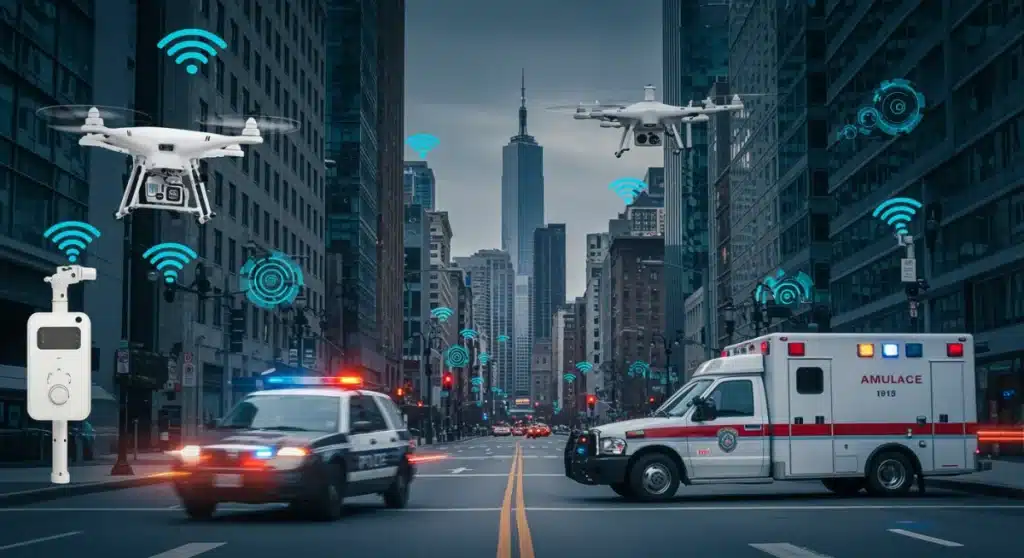
Leveraging IoT in public safety promises a significant reduction in emergency response times, with insider strategies targeting a 10% improvement by 2025 through advanced data integration and predictive analytics.
The landscape of urban safety is rapidly evolving, demanding innovative solutions to protect communities more effectively. IoT public safety initiatives are at the forefront of this transformation, promising not just incremental improvements but a paradigm shift in how emergency services operate. This article delves into insider strategies aimed at achieving a ambitious 10% reduction in response times by 2025, exploring the technological foundations, implementation challenges, and the profound impact these advancements will have on our cities.
The Foundation of Smart Public Safety: IoT Sensors and Networks
The backbone of any effective IoT public safety system lies in its sensor infrastructure and robust network connectivity. These elements work in concert to gather critical data from diverse sources, providing real-time situational awareness to emergency responders. Understanding how these components integrate is crucial for optimizing their impact on response times.
Modern cities are increasingly deploying a wide array of IoT sensors, from environmental monitors detecting hazardous substances to acoustic sensors identifying gunshots or vehicle collisions. The sheer volume and variety of data generated require sophisticated networks capable of high-speed, low-latency transmission. This ensures that information reaches the right personnel precisely when it’s needed most, enabling proactive rather than reactive responses.
Advanced Sensor Deployment
Strategic placement and calibration of IoT sensors are paramount. It’s not just about having more sensors, but about having the right sensors in the right locations, feeding into an intelligent system that can interpret the data effectively. This includes:
- Environmental Sensors: Detecting air quality issues, gas leaks, or fire hazards.
- Acoustic Sensors: Pinpointing the location of gunshots, screams, or car crashes.
- Smart Cameras: Utilizing AI for anomaly detection, crowd monitoring, and facial recognition (with appropriate privacy safeguards).
- Wearable Devices: Equipping first responders with vital sign monitors and location trackers for enhanced safety and coordination.
The integration of these diverse sensor types creates a comprehensive picture of urban events, allowing public safety agencies to anticipate and mitigate risks before they escalate. The ability to detect an incident in its nascent stages is a game-changer for reducing response times.
Robust Network Infrastructure
Reliable communication is non-negotiable for IoT public safety. This necessitates a blend of technologies to ensure continuous data flow, even in challenging environments. 5G networks, with their unparalleled speed and capacity, are becoming foundational for these systems, enabling instantaneous data transfer from countless devices.
Beyond 5G, hybrid networks incorporating LoRaWAN for low-power, long-range devices and satellite communication for remote areas ensure comprehensive coverage. The resilience of these networks, including redundancy and cybersecurity measures, is critical. Any disruption can have severe consequences, undermining the very purpose of an IoT-driven public safety system. The focus on network reliability is as important as the sensors themselves, as even the most advanced sensor is useless without a path to transmit its data.
In essence, the effectiveness of IoT in public safety hinges on a tightly integrated system of advanced sensors and resilient, high-speed networks. This foundational layer provides the raw data necessary for informed decision-making and rapid deployment, setting the stage for significant reductions in emergency response times. Without this robust infrastructure, the potential of IoT remains largely untapped, making its strategic implementation a priority for any smart city aiming for enhanced safety.
Data Analytics and Predictive Intelligence for Faster Responses
Collecting vast amounts of data is only the first step; the true power of IoT in public safety lies in its ability to transform this raw information into actionable insights. Data analytics and predictive intelligence tools are the engines that drive faster, more efficient emergency responses. These technologies analyze patterns, forecast potential incidents, and optimize resource allocation.
The goal is to move beyond reactive responses to a proactive posture, where public safety agencies can anticipate and prevent emergencies or, at the very least, respond with unprecedented speed and precision. This requires sophisticated algorithms and machine learning models capable of processing complex data sets in real-time.
Real-time Data Processing and Visualization
Emergency situations demand immediate understanding. Real-time data processing, coupled with intuitive visualization dashboards, provides incident commanders with a clear, up-to-the-minute overview of unfolding events. This includes everything from traffic conditions impacting response routes to the exact location and nature of an emergency.
- Incident Mapping: Overlaying sensor data, caller locations, and responder positions on digital maps.
- Traffic Optimization: Dynamically adjusting traffic signals to clear paths for emergency vehicles.
- Resource Tracking: Monitoring the availability and location of police, fire, and medical units.
These capabilities enable dispatchers and field personnel to make swift, informed decisions, significantly cutting down on the time it takes to assess a situation and deploy appropriate resources. The visual representation of data democratizes access to critical information, allowing for better coordination across multiple agencies.
Predictive Analytics for Proactive Safety
Perhaps the most transformative aspect of IoT data is its potential for predictive analytics. By analyzing historical data from various sources – crime statistics, weather patterns, social media trends, and even public transit schedules – machine learning models can identify areas and times with a higher likelihood of incidents. This allows for:
- Proactive Patrol Deployment: Directing law enforcement to high-risk areas before incidents occur.
- Anticipatory Resource Staging: Positioning ambulances or fire trucks strategically based on predictive models of demand.
- Early Warning Systems: Alerting authorities to potential public health crises or infrastructure failures.
Predictive analytics shifts public safety from a purely responsive model to one that actively works to prevent emergencies or minimize their impact. This intelligence not only reduces response times but can also lead to a decrease in the overall number of incidents, creating safer communities. The continuous refinement of these models, fed by new data, ensures their accuracy and effectiveness improve over time.
The integration of advanced data analytics and predictive intelligence forms a critical layer in the IoT public safety ecosystem. By transforming raw sensor data into actionable foresight, these technologies empower public safety agencies to respond with unparalleled speed and effectiveness, ultimately contributing to the ambitious goal of a 10% reduction in emergency response times. This strategic application of data is what truly unlocks the potential of IoT for a safer future.
Integrated Communication Systems and First Responder Empowerment
Effective communication is the lifeblood of emergency response. In the context of IoT public safety, this means more than just radio calls; it involves seamless, multi-channel communication systems that connect first responders, command centers, and even the public. Empowering first responders with the right tools and information is paramount to reducing response times and enhancing their safety and effectiveness.
The goal is to eliminate communication silos and ensure that every piece of relevant information, from sensor data to caller details, is immediately accessible to those on the front lines. This integrated approach fosters better coordination, faster decision-making, and ultimately, quicker resolution of incidents.

Unified Communication Platforms
Traditional communication methods often fall short in complex, multi-agency emergencies. Unified communication platforms, leveraging IoT data, bridge these gaps by providing a single interface for voice, video, and data exchange. These platforms can integrate with:
- Body-worn Cameras: Providing live video feeds from the scene to command centers.
- Smart Radios: Offering enhanced location tracking and data transmission capabilities.
- Mobile Applications: Allowing first responders to access incident details, building blueprints, and suspect information on their devices.
Such platforms ensure that all relevant parties, from police officers to paramedics and firefighters, are operating with the same up-to-date information. This common operational picture is vital for coordinated action and avoiding delays caused by miscommunication or lack of information. The ability to share real-time video and data significantly enhances situational awareness for all involved.
Wearable Technology for Enhanced Responder Safety and Efficiency
Equipping first responders with wearable IoT devices not only improves their efficiency but also significantly enhances their safety. These devices can monitor vital signs, detect environmental hazards, and provide precise location data, offering a layer of protection that was previously unattainable.
- Biometric Sensors: Monitoring heart rate, body temperature, and stress levels to prevent responder fatigue or medical emergencies.
- Gas Detectors: Alerting firefighters to dangerous chemical presences in hazardous environments.
- GPS Trackers: Providing real-time location of personnel within buildings or complex incident sites, crucial for accountability and rapid assistance.
By integrating these wearables into the broader IoT public safety network, command centers can have a live overview of their personnel’s well-being and location. This allows for immediate assistance if a responder is in distress, and optimizes deployment strategies. Empowered with such tools, first responders can operate more confidently and effectively, knowing they are supported by a network designed to protect them.
The synergy between integrated communication systems and empowered first responders is a cornerstone of achieving reduced response times in public safety. By ensuring seamless information flow and equipping personnel with cutting-edge IoT tools, cities can significantly enhance their emergency response capabilities. This strategic investment in communication and responder technology is critical for building resilient and responsive public safety frameworks.
Smart Infrastructure and Traffic Management for Emergency Pathways
Emergency response times are not solely dependent on the speed of dispatch or the efficiency of first responders; they are heavily influenced by urban infrastructure and traffic conditions. Leveraging IoT in public safety extends to optimizing these external factors, creating clear pathways for emergency vehicles and ensuring unhindered access to incident sites. Smart infrastructure, powered by IoT, plays a pivotal role in this optimization.
By intelligently managing traffic flow and providing real-time data on road conditions, cities can proactively clear routes, reducing travel time for ambulances, fire trucks, and police vehicles. This proactive traffic management is a critical component of achieving significant reductions in overall response times.
Intelligent Traffic Signal Prioritization
One of the most immediate impacts of IoT on emergency pathways is through intelligent traffic signal prioritization. Instead of static signal timings, IoT-enabled systems can dynamically adjust signals to create a ‘green wave’ for approaching emergency vehicles. This involves:
- Vehicle-to-Infrastructure (V2I) Communication: Emergency vehicles communicate their presence and direction to traffic signals.
- Real-time Route Optimization: Systems analyze traffic density and incident location to determine the fastest route and adjust signals accordingly.
- Pedestrian and Cyclist Awareness: Integrating data from smart crosswalks to ensure pedestrian safety during signal changes for emergency vehicles.
This dynamic prioritization significantly reduces delays at intersections, which are often major bottlenecks for emergency response. The ability to clear a path before an emergency vehicle even arrives at an intersection can shave crucial minutes off response times, potentially saving lives. This system also minimizes the risk of accidents involving emergency vehicles by reducing the need for them to navigate against traffic.
Smart Roadway Monitoring and Obstruction Detection
IoT sensors embedded in roadways and smart cameras can continuously monitor road conditions, detect obstructions, and identify potential hazards that could impede emergency response. This includes:
- Pothole Detection: Identifying and reporting road damage that could slow down or damage emergency vehicles.
- Accident Detection: Automated systems detecting collisions and immediately alerting authorities, often faster than human callers.
- Weather Impact Monitoring: Providing real-time data on ice, heavy rain, or fog, allowing for route adjustments or early warnings.
- Illegal Parking/Obstruction Alerts: Notifying authorities of vehicles blocking fire lanes or critical access points.
By providing constant, real-time feedback on roadway conditions, smart infrastructure allows for rapid intervention to clear obstacles or reroute emergency services. This proactive approach to maintaining clear emergency pathways is indispensable for ensuring swift and unobstructed access to incident locations. The integration of these systems transforms urban roadways into intelligent arteries that actively support public safety efforts.
In summary, leveraging smart infrastructure and advanced traffic management systems is a vital strategy in the broader IoT public safety framework. By optimizing emergency pathways through intelligent signal prioritization and continuous roadway monitoring, cities can drastically reduce travel times for first responders, directly contributing to the ambitious goal of a 10% reduction in overall emergency response times. These technological advancements make urban environments not only smarter but also significantly safer and more efficient during critical moments.
Cybersecurity and Privacy in IoT Public Safety Deployments
The deployment of extensive IoT networks for public safety, while offering immense benefits, also introduces significant challenges related to cybersecurity and data privacy. The very nature of these systems—collecting sensitive data from numerous sources and often involving critical infrastructure—makes them attractive targets for cyberattacks. Addressing these concerns is not just a technical requirement but a foundational element for building public trust and ensuring the long-term viability of IoT public safety initiatives.
Without robust security measures and clear privacy policies, the risks of data breaches, system compromises, and public backlash can undermine all the potential gains in response times and efficiency. Therefore, a comprehensive strategy encompassing both cybersecurity and privacy is non-negotiable.
Robust Cybersecurity Protocols
Securing IoT public safety systems requires a multi-layered approach that protects against a wide range of cyber threats. This goes beyond traditional IT security to address the unique vulnerabilities of interconnected devices and large data streams. Key protocols include:
- End-to-End Encryption: Encrypting all data in transit and at rest to prevent unauthorized access.
- Regular Vulnerability Assessments: Proactively identifying and patching security weaknesses in devices and software.
- Intrusion Detection Systems: Monitoring networks for suspicious activities and alerting security personnel in real-time.
- Secure Authentication: Implementing strong authentication mechanisms for all users and devices accessing the network.
- Blockchain for Data Integrity: Exploring decentralized ledger technologies to ensure the immutability and integrity of critical data logs.
These measures are essential to prevent data tampering, denial-of-service attacks, and unauthorized control of IoT devices, which could have catastrophic consequences in a public safety context. Continuous monitoring and adaptation to evolving cyber threats are also crucial, as adversaries constantly develop new attack vectors. Investing in cybersecurity is an investment in the reliability and trustworthiness of the entire system.
Ensuring Data Privacy and Ethical Use
The collection of vast amounts of personal and public data through IoT devices raises legitimate privacy concerns. Public safety agencies must implement stringent privacy policies and adhere to ethical guidelines to maintain community trust. This involves:
- Data Minimization: Collecting only the necessary data for public safety purposes and avoiding unnecessary surveillance.
- Anonymization and Pseudonymization: Transforming personal data so that individuals cannot be identified, where appropriate.
- Transparent Data Use Policies: Clearly communicating to the public what data is collected, why it’s collected, and how it’s used.
- Access Controls: Restricting access to sensitive data to authorized personnel only, with strict auditing.
- Independent Oversight: Establishing independent bodies to review and audit privacy practices and ensure accountability.
Balancing public safety needs with individual privacy rights is a delicate but critical task. Ethical considerations must be embedded into the design and operation of all IoT public safety systems. Engaging with community stakeholders and fostering open dialogue about data practices can help build consensus and acceptance for these technologies. Without public trust, even the most technologically advanced system will struggle to achieve its full potential. By prioritizing both cybersecurity and privacy, cities can deploy IoT solutions that are not only effective but also responsible and sustainable.
Case Studies and Pilot Programs: Proving IoT’s Impact
While the theoretical benefits of IoT in public safety are compelling, real-world applications and pilot programs offer tangible proof of its impact. Examining successful implementations provides valuable insights into best practices, challenges overcome, and the measurable improvements achieved in emergency response times. These case studies serve as blueprints for other municipalities looking to deploy similar technologies.
From smart city initiatives in major metropolitan areas to targeted deployments in specific neighborhoods, these examples demonstrate how diverse IoT technologies can be integrated to create a more responsive and secure urban environment. They underscore the importance of tailored solutions and community engagement.
Smart City Implementations: A Glimpse into the Future
Several cities globally have embarked on ambitious smart city projects that integrate IoT for public safety, showcasing impressive results. These initiatives often involve a comprehensive array of sensors, AI-powered analytics, and integrated communication systems.
- Predictive Policing in Los Angeles: Using data analytics to forecast crime hotspots and optimize patrol routes, leading to a noticeable decrease in certain crime categories and faster incident resolution.
- Emergency Drone Deployment in Dubai: Drones equipped with cameras and thermal imaging capabilities providing real-time aerial views of incident sites, significantly improving situational awareness for first responders and reducing search times.
- Connected Streetlights in San Diego: Smart streetlights equipped with acoustic sensors and cameras detecting gunshots or vehicular accidents, automatically alerting emergency services and providing precise location data.
These examples highlight how integrated IoT solutions can lead to faster detection, more accurate information, and optimized resource deployment, all contributing to quicker emergency response. The success of these programs often relies on strong public-private partnerships and a clear vision for technological integration.
Targeted Pilot Programs and Their Lessons
Beyond large-scale smart city initiatives, numerous smaller, targeted pilot programs have demonstrated the efficacy of specific IoT applications in public safety. These pilots often focus on addressing particular challenges or validating new technologies before broader deployment.
- Wearable Sensors for Firefighters: Pilot programs testing biometric and environmental sensors in firefighter gear to monitor health and detect hazardous conditions, enhancing safety and allowing for quicker intervention in emergencies.
- Smart Hydrant Systems: IoT-enabled hydrants that can report water pressure issues or tampering, ensuring reliable water supply for firefighting efforts and reducing delays.
- Connected Public Transportation: Buses and trains equipped with sensors that can detect anomalies or security incidents onboard, automatically alerting authorities and providing real-time location for rapid response.
Lessons learned from these pilot programs often emphasize the importance of interoperability between different systems, the need for robust training for first responders, and the critical role of data integration platforms. They also underscore the value of starting small, demonstrating success, and then scaling up. These real-world applications provide invaluable evidence for the transformative potential of IoT in achieving a 10% reduction in emergency response times by 2025, moving theoretical possibilities into practical realities.
The Road Ahead: Future Trends and Challenges
The journey towards fully realizing the potential of IoT in public safety is ongoing, with exciting future trends on the horizon and persistent challenges to overcome. As technology continues to evolve, so too will the capabilities of smart city infrastructure to enhance security and efficiency. Understanding these future directions and proactively addressing obstacles will be crucial for achieving and sustaining the goal of reduced response times.
Innovation in areas like artificial intelligence, edge computing, and digital twins promises to further refine and expand the impact of IoT. However, alongside these advancements, concerns around funding, regulatory frameworks, and public acceptance will require careful navigation.
Emerging Technologies and Their Potential
Several cutting-edge technologies are poised to integrate with and enhance existing IoT public safety systems:
- AI-Powered Autonomous Drones: Drones capable of independent navigation and incident assessment, providing even faster initial reconnaissance and delivering critical supplies.
- Digital Twins of Urban Environments: Virtual replicas of cities that can simulate emergency scenarios, allowing agencies to test response strategies and optimize resource deployment in a risk-free environment.
- Edge Computing for Faster Processing: Processing data closer to the source (at the ‘edge’ of the network), reducing latency and enabling real-time decision-making without reliance on centralized cloud servers.
- Next-Gen Biometrics: More advanced identification and verification technologies for secure access and rapid identification of individuals in emergencies.
These advancements promise to make public safety systems even more intelligent, responsive, and predictive. The integration of AI will allow for more sophisticated analysis of complex data, while digital twins will provide unprecedented tools for planning and training. Edge computing will address the growing demand for instantaneous data processing, critical for time-sensitive emergencies.
Addressing Challenges: Funding, Regulation, and Public Acceptance
Despite the clear benefits, widespread adoption of advanced IoT public safety systems faces several significant hurdles:
- Funding and Investment: The initial capital outlay for deploying comprehensive IoT infrastructure can be substantial, requiring innovative funding models and strong political will.
- Regulatory and Policy Frameworks: Developing clear and consistent regulations for data collection, privacy, and the use of autonomous systems is essential to ensure ethical and legal compliance.
- Interoperability Standards: Ensuring that different IoT devices and platforms from various vendors can seamlessly communicate and share data remains a challenge.
- Public Trust and Acceptance: Overcoming concerns about surveillance, data privacy, and algorithmic bias requires transparent communication, community engagement, and demonstrable benefits.
- Talent Gap: A shortage of skilled professionals capable of designing, deploying, and maintaining complex IoT and AI systems for public safety.
Overcoming these challenges requires a concerted effort from government, industry, academia, and the public. Strategic partnerships, pilot programs that demonstrate clear ROI, and robust public education campaigns will be vital. The future of IoT in public safety is bright, but it requires careful planning, ethical consideration, and continuous innovation to navigate the complexities and deliver on its promise of safer, more responsive communities. The commitment to addressing these challenges will determine the extent to which cities can leverage IoT to achieve their ambitious response time reduction goals.
| Key Point | Brief Description |
|---|---|
| Sensor Infrastructure | Deployment of diverse IoT sensors and robust networks for real-time data collection. |
| Data Analytics | Using AI and predictive models to transform data into actionable insights for proactive responses. |
| Responder Empowerment | Integrated communication and wearable tech for enhanced safety and efficiency of first responders. |
| Smart Infrastructure | Intelligent traffic management and roadway monitoring to clear emergency pathways. |
Frequently Asked Questions About IoT in Public Safety
IoT reduces response times by providing real-time incident detection, precise location data, optimized routing for emergency vehicles through smart traffic signals, and enhanced communication among first responders. This integrated approach allows for quicker assessment and deployment.
Main privacy concerns include the extensive collection of personal data, potential for surveillance, and the risk of data breaches. Addressing these requires strict data minimization, anonymization, transparent policies, and robust cybersecurity measures to build public trust.
Yes, small cities can implement IoT solutions effectively by starting with targeted pilot programs that address specific needs, leveraging existing infrastructure, and seeking partnerships. Scalable solutions and cloud-based platforms make advanced technology accessible to smaller municipalities.
AI plays a critical role by analyzing vast amounts of IoT data to detect patterns, predict potential incidents, and optimize resource allocation. It enhances real-time situational awareness and enables proactive strategies, moving beyond reactive emergency responses.
Key challenges include significant funding requirements, developing clear regulatory frameworks, ensuring interoperability between diverse systems, overcoming public concerns regarding privacy, and addressing the talent gap in specialized technical skills.
Conclusion
The strategic integration of IoT technologies into public safety frameworks represents a pivotal shift towards creating safer, more responsive urban environments. By focusing on robust sensor networks, advanced data analytics, empowered first responders, and intelligent infrastructure, cities can realistically aim for a significant reduction in emergency response times. While challenges such as cybersecurity, privacy, and funding persist, the proven benefits and ongoing technological advancements underscore the imperative for continued investment and innovation. The journey to a 10% reduction in response times by 2025 is ambitious but achievable, paving the way for a future where communities are better protected and emergencies are managed with unprecedented speed and efficiency.