Intelligent traffic signal systems: optimizing your city

Intelligent traffic signal systems optimize urban traffic flow by using real-time data to reduce congestion, enhance safety, and improve overall mobility in cities.
Intelligent traffic signal systems are transforming how cities manage traffic flow. Have you ever sat in traffic, wondering if there’s a better way to streamline the chaos? This article dives into the mechanics of smart traffic lights and their impact on urban mobility.
Understanding intelligent traffic signal systems
Understanding intelligent traffic signal systems is essential in today’s busy cities. These systems use advanced technology to manage traffic flow and improve safety on the roads.
At their core, intelligent traffic signals analyze real-time data to adjust their timing based on traffic conditions. By optimizing light changes, these signals reduce congestion and help ensure smooth transportation.
Key Features of Intelligent Traffic Signal Systems
These systems come with several exciting features that differentiate them from traditional traffic lights:
- Real-time data analysis: Sensors collect data about vehicle and pedestrian traffic.
- Adaptive signal control: Lights adapt their duration based on current traffic conditions.
- Priority for emergency vehicles: These signals can change to clear a path for emergency responders.
- Integration with GPS data: Traffic data from navigation apps enhances system efficiency.
Additionally, intelligent traffic signal systems can significantly reduce accidents. By sensing when vehicles are approaching and adjusting lights accordingly, they provide better visibility and coordination at intersections. For instance, if a car is speeding towards a red light, the system may trigger an early change to green to prevent a potential collision.
Moreover, the impact of intelligent traffic signal systems extends to environmental benefits. Reducing stop-and-go traffic leads to lower emissions and improved air quality. Cities investing in these systems often see a decrease in overall travel times and vehicle operating costs.
Challenges in Implementation
While the benefits are clear, implementing intelligent traffic signals isn’t without challenges. Some common obstacles include:
- High initial costs: Upgrading infrastructure requires significant investment.
- Integration issues: Merging new technology with existing systems can be complex.
- Public acceptance: People need to understand and trust these new systems for them to be effective.
As technology continues to advance, we can expect intelligent traffic signal systems to evolve, providing even smarter solutions for urban traffic management. Embracing these innovations will play a crucial role in creating safer, more efficient cities.
Benefits of implementing smart traffic lights
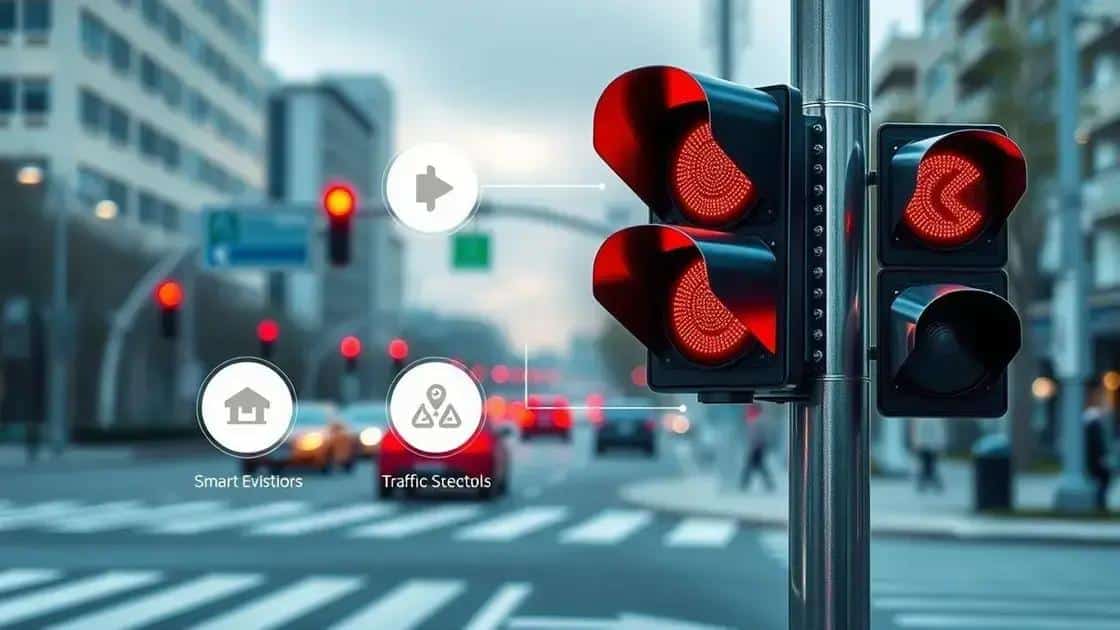
Implementing smart traffic lights brings a variety of benefits that significantly enhance urban mobility. These advanced systems do more than just change traffic signals; they optimize the entire traffic flow.
One major advantage of smart traffic lights is improved traffic management. They use real-time data to adjust signal timing based on current traffic patterns, which reduces congestion. This adaptive technology allows vehicles to spend less time idling, which can lead to quicker commutes.
Key Benefits of Smart Traffic Lights
Some of the most important benefits include:
- Reduced traffic congestion: By optimizing signal timings, smart lights manage traffic flow more efficiently.
- Improved safety: These systems can help decrease accidents at intersections by providing timely signals for both vehicles and pedestrians.
- Lower emissions: Fewer idling vehicles lead to less fuel consumption and reduced greenhouse gas emissions.
- Emergency vehicle priority: Smart signals can adjust to give priority to emergency vehicles, ensuring faster response times.
In addition to these perks, smart traffic lights enhance the overall travel experience. Drivers enjoy smoother transitions at intersections, creating less frustration and promoting a calmer driving environment. This type of technology gives urban planners and policymakers tools to create more livable cities.
Moreover, smart traffic lights contribute to data collection for better urban planning. They gather information on traffic patterns and behavior, allowing cities to make informed decisions about future infrastructure improvements. Understanding traffic dynamics enables better strategies for managing road usage and enhancing public transportation systems.
Long-term Advantages
Over time, the benefits of implementing smart traffic lights can lead to cost savings. Even though the initial installation may require investment, the reduction in traffic delays often translates into lower operational costs for transportation departments. Moreover, those entering the workforce can find better job prospects in cities with modernized traffic systems.
Considering these many advantages, it’s clear that adopting smart traffic lights is a wise choice for cities looking to modernize their infrastructure and improve the quality of life for residents.
Real-world examples of intelligent traffic management
Real-world examples of intelligent traffic management showcase how cities are using technology to enhance traffic flow and improve safety. Cities around the globe are implementing smart traffic systems to tackle congestion and optimize transportation.
One notable example is Los Angeles, California. The city has deployed a network of smart traffic signals that adjust in real time to traffic conditions. These signals analyze vehicle flow and can change their timing to promote smoother traffic, effectively reducing travel times.
Successful Implementations
Several other cities have also implemented successful intelligent traffic management systems:
- Singapore: Singapore’s network of traffic cameras and sensors automatically adjusts signal timings based on real-time traffic data, significantly reducing congestion.
- Amsterdam: This city uses smart traffic lights that can prioritize public transport and cyclists while ensuring pedestrian safety, promoting a balanced use of roadways.
- Barcelona: Barcelona’s smart traffic management includes sensors that monitor vehicle flow and provide valuable data for traffic planning and enforcement.
- Berlin: In Berlin, intelligent signal control systems prioritize emergency vehicles, ensuring faster response times while managing regular traffic.
Apart from these cities, various others implement intelligent traffic systems with similar goals. They use data collected from various inputs, such as GPS data from cars and real-time reports from traffic apps. This information helps create a more dynamic traffic environment where signals adapt automatically.
Implementing intelligent systems greatly reduces traffic delays and enhances the overall travel experience. It allows for better planning and management, reflecting the ongoing need for innovation in urban transportation. As technology advances, many cities are looking into expanding their intelligent traffic systems to further enhance efficiency and safety.
Future of Intelligent Traffic Management
The future of intelligent traffic management looks promising. Continued advancements in technology will lead to more sophisticated systems that further integrate various modes of transportation. Cities will increasingly adopt comprehensive data-driven approaches to address traffic challenges.
Overall, these real-world examples illustrate how intelligent traffic management can effectively improve urban mobility and safety, paving the way for smarter cities.
Challenges in deploying intelligent traffic signals

Deploying intelligent traffic signals presents several challenges that cities must navigate to successfully implement these systems. While the benefits are significant, the road to modernization can be complex and requires careful planning.
One of the main hurdles is the initial cost of installation and upgrades. Smart traffic signals often require extensive infrastructure changes, including new hardware, software, and communication networks. This investment can be difficult for many cities, especially those with limited budgets.
Technical Integration Issues
Moreover, integrating smart traffic signals with existing systems poses a challenge. Many cities still rely on older traffic management technologies. Upgrading these can lead to compatibility issues, making it difficult to achieve seamless operation across all systems.
- Legacy systems: Older traffic infrastructure may not easily connect with new technologies.
- Data sharing: Ensuring accurate data flow between different technologies can be complicated.
- Maintenance: New systems will require ongoing maintenance, which can strain city resources.
In addition to these integration challenges, cities often face resistance from the public. Many people may be hesitant to adapt to new technologies, particularly if they fear that these systems will disrupt their daily routines. Public education campaigns become essential to help address these concerns and improve community acceptance.
Another challenge is the need for skilled personnel to manage and maintain these systems. Many cities may not have the necessary expertise available in-house, necessitating training or hiring specialized staff. This factor can further strain budgets and resources.
Regulatory and Policy Considerations
Regulatory considerations also play a critical role in deploying intelligent traffic systems. Local and federal regulations can dictate how traffic management technology is implemented. Projects may require approval from multiple governing bodies, which can slow down progress.
Additionally, data privacy concerns cannot be overlooked. As intelligent systems often utilize real-time data collection, cities must ensure they protect citizen information, complying with relevant privacy laws and regulations. Balancing innovative traffic management with public concerns about data use is crucial.
In summary, while deploying intelligent traffic signals can lead to numerous benefits for urban mobility, it is essential to address these challenges head-on. With careful planning, investment, and public engagement, cities can successfully integrate these modern systems into their transportation networks.
FAQ – Frequently Asked Questions about Intelligent Traffic Signal Systems
What are intelligent traffic signal systems?
Intelligent traffic signal systems are advanced traffic management solutions that use real-time data to optimize traffic flow and reduce congestion.
How do smart traffic lights improve safety?
Smart traffic lights enhance safety by adjusting their signals based on real-time conditions, helping to minimize accidents at intersections.
What challenges do cities face when deploying smart traffic signals?
Cities may encounter challenges like high initial costs, the need for technical integration with existing systems, and public acceptance issues.
What are the benefits of implementing intelligent traffic systems?
The main benefits include reduced traffic congestion, improved travel times, lower emissions, and enhanced overall urban mobility.