Hyperloop Freight US: Transforming Cross-Country Shipping by 2030
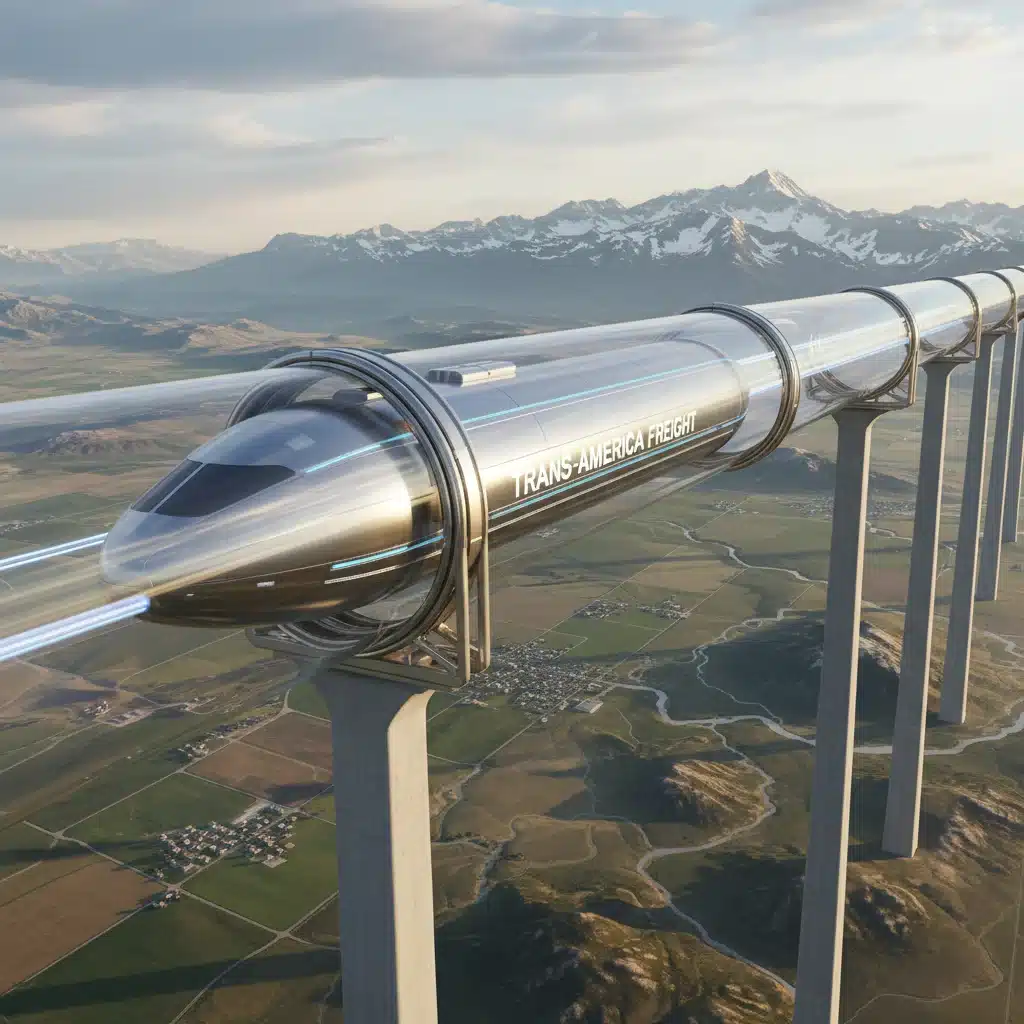
The landscape of logistics and freight transportation in the United States is constantly evolving, driven by demands for greater speed, efficiency, and sustainability. While traditional methods like trucking, rail, air, and sea have served their purpose, they often struggle with issues such as congestion, environmental impact, and delivery times. Enter hyperloop technology – a revolutionary concept that promises to redefine how goods move across vast distances. The prospect of hyperloop freight US emerging as a dominant force in cross-country shipping by 2030 is not merely a futuristic fantasy but a tangible goal being pursued by innovators and policymakers alike.
This comprehensive analysis delves into the transformative potential of hyperloop freight US, examining its core technology, the economic and environmental benefits it could unlock, the formidable infrastructure challenges that lie ahead, and a realistic timeline for its widespread adoption. By exploring the intricacies of this cutting-edge transportation system, we can better understand its capacity to disrupt and reshape the American supply chain, offering unprecedented advantages in a globalized economy.
Understanding Hyperloop Technology: The Foundation of Future Freight
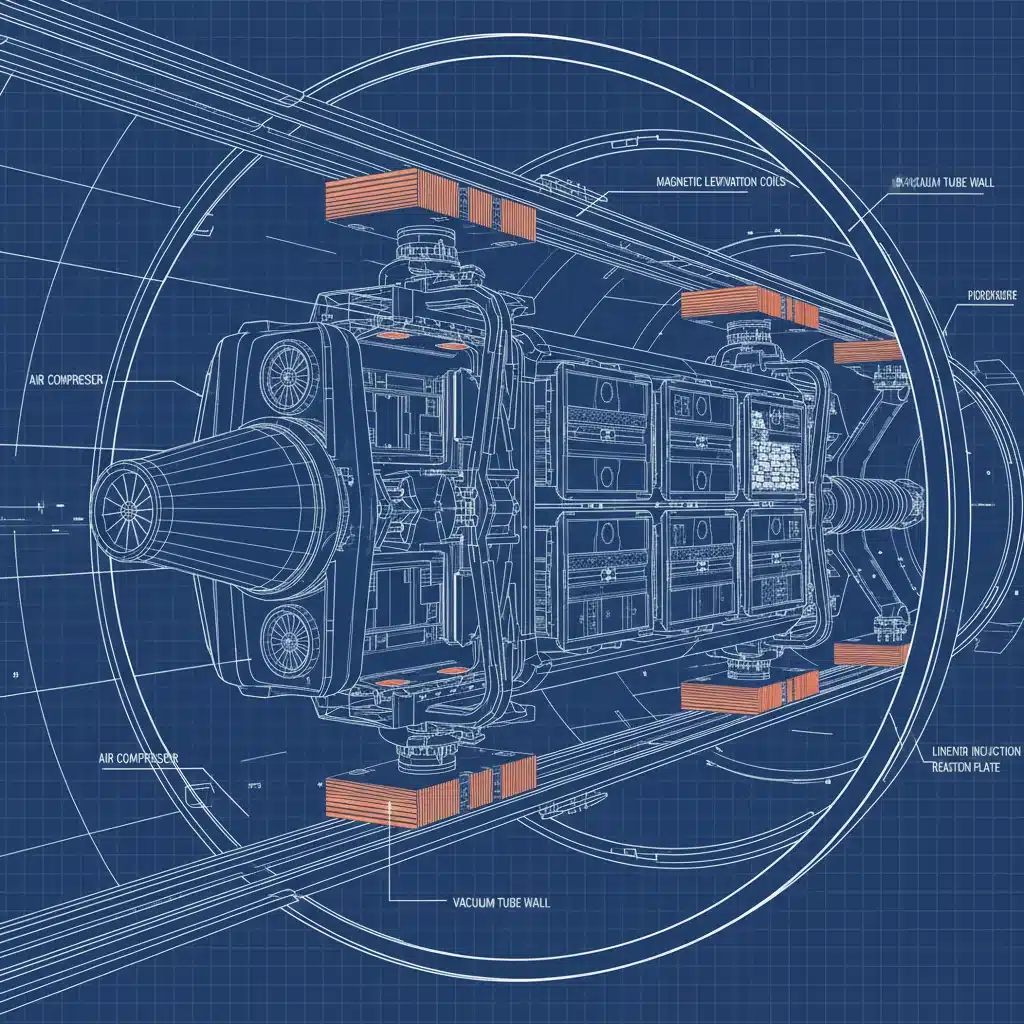
At its heart, hyperloop technology is an innovative mode of transport that envisions propelling pods, either for passengers or cargo, through sealed tubes or tunnels from which most of the air has been removed. This creates a near-vacuum environment, drastically reducing air resistance. Coupled with magnetic levitation (maglev) and linear electric motors, these pods can achieve incredibly high speeds, potentially exceeding 700 miles per hour (1,126 km/h). For hyperloop freight US, this means goods could travel from coast to coast in a matter of hours, rather than days.
The fundamental principles behind hyperloop are not entirely new. The concept of pneumatic tubes for mail delivery has existed for over a century, and maglev trains have been operational in various parts of the world for decades. However, hyperloop combines these elements with advanced engineering, material science, and vacuum technology to push the boundaries of terrestrial speed and efficiency. The low-pressure environment within the tubes minimizes drag, allowing for minimal energy consumption at high velocities. Magnetic levitation lifts the pods above the track, eliminating friction and enabling smooth, rapid movement.
Several companies globally are actively developing hyperloop systems, each with slightly different approaches to tube design, propulsion, and levitation. Virgin Hyperloop (now Hyperloop One), for instance, has conducted successful tests demonstrating passenger-carrying pods reaching significant speeds. While initial focus often gravitates towards passenger transport, the application of this technology to freight offers a particularly compelling case for the US, given its vast geographical expanse and reliance on efficient goods movement.
The implications for hyperloop freight US are profound. Imagine fresh produce from California reaching New York markets within hours, or critical manufacturing components arriving just-in-time from distant factories. This level of speed and reliability could fundamentally alter supply chain strategies, inventory management, and even the geographic distribution of industries. The technology’s scalability and potential for automation also present opportunities for significant labor efficiencies and reduced operational costs in the long run.
The Economic Imperative: Why Hyperloop Freight Makes Sense for the US
The economic benefits of integrating hyperloop freight US into the national transportation network are multifaceted and substantial. One of the most immediate advantages is the dramatic reduction in transit times. Current cross-country shipping methods, particularly trucking and rail, can take several days to traverse the continental US. Hyperloop could cut this down to mere hours, opening up new possibilities for time-sensitive cargo, perishable goods, and urgent deliveries.
This speed translates directly into increased efficiency and reduced inventory costs. Businesses could operate with leaner inventories, minimizing warehousing expenses and the capital tied up in goods in transit. The ‘just-in-time’ delivery model, often challenging to implement over long distances, becomes far more achievable with hyperloop. Furthermore, the ability to rapidly move goods could enhance market responsiveness, allowing companies to react more quickly to consumer demand and supply chain disruptions.
Beyond speed, hyperloop offers significant operational cost savings. While the initial infrastructure investment is high, the running costs are projected to be lower than traditional methods due to reduced energy consumption (thanks to the vacuum environment) and minimal wear and tear on components (due to magnetic levitation). The automated nature of hyperloop systems also means reduced labor costs associated with drivers and operators, though new jobs in maintenance and system management would emerge.
Another critical economic factor is the potential to alleviate congestion on existing infrastructure. US highways are increasingly strained by truck traffic, leading to delays, increased fuel consumption, and higher maintenance costs for roads. Rail networks also face capacity constraints. By diverting a significant portion of freight to dedicated hyperloop lines, pressure on these traditional systems could be eased, leading to smoother operations for all modes of transport.
Moreover, the development and deployment of hyperloop freight US would spur economic growth through job creation in construction, engineering, manufacturing, and technology. It would attract investment, foster innovation, and position the US at the forefront of advanced transportation technologies, creating a new industry ecosystem with global export potential.
Environmental Impact: A Greener Future for US Logistics
In an era increasingly focused on sustainability, the environmental benefits of hyperloop freight US are particularly compelling. Traditional freight transportation, especially trucking, is a significant contributor to greenhouse gas emissions and air pollution. The shift towards an electric-powered hyperloop system could drastically reduce the carbon footprint of cross-country shipping.
Hyperloop pods, driven by linear electric motors, produce zero direct emissions. When powered by renewable energy sources – such as solar, wind, or geothermal – the entire system can operate with a near-zero carbon footprint. This aligns perfectly with national and global efforts to combat climate change and transition to a more sustainable economy. The reduction in fossil fuel consumption would also lessen reliance on volatile global energy markets.
Beyond emissions, hyperloop technology offers other environmental advantages. The enclosed nature of the tubes means less noise pollution compared to trains or trucks, which is a significant benefit for communities located near transportation corridors. The system’s efficiency also means less land disturbance compared to building new highways or expanding rail lines, as hyperloop tubes can often be built underground or elevated on relatively small footprints.
The potential for reduced congestion on roads and railways, as mentioned earlier, also has indirect environmental benefits. Less idling traffic means less fuel burned and fewer emissions released from conventional vehicles. Furthermore, the ability to transport goods more safely and securely within enclosed tubes could lead to a reduction in accidents and spills, protecting ecosystems from potential contamination.
By embracing hyperloop freight US, the nation could make a significant leap towards decarbonizing its logistics sector, setting a precedent for other industries and countries. This commitment to green transportation not only benefits the environment but also enhances the US’s reputation as a leader in sustainable innovation.
Infrastructure Challenges and the Path to Deployment
While the benefits of hyperloop freight US are clear, the path to its widespread deployment is fraught with significant infrastructure challenges. The construction of a nationwide hyperloop network would be one of the most ambitious engineering projects in human history, requiring immense capital investment and overcoming complex technical and logistical hurdles.
The primary challenge is the sheer scale of infrastructure required. Building thousands of miles of sealed, low-pressure tubes, along with propulsion systems, vacuum pumps, and specialized cargo handling facilities, will demand unprecedented levels of funding. Estimates for hyperloop construction vary widely, but they generally run into the tens of billions, if not hundreds of billions, of dollars for a comprehensive network. Securing this level of investment, whether through public-private partnerships, government funding, or private capital, will be a monumental task.
Beyond funding, there are considerable technical hurdles. Maintaining a consistent near-vacuum over thousands of miles of tubing is a complex engineering feat. The integrity of the tubes must be absolute to prevent leaks, which could compromise the entire system. Developing robust and reliable magnetic levitation and propulsion systems capable of operating continuously at high speeds with heavy cargo also requires extensive research, development, and testing.
Land acquisition and regulatory approvals represent another significant barrier. Laying down a new transportation corridor across diverse terrains, through urban and rural areas, will involve navigating complex eminent domain issues, environmental impact assessments, and securing permits from numerous federal, state, and local agencies. Public acceptance and community engagement will be crucial to overcoming potential opposition to construction.
Furthermore, integrating hyperloop into existing logistics networks requires careful planning. How will cargo seamlessly transfer from trucks or trains to hyperloop pods and vice-versa? The design of efficient intermodal hubs that can handle the rapid loading and unloading of hyperloop cargo will be vital. Standardization of pod sizes and interface protocols will also be necessary to ensure interoperability across different segments of the network.
Despite these challenges, the trajectory of technological innovation suggests that many of these issues are solvable. Advances in automation, construction techniques, and materials science are continuously making such ambitious projects more feasible. The key will be sustained investment, collaborative research, and a clear regulatory framework to guide development.
Safety and Security Considerations for Hyperloop Freight
Any advanced transportation system, especially one operating at such high speeds and in unique environments, must prioritize safety and security. For hyperloop freight US, these considerations are paramount, not only for the integrity of the cargo but also for the surrounding communities and the personnel involved in its operation and maintenance.
One of the primary safety concerns revolves around maintaining the vacuum within the tubes. A breach in the tube could lead to rapid depressurization, creating significant aerodynamic forces that could affect pods in transit. Engineers are exploring robust tube designs, redundant sealing mechanisms, and advanced monitoring systems to detect and mitigate such events instantly. Emergency braking systems and evacuation protocols for maintenance crews within the tubes would also be critical.
The high speeds involved also necessitate extremely precise control systems and fault-tolerant designs. Any malfunction in the propulsion, levitation, or guidance systems could have catastrophic consequences. Redundancy in critical components, real-time diagnostic capabilities, and sophisticated artificial intelligence for operational control will be essential to ensure safe passage.
Security is another vital aspect. Given that hyperloop would transport valuable goods, and its infrastructure could be a target, robust physical and cyber security measures are indispensable. This includes securing access points to the tubes, monitoring the entire network for suspicious activity, and protecting the control systems from cyberattacks. The enclosed nature of the system, however, could also offer enhanced security benefits compared to open-air transportation methods, making cargo less susceptible to theft or tampering during transit.
Regulatory oversight will play a crucial role in establishing safety standards and certification processes. Just as with aviation or rail, a dedicated regulatory body or an expansion of existing agencies would need to develop comprehensive safety guidelines, conduct rigorous testing, and ensure compliance throughout the design, construction, and operational phases of hyperloop systems. International collaboration on safety standards could also accelerate global adoption and ensure interoperability.
The 2030 Vision: A Realistic Timeline for Cross-Country Hyperloop Freight
Is hyperloop freight US by 2030 a realistic vision or an overly optimistic dream? While a fully interconnected, nationwide hyperloop freight network by 2030 might be ambitious, significant progress and the operationalization of key routes are certainly within the realm of possibility. The timeline will depend heavily on sustained investment, regulatory support, and technological maturation.
The current decade is crucial for testing, pilot projects, and the establishment of foundational infrastructure. We are likely to see continued development of test tracks and short operational segments for both passenger and freight hyperloop systems. These initial deployments will be vital for proving the technology’s reliability, safety, and economic viability at scale.
By the mid-2020s, with successful pilot programs and continued private and public investment, we could witness the commencement of construction on longer, commercial-scale hyperloop freight lines. These might initially connect major industrial hubs or port cities, demonstrating the technology’s ability to handle significant cargo volumes and integrate with existing logistics chains. For instance, a route connecting a major West Coast port to an inland distribution center, or linking key manufacturing regions, could be a logical first step.

As we approach 2030, several critical routes for hyperloop freight US could be operational, albeit not a complete national network. These initial routes would serve as a spine, significantly accelerating the movement of high-value, time-sensitive, and perishable goods across specific corridors. The experience gained from these early deployments will be invaluable in refining the technology, optimizing operations, and scaling up for broader expansion.
The timeline also hinges on regulatory frameworks keeping pace with technological advancements. Governments will need to create clear guidelines for hyperloop development, addressing safety, environmental impact, and economic regulation. Public-private partnerships will be essential to mitigate financial risks and accelerate deployment. Furthermore, public acceptance and understanding of the technology will play a significant role in fostering support for these ambitious projects.
While a fully mature, ubiquitous hyperloop network by 2030 might be a stretch, the vision of specific, high-impact hyperloop freight US corridors transforming cross-country shipping within the next decade is achievable. This would lay the groundwork for a more extensive network in the subsequent decades, truly revolutionizing logistics in the 21st century.
Integration with Existing Logistics: A Seamless Transition
For hyperloop freight US to realize its full potential, it cannot exist in isolation. Seamless integration with existing logistics infrastructure – including road, rail, air, and sea – is paramount. The hyperloop will likely serve as a high-speed backbone for long-distance transport, necessitating efficient transfer mechanisms at either end of its routes.
This integration demands the development of sophisticated intermodal hubs. These hubs would be designed to quickly and efficiently transfer cargo from standard shipping containers or pallets onto hyperloop-compatible pods, and vice versa. Automated loading and unloading systems, powered by advanced robotics and AI, will be crucial to maintaining the speed advantage offered by hyperloop and preventing bottlenecks at transfer points.
Consider a scenario where a container arrives at a West Coast port. Instead of being loaded onto a train for a multi-day journey or onto multiple trucks for a cross-country haul, it could be swiftly transferred to a hyperloop pod at a nearby dedicated terminal. Within hours, that same cargo could be at an inland hyperloop hub, ready for final distribution via local trucks or last-mile delivery services. This ‘hub-and-spoke’ model, where hyperloop handles the long-haul ‘spoke’ and traditional methods manage the ‘hub’ distribution, optimizes the strengths of each transportation mode.
The design of hyperloop pods themselves will also play a role in integration. Standardization of pod dimensions to accommodate common cargo sizes (e.g., standard shipping containers or pallets) would simplify transfer processes. Compatibility with existing cargo handling equipment at ports and warehouses would also facilitate a smoother transition.
Furthermore, robust data exchange and communication systems will be essential. Real-time tracking of goods, predictive analytics for arrival and departure times, and seamless information flow between hyperloop operators, logistics providers, and end customers will be necessary to ensure transparency and efficiency across the entire supply chain. This digital integration will be as critical as the physical infrastructure.
The success of hyperloop freight US will not just be about how fast the pods travel, but how effectively they connect to and enhance the broader logistics ecosystem. A truly integrated system will leverage hyperloop’s speed for long-distance transport while relying on existing networks for efficient first and last-mile delivery, creating a synergistic and optimized supply chain.
The Competitive Landscape: Hyperloop vs. Traditional Freight
Understanding the competitive landscape is crucial when assessing the future of hyperloop freight US. How will it stack up against established modes like trucking, rail, and air cargo? Each has its strengths and weaknesses, and hyperloop aims to carve out a unique niche by offering a combination of speed, efficiency, and environmental benefits that none can currently match.
Trucking: Currently the backbone of US freight, trucking offers flexibility and door-to-door service. However, it’s susceptible to traffic congestion, weather delays, driver shortages, and has a significant carbon footprint. Hyperloop would directly compete with long-haul trucking for time-sensitive and high-value goods, offering vastly superior speed and reliability, potentially reducing the need for overnight or expedited truck services.
Rail: Rail freight is highly efficient for bulk goods and heavy cargo over long distances, offering lower costs per ton-mile than trucking. However, it is slower than trucking, often involves multiple transfers, and lacks the flexibility of door-to-door delivery. Hyperloop could complement rail by handling lighter, higher-value goods that require speed, potentially freeing up rail capacity for bulk commodities. For certain types of freight, hyperloop’s speed could make it a more attractive option than even expedited rail services.
Air Cargo: Air freight is the fastest option for cross-country and international shipping but is also the most expensive and has a considerable carbon footprint. Hyperloop could directly challenge air cargo for domestic time-critical shipments, offering comparable speeds at potentially lower costs and with significantly reduced environmental impact. For goods that don’t require international flight, hyperloop could become the preferred rapid transit option within the US.
Hyperloop’s competitive advantage lies in its unique blend of attributes: unparalleled speed for terrestrial transport, environmental sustainability (especially when powered by renewables), and high levels of automation and reliability. It’s not necessarily about replacing existing modes entirely, but rather about creating a new tier of service that addresses current market gaps and evolving demands.
The initial target market for hyperloop freight US will likely be high-value, time-sensitive cargo such as electronics, pharmaceuticals, fresh produce, e-commerce expedited deliveries, and critical manufacturing components. As the technology matures and costs decrease, its application could expand to a wider range of goods. The emergence of hyperloop could also push traditional freight modes to innovate further, leading to overall improvements in efficiency and sustainability across the entire logistics sector.
The Road Ahead: Policy, Investment, and Public Acceptance
The successful realization of hyperloop freight US by 2030 and beyond will require more than just technological prowess; it will demand a concerted effort from policymakers, investors, and the public. A supportive policy environment is crucial for such a transformative infrastructure project.
Governments at federal and state levels need to establish clear regulatory frameworks that address safety, environmental impact, land use, and economic oversight for hyperloop systems. This includes streamlining permitting processes, offering incentives for private investment, and potentially providing direct funding for research, development, and initial construction phases. The creation of a dedicated ‘Hyperloop Authority’ or integrating its regulation into existing transportation agencies could provide the necessary guidance and standardization.
Investment, both public and private, will be the lifeblood of hyperloop development. Given the high upfront capital costs, innovative financing models, such as public-private partnerships (PPPs), infrastructure bonds, and venture capital, will be essential. Demonstrating a clear return on investment through successful pilot projects and robust economic impact studies will be key to attracting the necessary funds.
Public acceptance is equally vital. Large-scale infrastructure projects often face opposition due to concerns about land acquisition, environmental impact, noise, and visual intrusion. Proactive public engagement, transparent communication about the benefits and safeguards, and community involvement in planning processes will be critical to building support and minimizing resistance. Highlighting the job creation, economic growth, and environmental advantages can help garner public backing.
Furthermore, continued research and development are indispensable. As hyperloop technology matures, there will be ongoing needs for innovation in materials science, propulsion systems, vacuum maintenance, energy efficiency, and operational intelligence. Academic institutions, industry leaders, and government research bodies must collaborate to push the boundaries of what’s possible.
Conclusion: A Future Accelerated by Hyperloop Freight US
The vision of hyperloop freight US transforming cross-country shipping by 2030 is a challenging yet exhilarating prospect. The technology promises to deliver unprecedented speed, efficiency, and environmental sustainability to the American logistics landscape, addressing many of the shortcomings of current freight transportation methods. From dramatically reducing transit times and inventory costs to significantly lowering carbon emissions, the potential benefits are immense and far-reaching.
However, realizing this vision will require overcoming substantial hurdles. The immense infrastructure investment, complex technical challenges, regulatory complexities, and the need for seamless integration with existing systems all present significant obstacles. Yet, with sustained innovation, strategic public-private partnerships, a supportive policy environment, and growing public acceptance, these challenges are not insurmountable.
As we advance through this decade, the focus will be on proving hyperloop’s commercial viability through pilot projects and the construction of initial high-impact routes. By 2030, we could realistically expect to see key corridors of hyperloop freight US operational, fundamentally altering how time-sensitive and high-value goods move across the nation. This would mark a pivotal moment in transportation history, setting the stage for a more connected, efficient, and sustainable future for American freight logistics. The journey ahead is complex, but the destination – a revolutionized supply chain – is well worth the pursuit.