Hydrogen Fuel Cell Transit: 2026 Cost-Effectiveness & 5-Year ROI for US Cities
The landscape of public transportation in the United States is at a critical juncture, facing increasing pressure to decarbonize and embrace sustainable solutions. As we look towards 2026 and beyond, hydrogen fuel cell technology is emerging as a compelling contender for urban transit systems. This comprehensive article delves into the cost-effectiveness and the projected 5-year Return on Investment (ROI) for US municipalities considering the adoption of hydrogen fuel cell buses. We will explore the technological advancements, economic considerations, environmental benefits, and the strategic pathways for integrating this innovative technology into public transit fleets.
The imperative for cleaner air and reduced greenhouse gas emissions has driven significant investment into alternative fuel vehicles. While battery-electric buses have gained considerable traction, hydrogen fuel cell buses offer a unique set of advantages, particularly for routes requiring longer ranges, faster refueling times, and consistent performance in varying climates. Understanding the true financial implications and the long-term value proposition of hydrogen fuel cell technology is paramount for city planners and transit authorities.
The Rise of Hydrogen Fuel Cell Technology in Public Transit
Hydrogen fuel cell technology, though not new, has seen significant maturation in recent years. Fuel cell electric vehicles (FCEVs) convert hydrogen gas into electricity, producing only water vapor as a byproduct. This makes them a zero-emission alternative at the tailpipe, directly addressing air quality concerns in urban environments. For public transit, where vehicles operate continuously for long hours and cover extensive distances, these attributes are particularly appealing.
In 2026, the technological readiness of hydrogen fuel cell systems for heavy-duty applications, such as transit buses, is expected to be robust. Advances in fuel cell stack efficiency, hydrogen storage solutions, and overall system integration have made these buses more reliable and performant than ever before. Several pilot projects and early deployments across the US and globally have demonstrated the viability of this technology, paving the way for wider adoption. The focus has shifted from proving concept to optimizing deployment and operational efficiency.
One of the primary benefits of hydrogen fuel cell buses is their operational flexibility. Unlike battery-electric buses, which require lengthy charging times, hydrogen buses can be refueled in a matter of minutes, comparable to conventional diesel buses. This minimizes downtime and maximizes operational capacity, a critical factor for maintaining schedules and service levels in busy urban transit networks. Furthermore, the energy density of hydrogen allows for longer driving ranges, making it suitable for routes that battery-electric buses might struggle with due to range limitations or the need for mid-route charging infrastructure.
Unpacking the Cost-Effectiveness of Hydrogen Transit ROI in 2026
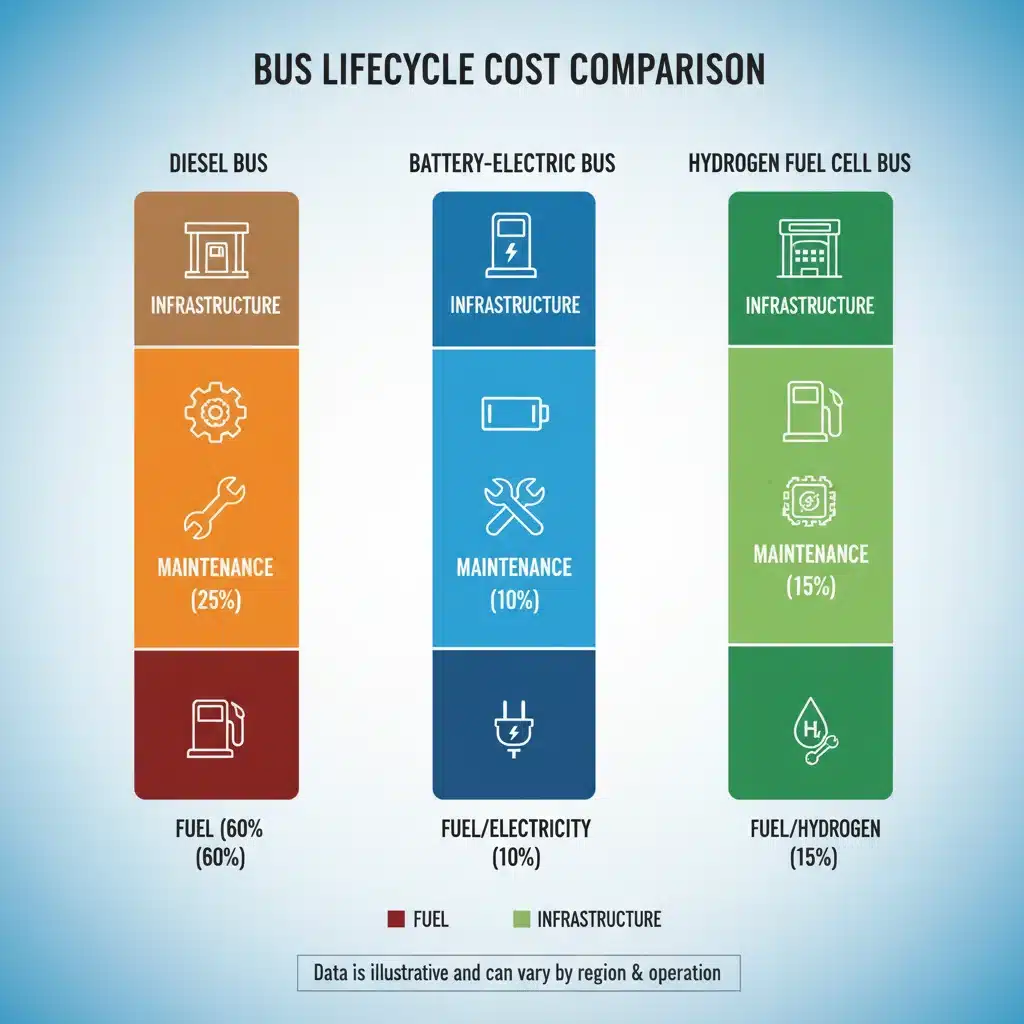
Evaluating the cost-effectiveness of hydrogen transit ROI involves a holistic assessment of capital expenditures (CapEx) and operational expenditures (OpEx) over the lifespan of the vehicles and associated infrastructure. For municipalities, this means looking beyond the initial purchase price to consider the total cost of ownership (TCO).
Capital Expenditures (CapEx)
Vehicle Purchase Price: In 2026, the purchase price of hydrogen fuel cell buses is still generally higher than that of conventional diesel buses, and often comparable to, or slightly above, battery-electric buses. However, economies of scale are beginning to impact manufacturing costs. As production increases and supply chains mature, these costs are projected to decrease. Government incentives and grants, both federal and state, play a crucial role in offsetting this initial investment, making them more financially accessible for municipalities.
Infrastructure Development: A significant CapEx component for hydrogen fuel cell adoption is the development of hydrogen fueling infrastructure. This includes hydrogen production (if on-site), storage, and dispensing stations. The cost of building a fueling station can vary widely depending on capacity, hydrogen source (e.g., green hydrogen production via electrolysis, or delivered hydrogen), and existing infrastructure. While substantial, this investment is often centralized at depots, serving an entire fleet, and can be amortized over many years. Strategic partnerships with energy companies and hydrogen producers can also help mitigate these upfront costs.
Operational Expenditures (OpEx)
Fuel Costs: The cost of hydrogen fuel is a major determinant of OpEx. This cost is highly dependent on the method of hydrogen production, transportation, and regional market dynamics. Green hydrogen, produced using renewable energy, is generally more expensive than grey hydrogen (produced from natural gas), but its cost is projected to fall significantly by 2026 due to advancements in electrolyzer technology and renewable energy scale-up. Long-term contracts and bulk purchasing can help stabilize and reduce fuel expenses for transit agencies. Furthermore, the energy efficiency of fuel cell systems can contribute to lower per-mile fuel costs compared to internal combustion engines.
Maintenance Costs: Hydrogen fuel cell buses generally have fewer moving parts than diesel buses, which can translate to lower maintenance requirements and costs. Electric drivetrains are inherently simpler and more durable. However, specialized training for maintenance personnel and the availability of parts for fuel cell systems are considerations. As the technology becomes more widespread, the ecosystem for maintenance and repairs will mature, leading to further cost efficiencies.
Personnel Training: Investing in training for drivers and maintenance staff is an essential OpEx. This ensures safe and efficient operation and upkeep of the new technology. While an initial expense, it’s a critical component for successful integration.
Projecting the 5-Year Return on Investment (ROI) for Municipalities
Calculating the 5-year hydrogen transit ROI requires a detailed financial model that accounts for all costs and benefits. While the initial CapEx might seem daunting, the long-term benefits can quickly offset these investments, leading to a positive ROI within the projected timeframe for many forward-thinking municipalities.
Direct Financial Benefits
Fuel Savings: As the price of green hydrogen decreases and carbon pricing mechanisms become more prevalent, the per-mile fuel cost of hydrogen buses can become competitive with, or even lower than, diesel. This represents significant operational savings over five years, particularly for large fleets.
Maintenance Savings: Reduced maintenance needs due to fewer moving parts and the inherent durability of electric powertrains contribute directly to OpEx savings. These savings accumulate over time, enhancing the 5-year ROI.
Government Incentives and Subsidies: Federal programs like the Bipartisan Infrastructure Law, as well as state and local initiatives, offer substantial grants and tax credits for zero-emission vehicle procurement and infrastructure development. These incentives can drastically reduce the net CapEx, accelerating the ROI timeline. Municipalities that strategically leverage these funding opportunities will see the quickest returns.
Carbon Credits and Environmental Markets: As carbon markets mature, transit agencies operating zero-emission vehicles may be eligible for carbon credits, providing an additional revenue stream or offsetting operational costs. This can significantly improve the financial attractiveness of hydrogen fuel cell adoption.
Indirect and Non-Financial Benefits
Improved Air Quality and Public Health: The elimination of tailpipe emissions directly improves urban air quality, leading to better public health outcomes. While difficult to quantify in direct financial terms for a transit agency, these benefits translate into reduced healthcare costs for the community and improved quality of life, which are invaluable for municipalities.
Enhanced Public Image and Community Relations: Adopting cutting-edge, sustainable technology demonstrates a municipality’s commitment to environmental stewardship and innovation. This can significantly boost public image, foster community pride, and potentially attract new residents and businesses, contributing to economic development.
Energy Security and Resilience: Diversifying fuel sources away from fossil fuels enhances energy security. If hydrogen is produced locally using renewable energy, it creates a more resilient and self-sufficient energy ecosystem for the transit system.
Technological Leadership and Innovation: Being an early adopter of hydrogen fuel cell technology positions a municipality as a leader in sustainable transportation, potentially attracting further investment and talent in the green technology sector.
Case Studies and Early Adopters: Paving the Way
Several US municipalities and transit agencies have already begun to integrate hydrogen fuel cell buses for public transport into their fleets, providing valuable real-world data and insights. These early adopters are demonstrating the feasibility and benefits of the technology, helping to refine operational models and inform future deployments.
For instance, transit agencies in California have been at the forefront of hydrogen bus deployment, driven by progressive environmental regulations and state incentives. Projects in areas like the Bay Area and Orange County have showcased the reliable performance of hydrogen buses on demanding routes, their quick refueling capabilities, and their contribution to reducing local air pollution. These pilot programs are crucial for understanding the nuances of infrastructure development, operational logistics, and long-term maintenance needs. The data collected from these initiatives will be instrumental in demonstrating a positive hydrogen transit ROI for other municipalities.
Beyond California, other states are also exploring or implementing hydrogen transit solutions. The lessons learned from these diverse geographical and operational contexts are invaluable for building a robust blueprint for widespread adoption across the US. These case studies often highlight the importance of careful planning, strong partnerships with technology providers and energy companies, and securing adequate funding from various sources.
Challenges and Considerations for Adoption
While the prospects for hydrogen fuel cell technology in public transit are bright, municipalities must also navigate several challenges to ensure a successful and cost-effective transition.
Infrastructure Development
Building out a comprehensive hydrogen fueling infrastructure is perhaps the most significant hurdle. This requires strategic planning for station location, capacity, and the source of hydrogen. Ensuring a reliable and cost-effective supply of hydrogen is critical. This challenge is mitigated by the increasing number of hydrogen production facilities and distribution networks being developed across the US, often supported by federal initiatives aimed at establishing a national hydrogen backbone.
Hydrogen Production and Supply Chain
The environmental benefit of hydrogen fuel cell buses is maximized when the hydrogen itself is produced from renewable sources (green hydrogen). Currently, a significant portion of hydrogen is produced from natural gas (grey hydrogen), which still carries a carbon footprint. Expanding green hydrogen production capacity and ensuring a robust, localized supply chain will be crucial for achieving the full environmental and economic benefits. Investments in electrolyzer technology and renewable energy infrastructure are key to this transition.
Initial Investment Costs
Despite decreasing costs, the initial capital outlay for hydrogen buses and fueling infrastructure remains substantial. Municipalities need to meticulously plan their budgets and aggressively pursue available grants and funding opportunities to make these projects financially viable. Collaborative procurement strategies among multiple transit agencies could also help drive down per-unit costs.
Public Perception and Education
Educating the public and stakeholders about the safety and benefits of hydrogen technology is important. Addressing any misconceptions and building public confidence are essential for successful adoption and community support. Transparent communication about the technology, its safety protocols, and its environmental advantages can foster a positive environment for implementation.
Strategic Pathways for Municipalities to Achieve a Positive ROI
For municipalities looking to achieve a positive 5-year hydrogen transit ROI, a multi-faceted strategic approach is essential. This involves careful planning, leveraging funding, and fostering partnerships.
1. Comprehensive Feasibility Studies and Pilot Programs
Before full-scale deployment, conducting detailed feasibility studies is crucial. These studies should assess route suitability, energy demand, infrastructure requirements, and financial projections specific to the municipality’s context. Initiating pilot programs with a small fleet of hydrogen buses can provide invaluable operational data, identify potential challenges early, and allow for adjustments before a larger investment. This iterative approach minimizes risk and optimizes the path to ROI.
2. Aggressive Pursuit of Funding and Incentives
Municipalities must actively seek out and apply for federal, state, and local grants and incentives designed to promote zero-emission transportation. Programs from the Department of Transportation, Department of Energy, and the Environmental Protection Agency, as well as state-specific clean energy funds, can significantly offset the capital costs of hydrogen buses and infrastructure. Staying informed about new funding opportunities and preparing compelling grant applications are critical.
3. Strategic Partnerships and Collaborations
Forming partnerships with hydrogen producers, energy companies, technology providers, and even neighboring transit agencies can unlock significant benefits. These collaborations can lead to shared infrastructure costs, bulk purchasing discounts for hydrogen fuel, and access to expertise in technology deployment and maintenance. A regional approach to hydrogen infrastructure development, for example, can create economies of scale and ensure a more robust supply network.
4. Long-Term Hydrogen Supply Contracts
Securing long-term contracts for hydrogen supply can help stabilize fuel costs and provide predictability in operational budgets. Exploring options for localized green hydrogen production, such as through electrolysis powered by municipal renewable energy projects, can further enhance cost control and environmental benefits, contributing significantly to a strong hydrogen transit ROI.

5. Workforce Development and Training
Investing in the training and upskilling of maintenance technicians and bus operators is paramount. A well-trained workforce ensures the safe, efficient, and reliable operation of hydrogen fuel cell buses, minimizing downtime and maximizing the lifespan of the assets. This proactive approach to workforce development is a key factor in achieving a positive ROI.
6. Lifecycle Cost Analysis and Continuous Monitoring
Adopting a lifecycle cost analysis approach for all procurement decisions allows municipalities to evaluate the true financial impact over the entire operational life of the vehicles. Continuously monitoring operational data, including fuel consumption, maintenance records, and uptime, enables agencies to identify areas for optimization and demonstrate the ongoing cost-effectiveness and ROI of their hydrogen fleet.
The Environmental Imperative and Beyond
While financial returns are a primary driver for municipalities, the environmental imperative cannot be overstated. Hydrogen fuel cells offer a powerful solution to reduce urban air pollution, combat climate change, and contribute to a healthier, more sustainable future. The elimination of tailpipe emissions, including particulate matter and nitrogen oxides, has direct and immediate benefits for public health, especially in densely populated urban areas.
Furthermore, by committing to zero-emission technologies like hydrogen fuel cells, municipalities align themselves with national and international climate goals. This commitment can attract green investment, foster innovation within local industries, and enhance the overall quality of life for residents. The long-term societal benefits, though harder to quantify in monetary terms, are profound and contribute to the overall value proposition of hydrogen transit.
The Future Outlook for Hydrogen Transit ROI
Looking beyond 2026, the trajectory for hydrogen fuel cell technology in public transit appears increasingly positive. Continued advancements in fuel cell efficiency, reductions in manufacturing costs, and the expansion of green hydrogen production capacity will further enhance the cost-effectiveness and accelerate the ROI for municipalities. The development of a robust national hydrogen ecosystem, supported by government policies and private sector investment, will create a more favorable environment for widespread adoption.
The integration of hydrogen fuel cell buses is not just about replacing diesel engines; it’s about transforming public transportation into a truly sustainable, resilient, and future-proof system. As more municipalities gain experience with the technology and share best practices, the pathway to achieving a strong hydrogen transit ROI within a 5-year timeframe will become clearer and more accessible for cities across the United States. The journey towards zero-emission public transit is an investment in both economic prosperity and environmental health, making hydrogen fuel cell technology a key component of urban sustainability strategies.
In conclusion, for US municipalities eyeing sustainable and efficient public transit solutions, hydrogen fuel cell technology presents a compelling opportunity. While initial investments require careful planning and strategic funding, the projected 2026 cost-effectiveness and the potential for a positive 5-year ROI, driven by operational savings, government incentives, and invaluable environmental benefits, make hydrogen transit a solution worthy of serious consideration and strategic adoption.