Fuel Price Drop: Impact on US Shipping Costs Q4 2024, Early 2025
The recent 5% drop in fuel prices is poised to significantly reduce national shipping costs across the US in Q4 2024 and early 2025, offering potential relief to businesses and consumers alike.
The recent 5% drop in fuel prices has ignited discussions across the logistics sector, prompting many to question its immediate and long-term implications. For businesses and consumers alike, understanding these dynamics is crucial, especially concerning national shipping costs. This article provides expert insights: what the recent 5% drop in fuel prices means for national shipping costs in Q4 2024 and early 2025, analyzing the potential impacts on supply chains, operational expenses, and ultimately, consumer prices.
Understanding the Fuel Price Drop: Causes and Context
The recent 5% reduction in fuel prices didn’t occur in a vacuum; it’s a culmination of various global and domestic factors. This section delves into the primary drivers behind this notable decrease, providing essential context for its potential effects on the shipping industry.
Several geopolitical shifts and economic indicators have contributed to the current market condition. A clearer understanding of these factors helps in forecasting future stability and potential fluctuations. It is important to look beyond just the immediate numbers to grasp the full picture.
Global Supply and Demand Dynamics
One of the most significant factors influencing fuel prices is the delicate balance between global oil supply and demand. Increased production from major oil-producing nations, coupled with a slight softening in global demand, has pushed prices downward.
- Increased OPEC+ production: Several key members have ramped up crude oil output.
- Slight economic slowdown: Reduced industrial activity in some regions has lowered overall demand.
- Strategic petroleum reserves: Releases from national reserves have augmented supply.
Domestic Economic Conditions
Within the United States, specific economic conditions have also played a role. Inflationary pressures and the Federal Reserve’s monetary policies have indirectly impacted fuel consumption patterns.
Consumer spending habits and business investment decisions are often responsive to these broader economic signals. A more cautious economic outlook can lead to reduced fuel usage across various sectors, including transportation.
In summary, the 5% fuel price drop is a multi-faceted event, driven by a combination of increased global supply, moderated demand, and specific domestic economic policies. These interconnected factors create a complex environment that directly influences the operational costs for shipping companies.
Direct Impact on Shipping Operational Costs
The immediate and most tangible effect of a fuel price reduction is on the operational costs of shipping companies. Fuel is a primary expenditure for any logistics operation, directly impacting profitability and pricing strategies.
A 5% drop, while seemingly modest, can translate into substantial savings when considering the vast volumes of fuel consumed by fleets of trucks, ships, and even air cargo carriers. These savings are not uniform across all modes of transport but are generally welcomed throughout the industry.
Fuel Surcharges and Their Adjustment
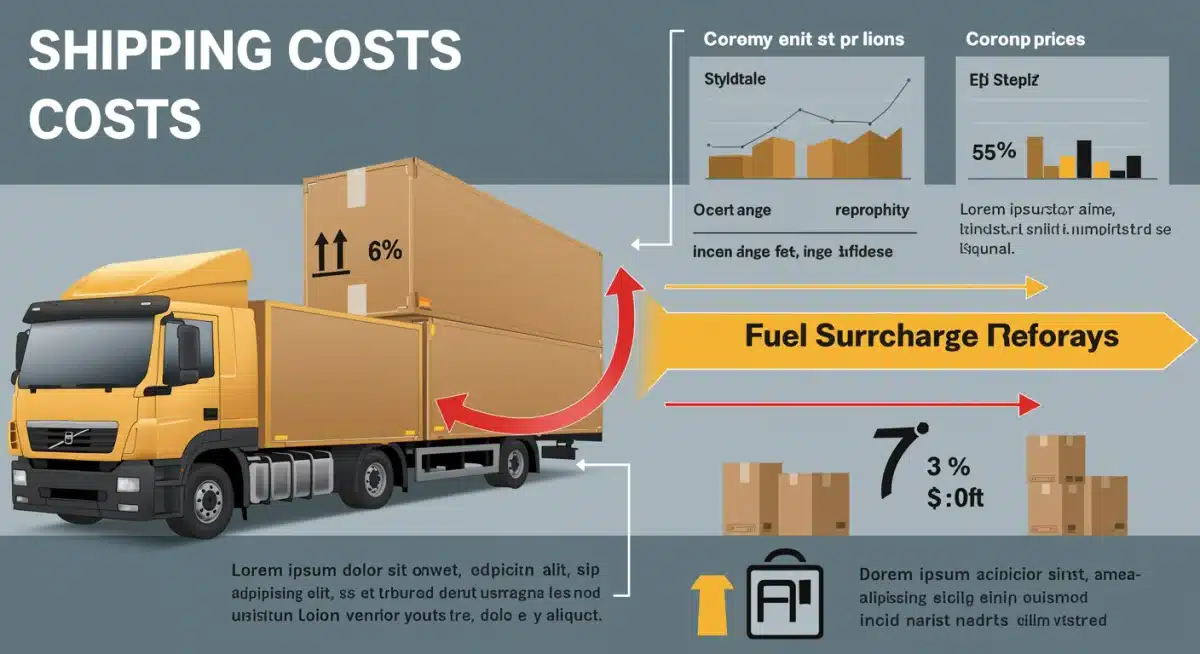
Most shipping carriers utilize fuel surcharges, which are variable fees added to base shipping rates to account for fluctuations in fuel costs. These surcharges are typically adjusted weekly or monthly based on published fuel indexes.
- Automatic adjustments: Many contracts include clauses for automatic surcharge reductions.
- Negotiated rates: Larger shippers may negotiate lower surcharges directly with carriers.
- Transparency issues: Some smaller businesses might not fully benefit if surcharge transparency is lacking.
The reduction in fuel prices directly translates to a decrease in these surcharges, offering immediate relief to shippers. This mechanism ensures that the benefits of lower fuel costs are theoretically passed down the supply chain.
Impact on Different Transportation Modes
The extent of the impact varies significantly depending on the mode of transportation. Road freight, which relies heavily on diesel, often sees the most direct and immediate benefit.
Rail and sea shipping also experience cost reductions, though their fuel consumption profiles and pricing structures can be different. Air cargo, while less fuel-efficient, also benefits from lower jet fuel prices, which are intrinsically linked to crude oil costs.
Ultimately, a 5% drop in fuel prices provides a significant opportunity for shipping companies to reduce their operational expenses. This reduction is primarily felt through lower fuel surcharges and direct savings on fuel purchases, impacting all major transportation modes to varying degrees.
Ripple Effects Across the Supply Chain
The influence of reduced fuel prices extends far beyond the immediate operational savings for carriers. It creates a domino effect throughout the entire supply chain, potentially affecting everything from inventory management to consumer pricing.
Businesses often factor transportation costs into their overall strategic planning. A decrease in these costs can lead to adjustments in inventory levels, distribution networks, and even sourcing decisions. This interconnectedness means that no part of the supply chain remains untouched.
Inventory Management and Warehousing
Lower shipping costs can encourage businesses to re-evaluate their inventory strategies. The concept of just-in-time (JIT) inventory, which relies on frequent, smaller shipments, becomes more economically viable. This can reduce warehousing costs and improve cash flow.
Conversely, some companies might opt for slightly larger, less frequent orders to optimize other logistical aspects, knowing that the transportation cost burden is lighter. The flexibility afforded by lower fuel prices allows for more dynamic inventory decisions.
Impact on Retail and Consumer Prices
One of the most anticipated outcomes of reduced shipping costs is the potential for lower consumer prices. When businesses spend less on getting products to market, they have the option to pass those savings on to the end consumer.
This can lead to increased competitiveness in the retail sector and potentially stimulate consumer spending. However, the extent to which these savings are passed on depends on various market factors, including competition, profit margins, and overall economic conditions.
In conclusion, the 5% fuel price drop can initiate a series of positive ripple effects across the supply chain. From enabling more efficient inventory practices to potentially lowering retail prices, the benefits are widespread, contributing to a more streamlined and cost-effective logistics ecosystem.
Forecasting Q4 2024 and Early 2025: What to Expect
Projecting the future impact of current fuel price trends requires careful consideration of various economic and geopolitical indicators. The shipping industry is particularly sensitive to these shifts, making accurate forecasting essential for strategic planning.
While a 5% drop is a positive development, its sustained effect into Q4 2024 and early 2025 hinges on a confluence of factors. Understanding these potential scenarios helps businesses prepare for different outcomes and optimize their operations accordingly.
Potential Scenarios for Fuel Prices
Analysts are presenting a few key scenarios for fuel prices in the coming months. These range from continued stability to potential upward or downward shifts, each carrying distinct implications for shipping costs.
- Stable prices: If global supply outpaces demand slightly, prices could remain relatively flat.
- Further declines: A significant economic downturn could lead to additional price drops.
- Price rebound: Geopolitical events or unexpected production cuts could cause prices to rise again.
Each scenario requires different levels of preparedness from shipping companies, highlighting the need for flexible and adaptive strategies.
Strategies for Shippers and Carriers
Both shippers and carriers can implement specific strategies to capitalize on or mitigate against future fuel price movements. Proactive measures can ensure sustained cost efficiency and competitive advantage.
For carriers, this might involve locking in fuel prices through hedging or optimizing routes for fuel efficiency. Shippers could explore longer-term contracts with carriers that reflect current lower fuel rates or diversify their transportation partners.
Looking ahead to Q4 2024 and early 2025, the shipping industry must remain agile. While the 5% fuel price drop offers immediate relief, continuous monitoring of market trends and the implementation of adaptive strategies will be crucial for sustained success.
Challenges and Opportunities for the Logistics Sector
While a drop in fuel prices generally presents a positive outlook, it also brings a unique set of challenges and opportunities for the logistics sector. Navigating these requires strategic thinking and a proactive approach from industry players.
The industry constantly evolves, and changes in fuel costs necessitate a re-evaluation of existing business models and operational strategies. This period of lower prices can be leveraged for growth and efficiency improvements.
Maintaining Competitive Edge
For logistics companies, lower fuel costs can be a double-edged sword. While it reduces their own expenses, it also intensifies competition as others may lower their rates, potentially squeezing profit margins.
Companies must focus on differentiating their services through efficiency, reliability, and value-added offerings, rather than solely competing on price. This includes investing in technology and optimizing routes beyond just fuel considerations.
Strong customer relationships and transparent communication about cost savings can also help maintain market position.
Investment in Sustainable Practices
The temporary relief from high fuel costs presents an opportunity for companies to invest in long-term sustainable solutions. This includes transitioning to more fuel-efficient fleets or exploring alternative fuels and electric vehicles.
- Fleet modernization: Upgrading to newer, more efficient vehicles.
- Alternative fuels: Researching and adopting cleaner energy sources.
- Route optimization software: Reducing mileage and idle times.
Such investments, while requiring upfront capital, can yield significant operational savings and environmental benefits in the long run, positioning companies favorably for future regulatory changes and consumer preferences.
In conclusion, the current fuel price environment offers both challenges in maintaining profitability amidst increased competition and significant opportunities for strategic investment in sustainability and efficiency. Companies that adapt effectively will be better positioned for future success.
Consumer Perspective: Savings and Spending Power
From the consumer’s vantage point, a reduction in fuel prices and subsequent lower shipping costs often translates into tangible benefits. These benefits can manifest as direct savings on goods and services, and potentially an increase in overall spending power.
Understanding how these cost reductions trickle down to the average household is vital for appreciating the broader economic impact. The connection between logistics costs and everyday expenses is often underestimated.
Impact on Everyday Goods
Nearly every product consumed daily, from groceries to electronics, involves multiple stages of transportation. A decrease in shipping costs can directly reduce the final price of these items.
Consumers may observe price stability or even slight reductions in a wide array of products, particularly those with high transportation cost components or long supply chains. This offers a welcome reprieve from inflationary pressures.
The extent of these savings ultimately depends on how retailers and manufacturers choose to adjust their pricing strategies.
Boost to Disposable Income
When the cost of goods decreases, consumers effectively have more disposable income. This additional purchasing power can be directed towards other expenditures, stimulating economic activity in various sectors.
Whether it’s saving more, investing, or spending on non-essential items, the cumulative effect of lower prices can contribute to a healthier consumer economy. This also indirectly supports businesses that rely on consumer demand.
In essence, the 5% fuel price drop holds the promise of tangible benefits for consumers, potentially leading to lower prices on everyday goods and an increase in their overall spending power, thereby fostering a more robust economic environment.
Technology and Efficiency: Amplifying Savings
The current landscape of lower fuel prices provides an excellent opportunity to amplify savings through technological integration and enhanced operational efficiency. Modern logistics are increasingly driven by data and advanced solutions.
Leveraging technology can help companies maximize the benefits of reduced fuel costs, ensuring that every dollar saved on fuel is further optimized through smart operational practices. This dual approach creates a powerful synergy for cost reduction.
Route Optimization Software
Advanced route optimization software plays a crucial role in minimizing fuel consumption. By calculating the most efficient paths, considering traffic, road conditions, and delivery schedules, these tools significantly reduce mileage and idle times.
- Reduced mileage: Minimizing distance traveled directly cuts fuel usage.
- Dynamic rerouting: Adapting to real-time conditions to avoid delays and congestion.
- Load consolidation: Optimizing cargo space to reduce the number of trips.
The savings generated from lower fuel prices are compounded when routes are meticulously planned and executed with the aid of such software, leading to overall greater efficiency.
Fleet Telematics and Predictive Maintenance
Telematics systems provide real-time data on vehicle performance, driver behavior, and operational parameters. This data can be used to identify inefficiencies and implement corrective actions, further reducing fuel waste.
Predictive maintenance, enabled by telematics, ensures that vehicles are always in optimal condition, preventing breakdowns that lead to costly delays and increased fuel consumption. A well-maintained fleet is inherently more fuel-efficient.
By embracing technology and focusing on efficiency, logistics companies can not only benefit from the immediate 5% drop in fuel prices but also establish long-term strategies for sustained cost savings and improved service delivery. This integration is key to modern, competitive logistics.
| Key Impact Area | Brief Description of Effect |
|---|---|
| Shipping Costs | Direct reduction in fuel surcharges and operational expenses for carriers. |
| Supply Chain Efficiency | Enables better inventory management and distribution network optimization. |
| Consumer Prices | Potential for lower retail prices on goods, boosting disposable income. |
| Logistics Innovation | Opportunity to invest in sustainable practices and technology for long-term gains. |
Frequently Asked Questions About Fuel Prices and Shipping
The reflection can be quite rapid, often within weeks, due to variable fuel surcharges. Many carriers adjust these surcharges monthly or even weekly, directly linking them to current fuel price indexes. Businesses should review their contracts for specific adjustment schedules.
While lower shipping costs create the potential for price reductions, immediate decreases are not guaranteed. Retailers and manufacturers consider various factors like inventory levels, competitive pressures, and profit margins before adjusting consumer prices. The effect is often gradual.
Road freight, primarily trucking, is typically the most sensitive to fuel price fluctuations due to its high reliance on diesel. Rail and sea shipping also see significant impacts, while air cargo is affected by jet fuel costs, which generally correlate with crude oil prices.
Forecasting fuel prices is complex. While current trends are favorable, geopolitical events, global economic shifts, and OPEC+ decisions can quickly alter the market. Experts suggest a cautious outlook, advising businesses to plan for various scenarios.
Businesses can maximize savings by optimizing routes, consolidating shipments, negotiating favorable carrier contracts, and investing in fuel-efficient technologies like telematics. Proactive supply chain management and strategic partnerships are also crucial for sustained benefits.
Conclusion
The recent 5% drop in fuel prices presents a significant, albeit potentially temporary, relief for the national shipping industry and the broader economy. While the immediate impact is a reduction in operational costs for carriers and lower fuel surcharges for shippers, the ripple effects extend to inventory management, consumer prices, and even opportunities for strategic investment in sustainable logistics. Businesses that proactively adapt their strategies, leverage technological advancements, and maintain a keen eye on market dynamics will be best positioned to capitalize on these favorable conditions through Q4 2024 and into early 2025, ultimately contributing to a more efficient and resilient supply chain.