Federal Legislation Review: EV Infrastructure Rollout by 2027
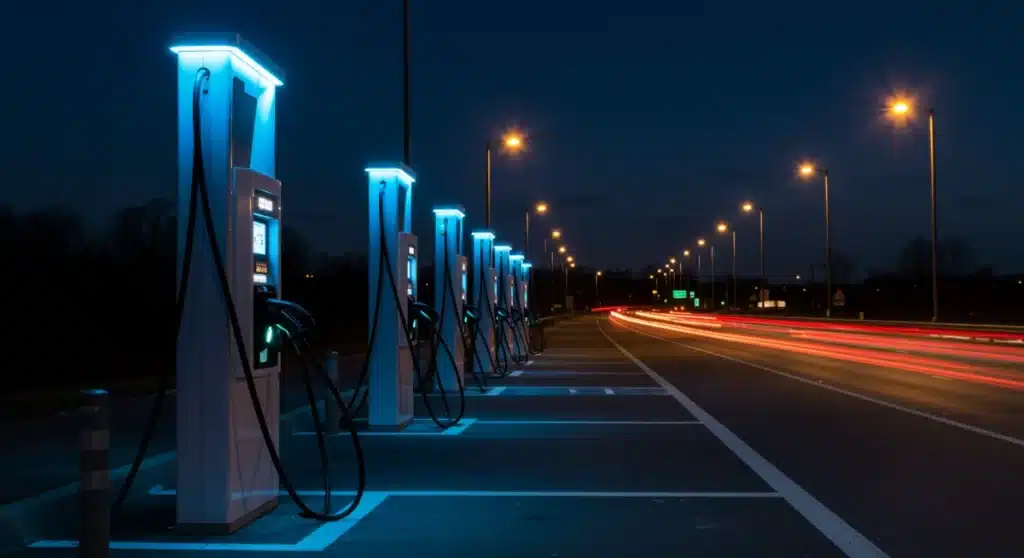
Federal legislation is currently under review to significantly accelerate electric vehicle infrastructure rollout by 2027, aiming to establish a robust and widespread charging network across the United States.
The landscape of transportation is undergoing a profound transformation, and at the heart of this shift lies the urgent need for robust electric vehicle (EV) infrastructure. A pivotal Policy Update: Federal Legislation in Review to Accelerate Electric Vehicle Infrastructure Rollout by 2027 is poised to dramatically reshape how the United States approaches sustainable mobility, promising a future where EV charging is as ubiquitous as gas stations today.
Understanding the Federal Push for EV Infrastructure
The federal government has recognized the critical role of accessible charging infrastructure in driving widespread EV adoption. This recognition has culminated in a series of legislative efforts designed to not only encourage but actively accelerate the deployment of charging stations across the nation. The overarching goal is to create a seamless and reliable charging experience for all EV owners, addressing range anxiety and fostering confidence in electric transportation.
Several key factors underpin this federal push. Environmental concerns, energy independence, and economic growth are all significant drivers. By investing in EV infrastructure, the U.S. aims to reduce carbon emissions, decrease reliance on fossil fuels, and stimulate job creation in new green industries. This holistic approach views EV infrastructure as a cornerstone of a sustainable and prosperous future.
Current Legislative Frameworks
Existing and proposed legislation build upon a foundation of previous initiatives, seeking to streamline processes and maximize impact. These frameworks often involve significant federal funding allocations, alongside directives for state and local collaboration.
- Bipartisan Infrastructure Law (BIL): This landmark legislation provides billions in funding for EV charging, focusing on a national network.
- Tax Credits and Incentives: Various tax credits for EV purchases and charging equipment installation encourage both consumers and businesses.
- Research and Development Grants: Federal grants support innovation in charging technology and grid integration.
The current legislative review seeks to refine these efforts, identifying bottlenecks and opportunities for greater efficiency. The objective is to ensure that federal investments yield tangible results by 2027, establishing a comprehensive and reliable charging ecosystem.
Key Components of the Proposed Legislation
The proposed federal legislation is multifaceted, encompassing various strategies to accelerate EV infrastructure rollout. It moves beyond simple funding, delving into standardization, grid integration, and equitable access. These components are designed to create a resilient and user-friendly charging network that can support the projected growth of electric vehicles.
A central theme of the legislative proposals is the emphasis on strategic deployment. This means prioritizing locations that maximize utility, such as major travel corridors, urban centers, and underserved rural areas. The goal is to avoid a patchwork approach and instead build a cohesive national network.
Standardization and Interoperability
One of the significant challenges in EV charging has been the lack of universal standards. The new legislation aims to address this by promoting common charging protocols and connectors. This will ensure that EV owners can confidently use any public charging station, regardless of their vehicle’s make or model.
- Unified Charging Protocols: Mandating or incentivizing the adoption of standardized communication protocols between vehicles and chargers.
- Common Connector Types: Encouraging the widespread use of compatible connector types to minimize compatibility issues.
- Seamless Payment Systems: Developing interoperable payment solutions to simplify the user experience.
Achieving standardization is crucial for fostering consumer confidence and reducing market fragmentation. It simplifies the charging process, making EVs a more attractive option for a wider demographic.
Grid Modernization and Energy Storage
The rapid expansion of EV charging infrastructure necessitates significant upgrades to the national electrical grid. The proposed legislation includes provisions for grid modernization, smart charging technologies, and energy storage solutions. These measures are essential to handle increased demand and ensure grid stability.
Integrating renewable energy sources into the charging network is another critical aspect. This not only enhances sustainability but also improves energy resilience. The legislation seeks to foster innovative solutions that balance energy demand with supply, especially during peak hours.
Funding Mechanisms and Incentives
A cornerstone of any large-scale infrastructure project is robust funding, and the federal legislation under review provides substantial financial backing. These mechanisms are designed to incentivize both public and private sector investment, leveraging federal dollars to catalyze broader economic participation in the EV transition. The aim is to create a self-sustaining market for EV infrastructure development.
Beyond direct funding, the legislation also incorporates a range of incentives to encourage adoption and development. These incentives are tailored to various stakeholders, from individual consumers to large corporations and municipalities, ensuring a comprehensive approach to accelerating the rollout.
Direct Federal Investments
The federal government is committing significant capital directly to the construction and expansion of charging networks. This includes funding for state and local governments, as well as partnerships with private entities. These investments often target critical gaps in the existing infrastructure and support projects with national strategic importance.
These direct investments are crucial for kickstarting projects that might otherwise be deemed too risky or costly for private ventures alone. They provide a foundational layer of infrastructure upon which further private development can build. The focus is on creating a robust backbone for the national charging network.
Tax Credits and Grants
To stimulate private investment and consumer adoption, the legislation expands upon existing tax credits and introduces new grant programs. These financial incentives make it more attractive for businesses to install charging stations and for individuals to purchase EVs.
- Commercial Charging Station Tax Credits: Businesses installing public or workplace charging stations can receive significant tax benefits.
- Residential Charging Equipment Tax Credits: Homeowners installing EV chargers are eligible for tax credits, reducing the upfront cost.
- Research and Development Grants: Grants are available for companies developing innovative charging technologies, such as ultra-fast chargers or wireless charging solutions.
- Community Charging Grants: Programs specifically designed to help municipalities and non-profits establish charging infrastructure in underserved areas.
These incentives play a vital role in democratizing access to EV technology and infrastructure, ensuring that the benefits of electric mobility are widely distributed across different socio-economic groups and geographic regions.
Challenges and Potential Roadblocks
While the federal push for accelerated EV infrastructure rollout is ambitious and necessary, it is not without its challenges. Several significant hurdles must be addressed to ensure the successful implementation of the proposed legislation by 2027. Overcoming these obstacles will require coordinated efforts from various stakeholders, including government agencies, private industry, and local communities.
One of the primary challenges lies in the sheer scale of the undertaking. Building a comprehensive national charging network in a relatively short timeframe demands unprecedented levels of planning, resource allocation, and technological innovation. Furthermore, the diverse needs of different regions and communities add layers of complexity to the deployment strategy.
Grid Capacity and Upgrades
The existing electrical grid, while robust, was not designed to accommodate the widespread adoption of electric vehicles. The increased demand for electricity, especially during peak charging times, could strain local and regional grids. Significant investments in grid modernization and capacity upgrades are essential to prevent outages and ensure reliable service.
- Aging Infrastructure: Many parts of the grid require substantial upgrades to handle increased load.
- Local Distribution Challenges: Ensuring sufficient power delivery to individual charging sites can be complex and costly.
- Renewable Energy Integration: Seamlessly integrating intermittent renewable energy sources into the grid poses technical challenges.
Addressing these grid-related issues is paramount. Without a modernized and resilient grid, even the most advanced charging stations will be unable to function effectively, hindering the overall progress of EV adoption.
Siting and Permitting Processes
Identifying suitable locations for charging stations and navigating complex permitting processes can significantly delay deployment. Bureaucratic hurdles, zoning regulations, and local opposition can all contribute to project slowdowns. The legislation aims to streamline these processes, but local implementation remains a critical factor.
Public engagement and education are also vital. Addressing community concerns about visual impact, noise, and potential traffic changes can help mitigate opposition and foster greater acceptance of new charging installations. A collaborative approach between developers and local communities is key to efficient siting and permitting.
Economic and Environmental Impact by 2027
The accelerated rollout of electric vehicle infrastructure under federal legislation is projected to have profound economic and environmental impacts across the United States by 2027. These changes extend far beyond simply having more charging stations; they encompass job creation, technological innovation, and a significant step towards a greener, more sustainable future. The policy aims to position the U.S. as a leader in the global EV transition.
Economically, the investment in EV infrastructure is expected to stimulate growth in various sectors, from manufacturing and construction to software development and maintenance services. Environmentally, the shift towards electric vehicles, supported by a robust charging network, will lead to substantial reductions in greenhouse gas emissions and improved air quality.
Job Creation and Economic Growth
The expansion of EV infrastructure will create a new wave of jobs across the country. These opportunities will arise in diverse areas, including the manufacturing of charging equipment, installation and maintenance of stations, software development for charging networks, and related services.
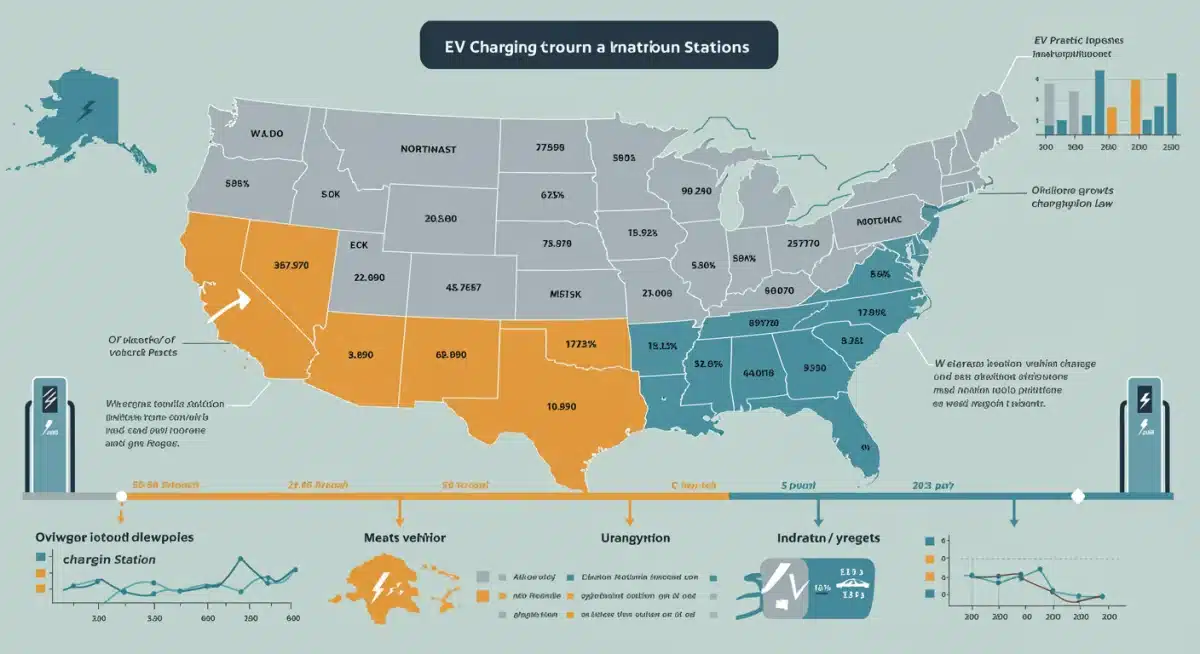
Furthermore, the increased adoption of EVs will foster innovation in battery technology, vehicle design, and smart grid solutions, leading to further economic expansion. The domestic production of EVs and their components will strengthen the national economy and reduce reliance on foreign supply chains. This economic ripple effect is a key benefit anticipated by 2027.
Reduced Emissions and Improved Air Quality
From an environmental perspective, the primary benefit of accelerated EV infrastructure is the reduction in tailpipe emissions. As more drivers transition to electric vehicles, the overall carbon footprint of the transportation sector will decrease significantly. This directly contributes to national and global climate goals.
- Lower Greenhouse Gas Emissions: Replacing gasoline-powered vehicles with EVs reduces CO2 and other harmful emissions.
- Improved Local Air Quality: Fewer internal combustion engines mean less smog and particulate matter in urban areas, leading to better public health outcomes.
- Decreased Reliance on Fossil Fuels: A robust EV ecosystem lessens the nation’s dependence on petroleum, enhancing energy security.
The environmental benefits are not limited to emissions. The shift to EVs also encourages the development of renewable energy sources to power the charging network, creating a virtuous cycle of sustainability. By 2027, these impacts are expected to be noticeably felt in communities nationwide.
The Role of States and Local Communities
While federal legislation provides the overarching framework and significant funding, the success of the EV infrastructure rollout by 2027 heavily depends on the active participation and collaboration of states and local communities. These entities are on the front lines of implementation, translating national policy into tangible charging solutions that meet the specific needs of their residents and businesses. Their engagement is critical for effective and equitable deployment.
States and local governments play a pivotal role in overcoming localized challenges, such as permitting, zoning, and community acceptance. They also have a unique understanding of regional transportation patterns and energy grids, allowing for more strategic and efficient placement of charging stations.
State-Level Initiatives and Partnerships
Many states have already launched their own initiatives to promote EV adoption and infrastructure development, often complementing federal efforts. These initiatives can include additional funding programs, regulatory support, and public awareness campaigns. Partnerships between state agencies and private companies are also crucial for leveraging resources and expertise.
- State EV Roadmaps: Developing comprehensive plans for EV charging network expansion.
- Local Grant Programs: Providing additional financial incentives for communities and businesses to install chargers.
- Streamlined Permitting: Implementing faster and simpler processes for charging station construction.
These state-level actions are essential for creating a supportive environment for EV infrastructure, ensuring that federal investments are maximized and reach their intended recipients efficiently. Their proactive engagement is a key factor in achieving the 2027 rollout targets.
Community Engagement and Equity
Ensuring equitable access to EV charging infrastructure is a critical consideration. Local communities are instrumental in identifying underserved areas and ensuring that new installations benefit all residents, regardless of income or geographic location. Community engagement helps tailor solutions to specific needs and builds public support.
Addressing the needs of apartment dwellers, rural communities, and low-income areas requires innovative approaches, such as curbside charging, community charging hubs, and mobile charging solutions. Local planning and community feedback are vital to designing an inclusive and accessible network for everyone.
Looking Ahead: Post-2027 Vision for EV Infrastructure
The federal legislation under review aims to accelerate electric vehicle infrastructure rollout by 2027, setting a crucial benchmark for the nation’s transition to electric mobility. However, 2027 is not the finish line, but rather a significant milestone. The vision extends well beyond this date, focusing on continuous evolution, adaptation, and sustained growth to meet the ever-increasing demands of an electric future. The foundation laid by this legislation will serve as a springboard for further advancements.
The post-2027 landscape for EV infrastructure envisions a highly integrated, intelligent, and ubiquitous charging network. This future will be characterized by advanced technologies, seamless user experiences, and a strong emphasis on sustainability and energy resilience. The policies enacted now will shape the trajectory for decades to come.
Advanced Charging Technologies
Beyond 2027, expect to see the widespread adoption of even more advanced charging technologies. This includes ultra-fast charging capabilities that can significantly reduce charging times, making long-distance EV travel even more convenient. Wireless charging solutions, both static and dynamic (charging while driving), are also likely to become more common, offering unparalleled convenience.
- Megawatt Charging Systems (MCS): Essential for heavy-duty electric vehicles, enabling rapid charging for trucks and buses.
- Bidirectional Charging (V2G/V2H): Allowing EVs to feed energy back into the grid or power homes, enhancing grid stability and resilience.
- Autonomous Charging: Robotic charging solutions that automatically connect to vehicles, further simplifying the user experience.
These innovations will not only improve the practicality of EVs but also integrate them more deeply into the broader energy ecosystem, transforming them from mere transportation devices into mobile energy storage units.
Integrated Smart Grid and Renewable Energy
The post-2027 vision for EV infrastructure is inextricably linked with the development of a fully integrated smart grid powered predominantly by renewable energy sources. This intelligent grid will optimize energy flow, manage demand fluctuations from EV charging, and ensure that electric vehicles are powered by clean, sustainable electricity.
Further policy and investment will focus on strengthening grid resilience against climate impacts and cyber threats, ensuring that the charging network remains operational under all conditions. The long-term goal is a fully decarbonized transportation sector supported by a robust and intelligent energy infrastructure.
| Key Aspect | Brief Description |
|---|---|
| Legislative Goal | Accelerate EV charging infrastructure rollout across the U.S. by 2027. |
| Key Components | Funding, standardization, grid modernization, and equitable access. |
| Challenges | Grid capacity, siting/permitting complexities, and equitable distribution. |
| Impact | Job creation, economic growth, and significant environmental benefits. |
Frequently Asked Questions About EV Infrastructure
The main objective is to rapidly expand and standardize electric vehicle charging infrastructure across the United States. This aims to create a reliable and accessible network, encouraging widespread EV adoption and reducing range anxiety for drivers nationwide.
The legislation is expected to significantly increase the number of public and private charging stations, particularly along major travel corridors and in urban areas. It also focuses on promoting standardization, making charging more convenient and universally compatible for various EV models.
Key challenges include upgrading the existing electrical grid to handle increased demand, streamlining complex siting and permitting processes for new stations, and ensuring equitable access to charging in rural and underserved communities. These require coordinated efforts.
Economically, it will create jobs in manufacturing, installation, and maintenance, fostering growth in green industries. Environmentally, it will lead to significant reductions in greenhouse gas emissions and improved air quality, contributing to climate goals and public health.
States and local communities are crucial for implementation, handling local permitting, zoning, and community engagement. They also develop specific initiatives and partnerships that complement federal efforts, ensuring tailored solutions and equitable distribution of charging access across diverse regions.
Conclusion
The ongoing federal legislative review to accelerate electric vehicle infrastructure rollout by 2027 represents a critical juncture for the United States. This comprehensive policy push, encompassing significant funding, standardization efforts, and grid modernization, is designed to overcome existing barriers and establish a robust, accessible, and future-proof charging network. While challenges related to grid capacity and local implementation remain, the anticipated economic benefits, such as job creation and technological innovation, coupled with profound environmental improvements, underscore the transformative potential of this initiative. The success of this endeavor hinges on sustained collaboration between federal, state, and local entities, paving the way for a more sustainable and electrified transportation future.