Electric Vehicle Adoption to Hit 40% by 2030: New US Report

A new report projects that electric vehicle (EV) adoption in the United States will reach 40% by 2030, driven by decreasing battery costs, government incentives, and increasing consumer awareness of the environmental and economic benefits of EVs.
A recent study reveals a significant shift in the automotive landscape, predicting that new report: electric vehicle adoption rate projected to reach 40% by 2030 in the United States. This projection underscores the growing consumer interest and the pivotal role of EVs in shaping the future of transportation.
Electric Vehicle Revolution: A 40% Adoption Rate by 2030?
The automotive industry is undergoing a seismic shift, with electric vehicles (EVs) poised to redefine how we commute, travel, and transport goods. But is a 40% adoption rate realistic, and what factors are driving this potential revolution?
Key Drivers of EV Adoption
Several factors are converging to accelerate the adoption of EVs in the United States. These include advancements in battery technology, increasing affordability, and growing environmental consciousness.
- Decreasing Battery Costs: Battery prices have plummeted in recent years, making EVs more price-competitive with traditional gasoline vehicles.
- Government Incentives: Federal and state incentives, such as tax credits and rebates, are further reducing the upfront cost of EV ownership.
- Expanding Charging Infrastructure: The growing availability of public charging stations is alleviating range anxiety and making EV ownership more convenient.
- Rising Consumer Awareness: Increasing awareness of the environmental and economic benefits of EVs is driving consumer demand.
The convergence of these factors suggests that the projected 40% adoption rate by 2030 is not only achievable but potentially conservative.
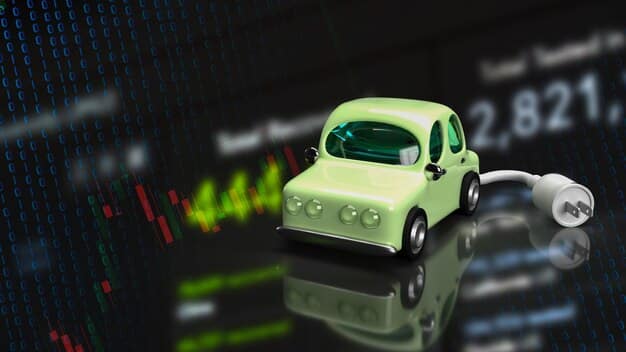
As technology continues to improve and infrastructure expands, electric vehicles will become an increasingly attractive option for American consumers.
Unpacking the New Report: Key Findings and Analysis
To fully understand the implications of the projected 40% EV adoption rate, it’s essential to delve into the key findings and analysis of the new report. What specific data points support this forecast, and what are the potential challenges that could hinder its realization?
Regional Variations in EV Adoption
The report likely highlights regional variations in EV adoption rates across the United States. Some states, such as California and Washington, are already leading the charge, while others lag behind.
Factors contributing to these regional disparities include:
- State-Level Policies: States with more aggressive EV mandates and incentives are experiencing faster adoption rates.
- Charging Infrastructure Availability: The density of public charging stations varies significantly from state to state.
- Consumer Preferences: Consumer preferences and purchasing power also play a role in regional EV adoption rates.
Understanding these regional variations is crucial for policymakers and industry stakeholders seeking to accelerate EV adoption nationwide.
While some regions may embrace EVs more quickly, the overall trend suggests a steady increase across the US.
The Impact on Infrastructure: Preparing for an Electric Future
A 40% EV adoption rate by 2030 will have a profound impact on infrastructure needs across the United States. How well-prepared are we to handle this surge in electric vehicle demand, and what investments are necessary to ensure a smooth transition?
One of the most pressing challenges is the need for a robust and reliable charging infrastructure. This includes:
- Expanding Public Charging Networks: Investing in the deployment of fast-charging stations along major highways and in urban areas.
- Upgrading the Grid: Modernizing the electrical grid to handle the increased demand from EV charging.
- Promoting Home Charging: Encouraging homeowners to install EV chargers through incentives and streamlined permitting processes.
The Role of Renewable Energy
To truly maximize the environmental benefits of EVs, it’s essential to power them with renewable energy sources. This requires:
Expanding solar and wind energy generation capacity to meet the growing demand for electricity.
- Integrating Renewable Energy into the Grid: Developing smart grid technologies to efficiently manage the flow of renewable energy.
- Incentivizing Renewable Energy Adoption: Providing incentives for homeowners and businesses to install solar panels and wind turbines.
A holistic approach that combines EV adoption with renewable energy investments is crucial for creating a sustainable transportation system.

Economic Implications: New Jobs and Industries
The transition to electric vehicles is not just an environmental imperative; it also presents significant economic opportunities. How will increased EV adoption impact the job market and create new industries in the United States?
The growth of the EV industry is expected to create jobs in a variety of sectors, including:
- Manufacturing: Building electric vehicles, batteries, and charging equipment.
- Installation and Maintenance: Installing and servicing EV chargers and other related infrastructure.
- Software Development: Creating software for EV control systems, charging networks, and autonomous driving features.
The Growth of the Battery Industry
The battery industry is poised for explosive growth as demand for EVs increases. This will lead to:
The development of new battery technologies with improved energy density, charging speed, and lifespan.
The establishment of battery manufacturing facilities in the United States, creating domestic jobs and reducing reliance on foreign suppliers.
The growth of the battery recycling industry, ensuring that valuable materials are recovered and reused.
These economic benefits will further incentivize the adoption of electric vehicles across the United States.
Challenges and Obstacles: Addressing Potential Roadblocks
While the future of electric vehicles looks bright, there are still challenges and obstacles that need to be addressed to ensure a smooth transition. What are the potential roadblocks that could hinder the projected 40% adoption rate, and how can we overcome them?
One of the primary challenges is:
- Range Anxiety: Overcoming consumer concerns about the limited range of EVs and the availability of charging stations.
- High Upfront Cost: Making EVs more affordable for a wider range of consumers.
- Charging Infrastructure Gaps: Closing gaps in the availability of public charging stations, particularly in rural areas.
Addressing Supply Chain Issues
The EV industry is also facing supply chain challenges, including:
Ensuring a stable supply of critical minerals, such as lithium and cobalt, for battery production.
Reducing reliance on foreign suppliers of these minerals through domestic mining and recycling initiatives.
Diversifying the supply chain to mitigate the risk of disruptions.
Successfully addressing these challenges is critical for achieving the projected 40% EV adoption rate and realizing the full potential of electric vehicles.
Consumer Perspectives: Overcoming Hesitations and Building Trust
Ultimately, the success of electric vehicle adoption depends on winning over consumers. How can we overcome consumer hesitations and build trust in EVs to accelerate their acceptance in the marketplace?
Education and awareness are key. This includes:
- Highlighting the Environmental Benefits: Emphasizing the role of EVs in reducing greenhouse gas emissions and improving air quality.
- Showcasing the Economic Advantages: Demonstrating the long-term cost savings of EV ownership, including lower fuel and maintenance costs.
- Providing Test Drive Opportunities: Allowing consumers to experience the performance and convenience of EVs firsthand.
Building Trust Through Transparency
Transparency is also crucial for building consumer trust. This requires:
Providing clear and accurate information about EV range, charging times, and battery lifespan.
Establishing reliable charging networks with easy-to-use payment systems.
Offering comprehensive warranties and service agreements to protect consumers from unexpected costs.
By addressing consumer concerns and building trust, we can accelerate the adoption of electric vehicles and create a more sustainable transportation future.
| Key Point | Brief Description |
|---|---|
| 🚗 40% EV Adoption | New report projects 40% EV adoption in the US by 2030. |
| 💰 Economic Impact | EV growth creates jobs in manufacturing, maintenance, and software. |
| ⚡ Infrastructure Needs | Expanding charging networks and upgrading the electrical grid are crucial. |
| 🌱 Sustainability | Renewable energy integration maximizes EV environmental benefits. |
[Retractable FAQ Section]
Frequently Asked Questions
▼
A new report projects that electric vehicle adoption in the United States will reach 40% by 2030, driven by various factors.
▼
Decreasing battery costs, government incentives, expanding charging infrastructure, and rising consumer awareness are key drivers.
▼
The growth of the EV industry is expected to create jobs in manufacturing, installation, maintenance, and software development.
▼
Expanding public charging networks, upgrading the electrical grid, and promoting home charging are essential infrastructure changes.
▼
Range anxiety, high upfront cost, and charging infrastructure gaps are key challenges that need to be addressed for widespread EV adoption.
Conclusion
The projected 40% adoption rate of electric vehicles in the United States by 2030 signifies a pivotal moment in the automotive industry. While challenges remain, the confluence of technological advancements, government support, and growing consumer awareness suggests a promising future for EVs. By addressing the remaining obstacles and embracing the opportunities that this transition presents, the US can pave the way for a more sustainable and economically vibrant transportation system.