Electric vs. Biofuel Logistics: ROI Analysis for US Operations 2026
Electric vs. Biofuel Logistics: A Data-Backed ROI Analysis for US Operations in 2026
The global push towards sustainability has profoundly reshaped the logistics landscape. As businesses strive to reduce their carbon footprint and achieve ambitious environmental, social, and governance (ESG) goals, the choice of fuel for their fleets has become a critical strategic decision. In the United States, logistics companies are increasingly evaluating two primary contenders for decarbonization: electric vehicles (EVs) and biofuels. This comprehensive analysis will delve into a data-backed Return on Investment (ROI) comparison of electric vs. biofuel logistics for US operations in 2026, offering insights into the financial, operational, and environmental implications of each.
The year 2026 stands as a pivotal point, with evolving technologies, infrastructure development, and regulatory frameworks expected to significantly influence the viability and profitability of these sustainable options. Understanding the nuances of electric biofuel logistics is no longer a niche concern but a mainstream imperative for competitive advantage and long-term resilience.
The Evolving Landscape of Sustainable Logistics
Before diving into the specifics of ROI, it’s essential to acknowledge the broader context driving this shift. Climate change concerns, stringent emissions regulations, and growing consumer demand for eco-friendly supply chains are compelling logistics providers to innovate. The Bipartisan Infrastructure Law, along with various state-level initiatives, is pouring significant investments into charging infrastructure and alternative fuel production, creating a more favorable environment for adoption.
For US operations, the sheer scale and geographical diversity present unique challenges and opportunities. A solution that works efficiently in California might face different hurdles in Texas or the Midwest. Therefore, our analysis considers not just national trends but also regional variations that can impact the ROI of electric biofuel logistics.
Key Factors Influencing ROI in Sustainable Logistics
When evaluating the ROI of any major fleet transformation, several critical factors come into play:
- Initial Capital Expenditure (CapEx): The upfront cost of vehicles and necessary infrastructure.
- Operational Expenditure (OpEx): Fuel/energy costs, maintenance, insurance, and labor.
- Incentives and Subsidies: Government grants, tax credits, and other financial support.
- Residual Value: The estimated resale value of vehicles at the end of their service life.
- Environmental Benefits & Brand Value: Quantifying the non-financial gains from reduced emissions and improved public perception.
- Regulatory Compliance: Avoiding penalties and benefiting from compliance with future regulations.
- Operational Efficiency: Impact on routes, delivery times, and payload capacity.
Each of these factors will be examined in detail for both electric and biofuel options, providing a holistic view of their financial attractiveness by 2026.
Electric Logistics: A Deep Dive into ROI for 2026
Electric vehicles (EVs) in logistics primarily refer to battery electric vehicles (BEVs), ranging from light-duty delivery vans to heavy-duty semi-trucks. The technology is rapidly maturing, with increased range, faster charging, and a broader selection of models entering the market.
Initial Capital Expenditure (CapEx) for Electric Fleets
As of 2023-2024, electric trucks generally have a higher purchase price than their diesel counterparts. However, forecasts for 2026 suggest a narrowing gap. Battery costs, which constitute a significant portion of EV manufacturing expenses, are projected to continue their downward trend. According to BloombergNEF, battery pack prices could fall an additional 10-15% by 2026, making EVs more competitive.
Beyond the vehicle itself, infrastructure is a major CapEx consideration. Installing charging depots, especially for heavy-duty trucks requiring high-power fast chargers, can be substantial. A typical depot for a medium-sized fleet might cost anywhere from $500,000 to several million dollars, depending on the number of chargers, power requirements, and grid upgrades. However, government incentives, such as those offered through the National Electric Vehicle Infrastructure (NEVI) Formula Program, can significantly offset these costs.
Operational Expenditure (OpEx) for Electric Fleets
Energy Costs
The primary OpEx advantage of electric vehicles lies in their energy costs. Electricity is generally cheaper per mile than diesel, especially when fleets can leverage off-peak charging rates or generate their own renewable energy (e.g., solar). While electricity prices fluctuate, they tend to be more stable than fossil fuel prices. In 2026, with a more robust renewable energy infrastructure, these costs are expected to remain favorable for EVs. The average cost per kWh for commercial charging can vary widely by state and time of day, but typically translates to lower fuel costs per mile compared to diesel.
Maintenance Costs
Electric vehicles boast fewer moving parts than internal combustion engine (ICE) vehicles, leading to significantly lower maintenance costs. There are no oil changes, spark plugs, fuel filters, or complex exhaust systems to maintain. Regenerative braking also reduces wear and tear on brake pads. Industry data consistently shows EV maintenance costs to be 30-50% lower than comparable diesel trucks over their lifespan.
Insurance and Other Costs
Insurance premiums for EVs can sometimes be higher due to the newer technology and higher initial purchase price, but this is expected to normalize as adoption increases and repair networks expand. Other operational costs like tires and driver training are comparable, though specialized training for EV operations and safety might be required initially.
Incentives and Subsidies for Electric Fleets (2026 Outlook)
The US government, through federal and state programs, offers a suite of incentives for EV adoption. The Inflation Reduction Act (IRA) provides tax credits for clean commercial vehicles, which could significantly reduce the effective purchase price of electric trucks. State-level incentives, such as purchase rebates, grants for charging infrastructure, and preferential utility rates, further boost the ROI. By 2026, many of these programs are expected to be well-established and accessible, though their specific terms may evolve.
Environmental Impact and Brand Value of Electric Fleets
Zero tailpipe emissions are the hallmark of electric vehicles, contributing directly to improved air quality in urban areas. The overall carbon footprint depends on the electricity source, but as the grid decarbonizes, the lifecycle emissions of EVs become increasingly attractive. For businesses, this translates to enhanced brand reputation, meeting stakeholder ESG demands, and potentially attracting environmentally conscious customers and employees. This intangible value, while hard to quantify precisely, is a significant component of long-term ROI.
Challenges for Electric Logistics in 2026
- Range Anxiety and Payload: While improving, range can still be a concern for long-haul operations, especially with heavy loads. Battery weight can also reduce payload capacity.
- Charging Infrastructure: Despite investments, widespread, reliable, and high-speed charging infrastructure, particularly for heavy-duty vehicles, will still be under development in many regions by 2026.
- Grid Capacity: Large-scale fleet electrification requires significant grid upgrades, which can be time-consuming and costly.
- Vehicle Availability: The supply of diverse electric truck models might still lag demand in certain segments.
Biofuel Logistics: A Data-Backed Look at ROI for 2026
Biofuels, such as renewable diesel (RD), biodiesel, and compressed natural gas (CNG) derived from renewable sources (RNG), offer an alternative pathway to decarbonization. These fuels can often be used in existing diesel engines with minimal or no modifications, making them an attractive ‘drop-in’ solution for many fleets.
Initial Capital Expenditure (CapEx) for Biofuel Fleets
One of the strongest arguments for biofuels is their minimal CapEx requirement. Fleets can often continue using their existing diesel trucks and refueling infrastructure. This avoids the substantial upfront investment in new electric vehicles and charging stations. For companies with large, relatively new diesel fleets, this capital preservation is a significant advantage in the short to medium term.
If a company needs to purchase new vehicles, diesel trucks capable of running on biofuels are generally less expensive than their electric counterparts. The primary CapEx might involve minor modifications to existing storage tanks or dispensers, but these are typically far less extensive than EV charging infrastructure.
Operational Expenditure (OpEx) for Biofuel Fleets
Fuel Costs
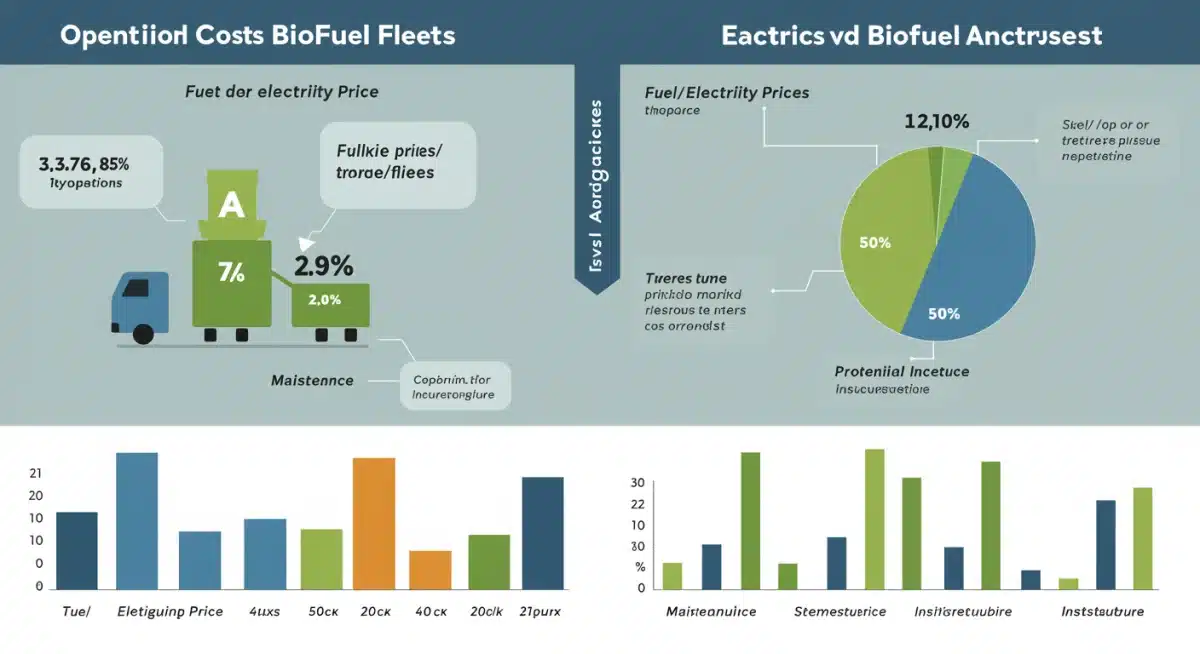
The cost of biofuels is highly variable and depends on feedstock availability, production costs, and government incentives. Renewable diesel, for instance, can sometimes be more expensive per gallon than petroleum diesel. However, its higher energy density compared to biodiesel often means better fuel economy. The effective cost per gallon is frequently offset by federal and state incentives, such as the federal Renewable Fuel Standard (RFS) program and California’s Low Carbon Fuel Standard (LCFS), which generate credits that reduce the net cost for producers and, in turn, for consumers. By 2026, these incentive structures are expected to continue playing a crucial role in making biofuels economically viable.
Maintenance Costs
Since biofuels are typically used in existing diesel engines, maintenance costs remain largely similar to conventional diesel operations. While some biofuels like biodiesel can sometimes lead to minor filter clogging or material compatibility issues if not properly managed, renewable diesel generally performs identically to petroleum diesel in modern engines, incurring no additional maintenance burden. This predictability is a key operational benefit.
Other Costs
Insurance, driver training, and other operational costs for biofuel fleets are generally consistent with conventional diesel fleets, representing no significant deviation from established practices.
Incentives and Subsidies for Biofuel Fleets (2026 Outlook)
Biofuels benefit from a robust system of federal and state incentives. The federal Blender’s Tax Credit and the Renewable Fuel Standard (RFS) are major drivers, creating a market for renewable fuels. States like California (LCFS), Oregon (CFP), and Washington (CLEAN Fuel Standard) offer significant credits for low-carbon fuels, making renewable diesel particularly attractive in these regions. These programs are designed to reduce the carbon intensity of transportation fuels, and the financial benefits are passed down the supply chain, often making biofuels competitive or even cheaper than petroleum diesel on a net basis. The long-term stability of these policies is crucial for biofuel ROI, and while some adjustments may occur, the overall framework is expected to remain supportive through 2026.
Environmental Impact and Brand Value of Biofuel Fleets
Biofuels offer substantial greenhouse gas (GHG) emission reductions compared to fossil diesel, often ranging from 50% to 85% or even more for renewable natural gas (RNG) when considering a lifecycle analysis. They also reduce particulate matter and other harmful air pollutants. This direct and immediate reduction in emissions makes them a powerful tool for achieving sustainability targets and improving air quality, especially for fleets operating in urban environments. The brand value derived from using biofuels, while perhaps less dramatic than zero-emission EVs, is still significant, demonstrating a tangible commitment to environmental responsibility.
Challenges for Biofuel Logistics in 2026
- Feedstock Availability: The availability and sustainable sourcing of feedstocks (e.g., used cooking oil, animal fats, agricultural waste) can be a limiting factor and impact price stability.
- Scalability: While production capacity is growing, meeting the demand for widespread adoption, especially for renewable diesel, can be challenging.
- Perception: Despite significant environmental benefits, some stakeholders may perceive biofuels as an ‘interim’ solution compared to the ‘ultimate’ goal of electrification.
- Policy Dependency: The economic viability of biofuels is heavily dependent on government mandates and incentives, making them susceptible to policy changes.
Comparative ROI Analysis: Electric vs. Biofuel Logistics in 2026
Now, let’s bring it all together for a direct electric biofuel logistics ROI comparison for US operations in 2026.
Scenario 1: Short-Haul/Urban Delivery Fleets
For fleets operating predictable, shorter routes (e.g., last-mile delivery, regional distribution), electric vehicles present a compelling ROI. The lower maintenance costs, predictable charging patterns (often overnight depot charging), and strong urban air quality benefits align perfectly with EV strengths. While initial CapEx for vehicles and charging infrastructure is higher, the OpEx savings on fuel and maintenance, coupled with robust incentives, often lead to a faster payback period – potentially 3-5 years for medium-duty trucks by 2026. The brand value from zero-emission operations in densely populated areas is also a significant plus.
Biofuels, particularly renewable diesel, offer a strong alternative for these fleets, especially if current diesel assets are still relatively new. The low CapEx for conversion and immediate emission reductions are attractive. However, the per-mile fuel cost, even with incentives, might not always beat the lowest electricity rates available for depot charging. The ROI for biofuels in this segment is good, but potentially outpaced by EVs on a total cost of ownership (TCO) basis over the long run, given the significant OpEx advantages of electric.
Scenario 2: Long-Haul/Regional Haul Fleets
This is where the comparison becomes more nuanced. For long-haul operations, range, payload, and the availability of public charging infrastructure are critical for electric trucks. While battery technology is improving, 2026 might still see electric heavy-duty trucks facing limitations on very long, cross-country routes without strategic, high-power charging stops. The infrastructure build-out will be ongoing but likely not fully ubiquitous. Higher CapEx for vehicles and the need for significant depot charging solutions remain. However, for regional haul (e.g., 200-300 mile routes), electric trucks are becoming increasingly viable, with OpEx savings still providing a strong ROI.
Biofuels, specifically renewable diesel, shine in the long-haul sector for 2026. The ability to use existing vehicles and refueling infrastructure means virtually no CapEx on the fleet side. The ‘drop-in’ nature avoids operational disruptions and range anxiety. While fuel costs can be higher than electricity, the total OpEx for a biofuel-powered diesel truck is often still lower than a new electric truck’s combined OpEx and amortized CapEx in this segment, especially when considering the current limitations of EV long-haul infrastructure. The immediate and substantial GHG reductions also contribute to a strong environmental ROI without requiring a complete operational overhaul.
Financial Projections for 2026 (Illustrative)
To provide a more concrete understanding, let’s consider a hypothetical scenario for a medium-duty truck operating 80,000 miles/year:
| Category | Electric Truck (2026 Est.) | Biofuel Truck (2026 Est.) |
|---|---|---|
| Vehicle CapEx (before incentives) | $180,000 – $250,000 | $100,000 – $150,000 |
| Infrastructure CapEx (avg. per vehicle) | $10,000 – $50,000 (shared depot) | Minimal (existing infrastructure) |
| Net CapEx (after incentives) | $120,000 – $180,000 | $90,000 – $140,000 |
| Annual Fuel/Energy Cost (80k miles) | $8,000 – $12,000 (electricity) | $25,000 – $35,000 (biofuel, net) |
| Annual Maintenance Cost | $2,000 – $4,000 | $7,000 – $10,000 |
| Total Annual OpEx | $10,000 – $16,000 | $32,000 – $45,000 |
| Estimated Payback Period (TCO) | 3-7 years (depending on incentives/usage) | Immediately positive (OpEx offset) |
| GHG Reduction (vs. Diesel) | 70-100% (grid dependent) | 50-85% (feedstock dependent) |
Note: These figures are illustrative and can vary significantly based on specific vehicle models, regional energy prices, incentive programs, and operational profiles.
The table clearly shows that while electric vehicles demand higher upfront investment, their significantly lower operational costs provide a strong long-term ROI. Biofuels, on the other hand, offer a quicker path to emission reduction with minimal CapEx, leveraging existing assets, but with higher ongoing fuel costs compared to electricity.
Strategic Considerations for US Logistics Operations in 2026
Choosing between electric biofuel logistics is not a one-size-fits-all decision. Fleet managers must consider their specific operational context, financial capabilities, and long-term sustainability goals.
Hybrid Approaches and Fleet Diversification
Many logistics companies will likely adopt a hybrid approach. For urban and regional routes with depot charging capabilities, electric vehicles will become the preferred choice due to their superior TCO and zero emissions. For longer hauls or routes where charging infrastructure is sparse, biofuel-powered trucks will continue to play a crucial role, offering substantial emission reductions without the need for extensive infrastructure overhaul or range compromises.
This diversification allows companies to strategically deploy the most efficient and sustainable solution for each segment of their operations, optimizing overall ROI and environmental impact.
The Role of Data and Technology
Advanced telematics and fleet management software will be indispensable in 2026. These tools can optimize routes for EV charging, monitor biofuel consumption, track emissions reductions, and provide real-time data on vehicle performance and costs. This data-driven approach is crucial for accurately calculating ROI and making informed operational adjustments.
Infrastructure Development and Regional Differences
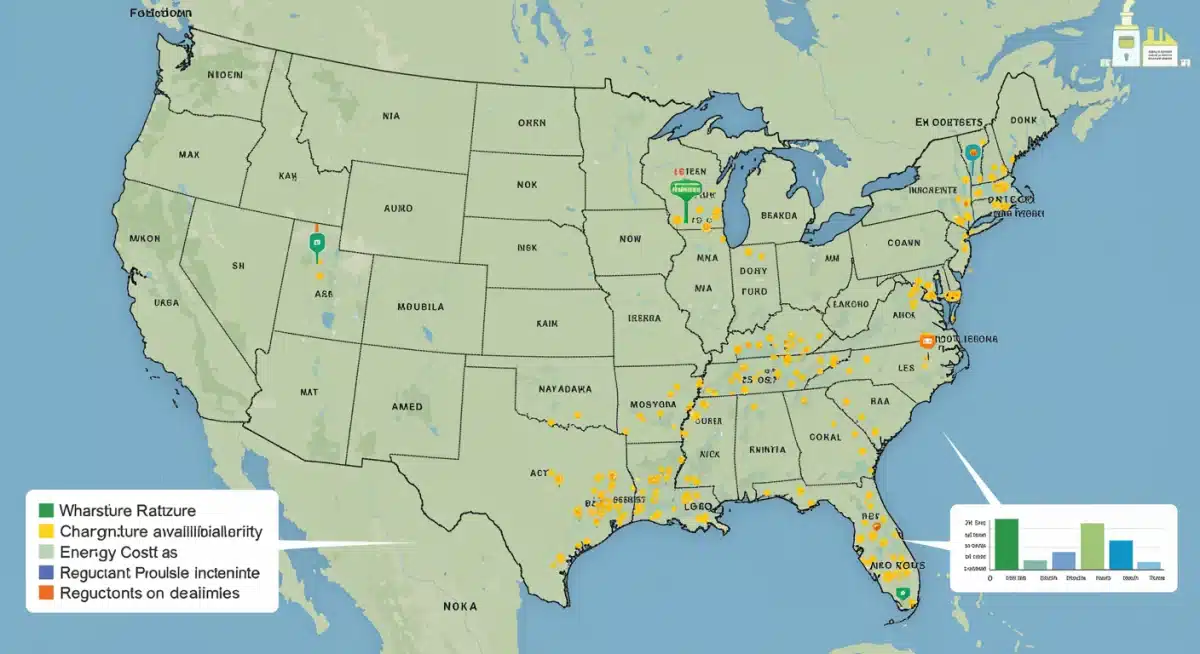
The pace and nature of infrastructure development will heavily influence ROI. States with aggressive clean transportation policies (e.g., California, New York) and significant investments in charging networks will see faster EV adoption and better ROI. Conversely, regions with abundant local feedstock for biofuels might find them more economically attractive. Logistics companies with nationwide operations will need to navigate this patchwork of infrastructure and incentives.
By 2026, while significant progress will have been made, a fully mature, ubiquitous EV charging network for heavy-duty trucks across the entire US is still likely several years away. This reinforces the role of biofuels as a practical and effective solution for immediate decarbonization in many areas.
Risk Mitigation and Future-Proofing
Investing in sustainable logistics also involves mitigating future risks. Companies that fail to decarbonize risk regulatory penalties, reputational damage, and difficulty attracting talent and customers. Both electric and biofuel options offer pathways to future-proof operations against evolving environmental mandates and market demands. The choice depends on the immediate capital availability, existing fleet composition, and the desired speed and depth of emission reduction.
Conclusion: Navigating the Sustainable Logistics Crossroads in 2026
The ROI comparison of electric vs. biofuel logistics for US operations in 2026 reveals a dynamic and complex picture. Electric vehicles, with their promise of ultra-low OpEx and zero emissions, are poised for significant growth, particularly in urban and regional distribution, driven by falling battery costs and expanding charging infrastructure. Their higher initial CapEx is increasingly offset by incentives and substantial long-term operational savings, leading to compelling TCO.
Biofuels, especially renewable diesel, offer an immediate and highly scalable solution for emission reduction across all segments, including long-haul. Their low CapEx, compatibility with existing fleets, and strong environmental benefits (supported by robust incentive structures) make them a pragmatic choice for fleets seeking to decarbonize without massive upfront investments or operational overhauls. They serve as a crucial bridge and a complementary solution to electrification.
Ultimately, the optimal strategy for US logistics companies in 2026 will likely involve a thoughtful blend of both. A diversified fleet, leveraging electric vehicles where they are most efficient and biofuels where they offer practical and immediate decarbonization, will be key to maximizing ROI, achieving sustainability goals, and maintaining a competitive edge in an increasingly green economy. The data clearly shows that both pathways offer significant financial and environmental returns, and the most successful companies will be those that strategically integrate both into their long-term fleet management plans.