Drone Delivery US Urban Logistics: Top Platforms for 2026
The landscape of urban logistics is on the cusp of a profound transformation, driven by the emergence of drone delivery. As e-commerce continues its relentless expansion and consumer expectations for instant gratification intensify, traditional last-mile delivery methods are increasingly strained. Enter drone delivery platforms, offering a tantalizing vision of faster, more efficient, and potentially more sustainable urban logistics. The United States, with its vast and diverse urban centers, presents a unique and challenging environment for the widespread adoption of these autonomous aerial vehicles. By 2026, we anticipate several leading drone delivery platforms will have established significant footholds, reshaping how goods move from distribution centers to doorsteps. This comprehensive analysis will compare three prominent drone delivery platforms, examining their technology, operational models, regulatory compliance, and their potential impact on US urban logistics.
The promise of drone delivery is multifaceted. Imagine medical supplies reaching remote communities in minutes, or a forgotten grocery item arriving at your door within a quarter of an hour. Beyond convenience, drones offer the potential to alleviate traffic congestion, reduce carbon emissions associated with ground transportation, and lower operational costs for businesses. However, the path to widespread implementation is fraught with challenges, including complex air traffic management, safety concerns, public acceptance, and, crucially, a rapidly evolving regulatory framework. Understanding how different drone delivery platforms are addressing these hurdles is key to evaluating their prospective success.
The Dawn of Drone Delivery in US Urban Logistics
The concept of drone delivery has moved beyond science fiction and into the realm of practical application. Companies worldwide have been investing heavily in research and development, conducting trials, and slowly but surely, launching commercial services. In the US, the Federal Aviation Administration (FAA) plays a pivotal role in shaping this nascent industry, establishing regulations for drone operation, airspace integration, and safety. These regulations are continually being refined, creating both opportunities and constraints for drone delivery platforms. The ability of a platform to navigate this regulatory labyrinth will be a significant determinant of its success.
The market for drone delivery in urban logistics is projected to grow exponentially. Factors such as the increasing demand for same-day and even sub-hour delivery, the rising labor costs for traditional delivery services, and advancements in battery technology and autonomous navigation are all contributing to this upward trajectory. By 2026, we expect to see a more mature market with clearer leaders and more defined operational models. Our focus here is to provide a detailed comparison of three such leading drone delivery platforms, offering insights into their strengths, weaknesses, and strategic approaches to conquering the US urban logistics market.
Platform 1: Wing Aviation – Google’s Alphabet Subsidiary
Technological Prowess and Operational Model
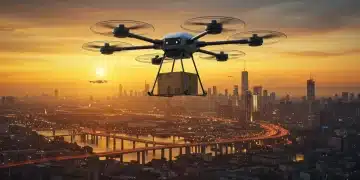
Wing, a subsidiary of Alphabet (Google’s parent company), is arguably one of the most recognized names in the drone delivery space. Their system is characterized by a highly sophisticated network of autonomous drones designed for efficient, quiet, and safe delivery. Wing’s drones are fixed-wing hybrid aircraft, meaning they can take off and land vertically like a helicopter but transition to horizontal flight like a plane, allowing for greater speed and range. This design is particularly advantageous for covering larger distances within urban and suburban areas.
Wing’s operational model typically involves small, lightweight packages (up to a few pounds) being picked up from designated hubs or directly from partner businesses. The drone then flies autonomously to the customer’s location, hovers at a safe altitude, and lowers the package gently to the ground using a tether. This ‘hover and lower’ mechanism minimizes noise disturbance and eliminates the need for the drone to land, enhancing safety and operational efficiency. Their proprietary software manages the entire delivery process, from order placement to flight path optimization and package drop-off.
Regulatory Navigation and US Expansion
Wing has been a trailblazer in navigating US aviation regulations. They were one of the first drone delivery companies to receive Part 135 air carrier certification from the FAA, allowing them to operate as a small airline. This certification is a significant milestone, granting them greater operational flexibility than companies operating under Part 107 (small UAS rule). Wing has successfully launched commercial drone delivery services in several US locations, including Christiansburg, Virginia, and parts of the Dallas-Fort Worth metropolitan area. Their strategy involves starting in less densely populated suburban areas before gradually expanding into more complex urban environments, gaining valuable operational data and public trust along the way.
Advantages and Challenges for Wing
Advantages: Wing’s primary advantages lie in its advanced hybrid drone technology, extensive experience in commercial operations, and the robust backing of Alphabet, providing significant financial and technological resources. Their ‘hover and lower’ delivery method is also a key differentiator, offering a safe and less intrusive delivery experience. Their early FAA certification has given them a head start in establishing a compliant and scalable operational framework.
Challenges: Despite its strengths, Wing faces challenges. The weight limitations of their drones restrict the types of goods that can be delivered. Public perception and noise concerns, while mitigated by their quiet drones, remain a factor in urban environments. Scaling operations rapidly across diverse US cities, each with unique airspace considerations and population densities, will require continuous innovation and regulatory adaptation. The high cost of developing and maintaining such sophisticated technology also presents a barrier to entry and profitability.
Platform 2: Zipline – Medical and Beyond
Technological Prowess and Operational Model
Zipline initially gained global recognition for its groundbreaking work in delivering medical supplies, including blood and vaccines, to remote areas in Rwanda and Ghana. Their operational model is distinct: they utilize fixed-wing drones that are launched catapult-style and drop packages with parachutes at designated landing zones or even directly to people on the ground. These drones are designed for long-range, high-speed flights, making them ideal for covering significant distances efficiently.
While their initial focus was humanitarian and medical logistics, Zipline has increasingly pivoted towards broader commercial applications, including general merchandise delivery in urban and suburban settings. Their system relies on a network of distribution centers (or ‘nests’) from which drones are launched. The package is released from the drone and descends safely via parachute, allowing for precise delivery without the drone having to land. This method is particularly effective for delivering to areas with open spaces where a parachute drop is feasible.
Regulatory Navigation and US Expansion
Zipline has also secured FAA Part 135 certification, enabling them to conduct commercial drone delivery operations in the US. They have partnered with major retailers and healthcare providers to launch services in various states, including Arkansas and North Carolina. Their experience in operating complex drone networks in challenging international environments has provided them with invaluable expertise in safety protocols, air traffic management, and operational resilience. Their expansion strategy in the US involves leveraging existing partnerships and demonstrating the reliability and efficiency of their system for a wider range of products.
Advantages and Challenges for Zipline
Advantages: Zipline’s key strengths include its proven track record in high-stakes medical deliveries, demonstrating exceptional reliability and safety. Their fixed-wing design allows for greater range and speed compared to multi-rotor drones, making them suitable for covering larger service areas. The parachute drop mechanism is efficient and avoids ground interaction, which can simplify some aspects of delivery logistics. Their robust operational experience in diverse environments is a significant asset.
Challenges: The primary challenge for Zipline in dense urban environments is the requirement for suitable landing zones for parachute drops. While effective in suburban or rural areas, finding clear, safe drop-off points in densely packed cities can be difficult. Public perception regarding falling objects (even with parachutes) could also be a concern. Furthermore, the catapult launch system requires dedicated infrastructure, which might limit deployment flexibility compared to vertical take-off and landing (VTOL) drones.
Platform 3: Amazon Prime Air – The E-commerce Giant’s Vision
Technological Prowess and Operational Model
Amazon, the e-commerce behemoth, has been a major proponent of drone delivery, investing heavily in its Prime Air program for years. Their vision is to deliver packages to customers within 30 minutes. Amazon’s drones are typically multi-rotor or hybrid VTOL designs, capable of carrying packages up to 5 pounds. Their latest drone models feature advanced sensing and avoidance technology, allowing them to detect and react to obstacles, including other aircraft, people, and pets, in real-time.
The operational model for Prime Air involves drones picking up packages from Amazon fulfillment centers or dedicated drone delivery stations. The drones then fly autonomously to the customer’s backyard, hover, and gently lower the package to the ground. Amazon’s vast logistics network and technological infrastructure provide a unique advantage, allowing for seamless integration of drone operations with their existing delivery ecosystem. Their focus is on high-volume, rapid delivery of a wide range of smaller consumer goods.
Regulatory Navigation and US Expansion
Amazon Prime Air also holds FAA Part 135 certification, a crucial step enabling their commercial operations. They have been conducting trials and launching limited commercial services in select US locations, including Lockeford, California, and College Station, Texas. Amazon’s approach involves extensive testing and a gradual rollout, meticulously refining their technology and operational procedures to meet stringent safety and regulatory requirements. Their immense lobbying power and resources also play a role in shaping future drone regulations.
Advantages and Challenges for Amazon Prime Air
Advantages: Amazon’s biggest advantage is its unparalleled scale, existing logistics infrastructure, and customer base. The ability to integrate drone delivery directly into their Prime ecosystem offers a compelling value proposition. Their significant investment in R&D ensures cutting-edge technology, particularly in autonomous navigation and safety features. The brand recognition and trust associated with Amazon are also powerful assets.
Challenges: Despite its resources, Amazon Prime Air faces substantial challenges. The sheer volume of packages Amazon handles means that scaling drone delivery to a significant portion of its operations is an enormous undertaking. Public acceptance, especially regarding drones flying over residential properties, remains a hurdle. Regulatory complexities, particularly concerning flight paths over crowded urban areas and integration with existing air traffic, are also significant. The cost-effectiveness of widespread drone delivery compared to traditional methods for all types of packages is still being evaluated, especially in highly competitive markets.
Comparative Analysis of Drone Delivery Platforms for 2026
As we look towards 2026, the competitive landscape for drone delivery platforms in US urban logistics will be shaped by several key factors:
Technology and Drone Design
Wing’s hybrid VTOL design offers a balance of speed and vertical maneuverability, making it versatile for suburban and potentially denser urban environments. Zipline’s fixed-wing, parachute-drop model excels in range and speed, ideal for longer distances and areas with suitable drop zones. Amazon’s multi-rotor/hybrid VTOL drones are optimized for rapid, precise delivery of smaller consumer goods, leveraging advanced obstacle avoidance. Each design has its niche, and the most successful platforms will likely adapt their technology to specific urban geographies and package types.
Operational Scalability and Infrastructure
Amazon’s existing fulfillment network gives it a distinct advantage in terms of infrastructure and immediate access to a massive customer base. Wing and Zipline are building out their networks more organically, often through partnerships. The ability to rapidly deploy and manage a fleet of thousands of drones, along with the necessary ground infrastructure (charging stations, maintenance hubs), will be critical for achieving significant market share. Automation in package handling and drone maintenance will be paramount for scaling efficiently.
Regulatory Compliance and Airspace Integration
All three platforms have demonstrated their commitment to regulatory compliance by achieving FAA Part 135 certification. However, the regulatory environment is dynamic. Future regulations concerning beyond visual line of sight (BVLOS) operations, urban air mobility (UAM) corridors, and air traffic management systems for drones will heavily influence expansion. Platforms that can proactively work with regulators and demonstrate impeccable safety records will gain a competitive edge. The development of a robust Unmanned Aircraft System Traffic Management (UTM) system will be essential for safe and efficient integration of multiple drone operators in crowded airspace.
Public Acceptance and Safety
Public acceptance is a make-or-break factor. Noise, privacy concerns, and perceived safety risks are significant hurdles. Platforms like Wing, with their quiet drones and tethered delivery, are actively addressing noise. All platforms are investing heavily in safety features, including redundant systems, advanced sensors, and AI-powered navigation. Education and transparent communication with communities will be vital for building trust and overcoming skepticism. Demonstrating an impeccable safety record through millions of flights will be key to widespread adoption.
Economic Viability and Business Models
The long-term success of these platforms hinges on economic viability. While drone delivery promises cost savings in the long run, the initial investment in technology, infrastructure, and regulatory compliance is substantial. Business models will likely evolve, potentially involving subscription services (like Amazon Prime Air), partnerships with local businesses, or specialized delivery services for high-value or time-sensitive goods. The cost per delivery must become competitive with or superior to traditional methods to justify widespread adoption, especially for everyday items.
The Future Outlook for Drone Delivery in US Urban Logistics by 2026
By 2026, the US urban logistics landscape will undoubtedly feature more drone delivery operations. We anticipate a tiered approach, where drones handle specific types of deliveries in particular geographies. For instance, Wing might continue to excel in suburban areas for lighter packages, leveraging its quiet operation and ‘hover and lower’ system. Zipline could dominate in areas requiring longer-range, faster deliveries, potentially for medical supplies or specialized retail in less dense urban fringes where parachute drops are viable. Amazon Prime Air, with its vast network, is poised to integrate drone delivery into its existing last-mile operations for a subset of consumer goods, particularly in areas near its fulfillment centers.
The competition will not be limited to these three. Emerging players and specialized drone companies will also vie for market share, focusing on niche markets or specific technological innovations. Partnerships between drone operators, retailers, and local governments will become increasingly common to overcome infrastructure and regulatory challenges. The development of standardized drone ports or landing zones in urban centers, perhaps integrated into existing buildings or public spaces, could revolutionize package reception.
Furthermore, the data generated by millions of drone deliveries will provide invaluable insights for optimizing urban planning, traffic management, and supply chain logistics. The environmental benefits, such as reduced carbon footprint and lower traffic congestion, will become more apparent as drone fleets expand. However, ethical considerations, such as data privacy and the impact on urban aesthetics, will also need continuous attention and robust policy frameworks.
Conclusion: A Sky Full of Potential
The journey of drone delivery in US urban logistics is just beginning, but by 2026, it will be a far more established reality. Wing Aviation, Zipline, and Amazon Prime Air represent the vanguard of this revolution, each bringing unique technological strengths, operational philosophies, and strategic approaches to the market. Their success will depend not only on their ability to innovate and scale but also on their capacity to adapt to evolving regulations, secure public trust, and demonstrate clear economic value.
The future of urban logistics is undeniably aerial. As these drone delivery platforms mature, they promise to unlock unprecedented levels of efficiency, speed, and convenience for consumers and businesses alike. The comparison of these leading platforms highlights the diverse pathways to achieving this future, setting the stage for a dynamic and transformative period in how goods are delivered across American cities. The skies of 2026 will be busier, smarter, and ultimately, more connected, thanks to the pioneering efforts of these drone delivery innovators.