Climate disaster policy updates: what you need to know

Climate disaster policy updates are essential for enhancing community preparedness, promoting technological innovation, and ensuring equitable access to resources in response to increasing environmental challenges.
Climate disaster policy updates are essential for navigating today’s environmental challenges. Have you considered how these changes impact your life? Let’s uncover the details together.
Understanding climate disaster policies
Understanding climate disaster policies is crucial for everyone as climate change impacts our world more each day. Policies guide how we prepare for and respond to disasters caused by climate events.
The Basics of Climate Disaster Policies
At its core, climate disaster policy includes laws and regulations that help manage the risks associated with environmental disasters. These policies aim to protect communities and ecosystems from the effects of climate change.
Key Elements of Effective Policies
Effective climate disaster policies should focus on:
- Risk assessment and management.
- Emergency preparedness and response.
- Community involvement and support.
- Long-term recovery planning.
The goal is to create a robust framework that allows societies to respond swiftly and effectively to disasters. Collaboration among government agencies, non-profits, and local communities is necessary to maximize the effectiveness of these policies.
Current Trends in Climate Disaster Policies
Recently, there has been a shift towards integrating sustainability in climate policies. This means that new policies not only focus on disaster response but also on preventing future occurrences by reducing greenhouse gas emissions and increasing resilience.
Public awareness and engagement play an important role in shaping these policies. The more informed the public is, the more they can advocate for necessary changes. This grassroots approach leads to better disaster preparedness and response strategies.
As we look forward, it’s essential to stay informed about these evolving policies. Understanding climate disaster policies empowers us to take action and advocate for our communities, ensuring that individuals and families are better protected from climate-related threats.
Recent updates in disaster policy
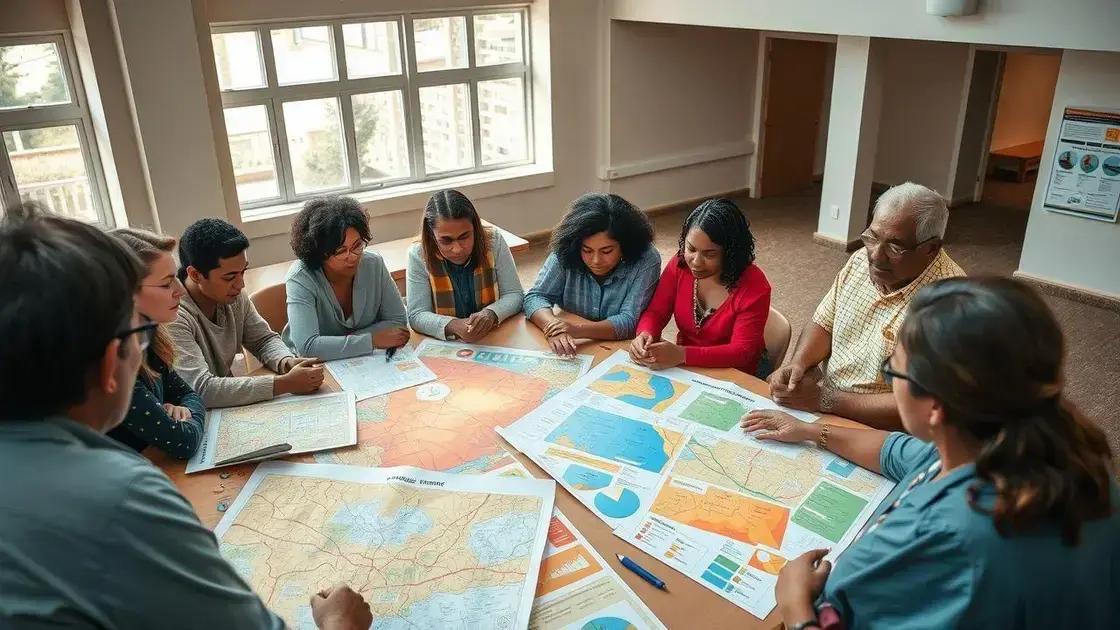
Recent updates in disaster policy reflect the changing landscape of how communities prepare for climate events. As we face increasing threats, these policies evolve to better protect us.
New Legislative Measures
Governments worldwide are introducing new laws to tackle the challenges posed by climate change. These updates aim to enhance emergency response and improve recovery strategies. Notably, many policies now include:
- Increased funding for disaster preparedness.
- Stricter building codes to withstand extreme weather.
- Enhanced training for emergency responders.
- Integration of technology in disaster response efforts.
These measures are vital for adapting to the realities of climate disasters. They not only promote safety but also foster resilience within communities.
Community Engagement Initiatives
Engagement from local communities is becoming a crucial part of updating disaster policies. More local governments are seeking input from citizens to tailor policies that meet specific needs. This approach ensures that disaster plans are:
- Relevant to local vulnerabilities.
- Supported by community members.
- Effective in implementation during crises.
Active participation helps communities identify their unique challenges. By involving everyone, policies become stronger and more effective.
Additionally, recent updates emphasize the need for collaboration between different sectors. Partnerships among governmental agencies, private companies, and non-profit organizations are essential. This teamwork can lead to innovative solutions and shared resources that enhance overall disaster preparedness.
Impact of climate policies on communities
The impact of climate policies on communities is profound. These policies shape how local areas prepare for and respond to climate-related challenges. Understanding this impact is essential for making informed decisions.
Economic Benefits and Challenges
Climate policies can create economic opportunities while also posing challenges. Many initiatives focus on renewable energy, which can lead to job creation in sectors like solar and wind power. Communities are seeing:
- Increased investment in green technologies.
- Growth in local businesses that support sustainable practices.
- Potential job losses in traditional energy sectors.
This shift emphasizes the need for training programs that prepare workers for new roles in a green economy. By investing in education and resources, communities can thrive even through transitions.
Social and Health Impacts
In addition to economic factors, climate policies affect the social fabric of communities. Stronger regulations can lead to improvements in public health and safety. We see communities benefiting from:
- Reduced air pollution, leading to fewer respiratory issues.
- Enhanced disaster response plans that protect vulnerable populations.
- Increased access to green spaces, promoting mental health.
These benefits highlight the importance of community involvement in shaping effective policies. When community members are engaged, policies can better reflect the needs of the people.
Furthermore, the impact of climate policies can vary widely between different regions. Coastal areas often face unique challenges related to rising sea levels, while urban areas may struggle with heatwaves and air quality. Tailoring policies to fit these specific needs ensures that all communities are prepared and resilient.
Future directions in climate disaster management

Future directions in climate disaster management are crucial for developing strategies to address the increasing frequency of environmental disasters. As we look ahead, it’s clear that innovative approaches will be necessary.
Emphasis on Technology
One key area of focus is leveraging technology to improve disaster response and recovery. Tools such as artificial intelligence, drones, and data analytics can help in various ways:
- Predicting potential disaster events through advanced modeling.
- Mapping affected areas quickly for efficient resource allocation.
- Communicating real-time updates to communities during emergencies.
This tech-savvy approach will enhance preparedness and minimize the impact of disasters on communities.
Community-Led Initiatives
Another direction is the promotion of community-led initiatives. Engaging local populations in disaster preparedness ensures that plans reflect their specific needs. Strategies could include:
- Training community members in emergency response.
- Developing neighborhood action plans.
- Creating educational programs on resilience and sustainability.
By empowering local voices, we can create more effective and inclusive disaster management strategies. These initiatives foster stronger ties within communities, making them more resilient.
The role of policymakers in shaping future directions is also critical. They must adapt regulations and funding requirements to support ongoing advancements in disaster management. Collaboration between government, private sector, and non-profits will drive meaningful change.
Moreover, incorporating environmental justice into disaster management is essential. Addressing the needs of the most vulnerable populations ensures that future policies are equitable. This holistic approach benefits everyone by creating safer, healthier communities.
FAQ – Frequently Asked Questions about Climate Disaster Management
What are climate disaster policies?
Climate disaster policies are regulations and guidelines that help communities prepare for, respond to, and recover from climate-related disasters.
How does community engagement improve disaster management?
Community engagement ensures that local needs are met and that disaster plans effectively reflect the unique challenges faced by residents.
What role does technology play in disaster response?
Technology enhances disaster response by providing real-time data, improving communication, and helping in resource allocation during emergencies.
Why is a holistic approach to disaster management important?
A holistic approach integrates various factors, including environmental justice, ensuring that all communities receive equitable support and resources during disasters.