Blockchain in US Logistics 2026: Adoption, Security, and Future Benefits
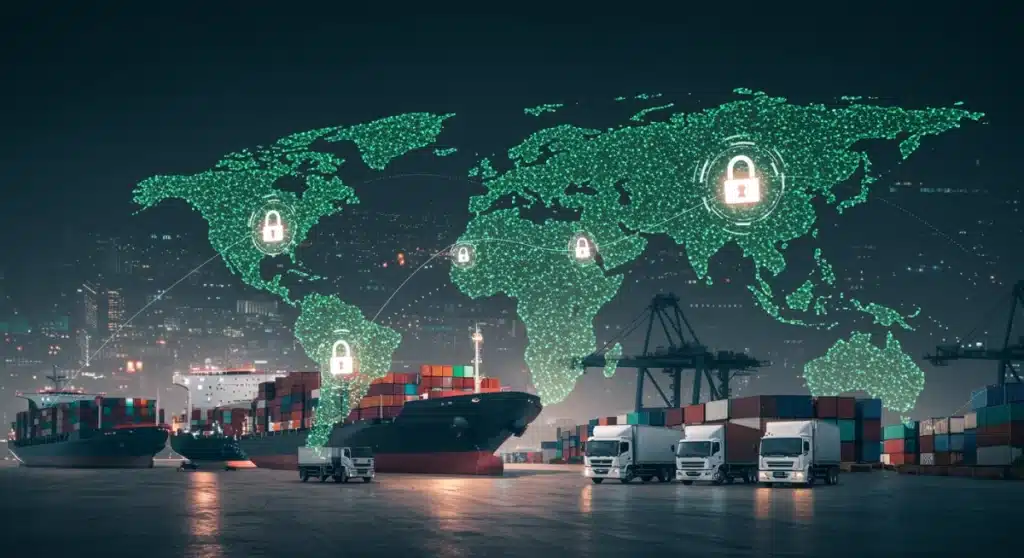
The global supply chain landscape is in constant flux, driven by technological advancements, geopolitical shifts, and evolving consumer demands. In the United States, the logistics sector, a cornerstone of the national economy, is particularly susceptible to these changes. Among the myriad innovations vying for prominence, Blockchain stands out as a transformative force, promising to redefine how goods move, how data is secured, and how trust is established across complex networks. As we approach 2026, the adoption of Blockchain in US logistics is no longer a distant dream but a tangible reality, bringing with it a suite of unparalleled security benefits and operational efficiencies. This article delves into the recent updates on Blockchain adoption, its profound impact on security, and the projected benefits for the US logistics sector in the coming years.
The Imperative for Transformation in US Logistics
Before exploring the intricacies of Blockchain, it’s crucial to understand the challenges that have historically plagued the US logistics sector. Traditional supply chains are often characterized by fragmentation, opacity, and vulnerability. Multiple intermediaries, disparate data systems, and a lack of real-time visibility contribute to inefficiencies, delays, and a heightened risk of fraud and cyber-attacks. The COVID-19 pandemic further exposed the fragility of these systems, highlighting the urgent need for resilient, transparent, and secure alternatives.
The US logistics industry, a colossal network encompassing transportation, warehousing, distribution, and freight forwarding, operates on a scale that magnifies these inherent weaknesses. Billions of dollars are lost annually due to counterfeiting, cargo theft, and administrative errors. Regulatory compliance is a complex maze, and the ability to track products from origin to destination with certainty remains a significant hurdle. These challenges create a fertile ground for disruptive technologies, and Blockchain, with its decentralized, immutable, and transparent ledger system, offers a compelling solution.
Understanding Blockchain: The Foundation of Future Logistics
At its core, Blockchain is a distributed ledger technology (DLT) that records transactions across a network of computers. Each transaction, or ‘block,’ is cryptographically linked to the previous one, forming an immutable chain. This distributed and unchangeable nature is what gives Blockchain its unique power. Unlike traditional centralized databases, there is no single point of failure, and data integrity is maintained through consensus mechanisms among network participants. For Blockchain US Logistics, this translates into unprecedented levels of trust and transparency.
Key Principles of Blockchain:
- Decentralization: No single entity controls the network, reducing the risk of manipulation and censorship.
- Immutability: Once a transaction is recorded, it cannot be altered or deleted, ensuring a permanent audit trail.
- Transparency: All authorized participants can view the same ledger, fostering trust and accountability.
- Security: Cryptographic hashing and consensus mechanisms protect the data from tampering.
- Smart Contracts: Self-executing contracts with the terms of the agreement directly written into code, automating processes and reducing the need for intermediaries.
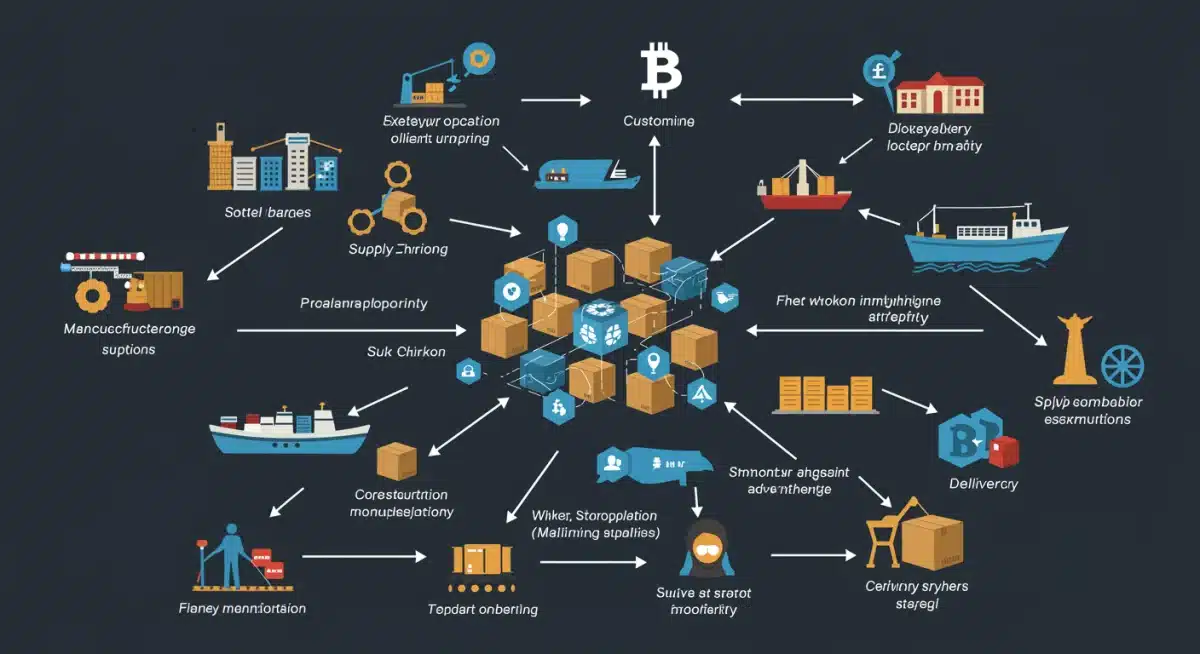
These principles are particularly relevant to the complexities of the supply chain. Imagine a container of goods moving from a factory in Asia to a distribution center in the US. With traditional methods, each handoff involves paperwork, manual entries, and a potential for discrepancies. With Blockchain, every event—from manufacturing to shipping, customs clearance, and final delivery—can be recorded as a block on a shared ledger, creating a single, verifiable source of truth for all stakeholders. This is the promise of Blockchain US Logistics.
Recent Updates on Blockchain Adoption in US Logistics (Towards 2026)
While the initial hype around Blockchain might have been focused on cryptocurrencies, its enterprise applications, especially in supply chain and logistics, are gaining significant traction. Several pilot programs and commercial implementations are already underway, demonstrating the technology’s potential. As we approach 2026, the trend indicates an accelerated pace of adoption within the US logistics sector.
Key Drivers of Adoption:
- Increased Demand for Transparency: Consumers and regulators are increasingly demanding greater visibility into product origins, ethical sourcing, and environmental impact.
- Enhanced Security Concerns: The rising threat of cyber-attacks and cargo theft necessitates more robust security measures.
- Operational Efficiency: Automation of processes through smart contracts and real-time data sharing can significantly reduce administrative overhead and accelerate workflows.
- Regulatory Pressure: New regulations, particularly in areas like food safety and pharmaceutical traceability, are pushing companies towards more secure and verifiable data management systems.
- Competitive Advantage: Early adopters are realizing the competitive edge gained through improved efficiency, reduced costs, and enhanced customer trust.
Major players in the US logistics and retail sectors are investing heavily in Blockchain solutions. Companies like IBM, Maersk (through TradeLens), and various logistics technology startups are leading the charge. The focus is on creating consortiums and industry-wide platforms that allow for seamless data exchange and collaboration. These initiatives are not just about individual company gains but about creating a more interconnected and resilient ecosystem for Blockchain US Logistics as a whole.
Examples of Current Adoption:
- Food Traceability: Walmart, for instance, has successfully implemented Blockchain to track fresh produce, significantly reducing the time it takes to trace food items from farm to store, a critical factor in managing recalls and ensuring food safety.
- Pharmaceutical Supply Chain: The Drug Supply Chain Security Act (DSCSA) in the US mandates enhanced traceability for prescription drugs. Blockchain offers a robust solution for compliance, ensuring the authenticity and integrity of pharmaceutical products.
- Freight and Shipping: TradeLens, a joint venture between Maersk and IBM, is a notable example of Blockchain’s application in global container shipping, aiming to digitize and streamline documentation and processes across the entire shipping ecosystem.
- Customs and Border Control: Pilot programs are exploring how Blockchain can expedite customs clearance by providing secure and verifiable documentation, reducing delays and improving trade efficiency.
By 2026, we anticipate a broader integration of Blockchain into standard operating procedures for many US logistics firms. The initial skepticism surrounding scalability and interoperability is being addressed through innovative solutions and industry collaboration. The maturation of Blockchain technology, coupled with a growing understanding of its practical applications, is paving the way for widespread adoption.
Security Benefits for US Logistics in 2026
The security implications of Blockchain for the US logistics sector are perhaps its most compelling advantage. In an era of escalating cyber threats and sophisticated fraud, the inherent characteristics of Blockchain provide a powerful defense mechanism. The decentralized and immutable nature of the ledger makes it incredibly difficult for malicious actors to tamper with data or introduce counterfeit products into the supply chain.
Enhanced Data Integrity and Verifiability:
Every transaction recorded on a Blockchain is timestamped and cryptographically linked to the previous one. This creates an unalterable audit trail that provides irrefutable proof of origin, ownership, and movement. For Blockchain US Logistics, this means:
- Reduced Counterfeiting: Products can be traced back to their source with certainty, making it nearly impossible for counterfeit goods to enter the legitimate supply chain. This is particularly vital for high-value goods, pharmaceuticals, and luxury items.
- Protection Against Data Tampering: Once data is recorded on the Blockchain, it cannot be altered without the consensus of the network, preventing unauthorized modifications to shipping manifests, bills of lading, or inventory records.
- Improved Compliance and Auditing: The immutable ledger simplifies regulatory compliance by providing a complete and verifiable history of every product, making audits faster and more accurate.

Robust Cybersecurity Measures:
Traditional centralized databases are attractive targets for cyber-attacks. A successful breach can compromise vast amounts of sensitive data. Blockchain, by its very design, mitigates this risk:
- Decentralized Attack Surface: Instead of a single point of failure, data is distributed across multiple nodes. To compromise the system, an attacker would need to gain control of a majority of these nodes simultaneously, a task that is computationally infeasible.
- Cryptographic Security: Advanced encryption techniques safeguard individual transactions, making them unintelligible to unauthorized parties.
- Consensus Mechanisms: The network’s consensus protocols ensure that only valid transactions are added to the chain, effectively filtering out fraudulent activities.
Supply Chain Visibility and Risk Mitigation:
Greater visibility across the supply chain translates directly into improved security and risk management:
- Real-time Tracking: Stakeholders can track goods in real-time, identifying potential delays, diversions, or compromises as they happen.
- Proactive Risk Management: By having a comprehensive view of the supply chain, companies can identify and mitigate risks faster, such as geopolitical instability impacting shipping routes or quality control issues at a particular supplier.
- Enhanced Fraud Detection: Anomalies in the supply chain, such as unexpected changes in routing or unauthorized access points, can be quickly detected and flagged, preventing fraud before it escalates.
Operational Efficiencies and Cost Savings
Beyond security, Blockchain’s impact on operational efficiency and cost savings will be a significant driver of its adoption in US logistics by 2026. The automation and streamlined processes enabled by this technology promise substantial improvements across various facets of the supply chain.
Streamlined Documentation and Administration:
Paper-based processes and manual data entry are notorious for being time-consuming, error-prone, and costly. Blockchain offers a digital alternative:
- Digitized Records: All necessary documents, from bills of lading to customs declarations, can be digitized and securely stored on the Blockchain, accessible to authorized parties. This eliminates the need for physical paperwork and reduces the risk of loss or damage.
- Automated Workflows with Smart Contracts: Smart contracts can automate various logistical processes, such as payment releases upon delivery confirmation, customs clearance based on pre-defined conditions, or insurance payouts. This reduces administrative burden, accelerates transaction times, and minimizes human error.
- Reduced Discrepancies: A single, shared source of truth eliminates disputes arising from conflicting information, leading to faster resolution of issues and smoother operations.
Improved Inventory Management and Demand Forecasting:
Real-time, accurate data from the Blockchain can significantly enhance inventory management and forecasting capabilities:
- Accurate Inventory Tracking: Businesses gain precise, up-to-the-minute visibility into inventory levels across the entire supply chain, from raw materials to finished goods. This reduces the likelihood of stockouts or overstocking.
- Optimized Demand Forecasting: With better data on product movement and consumption, companies can make more informed decisions about demand forecasting, leading to more efficient production schedules and reduced waste.
- Reduced Holding Costs: Improved inventory management translates into lower warehousing costs and less capital tied up in excess stock.
Enhanced Collaboration and Trust:
The inherent transparency and immutability of Blockchain foster a greater degree of trust and collaboration among supply chain partners:
- Shared, Verifiable Information: All participants operate from the same, unalterable set of data, reducing mistrust and the need for extensive reconciliation efforts.
- Simplified Partner Onboarding: Establishing trust with new suppliers or logistics providers becomes easier when their historical performance and compliance records are transparently available on a shared ledger.
- Improved Dispute Resolution: With an undeniable audit trail, resolving disputes over delivery, quality, or payment becomes a more straightforward and less time-consuming process.
Challenges and Considerations for Blockchain in US Logistics
Despite the immense potential, the path to widespread Blockchain adoption in US logistics is not without its hurdles. Addressing these challenges will be crucial for the technology to fully realize its promise by 2026 and beyond.
Interoperability and Standardization:
One of the primary challenges is the lack of universal standards and interoperability between different Blockchain platforms. The logistics sector is vast and diverse, with numerous companies using various legacy systems and, increasingly, different Blockchain solutions. For Blockchain US Logistics to be truly effective, these disparate systems must be able to communicate and exchange data seamlessly. Industry-wide consortiums and open-source initiatives are working towards establishing common protocols and standards.
Scalability:
The sheer volume of transactions in the global logistics network poses a significant scalability challenge for some Blockchain architectures. Early Blockchain designs, like Bitcoin, were not built for high transaction throughput. However, advancements in DLT, such as sharding, sidechains, and layer-2 solutions, are addressing these limitations, making Blockchain more viable for enterprise-level applications.
Regulatory and Legal Frameworks:
The legal and regulatory landscape surrounding Blockchain is still evolving. Questions about data ownership, jurisdiction, and the legal enforceability of smart contracts need to be clarified. Governments and international bodies are actively working on developing frameworks that support innovation while ensuring consumer protection and fair competition. The US government’s stance and forthcoming regulations will significantly influence the pace of Blockchain US Logistics adoption.
Cost of Implementation and Integration:
Implementing Blockchain technology requires significant upfront investment in infrastructure, software development, and personnel training. Integrating Blockchain solutions with existing legacy systems can be complex and costly. Companies need to conduct thorough cost-benefit analyses and choose solutions that align with their long-term strategic goals.
Data Privacy Concerns:
While Blockchain offers transparency, there are also concerns about data privacy, especially when dealing with sensitive commercial information. Private and permissioned Blockchains, where access to data is restricted to authorized participants, are being developed to address these concerns, offering a balance between transparency and confidentiality. This is particularly important for competitive businesses within Blockchain US Logistics.
Lack of Skilled Workforce:
The demand for Blockchain developers, architects, and legal experts far outstrips the current supply. A shortage of skilled professionals can impede the development and deployment of robust Blockchain solutions. Investment in education and training programs will be essential to bridge this talent gap.
The Future Outlook: Blockchain US Logistics in 2026 and Beyond
Looking ahead to 2026, the trajectory for Blockchain in US logistics is one of continued growth and maturation. The initial exploratory phases are giving way to more strategic and integrated implementations. We can expect to see:
- Increased Consortium-led Initiatives: More industry-wide collaborations will emerge to tackle common challenges and build shared Blockchain infrastructure, fostering a more interconnected ecosystem.
- Hyper-automation through Smart Contracts: The use of smart contracts will become more sophisticated, automating a wider range of processes from procurement to payments, further reducing manual intervention and accelerating workflows.
- Enhanced Predictive Analytics: The rich, verifiable data generated by Blockchain will feed into advanced AI and machine learning models, leading to more accurate demand forecasting, route optimization, and risk prediction.
- Focus on Sustainability and Ethical Sourcing: Blockchain will play a crucial role in verifying the sustainability claims of products and ensuring ethical sourcing practices, responding to growing consumer and regulatory demands.
- Integration with IoT and AI: The combination of Blockchain with Internet of Things (IoT) devices (for real-time tracking and condition monitoring) and Artificial Intelligence (for data analysis and decision-making) will unlock unprecedented levels of visibility and automation in the supply chain.
The US logistics sector is at a pivotal moment. The embrace of technologies like Blockchain is not merely an option but a strategic imperative for maintaining competitiveness, building resilience, and meeting the evolving demands of a globalized economy. By 2026, companies that have successfully integrated Blockchain into their operations will likely be distinguished by their superior efficiency, enhanced security, and unwavering customer trust.
Conclusion
Blockchain is poised to fundamentally reshape the US logistics landscape by 2026. Its ability to provide unparalleled transparency, immutability, and security addresses many of the long-standing pain points in traditional supply chains. From mitigating counterfeiting and fraud to streamlining documentation and enhancing operational efficiency, the benefits are clear and compelling. While challenges related to interoperability, scalability, and regulation remain, the rapid pace of technological innovation and increasing industry collaboration suggest that these hurdles will be overcome.
For businesses operating within the US logistics sector, understanding and strategically adopting Blockchain is no longer a futuristic concept but a present-day necessity. Those that embrace this transformative technology will not only secure their supply chains against emerging threats but also unlock new levels of efficiency, trust, and competitive advantage in the years to come. The future of Blockchain US Logistics is bright, promising a more secure, transparent, and resilient ecosystem for the movement of goods across the nation and beyond.