Blockchain for Supply Chain Transparency in the US: Achieving 95% Data Accuracy by 2026
Blockchain for Supply Chain Transparency in the US: Insider Knowledge on Achieving 95% Data Accuracy by 2026
The global supply chain landscape is undergoing a monumental shift, driven by increasing consumer demand for ethical sourcing, regulatory pressures, and the sheer complexity of modern logistics. In the United States, businesses are grappling with these challenges, seeking innovative solutions to enhance visibility and ensure product integrity. Enter blockchain technology – a distributed ledger system promising unparalleled transparency and data accuracy. This article delves deep into how blockchain can revolutionize blockchain supply chain US operations, outlining a clear path to achieving an ambitious 95% data accuracy by 2026.
The quest for transparency in the supply chain is not merely a trend; it’s a fundamental requirement for sustainable business growth and consumer trust. From farm to fork, factory to consumer, every touchpoint generates data. The challenge lies in collecting, verifying, and sharing this data in a way that is immutable, secure, and accessible to all authorized parties. Traditional supply chain models, often characterized by silos and opaque processes, struggle to meet this demand. This is where the power of blockchain becomes evident, offering a decentralized and tamper-proof record of every transaction and movement.
The Imperative for Transparency in the US Supply Chain
The US supply chain is a behemoth, encompassing diverse industries from agriculture and manufacturing to pharmaceuticals and retail. Each sector faces unique challenges, yet all share a common need for greater transparency. Recent global events, such as the COVID-19 pandemic and geopolitical tensions, have exposed critical vulnerabilities in these complex networks. Disruptions have highlighted the urgent need for real-time visibility into inventory, shipments, and potential bottlenecks. Consumers, empowered by information, are increasingly demanding to know the origin of their products, the conditions under which they were produced, and the ethical footprint of their purchases. This growing demand is pushing companies to adopt more transparent practices, making blockchain supply chain US initiatives not just an advantage, but a necessity.
Consumer Trust and Brand Reputation
In an era of conscious consumerism, trust is currency. Brands that can demonstrate verifiable claims about their products’ origins, quality, and ethical production practices gain a significant competitive edge. Blockchain provides an unalterable record that can be shared with consumers, fostering a deeper level of trust. Imagine a consumer scanning a QR code on a product and instantly accessing its entire journey – from raw material sourcing to manufacturing dates, quality control checks, and transportation logs. This level of transparency builds brand loyalty and mitigates risks associated with counterfeiting or mislabeling.
Regulatory Compliance and Risk Mitigation
The regulatory landscape for supply chains in the US is becoming increasingly stringent. From food safety regulations (like the FDA’s Food Safety Modernization Act) to environmental protection standards and labor laws, businesses face a labyrinth of compliance requirements. Non-compliance can lead to hefty fines, product recalls, and severe reputational damage. Blockchain’s ability to create an immutable audit trail simplifies compliance reporting and provides irrefutable evidence of adherence to regulations. This proactive approach to risk management is crucial for businesses operating within the complex US legal framework, especially for those involved in international trade where varied customs and import regulations apply. The verifiable nature of data on a blockchain significantly reduces the likelihood of fraud and errors, thereby strengthening the overall integrity of the blockchain supply chain US ecosystem.
Operational Efficiency and Cost Reduction
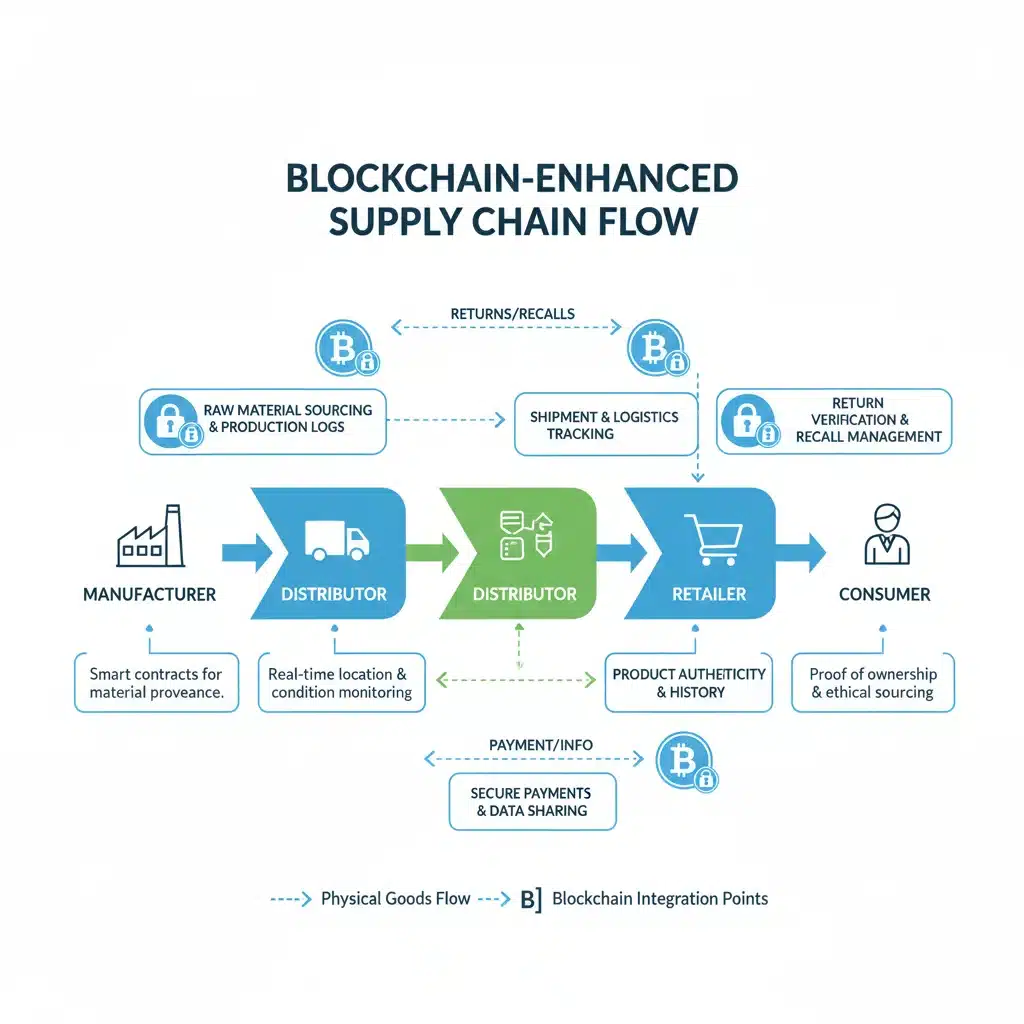
Beyond external pressures, internal operational inefficiencies plague many traditional supply chains. Manual data entry, disparate systems, and a lack of real-time information lead to delays, errors, and increased costs. Blockchain automates many of these processes, reducing the need for intermediaries and minimizing administrative overhead. Smart contracts, self-executing agreements stored on the blockchain, can automate payments, customs clearances, and quality assurance checks, significantly streamlining operations. This enhanced efficiency translates directly into cost savings and faster time-to-market. By having a single, shared source of truth, disputes are reduced, and reconciliation processes become almost instantaneous.
Understanding Blockchain’s Core Principles for Supply Chain
To fully grasp blockchain’s potential in the blockchain supply chain US context, it’s essential to understand its foundational principles:
- Decentralization: Unlike traditional databases controlled by a single entity, blockchain operates on a distributed network. No single point of failure exists, making it more resilient and secure.
- Immutability: Once a transaction or data point is recorded on the blockchain, it cannot be altered or deleted. This creates an unchangeable audit trail, crucial for verifying product authenticity and compliance.
- Transparency (Selective): While data is visible to all authorized participants on the network, privacy can be maintained through cryptographic techniques. This means companies can share necessary information without exposing proprietary data to competitors.
- Security: Cryptographic hashing and consensus mechanisms ensure the integrity and security of the data. Each block is linked to the previous one, making it incredibly difficult for malicious actors to tamper with records.
- Smart Contracts: These are self-executing contracts with the terms of the agreement directly written into code. They automatically execute predefined actions when certain conditions are met, eliminating the need for intermediaries and speeding up processes.
These principles combine to create a robust and trustworthy system for managing and tracking goods throughout their entire lifecycle. For the diverse and often fragmented US supply chain, this represents a paradigm shift in how information is managed and shared.
The Path to 95% Data Accuracy by 2026: A Strategic Roadmap
Achieving 95% data accuracy in the blockchain supply chain US by 2026 is an ambitious yet attainable goal. It requires a well-defined strategy, a commitment to technological adoption, and collaborative effort across the ecosystem. Here’s a roadmap outlining the key steps:
Phase 1: Pilot Programs and Proof of Concept (2023-2024)
The initial phase involves identifying specific pain points within the supply chain where blockchain can deliver immediate value. This could be in high-value goods tracking, combating counterfeiting, or ensuring ethical sourcing of specific raw materials. Companies should start with pilot programs involving a limited number of partners and products.
- Identify Key Use Cases: Focus on areas with high impact, such as product traceability for recalls, combating counterfeiting in pharmaceuticals, or verifying sustainable sourcing for agricultural products.
- Choose the Right Blockchain Platform: Evaluate various enterprise blockchain platforms (e.g., Hyperledger Fabric, Ethereum Enterprise, Corda) based on scalability, privacy features, and integration capabilities.
- Engage Key Stakeholders: Secure buy-in from all participating parties – suppliers, manufacturers, logistics providers, and retailers. Collaboration is paramount for successful implementation.
- Develop Minimum Viable Product (MVP): Build a basic blockchain solution that addresses the chosen use case, focusing on core functionalities like data capture, secure storage, and basic query capabilities.
- Establish Data Standards: Define clear data input standards and protocols to ensure consistency and interoperability across the network. This is crucial for achieving high data accuracy.
Phase 2: Scaled Implementation and Integration (2024-2025)
Once pilot programs demonstrate success, the focus shifts to scaling the solution across more products, partners, and geographical regions. This phase involves deeper integration with existing enterprise resource planning (ERP) systems, Internet of Things (IoT) devices, and other legacy systems.
- Integrate with Existing Systems: Seamlessly connect the blockchain platform with ERP, WMS (Warehouse Management Systems), TMS (Transportation Management Systems), and other operational software to automate data input and avoid manual errors.
- Deploy IoT for Real-time Data: Utilize IoT sensors (e.g., for temperature, humidity, location) to automatically feed real-time, verifiable data directly onto the blockchain, significantly boosting data accuracy and reducing human intervention.
- Expand Partner Network: Onboard more suppliers, logistics partners, and distributors onto the blockchain network, ensuring widespread adoption and shared benefits.
- Refine Data Governance Policies: Implement robust data governance frameworks that define roles, access rights, and data validation processes to maintain the integrity of the shared ledger.
- Continuous Training and Education: Provide ongoing training for all users to ensure they understand the system, its benefits, and best practices for data entry and verification.
Phase 3: Optimization and Advanced Analytics (2025-2026)
The final phase focuses on optimizing the blockchain network for maximum efficiency, leveraging advanced analytics to extract insights, and exploring further innovations. By this stage, the goal of 95% data accuracy should be within reach, becoming a new standard for the blockchain supply chain US.
- Implement AI and Machine Learning: Utilize AI/ML algorithms to analyze the vast amount of data collected on the blockchain, identifying patterns, predicting potential disruptions, and optimizing routes or inventory levels.
- Enhance Predictive Analytics: Move beyond reactive problem-solving to proactive identification of supply chain risks, such as potential delays, quality issues, or compliance breaches, before they escalate.
- Explore Cross-Chain Interoperability: Investigate solutions for connecting different blockchain networks, allowing for even broader data sharing and collaboration across diverse ecosystems.
- Automate Compliance Reporting: Develop automated tools that generate compliance reports directly from the blockchain data, drastically reducing the time and effort required for audits.
- Measure and Monitor Key Performance Indicators (KPIs): Continuously track metrics related to data accuracy, efficiency gains, cost reductions, and customer satisfaction to demonstrate the ROI of the blockchain investment.
Key Challenges and How to Overcome Them
While the benefits of blockchain in the blockchain supply chain US are compelling, implementation is not without its challenges. Addressing these proactively is crucial for success.
Interoperability and Standardization
One of the biggest hurdles is ensuring different blockchain platforms and legacy systems can communicate effectively. The lack of universal standards can create data silos, undermining the very purpose of transparency. Solution: Advocate for industry-wide standards and protocols. Invest in middleware solutions that facilitate integration between disparate systems. Focus on open-source blockchain platforms that promote interoperability.
Data Privacy and Confidentiality
Businesses are often hesitant to share data due to concerns about exposing proprietary information to competitors. Blockchain’s inherent transparency can be seen as a double-edged sword. Solution: Utilize privacy-enhancing techniques such as zero-knowledge proofs, private channels (as in Hyperledger Fabric), and permissioned blockchains where access rights are strictly controlled. Smart contracts can also be designed to only reveal necessary information to relevant parties.
Scalability
As the number of transactions and participants grows, blockchain networks must be able to handle the increased load without compromising speed or efficiency. Solution: Choose enterprise-grade blockchain platforms designed for high transaction volumes. Explore layer-2 scaling solutions and sharding techniques to improve network throughput. Cloud-based blockchain-as-a-service (BaaS) offerings can also provide scalable infrastructure.
Cost of Implementation
Implementing blockchain technology can be a significant upfront investment, especially for small and medium-sized enterprises (SMEs). Solution: Start with pilot programs to demonstrate clear ROI before full-scale deployment. Explore consortium models where costs are shared among multiple participants. Leverage BaaS solutions to reduce infrastructure costs and simplify deployment.
Change Management and Adoption
Any new technology requires a shift in processes and mindsets. Resistance to change from employees and partners can hinder adoption. Solution: Develop a comprehensive change management strategy. Provide extensive training and highlight the benefits for all stakeholders. Foster a culture of collaboration and innovation, emphasizing how blockchain streamlines work and adds value.
Real-World Examples and Future Outlook
Several leading companies in the US are already leveraging blockchain to enhance their supply chain operations, providing compelling case studies for others to follow. Walmart, for instance, famously used IBM Food Trust (built on Hyperledger Fabric) to trace mangoes from farm to store in seconds, a process that previously took days or even weeks. This dramatically improved food safety and recall efficiency. Similarly, pharmaceutical companies are exploring blockchain for drug traceability to combat counterfeiting and ensure regulatory compliance.
The future of blockchain supply chain US is bright. As the technology matures and becomes more accessible, we can expect wider adoption across various sectors. The focus will shift from mere traceability to more advanced applications, including:
- Circular Economy Initiatives: Tracking products through their entire lifecycle, from production to recycling and reuse, to support sustainable practices.
- Automated Customs and Trade Finance: Streamlining international trade processes through automated documentation and payments facilitated by blockchain and smart contracts.
- Decentralized Autonomous Organizations (DAOs) for Supply Chains: Creating self-governing supply chain networks where participants collectively manage and optimize operations.
- Enhanced Consumer Engagement: Providing consumers with richer, verifiable information about products, enabling more informed purchasing decisions and fostering brand loyalty.
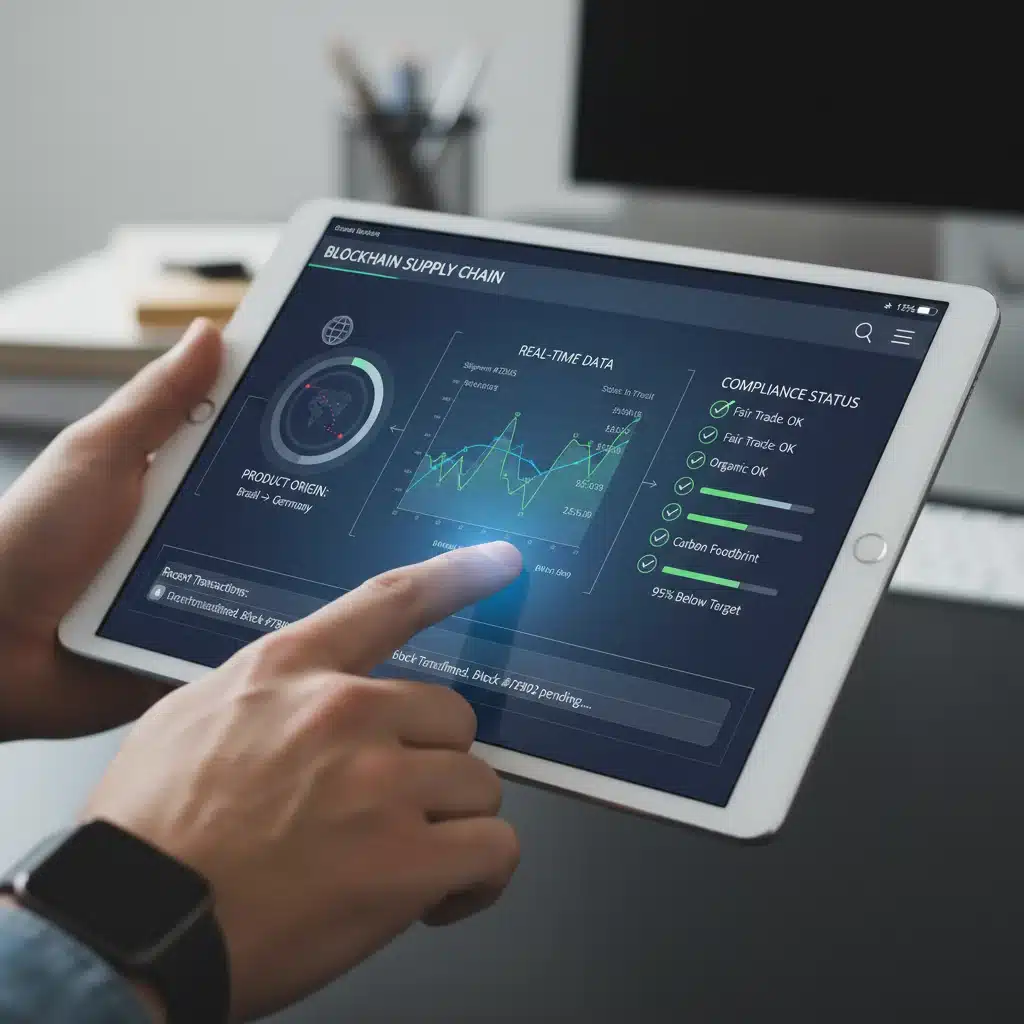
The synergy between blockchain, IoT, and AI will unlock unprecedented levels of transparency and efficiency. Imagine a scenario where IoT sensors automatically log environmental conditions during transit onto a blockchain, and AI algorithms analyze this data in real-time to predict potential quality degradation, allowing for proactive intervention. This integrated approach is what will truly drive the US towards 95% data accuracy in its supply chain by 2026.
Conclusion: The Transparent Future of US Supply Chains
The journey towards a fully transparent and highly accurate blockchain supply chain US is complex, but the rewards are substantial. By embracing blockchain technology, US businesses can build more resilient, efficient, and trustworthy supply chains. The target of 95% data accuracy by 2026 is not just an arbitrary number; it represents a commitment to excellence, a promise of integrity, and a pathway to sustainable growth in an increasingly demanding global market.
Success hinges on a clear strategic vision, collaborative partnerships, and a willingness to invest in innovative technologies. Businesses that proactively adopt blockchain will not only gain a significant competitive advantage but will also contribute to a more ethical, transparent, and secure global trade ecosystem. The time to act is now, laying the groundwork for a future where every product’s journey is an open book, fostering trust and driving progress across the United States supply chain landscape.
The transformative potential of blockchain is undeniable. As companies continue to navigate the complexities of modern commerce, those that harness this technology will emerge as leaders, setting new benchmarks for transparency and data integrity. The commitment to achieving 95% data accuracy by 2026 is a bold statement, reflecting a future where the US supply chain is not only efficient but also unequivocally trustworthy.