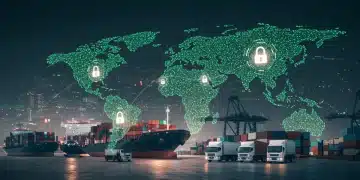
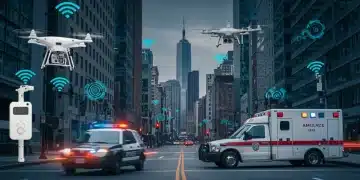
Blockchain for Smart Cities: Enhancing Security and Transparency

Blockchain technology plays a crucial role in enhancing the security and transparency of smart city systems by providing a decentralized, immutable, and secure platform for managing data and transactions.
As cities around the globe become increasingly interconnected and reliant on technology, the need for secure and transparent systems is paramount. The role of blockchain in enhancing security and transparency in smart city systems is pivotal, offering a robust solution to many challenges faced by modern urban environments.
Understanding Blockchain Technology in Smart Cities
Blockchain technology is revolutionizing various sectors, and its application in smart cities is particularly promising. It offers a unique approach to data management and security, addressing vulnerabilities inherent in traditional centralized systems.
By leveraging blockchain, smart cities can ensure that data is not only secure but also transparent and tamper-proof. This foundation is crucial for building trust and efficiency in urban operations.
What is Blockchain?
At its core, blockchain is a decentralized, distributed, and immutable ledger. It records transactions in blocks, which are then linked together in a chain. This structure makes it extremely difficult to alter or tamper with the data.
- Decentralization: Data is stored across multiple nodes, reducing the risk of a single point of failure.
- Immutability: Once a block is added to the chain, it cannot be altered, ensuring data integrity.
- Transparency: All participants in the network can view the transactions, promoting accountability and trust.
How Blockchain Enhances Security
The inherent security features of blockchain make it an ideal solution for protecting sensitive information in smart cities. Traditional systems often rely on centralized databases, which are vulnerable to cyberattacks and data breaches.
Blockchain’s decentralized nature mitigates these risks by distributing data across a network, making it significantly harder for attackers to compromise the system. This enhanced security is essential for protecting critical infrastructure and citizen data.
In conclusion, blockchain technology offers a strong foundation for enhancing security and transparency in smart cities by providing a decentralized and immutable ledger system.
Securing IoT Devices with Blockchain
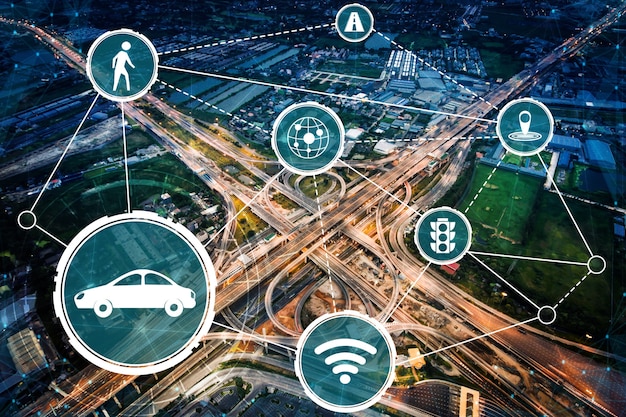
The Internet of Things (IoT) is a cornerstone of smart city infrastructure, connecting countless devices that collect and transmit data. However, these devices are often vulnerable to security threats, making them a prime target for cyberattacks.
Blockchain can play a vital role in securing IoT devices by providing a secure and transparent platform for device authentication, data management, and communication.
IoT Security Challenges
One of the main challenges in securing IoT devices is their limited processing power and storage capacity. This makes it difficult to implement traditional security measures, such as encryption and firewalls.
Additionally, the sheer number of IoT devices in a smart city creates a vast attack surface, making it difficult to monitor and manage security risks effectively.
Blockchain Solutions for IoT
Blockchain offers several solutions to address these challenges. By using blockchain for device authentication, smart cities can ensure that only authorized devices can access the network. This helps prevent malicious devices from infiltrating the system.
- Device Authentication: Blockchain can be used to create a secure and tamper-proof identity for each IoT device.
- Data Integrity: Blockchain ensures that data collected by IoT devices is accurate and has not been tampered with.
- Secure Communication: Blockchain can be used to encrypt communication between IoT devices, protecting data from eavesdropping.
In summary, blockchain provides robust solutions for securing IoT devices in smart cities, addressing the unique challenges posed by their limited resources and extensive networks.
Enhancing Data Transparency in Urban Governance
Transparency is a key principle of good governance, and blockchain can help smart cities achieve greater levels of openness and accountability. By providing a transparent and tamper-proof record of transactions and data, blockchain can foster trust between citizens and their government.
This enhanced transparency can lead to increased citizen engagement, reduced corruption, and improved decision-making.
Challenges in Traditional Governance
Traditional governance systems often lack transparency, making it difficult for citizens to understand how decisions are made and how public resources are allocated. This can lead to mistrust and disengagement.
Additionally, centralized databases used by government agencies are vulnerable to manipulation and data breaches, further eroding public trust.
Blockchain for Transparent Governance
Blockchain can address these challenges by providing a transparent and immutable record of government transactions and data. This allows citizens to easily track how public funds are spent and how decisions are made.
- Transparent Budgeting: Blockchain can be used to track public funds, ensuring that they are used effectively and efficiently.
- Secure Voting: Blockchain can provide a secure and transparent platform for conducting elections, reducing the risk of fraud.
- Citizen Engagement: Blockchain can enable citizens to participate more actively in decision-making processes.
In conclusion, blockchain has the potential to significantly improve data transparency in urban governance, fostering trust and accountability between citizens and their government.
Streamlining Supply Chain Management with Blockchain
Smart cities rely on complex supply chains to deliver goods and services to their citizens. However, these supply chains are often inefficient, opaque, and vulnerable to disruptions. Blockchain can help streamline supply chain management by providing a transparent and secure platform for tracking goods and transactions.
This can lead to reduced costs, improved efficiency, and greater resilience in the face of disruptions.

Supply Chain Challenges
One of the main challenges in supply chain management is the lack of transparency. It is often difficult to track goods as they move through the chain, making it hard to identify bottlenecks and prevent fraud.
Additionally, traditional supply chain systems rely on paper-based processes, which are inefficient, time-consuming, and prone to errors.
Blockchain for Supply Chain Optimization
Blockchain can address these challenges by providing a transparent and secure platform for tracking goods and transactions. Each step in the supply chain can be recorded on the blockchain, providing real-time visibility and traceability.
- Real-Time Tracking: Blockchain enables real-time tracking of goods, improving efficiency and reducing delays.
- Fraud Prevention: Blockchain’s immutability helps prevent fraud and counterfeiting.
- Improved Efficiency: Blockchain streamlines processes, reducing paperwork and administrative costs.
In summary, blockchain offers a powerful solution for streamlining supply chain management in smart cities, leading to improved efficiency, transparency, and resilience.
Decentralized Energy Management with Blockchain
Smart cities are increasingly focused on sustainable energy solutions, and blockchain can play a crucial role in enabling decentralized energy management. By providing a platform for peer-to-peer energy trading and secure energy data management, blockchain can help cities transition to a more sustainable energy future.
This can lead to reduced energy costs, improved grid resilience, and increased adoption of renewable energy sources.
Challenges in Traditional Energy Management
Traditional energy management systems are often centralized and inefficient. Consumers have limited control over their energy consumption and are typically reliant on large utility companies.
Additionally, integrating renewable energy sources into the grid can be challenging due to the intermittent nature of these sources.
Blockchain for Decentralized Energy
Blockchain can address these challenges by providing a platform for peer-to-peer energy trading and secure energy data management. Consumers can buy and sell energy directly from each other, reducing their reliance on traditional utility companies.
- Peer-to-Peer Trading: Blockchain enables consumers to trade energy directly with each other, fostering a decentralized energy market.
- Smart Contracts: Smart contracts can automate energy transactions, improving efficiency and reducing costs.
- Secure Data Management: Blockchain provides a secure platform for managing energy data, ensuring accuracy and transparency.
In summary, blockchain has the potential to transform energy management in smart cities, enabling a more decentralized, sustainable, and resilient energy system.
Smart Contracts and Automation in Smart City Systems
Smart contracts are self-executing contracts written in code and stored on the blockchain. They can automate various processes in smart city systems, leading to increased efficiency, reduced costs, and improved transparency.
By automating tasks such as payments, data sharing, and decision-making, smart contracts can streamline operations and free up resources for other priorities.
The Power of Smart Contracts
Smart contracts can be programmed to automatically execute when certain conditions are met. This eliminates the need for intermediaries and reduces the risk of human error.
They are also immutable, meaning that once a smart contract is deployed, it cannot be altered, ensuring that the terms of the agreement are always enforced.
- Automated Payments: Smart contracts can automate payments for services such as parking, transportation, and utilities.
- Data Sharing: Smart contracts can facilitate secure and transparent data sharing between different city departments.
- Automated Decision-Making: Smart contracts can automate decision-making processes based on pre-defined rules and data inputs.
Smart contracts offer a powerful tool for automating various processes in smart city systems, enhancing efficiency, transparency, and security.
Challenges and Future Trends in Blockchain Adoption
While blockchain offers significant benefits for smart cities, there are also challenges to its adoption. These include scalability issues, regulatory uncertainty, and a lack of public awareness.
Addressing these challenges will be crucial for realizing the full potential of blockchain in smart city development.
Overcoming the Challenges
Scalability is one of the main challenges facing blockchain technology. As the number of transactions increases, the network can become congested, leading to slower processing times and higher transaction fees.
Regulatory uncertainty is another significant challenge. Governments around the world are still grappling with how to regulate blockchain technology, creating uncertainty for businesses and developers.
- Scalability Solutions: Researchers are developing new scaling solutions, such as layer-2 protocols and sharding, to improve blockchain’s performance.
- Regulatory Frameworks: Governments are working to develop clear and consistent regulatory frameworks for blockchain technology.
- Public Awareness: Increasing public awareness and education about blockchain can help drive adoption and overcome skepticism.
In conclusion, while there are challenges to blockchain adoption, ongoing efforts to address these issues are paving the way for a future where blockchain plays a central role in smart city systems.
| Key Point | Brief Description |
|---|---|
| 🛡️ Enhanced Security | Blockchain’s decentralized structure protects data from cyberattacks. |
| 📊 Data Transparency | Provides an immutable record for government transactions and data. |
| ⚡️ Energy Efficiency | Enables peer-to-peer energy trading and sustainable practices. |
| ⚙️ Smart Contracts | Automate tasks, improving efficiency and reducing costs in smart cities. |
Frequently Asked Questions
▼
Blockchain’s decentralized nature distributes data across multiple nodes, reducing the risk of a single point of failure. Its immutability ensures data integrity, making it difficult for attackers to alter information.
▼
Blockchain provides a transparent and tamper-proof record of transactions and data, fostering trust between citizens and their government. This helps increase citizen engagement and reduce corruption.
▼
Blockchain facilitates peer-to-peer energy trading and secure energy data management, enabling cities to transition to more sustainable energy solutions. This reduces costs and improves grid resilience.
▼
Key challenges include scalability issues that affect transaction processing speeds, regulatory uncertainty that hinders implementation, and a lack of widespread public awareness and understanding.
▼
Smart contracts automate processes such as payments and data sharing, leading to increased efficiency and reduced costs. Their self-executing nature ensures terms are enforced without intermediaries.
Conclusion
In conclusion, the role of blockchain in enhancing security and transparency in smart city systems is undeniable. While challenges remain, the potential benefits of blockchain technology for creating more secure, efficient, and transparent urban environments are significant. As cities continue to evolve, embracing blockchain will be crucial for building a smarter and more sustainable future.