How Autonomous Trucking Will Cut U.S. Logistics Costs by 15% in 2026: A Deep Dive into Recent Updates
The landscape of U.S. logistics is on the cusp of an unprecedented transformation, driven by the rapid advancements in autonomous trucking technology. Industry experts and economic analysts are projecting a significant reduction in U.S. logistics costs, with estimates suggesting a remarkable 15% cut by as early as 2026. This isn’t merely a futuristic fantasy; it’s a tangible reality that is rapidly unfolding, promising to reshape supply chains, optimize operational efficiencies, and deliver substantial economic benefits across various sectors. The advent of autonomous trucking logistics represents a paradigm shift, moving beyond traditional trucking models to embrace a future where efficiency, safety, and cost-effectiveness are paramount.
For decades, the trucking industry has been the backbone of the American economy, responsible for transporting the vast majority of goods across the nation. However, this critical sector has also been plagued by persistent challenges, including driver shortages, escalating fuel costs, stringent regulations, and the inherent inefficiencies of human-driven operations. These challenges have collectively contributed to soaring logistics expenses, impacting everything from consumer prices to manufacturing costs. Autonomous trucking logistics emerges as a powerful solution to these deeply entrenched issues, offering a pathway to mitigate these pressures and unlock new levels of performance and profitability.
The 15% reduction in U.S. logistics costs by 2026 is a bold prediction, but it is one that is increasingly supported by compelling evidence and ongoing technological breakthroughs. This comprehensive article will delve into the mechanisms through which autonomous trucking is expected to achieve such significant savings, examining the key technological innovations, the economic implications, and the regulatory and societal factors that are shaping this transformative journey. We will explore the recent updates from leading autonomous vehicle companies, the evolving regulatory frameworks, and the pilot programs that are already demonstrating the immense potential of this groundbreaking technology. Understanding autonomous trucking logistics is no longer optional; it is essential for anyone involved in the future of freight and supply chain management.
The Economic Imperative: Why Autonomous Trucking Logistics Matters Now More Than Ever
The U.S. logistics sector is a colossal industry, accounting for a significant portion of the nation’s GDP. However, its efficiency is constantly challenged by a multitude of factors. Fuel costs, for instance, are notoriously volatile, directly impacting transportation expenses. Labor shortages, particularly in the long-haul trucking segment, have reached critical levels, driving up wages and recruitment costs. Moreover, the need for increased safety, reduced environmental footprint, and faster delivery times puts immense pressure on logistics providers. This is where autonomous trucking logistics steps in as a game-changer.
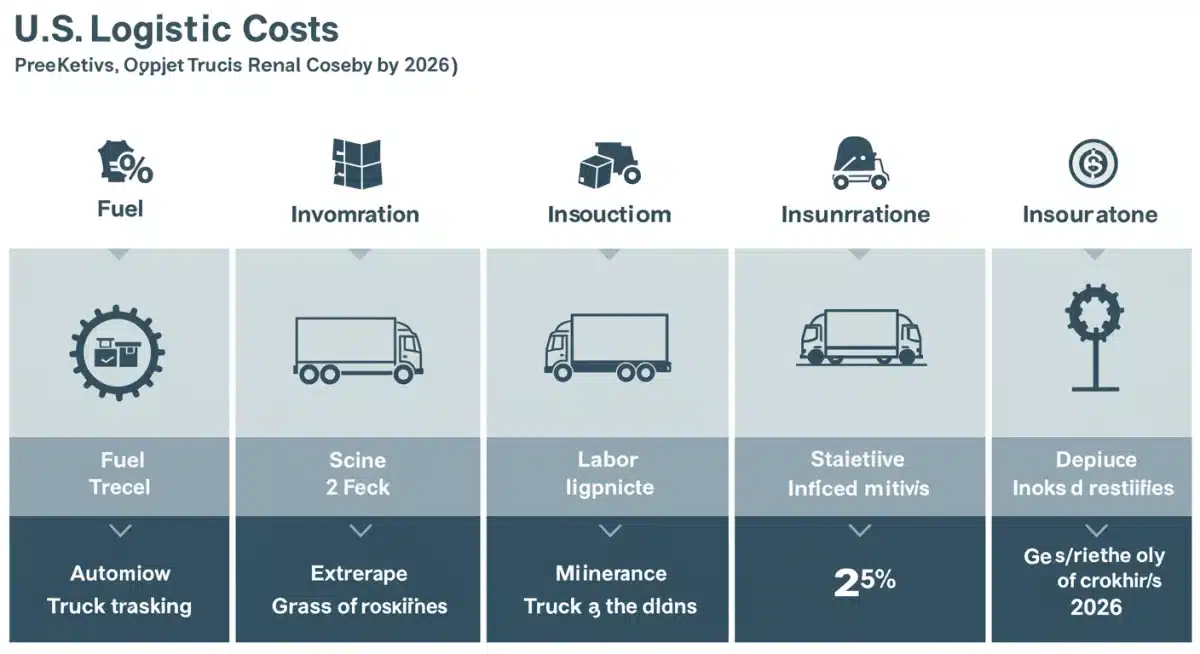
The projected 15% cut in U.S. logistics costs is not a single-source saving but rather a cumulative effect of improvements across several key operational areas. These include:
- Reduced Labor Costs: The most immediate and significant impact of autonomous trucking is the potential to dramatically reduce the reliance on human drivers for long-haul routes. While human drivers will still be crucial for first-mile and last-mile deliveries, and for supervising autonomous operations, the elimination of driver salaries, benefits, and associated overheads for extended stretches of highway driving will yield substantial savings. This addresses the persistent driver shortage issue, which has historically inflated labor costs within the industry.
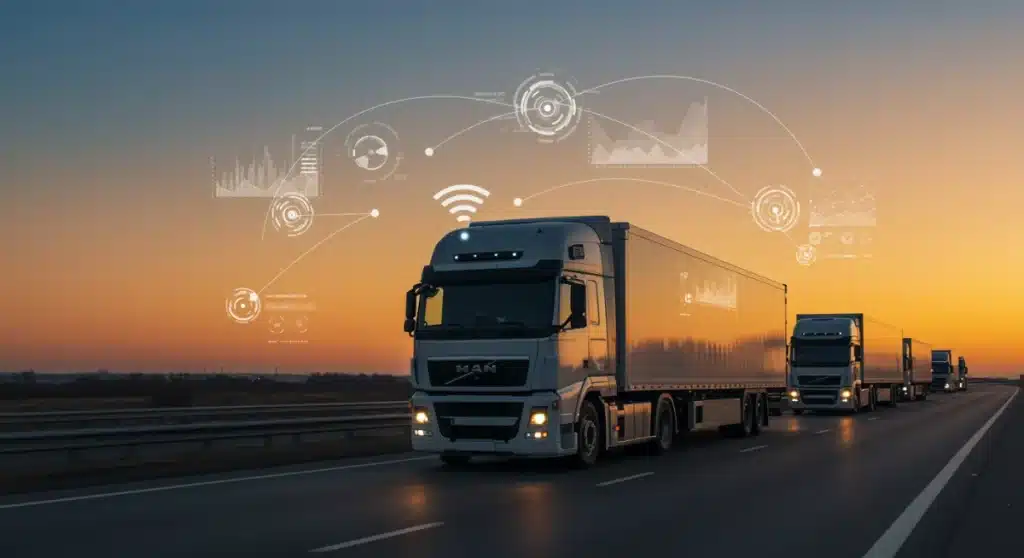
- Optimized Fuel Efficiency: Autonomous trucks, equipped with sophisticated AI and navigation systems, can maintain optimal speeds, accelerate and decelerate more smoothly, and follow the most fuel-efficient routes with unparalleled precision. This level of optimization is difficult for human drivers to consistently achieve, leading to significant reductions in fuel consumption. Furthermore, platooning, where multiple autonomous trucks travel in close convoy to reduce aerodynamic drag, promises even greater fuel savings.
- Increased Asset Utilization: Human drivers are subject to strict hours-of-service regulations, limiting their driving time and necessitating breaks. Autonomous trucks, conversely, can operate nearly 24/7, limited only by maintenance schedules and refueling needs. This continuous operation dramatically increases the utilization of valuable trucking assets, allowing more goods to be moved in less time with fewer vehicles, thereby improving the overall efficiency of autonomous trucking logistics.
- Enhanced Safety and Reduced Insurance Premiums: A significant portion of logistics costs is tied to insurance and accident-related expenses. Autonomous vehicles, with their advanced sensor arrays and AI-driven decision-making, are designed to eliminate human error, which is a leading cause of trucking accidents. As the safety record of autonomous trucks improves, the potential for reduced insurance premiums and lower liability costs becomes a powerful driver for cost savings within autonomous trucking logistics.
- Predictive Maintenance and Downtime Reduction: Autonomous trucks are equipped with extensive telematics and diagnostic systems that can monitor vehicle health in real-time. This allows for predictive maintenance, addressing potential issues before they lead to costly breakdowns and unplanned downtime. By minimizing unexpected repairs and maximizing operational uptime, the overall cost of vehicle ownership and maintenance is significantly reduced.
These combined factors create a compelling economic case for the rapid adoption of autonomous trucking logistics. The projected 15% cost reduction by 2026 is not an arbitrary figure; it’s a testament to the transformative power of this technology to address core inefficiencies and redefine the economics of freight transportation.
Technological Pillars of Autonomous Trucking: Recent Updates and Breakthroughs
The journey towards fully autonomous trucking logistics is paved with continuous technological innovation. Recent updates highlight significant progress in several critical areas:
Advanced Sensor Fusion and AI Algorithms
At the heart of every autonomous truck is a sophisticated sensor suite comprising lidar, radar, cameras, and ultrasonic sensors. Recent advancements in sensor technology have led to higher resolution, extended range, and improved reliability in adverse weather conditions. Crucially, the development of advanced sensor fusion algorithms allows these disparate data streams to be processed and integrated into a comprehensive, real-time understanding of the truck’s surroundings. This perception system is the eyes and ears of the autonomous truck, enabling it to detect other vehicles, pedestrians, road signs, and obstacles with unprecedented accuracy.
Coupled with sensor fusion are increasingly powerful AI and machine learning algorithms. These algorithms are not just about recognizing objects; they are about predicting behavior, making split-second decisions, and continuously learning from vast amounts of driving data. Companies are employing deep learning models to enhance predictive capabilities, allowing autonomous trucks to anticipate potential hazards and react proactively, further bolstering the safety and efficiency of autonomous trucking logistics.

High-Definition Mapping and Localization
For autonomous trucks to navigate complex road networks, highly accurate and constantly updated maps are indispensable. These aren’t your typical GPS maps; they are high-definition (HD) maps that contain detailed information about lane markings, road geometry, traffic signs, and even the precise location of curbs and barriers. Recent updates show significant investment in creating and maintaining these HD maps, with companies leveraging fleet data and specialized mapping vehicles to ensure their accuracy and freshness. Advanced localization techniques, which allow the truck to precisely pinpoint its position on these HD maps using sensor data, are also continually improving, ensuring reliable navigation even in areas with poor GPS signals.
Vehicle-to-Everything (V2X) Communication
The future of autonomous trucking logistics is not just about individual smart trucks but about a connected ecosystem. V2X communication, encompassing Vehicle-to-Vehicle (V2V), Vehicle-to-to-Infrastructure (V2I), and Vehicle-to-Cloud (V2C) technologies, is becoming increasingly vital. V2V allows trucks to communicate directly with each other, enabling platooning and cooperative maneuvers. V2I enables trucks to receive real-time information from road infrastructure, such as traffic light timings and construction zone warnings. V2C facilitates data exchange with central command centers for route optimization, fleet management, and over-the-air software updates. These communication advancements are crucial for enhancing safety, optimizing traffic flow, and increasing the overall efficiency of autonomous trucking logistics.
Enhanced Actuation and Control Systems
Beyond perception and decision-making, the physical control of the truck is paramount. Modern autonomous trucks feature sophisticated drive-by-wire systems for steering, braking, and acceleration, offering precise and rapid control inputs. Redundancy in these systems is a key focus, ensuring that even in the event of a component failure, the truck can safely continue or come to a controlled stop. The integration of these advanced actuation systems with the AI decision-making layer is what translates algorithmic commands into smooth, safe, and efficient driving maneuvers, directly contributing to the reliability and safety of autonomous trucking logistics.
The Road to 2026: Pilot Programs and Industry Adoption
The predicted 15% reduction in U.S. logistics costs by 2026 is not based on theoretical models alone; it’s being actively demonstrated through a growing number of pilot programs and commercial deployments. Several leading companies are at the forefront of this revolution:
- TuSimple: A pioneer in autonomous trucking, TuSimple has been conducting regular freight runs for major carriers on routes in the Southwest U.S. Their autonomous freight network is expanding, demonstrating the viability of driver-out operations on specific highway segments. Their focus on hub-to-hub operations is a prime example of how autonomous trucking logistics can optimize long-haul routes.
- Waymo Via: Google’s autonomous driving division, Waymo, has extended its expertise to trucking with Waymo Via. They are testing their Level 4 autonomous technology on routes in Texas, Arizona, and California, collaborating with logistics partners to integrate their technology into existing freight operations. Their approach emphasizes safety and gradual expansion.
- Aurora: Having acquired Uber’s autonomous driving unit, Aurora is rapidly developing its Aurora Driver platform for both ride-hailing and trucking. They have partnerships with major truck manufacturers like PACCAR and Volvo, aiming to deploy autonomous trucks on a large scale. Their recent milestones include driverless runs and significant progress in their safety case.
- Embark Trucks: Embark has also been a key player, focusing on developing autonomous driving software for Class 8 trucks. They have completed numerous long-haul test runs and are working with shippers and carriers to integrate their technology, demonstrating the potential for significant operational cost savings in autonomous trucking logistics.
These pilot programs are not just about testing technology; they are about building trust, refining operational models, and collecting invaluable data to further enhance the capabilities and safety of autonomous trucking logistics. The insights gained from these real-world deployments are directly contributing to the projected cost reductions by identifying efficiencies and optimizing processes.
Regulatory Frameworks and Public Acceptance: Navigating the Challenges
While the technological advancements are impressive, the widespread adoption of autonomous trucking logistics also hinges on the development of clear regulatory frameworks and public acceptance. Recent updates indicate increasing engagement from state and federal authorities:
Evolving State and Federal Regulations
Several U.S. states, particularly those with vast highway networks and favorable weather conditions, are taking the lead in establishing regulatory guidelines for autonomous vehicle testing and deployment. Arizona, Texas, Florida, and California are examples of states actively working to create environments conducive to autonomous trucking. At the federal level, the National Highway Traffic Safety Administration (NHTSA) and the Department of Transportation (DOT) are developing comprehensive policies to ensure the safe deployment of autonomous vehicles, including commercial trucks. This includes addressing issues such as vehicle certification, operational standards, and data recording requirements. The harmonization of these regulations across states will be crucial for seamless interstate autonomous trucking logistics.
Addressing Safety Concerns and Public Perception
Public acceptance is another critical factor. Concerns about safety, job displacement, and the reliability of autonomous systems need to be proactively addressed. Industry leaders are investing heavily in rigorous testing, transparent reporting of safety metrics, and public education campaigns to build trust. Demonstrating the superior safety record of autonomous trucks, which are not subject to fatigue or distraction, will be key to gaining widespread public and political support. The goal is to highlight how autonomous trucking logistics can lead to safer roads for everyone.
The Workforce Transition
The impact of autonomous trucking on the existing workforce is a significant consideration. While long-haul driving roles may change, new jobs will emerge in areas such as remote monitoring, maintenance of advanced systems, data analysis, and last-mile delivery. The industry, in collaboration with educational institutions and government agencies, is exploring training programs to help transition the current trucking workforce into these new roles, ensuring a smooth and equitable transformation of autonomous trucking logistics.
Beyond Cost Savings: Additional Benefits of Autonomous Trucking Logistics
The 15% reduction in U.S. logistics costs is a compelling headline, but autonomous trucking offers a myriad of other benefits that will reshape the industry and beyond:
Environmental Impact and Sustainability
Autonomous trucks, through optimized routing, smoother driving, and platooning capabilities, are inherently more fuel-efficient. This directly translates to a significant reduction in greenhouse gas emissions and a smaller carbon footprint for the freight industry. As environmental regulations become stricter and corporate sustainability goals grow, the eco-friendly aspects of autonomous trucking logistics will become increasingly valuable.
Improved Supply Chain Resilience and Predictability
The ability of autonomous trucks to operate consistently, day and night, without human hour-of-service limitations, introduces a new level of predictability and resilience into supply chains. This means fewer delays due to driver shortages, more reliable delivery schedules, and the ability to respond more dynamically to disruptions. Enhanced predictability in autonomous trucking logistics allows businesses to optimize inventory levels, reduce warehousing costs, and improve overall operational planning.
Enhanced Road Safety
Human error is a factor in a vast majority of trucking accidents. Autonomous trucks, with their 360-degree awareness, rapid reaction times, and tireless operation, have the potential to drastically reduce the number of accidents on highways. This not only saves lives and prevents injuries but also reduces the economic burden associated with accidents, including property damage, medical costs, and traffic delays. The primary focus of autonomous trucking logistics development is safety above all else.
Greater Data Insights and Optimization
Every autonomous truck is a data-gathering machine, continuously collecting information about road conditions, traffic patterns, vehicle performance, and route efficiency. This wealth of data can be analyzed to further optimize logistics operations, identify bottlenecks, improve route planning, and enhance overall supply chain management. This data-driven approach is a core advantage of autonomous trucking logistics.
The Future Outlook: Autonomous Trucking in 2026 and Beyond
The projected 15% reduction in U.S. logistics costs by 2026 due to autonomous trucking logistics is an ambitious yet achievable goal. By 2026, we can expect to see a significant expansion of autonomous freight networks, particularly on long-haul interstate highways. These will likely operate in a ‘hub-to-hub’ model, where autonomous trucks handle the middle-mile, high-volume segments, with human drivers managing the complex first-mile and last-mile urban deliveries. This hybrid approach will allow for a gradual integration of the technology, maximizing its benefits while addressing operational complexities.
Beyond 2026, as the technology matures and regulatory frameworks become more established, the scope of autonomous trucking logistics will broaden further. We might see autonomous trucks operating in more diverse environments, potentially even in some urban settings with appropriate infrastructure and regulatory oversight. The ongoing development of Level 5 autonomy, which aims for full automation in all driving conditions, will continue to push the boundaries of what’s possible.
The ripple effects of this transformation will extend far beyond the trucking industry. Businesses across all sectors that rely on freight transportation will benefit from lower costs, increased reliability, and more responsive supply chains. Consumers may see lower prices for goods as transportation costs decrease. The entire U.S. economy stands to gain from a more efficient, resilient, and sustainable logistics infrastructure, underpinned by the power of autonomous trucking logistics.
While challenges remain, including continued technological refinement, cybersecurity concerns, and the ongoing dialogue about job displacement, the momentum behind autonomous trucking is undeniable. The industry is rapidly moving from promise to reality, and the 15% cost reduction by 2026 serves as a powerful benchmark for the transformative impact of this revolutionary technology. Staying informed about autonomous trucking logistics is crucial for businesses and individuals looking to thrive in this evolving economic landscape.
Conclusion: Autonomous Trucking, A New Era for U.S. Logistics
The journey towards a fully autonomous trucking logistics ecosystem is one of the most exciting and impactful technological developments of our time. The promise of cutting U.S. logistics costs by a significant 15% by 2026 is not just an optimistic forecast; it’s a meticulously calculated projection based on tangible progress in AI, sensor technology, and operational deployments. This transformation will address long-standing challenges in the trucking industry, from labor shortages and fuel inefficiencies to safety concerns and environmental impact.
As we move closer to 2026, the lines between traditional and autonomous trucking will continue to blur, paving the way for a more integrated and intelligent freight network. Businesses that embrace autonomous trucking logistics early will gain a significant competitive advantage, realizing substantial cost savings, enhancing operational efficiencies, and contributing to a more sustainable future. The future of freight is autonomous, and it’s arriving faster than many anticipate, ready to redefine the very foundations of U.S. logistics.