Autonomous Delivery Fleets: 20% Cost Savings for Early Adopters
An exclusive report reveals that early adopters of autonomous delivery fleets have realized significant 20% cost savings within the last six months, signaling a transformative shift in logistics and urban last-mile solutions.
An Exclusive Report: How Autonomous Delivery Fleets Achieved 20% Cost Savings for Early Adopters in the Last 6 Months presents compelling evidence of a paradigm shift in logistics. Imagine a future where your packages arrive faster, more reliably, and at a fraction of the current cost. This isn’t a distant dream; it’s the current reality for businesses embracing autonomous delivery technology. What insights can we glean from these pioneers?
The rise of autonomous delivery
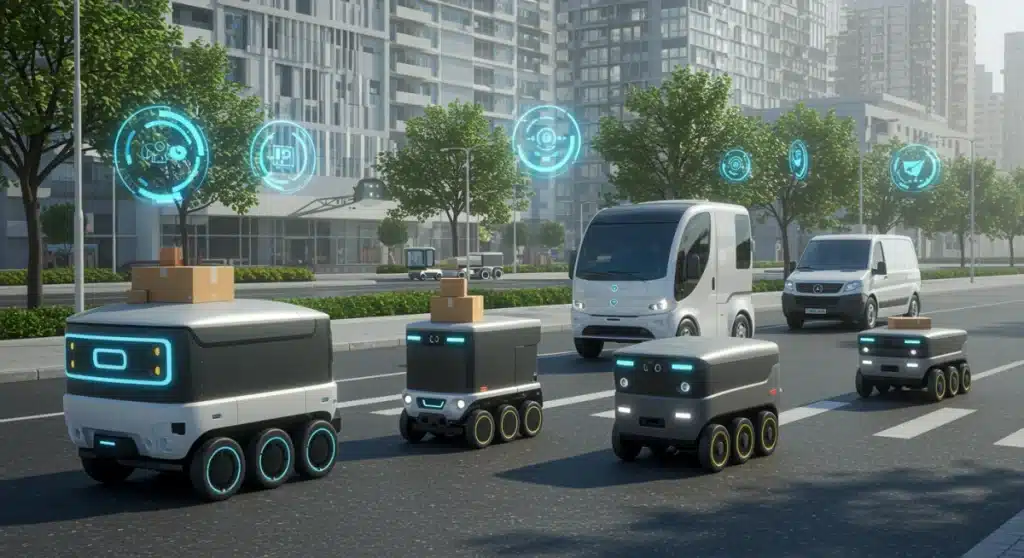
Autonomous delivery, once a concept confined to science fiction, is rapidly becoming a cornerstone of modern logistics. This technology encompasses a range of self-driving vehicles, from compact sidewalk robots to larger cargo vans, designed to transport goods without human intervention. The underlying promise has always been efficiency and cost reduction, but until recently, concrete data remained somewhat elusive.
Early adopters, spanning various sectors from retail to food service, have been strategically deploying these fleets in controlled environments and increasingly in urban landscapes. Their initial investments are now yielding significant returns, demonstrating the tangible benefits of this innovation. The progression from experimental trials to operational deployments has been swift, driven by the intense demand for optimized supply chains and reduced operational overheads.
Technological advancements driving adoption
Several key technological breakthroughs have propelled autonomous delivery into the mainstream. These advancements are not isolated but rather interconnected, creating a robust ecosystem for self-operating logistics.
- Advanced Sensor Suites: Lidar, radar, and high-resolution cameras provide 360-degree environmental awareness.
- Sophisticated AI Algorithms: Machine learning and deep learning enable real-time decision-making and route optimization.
- Improved Battery Technology: Extended range and faster charging capabilities support continuous operations.
- Enhanced Communication Systems: 5G connectivity ensures seamless data transfer and remote monitoring.
The synergy of these technologies allows autonomous vehicles to navigate complex urban environments, identify obstacles, and adapt to changing conditions with remarkable precision. This technological maturation is a critical factor behind the reported cost savings, as it minimizes errors and maximizes operational uptime.
The shift towards autonomous solutions is not merely about replacing human drivers. It’s about fundamentally rethinking the entire delivery process, from warehousing to the final doorstep. Companies are leveraging data analytics from these fleets to gain unprecedented insights into delivery patterns, bottlenecks, and customer preferences, further refining their strategies and enhancing service quality. This holistic approach contributes significantly to the overall efficiency gains.
Unpacking the 20% cost savings: where did it come from?
The headline figure of 20% cost savings is impressive, but understanding its origins is crucial for appreciating the full impact of autonomous delivery fleets. This reduction isn’t attributable to a single factor but rather a combination of efficiencies across various operational domains. Early adopters have meticulously tracked their expenditures, providing a clear picture of where the savings are being generated.
One of the most immediate and substantial areas of savings is labor costs. Human drivers represent a significant portion of traditional delivery expenses, including salaries, benefits, and overtime. Autonomous vehicles, while requiring initial investment and maintenance, eliminate the direct cost of a driver per route, leading to substantial long-term savings. Furthermore, these vehicles can operate continuously, often around the clock, without limitations imposed by human work hours or fatigue regulations.
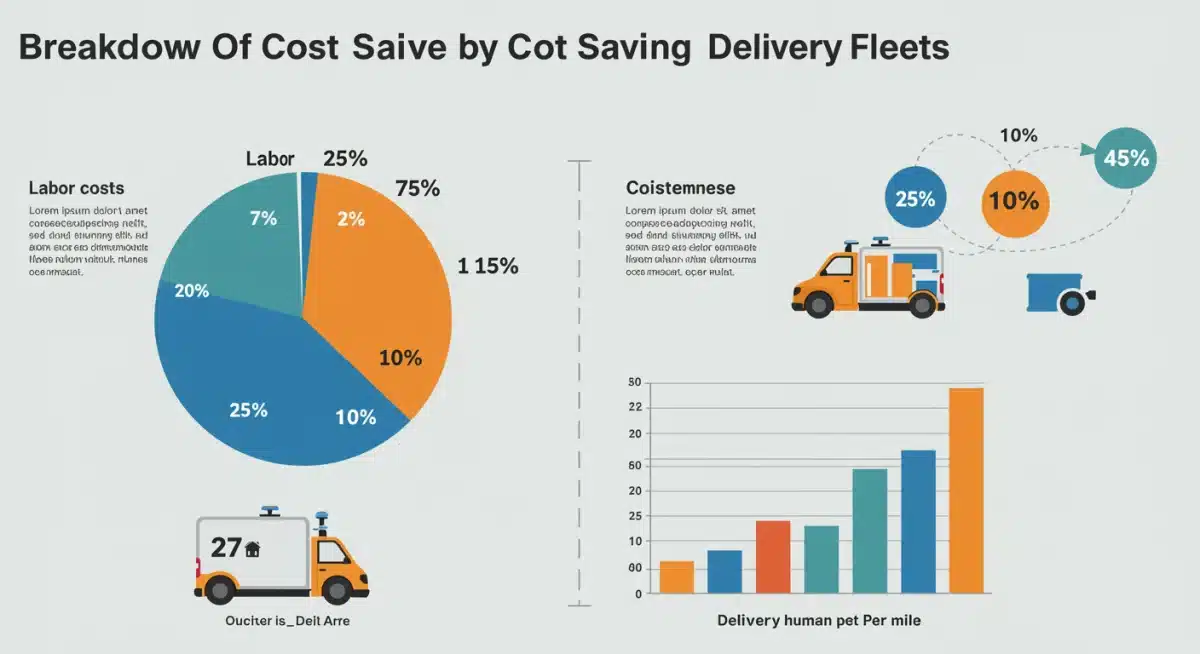
Key areas of cost reduction
The 20% savings are a composite of several interconnected factors. Analyzing these components provides a deeper understanding of the economic advantages.
- Reduced Labor Expenses: Eliminating driver salaries and associated benefits forms the largest segment of savings.
- Optimized Fuel/Energy Consumption: Autonomous systems can plan more efficient routes and drive with greater consistency, reducing fuel waste. Electric autonomous vehicles further cut down on fuel costs and maintenance.
- Lower Insurance Premiums: With fewer human errors, the potential for accidents decreases, potentially leading to lower insurance rates over time.
- Extended Operating Hours: Autonomous fleets can run 24/7, maximizing asset utilization and increasing delivery capacity without additional labor costs.
Beyond these direct cost reductions, there are also indirect benefits. Reduced human interaction points can lead to fewer delivery errors and improved package security. The ability to handle peak demand more effectively without surging labor costs also adds value, enhancing customer satisfaction and loyalty.
Furthermore, predictive maintenance powered by AI ensures that vehicles are serviced proactively, preventing costly breakdowns and extending their operational lifespan. This intelligent approach to fleet management contributes to overall efficiency and reduces unexpected expenses, solidifying the financial appeal of autonomous solutions.
Early adopter success stories and methodologies
The success stories emerging from early adopters are not just anecdotal; they are backed by rigorous data and strategic implementation. These companies, often leaders in their respective industries, have approached autonomous delivery with a methodical focus on integration and optimization. Their methodologies provide valuable blueprints for future widespread adoption.
One prominent retailer, for instance, deployed a fleet of sidewalk delivery robots in several metropolitan areas for last-mile delivery of groceries and small packages. By meticulously mapping out delivery zones and integrating the robots with their existing order fulfillment systems, they observed a significant decrease in per-delivery cost compared to traditional methods. The robots operated primarily during off-peak hours, further optimizing their use of urban infrastructure.
Strategic deployment and integration
Successful early adopters share common strategies that have contributed to their cost savings.
- Phased Rollouts: Starting with controlled environments or specific routes to refine operations before scaling up.
- Data-Driven Optimization: Continuously collecting and analyzing data to improve routing, vehicle performance, and customer experience.
- Partnerships with Tech Providers: Collaborating with leading autonomous technology companies to leverage cutting-edge solutions and expertise.
- Customer Education: Proactively informing customers about the new delivery methods to ensure smooth transitions and build trust.
Another example comes from a food delivery service that integrated autonomous vans into its hub-to-spoke model. These vans handled longer, repetitive routes between distribution centers and local pickup points, freeing human drivers to focus on the final, more complex last-mile drops. This hybrid approach maximized efficiency, reduced fuel consumption on major routes, and mitigated driver shortages.
The methodologies employed by these pioneers often involve a careful balance of technological innovation and operational pragmatism. They understand that while autonomous systems offer immense potential, successful integration requires careful planning, iterative testing, and a willingness to adapt existing business processes. This strategic foresight is a hallmark of their success.
Challenges overcome and lessons learned
The path to achieving 20% cost savings with autonomous delivery fleets has not been without its hurdles. Early adopters faced a myriad of technical, regulatory, and public perception challenges. Their experiences offer invaluable lessons for organizations considering similar transitions.
One significant challenge was navigating the complex regulatory landscape. Laws governing autonomous vehicles vary widely by state and municipality, often creating a patchwork of rules that required careful legal counsel and engagement with local authorities. Companies had to invest considerable resources in obtaining permits, conducting safety assessments, and demonstrating compliance with evolving standards. Public acceptance also posed an initial barrier; addressing concerns about safety, job displacement, and privacy required proactive communication and transparent operations.
Another technical hurdle involved ensuring robust performance in diverse weather conditions and unpredictable urban environments. While sensors and AI have advanced significantly, edge cases like heavy rain, snow, or unexpected road construction still presented complexities that required sophisticated software solutions and, at times, remote human oversight. Battery life and charging infrastructure also demanded careful planning to ensure continuous operation.
Key lessons from the forefront
- Regulatory Engagement is Paramount: Proactive collaboration with policymakers helps shape favorable regulations and streamline deployment.
- Robust Testing is Non-Negotiable: Extensive testing in varied conditions is essential to ensure safety and reliability.
- Public Trust is Earned: Transparent communication, safety demonstrations, and community involvement are vital for public acceptance.
- Scalability Requires Infrastructure: Investment in charging stations, maintenance facilities, and data infrastructure is critical for expansion.
Early adopters learned that successful deployment is an iterative process. They embraced a culture of continuous improvement, using data from initial deployments to refine algorithms, enhance vehicle design, and optimize operational protocols. Feedback loops from both internal teams and external stakeholders, including customers and local communities, proved essential in fine-tuning their autonomous delivery systems.
The experience of these vanguard companies underscores that while the technology is powerful, human ingenuity and adaptability remain crucial in overcoming real-world obstacles. The lessons learned pave the way for a smoother and faster adoption curve for subsequent waves of businesses.
The future outlook for autonomous delivery
The impressive 20% cost savings achieved by early adopters are just the beginning. The future outlook for autonomous delivery is one of continued growth, innovation, and increasingly widespread integration into the global logistics network. As technology matures and regulatory frameworks become clearer, the economic and operational benefits are set to expand even further.
We anticipate a significant expansion in the types of goods delivered autonomously, moving beyond small packages to larger freight and specialized cargo. The development of more robust and versatile autonomous platforms will enable a broader range of applications, from inter-city transport to complex industrial logistics within private campuses. The versatility of these systems will unlock new market opportunities and redefine supply chain capabilities.
Emerging trends and potential impacts
Several trends are poised to shape the next phase of autonomous delivery.
- Increased Interoperability: Standardized communication protocols will allow different autonomous systems to work together seamlessly.
- AI-Powered Predictive Logistics: Advanced AI will optimize entire supply chains, predicting demand and proactively positioning autonomous fleets.
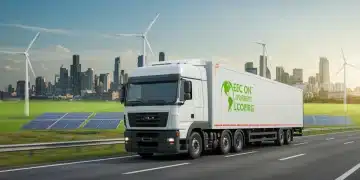
- Sustainable Delivery Solutions: A greater focus on electric autonomous vehicles will contribute to greener logistics and reduced carbon footprints.
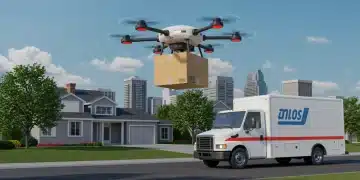
- Drone Integration: Hybrid delivery models combining ground-based autonomous vehicles with delivery drones for faster, more flexible last-mile options.
The economic ripple effects of widespread autonomous delivery will be profound. Businesses can expect further reductions in operational costs, leading to more competitive pricing for consumers. This could stimulate economic growth by making goods and services more accessible and affordable, particularly in underserved areas.
Moreover, the environmental benefits are substantial. Electric autonomous fleets reduce reliance on fossil fuels and significantly lower emissions in urban areas, contributing to cleaner air and more sustainable cities. The optimization of routes also minimizes traffic congestion, enhancing urban mobility for everyone.
Impact on urban mobility and sustainable transportation
Beyond the immediate cost savings for businesses, the widespread adoption of autonomous delivery fleets holds transformative potential for urban mobility and sustainable transportation. These vehicles are not merely a new way to move goods; they represent a fundamental shift in how cities function and how we interact with our environment.
One of the most significant impacts will be on traffic congestion. By optimizing routes, operating during off-peak hours, and potentially coordinating with smart city infrastructure, autonomous vehicles can reduce the number of human-driven delivery trucks on the road, easing traffic flow. This translates to faster commutes for residents, reduced fuel consumption for all vehicles, and a more pleasant urban experience. The ability to dynamically adjust routes based on real-time traffic conditions further enhances this benefit.
Contributions to smart cities
Autonomous delivery is a key component of the smart city ecosystem, contributing to several urban development goals.
- Reduced Emissions: Electric autonomous fleets significantly lower air and noise pollution in urban centers.
- Optimized Infrastructure Use: Coordinated autonomous movements can make more efficient use of roads and parking spaces.
- Enhanced Safety: Advanced sensors and AI reduce the likelihood of accidents compared to human-driven vehicles.
- Improved Public Services: Autonomous systems can support municipal services, from waste collection to infrastructure inspection.
Furthermore, the data generated by these fleets can provide invaluable insights for urban planners. Information on traffic patterns, delivery demand hotspots, and infrastructure needs can be used to design more efficient transportation networks, allocate resources more effectively, and plan for future urban development. This data-driven approach fosters a more responsive and resilient urban environment.
The integration of autonomous delivery also supports the broader goals of sustainable transportation. By reducing the carbon footprint of logistics and making supply chains more efficient, it contributes to global efforts to combat climate change. This aligns perfectly with the mission of MobilityRevolutionHub, which champions innovations that redefine mobility for a greener, more efficient future.
| Key Aspect | Brief Description |
|---|---|
| 20% Cost Savings | Achieved by early adopters in just 6 months through reduced labor, fuel, and operational efficiencies. |
| Key Savings Drivers | Primarily from eliminating driver salaries, optimizing routes, and lower insurance premiums. |
| Early Adopter Strategies | Phased rollouts, data-driven optimization, and strategic partnerships were crucial for success. |
| Future Impact | Expected to further reduce costs, enhance urban mobility, and drive sustainable transportation. |
Frequently Asked Questions about Autonomous Delivery
Autonomous delivery fleets consist of self-driving vehicles, such as robots and vans, designed to transport goods without human operators. They utilize advanced AI, sensors, and communication systems to navigate, optimize routes, and perform deliveries efficiently, transforming logistics by reducing reliance on human drivers and enhancing operational capabilities.
Early adopters achieved significant cost savings primarily by reducing labor expenses (driver salaries), optimizing fuel/energy consumption through efficient routing, and potentially lowering insurance premiums due to fewer accidents. These savings are also bolstered by extended operating hours and predictive maintenance, maximizing asset utilization and minimizing unexpected costs.
Early adopters encountered challenges such as navigating complex and inconsistent regulatory landscapes, ensuring robust performance in diverse weather conditions, and addressing public perception and trust issues. Overcoming these required significant investment in legal counsel, extensive testing, transparent communication, and community engagement to build confidence and streamline operations.
The environmental benefits include substantially reduced carbon emissions, especially with electric autonomous fleets, contributing to cleaner air and lower noise pollution in urban areas. Optimized routing and efficient driving also decrease fuel consumption, promoting more sustainable transportation practices and supporting global efforts against climate change.
The future of autonomous delivery promises continued growth, with expanded applications beyond small packages to larger freight. We can expect increased interoperability, AI-powered predictive logistics, and hybrid models integrating drones. These advancements will lead to further cost reductions, enhanced urban mobility, and significant contributions to sustainable transportation systems globally.
Conclusion
The findings from this exclusive report underscore a pivotal moment in the evolution of logistics. The 20% cost savings achieved by early adopters of autonomous delivery fleets in just six months are not merely an impressive statistic; they are a clear indicator of a viable, transformative technology. This shift is reshaping not only business operations but also urban environments, paving the way for more efficient, cost-effective, and sustainable transportation solutions. As the technology continues to mature and integrate more deeply into our infrastructure, the benefits are poised to expand, driving innovation and setting new standards for the future of delivery.