AI in Smart Cities 2026: National Deployment & Key Updates

The vision of a ‘smart city’ is rapidly evolving from a futuristic concept to a tangible reality, largely propelled by the pervasive integration of Artificial Intelligence (AI). As we approach 2026, the national deployment of AI in smart city infrastructure is not just a matter of technological advancement, but a strategic imperative for sustainable urban development, enhanced public services, and improved quality of life for citizens. This comprehensive exploration delves into the key updates, challenges, and promising prospects for AI Smart City Deployment across nations.
The Dawn of AI-Powered Urbanism: What Defines a Smart City in 2026?
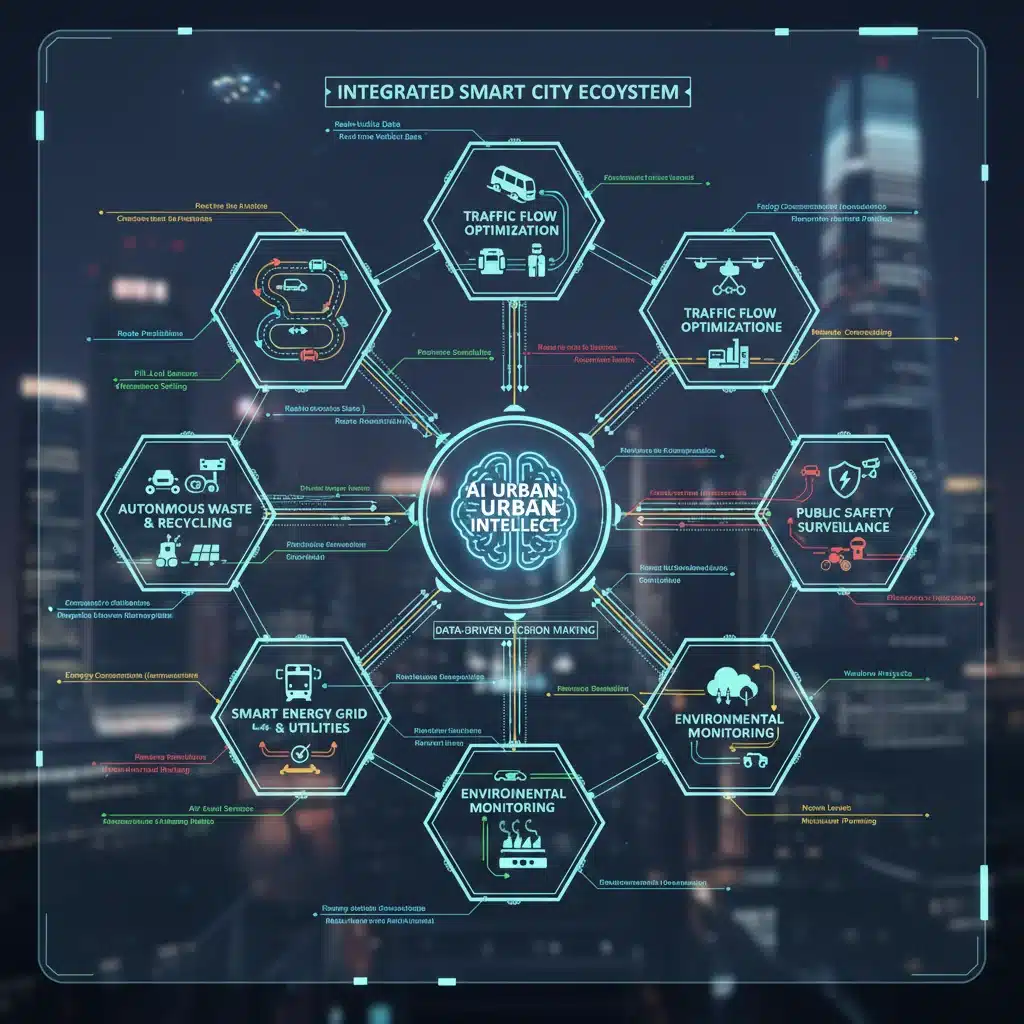
A smart city, at its core, is an urban area that utilizes various types of electronic methods and sensors to collect data. Insights gained from that data are used to manage assets, resources, and services efficiently; in return, that data is used to improve the operations across the city. In 2026, the definition is significantly amplified by AI. It’s no longer just about collecting data; it’s about intelligent data processing, predictive analytics, and autonomous decision-making that AI enables. This includes everything from smart traffic management systems that adapt to real-time conditions to AI-driven waste management that optimizes collection routes, and sophisticated public safety networks that predict and prevent crime.
Key Pillars of AI Integration for Smart City Deployment
The successful national deployment of AI in smart cities hinges on several critical pillars:
- Advanced Sensor Networks: The foundation of any smart city is its ability to collect vast amounts of data. AI leverages data from IoT devices, cameras, environmental sensors, and more to create a comprehensive understanding of urban dynamics.
- High-Speed Connectivity: 5G and future communication technologies are crucial for transmitting the enormous volumes of data generated by smart city infrastructure to AI processing centers with minimal latency.
- Robust Data Analytics Platforms: AI algorithms require powerful platforms to analyze data, identify patterns, and generate actionable insights. These platforms often incorporate machine learning and deep learning capabilities.
- Cloud and Edge Computing: A hybrid approach, utilizing both centralized cloud processing for complex tasks and edge computing for real-time, localized decision-making, is essential for efficient AI deployment.
- Cybersecurity Infrastructure: As more critical city functions become AI-dependent, robust cybersecurity measures are paramount to protect against data breaches and cyber-attacks.
- Public-Private Partnerships: Collaboration between government entities, technology providers, and academic institutions is vital for funding, developing, and implementing AI solutions at scale.
The synergy of these components forms the backbone of effective AI Smart City Deployment, paving the way for unprecedented levels of urban efficiency and citizen engagement.
National Deployment Strategies: A Look at 2026 Initiatives
Several nations are spearheading ambitious initiatives for AI Smart City Deployment, recognizing its potential to address pressing urban challenges such as traffic congestion, pollution, resource scarcity, and public safety. By 2026, many of these strategies will have matured into significant operational deployments.
United States: A Focus on Localized Innovation and Federal Support
In the United States, the approach to AI Smart City Deployment is often characterized by a decentralized model, with individual cities and states leading innovation, supported by federal grants and research initiatives. The ‘Smart Cities Challenge’ and similar programs have spurred competition and collaboration, leading to the development of AI solutions tailored to specific local needs. By 2026, we anticipate:
- Widespread Adoption of AI-Powered Traffic Management: Many major metropolitan areas will have implemented intelligent traffic light systems, predictive traffic flow analysis, and autonomous vehicle integration.
- Enhanced Public Safety with AI: AI-driven surveillance, predictive policing models (used ethically and with robust oversight), and emergency response optimization will be more common.
- Sustainable Infrastructure: AI will play a greater role in optimizing energy grids, water management, and waste collection to reduce environmental impact.
- Digital Twins for Urban Planning: The creation of digital replicas of cities to simulate and test AI interventions before physical deployment will become a standard practice.
European Union: Standardized Frameworks and Citizen-Centric AI
The EU’s strategy for AI Smart City Deployment emphasizes ethical AI, data privacy, and citizen-centric approaches. The European Commission has been actively promoting common standards and interoperability across member states to facilitate the scaling of smart city solutions. By 2026, key trends will include:
- GDPR-Compliant AI Solutions: A strong emphasis on data protection and privacy will guide the development and deployment of AI applications in public spaces.
- Integrated Urban Platforms: Many European cities will have established integrated data platforms, allowing different AI applications to share and leverage data for holistic urban management.
- Green AI Initiatives: AI will be extensively used to achieve climate neutrality goals, optimizing renewable energy consumption, smart heating and cooling systems, and sustainable mobility.
- Participatory AI Governance: Citizen involvement in the design and oversight of AI systems will be a distinguishing feature, fostering trust and acceptance.
Asia-Pacific: Rapid Adoption and Large-Scale Implementations
Countries in the Asia-Pacific region, particularly China, Singapore, and South Korea, are known for their rapid adoption of advanced technologies and large-scale AI Smart City Deployment projects. Their strategies often involve significant government investment and ambitious timelines. By 2026, we can expect:
- Hyper-Connected Smart Districts: The creation of entirely new smart districts or the transformation of existing ones, fully integrated with AI across all services.
- AI for Disaster Management: Advanced AI systems for predicting and responding to natural disasters will be widely deployed, especially in vulnerable regions.
- Smart Healthcare and Education: AI will enhance urban healthcare services through personalized medicine and optimize educational resources.
- Biometric Recognition and AI Security: Extensive use of AI for public security, including facial recognition and behavioral analytics, will be observed, often raising privacy concerns that are debated globally.
Technological Innovations Driving AI Smart City Deployment
The advancements in AI are not static; new innovations constantly push the boundaries of what’s possible in smart cities. Several key technological areas are set to mature and significantly impact AI Smart City Deployment by 2026.
Edge AI and Federated Learning
While cloud computing offers immense processing power, the latency involved in sending all data to a central cloud can be a bottleneck for real-time applications. Edge AI, where AI processing happens closer to the data source (e.g., on a smart camera or sensor), addresses this by enabling faster decision-making. Federated learning, a machine learning technique that trains AI models on decentralized datasets without explicitly exchanging data, offers a privacy-preserving way to leverage data from various city components. This will be crucial for maintaining data security and efficiency in complex urban environments.
Generative AI for Urban Planning and Design
Generative AI, capable of creating new content such as images, text, or designs, is beginning to find applications in urban planning. By 2026, we could see generative AI assisting urban planners in:
- Optimizing Building Layouts: Generating optimal designs for buildings and public spaces based on factors like sunlight, airflow, and pedestrian flow.
- Simulating Urban Growth: Creating realistic simulations of how urban areas might develop under different policy scenarios.
- Personalized Urban Experiences: Designing adaptive public spaces that can reconfigure based on real-time needs or events.
Quantum Computing’s Emergence (Early Stages)
While still in its nascent stages for broad commercial application, quantum computing holds immense potential for future AI Smart City Deployment. By 2026, we might see initial pilot projects exploring how quantum algorithms can:
- Solve Complex Optimization Problems: Such as optimizing city-wide logistics, public transport schedules, or resource allocation with unprecedented efficiency.
- Enhance Cybersecurity: Developing quantum-resistant encryption methods to protect sensitive smart city data.
Addressing the Challenges of AI Smart City Deployment
Despite the immense potential, the national deployment of AI in smart cities faces significant hurdles that need careful consideration and strategic solutions.
Data Privacy and Security Concerns
The collection and analysis of vast amounts of personal data raise legitimate concerns about privacy and potential misuse. Robust regulatory frameworks, explainable AI (XAI) to ensure transparency in decision-making, and strong encryption are essential to build public trust. Governments and city administrations must prioritize ethical AI development and deployment, ensuring that citizen rights are protected.
Interoperability and Standardization
Different AI solutions and smart city components often come from various vendors, leading to interoperability issues. A lack of standardized protocols can hinder seamless data exchange and system integration. National and international efforts to establish common standards and open APIs are crucial for creating truly integrated smart cities.
Infrastructure and Funding
The initial investment required for developing and deploying AI-powered smart city infrastructure is substantial. This includes not only the AI software but also the underlying sensor networks, high-speed communication infrastructure, and data centers. Securing adequate funding through public-private partnerships, government grants, and innovative financing models is critical for widespread AI Smart City Deployment.
Skills Gap and Workforce Development
The successful operation and maintenance of AI-driven smart cities require a skilled workforce. There is a growing demand for data scientists, AI engineers, cybersecurity specialists, and urban planners with technological expertise. Investing in education, training programs, and upskilling initiatives is vital to bridge this skills gap.
Public Acceptance and Digital Divide
For AI Smart City Deployment to be truly successful, it must be embraced by the citizens it serves. Lack of understanding, fear of surveillance, or concerns about job displacement can lead to public resistance. Transparent communication, citizen engagement initiatives, and ensuring equitable access to smart city services are crucial to fostering acceptance and preventing a ‘digital divide’ where some segments of the population are left behind.
The Economic and Social Impact of AI Smart City Deployment by 2026
The widespread adoption of AI in urban environments is poised to deliver significant economic and social benefits, fundamentally reshaping how cities operate and how citizens interact with their surroundings.
Economic Benefits
- Increased Efficiency and Cost Savings: AI optimizes resource allocation, reducing operational costs for city services like waste management, energy consumption, and public transportation. Predictive maintenance, for example, can save millions by preventing infrastructure failures.
- New Job Creation: While some jobs may be automated, the development, deployment, and maintenance of AI systems will create new roles in technology, data science, and urban planning.
- Attracting Investment and Talent: Smart cities become attractive hubs for businesses and skilled professionals, stimulating economic growth and innovation.
- Enhanced Tourism and Commerce: Improved urban environments, efficient transportation, and personalized services can boost tourism and local commerce.
Social Benefits
- Improved Quality of Life: Reduced traffic congestion, cleaner air, enhanced public safety, and more efficient public services directly contribute to a higher quality of life for residents.
- Better Public Services: AI can personalize and streamline public services, making them more accessible and responsive to citizen needs, from healthcare to education.
- Environmental Sustainability: AI-driven solutions for energy management, waste reduction, and pollution monitoring are critical tools in combating climate change and creating greener cities.
- Increased Citizen Engagement: Smart city platforms can offer new avenues for citizen participation, feedback, and engagement in urban governance.

Future Trends Beyond 2026: The Evolution Continues
While 2026 marks a significant milestone for national AI Smart City Deployment, the evolution of AI and urban environments is a continuous journey. Looking further into the future, we can anticipate several emerging trends:
Hyper-Personalized Urban Experiences
As AI becomes more sophisticated and data collection more granular, cities will be able to offer increasingly personalized experiences. This could range from adaptive public transport routes based on individual preferences to personalized recommendations for cultural events or services, all while respecting privacy.
Autonomous Urban Systems
Beyond self-driving cars, the future holds the promise of fully autonomous urban systems. This includes autonomous public transport fleets, robotic waste collection, self-repairing infrastructure, and AI-managed public spaces that adapt dynamically to usage patterns.
AI for Climate Resilience and Adaptation
With the increasing impact of climate change, AI will become an indispensable tool for urban resilience. This includes predictive models for extreme weather events, AI-driven infrastructure design that can withstand climate shocks, and intelligent resource allocation during emergencies.
Ethical AI and Governance Frameworks
As AI becomes more embedded in the fabric of cities, the focus on ethical AI and robust governance frameworks will intensify. This will involve ongoing public dialogue, co-creation of AI policies, and the development of ‘explainable AI’ systems that can justify their decisions to citizens.
Conclusion: The Intelligent Urban Future is Now
The integration of AI into smart city infrastructure represents a monumental shift in how urban environments are designed, managed, and experienced. By 2026, national deployment efforts will have significantly advanced, transforming cities into more efficient, sustainable, and livable spaces. While challenges related to privacy, interoperability, and funding persist, the benefits of AI in enhancing public services, fostering economic growth, and improving the quality of life are undeniable.
The journey towards truly intelligent cities is a collaborative one, requiring continuous innovation, strategic investment, and a commitment to ethical and citizen-centric development. As AI continues to evolve, so too will our urban landscapes, promising a future where technology and humanity coalesce to create thriving, resilient, and intelligent communities for generations to come. The time for AI Smart City Deployment is not just approaching; it is here, shaping the urban future before our very eyes.