AI Route Optimization: Saving U.S. Logistics Up to 10% on Fuel
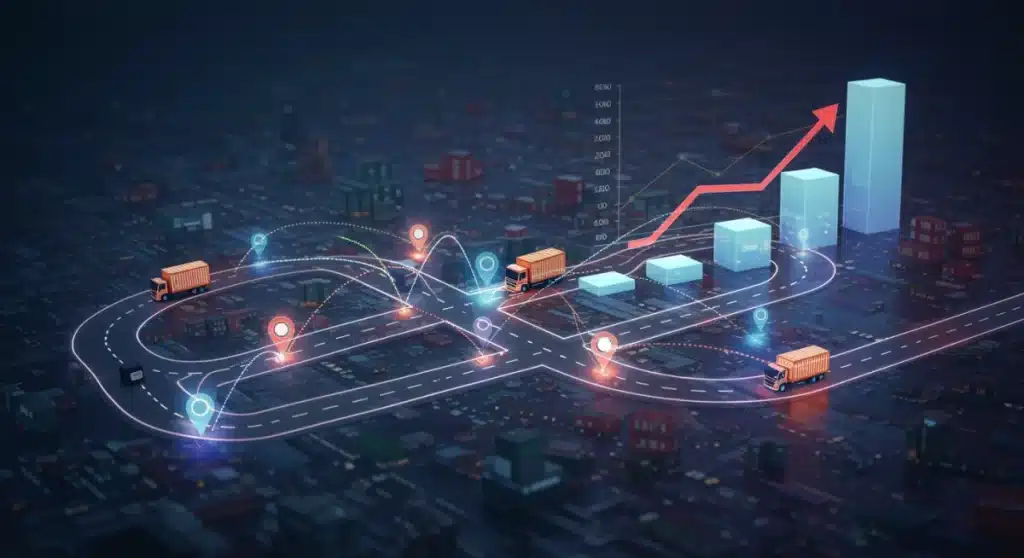
Financial Impact of AI-Driven Route Optimization: Saving U.S. Logistics Firms Up to 10% on Fuel Annually is profoundly reshaping the industry, allowing companies to achieve substantial cost reductions and operational efficiencies.
The Financial Impact of AI-Driven Route Optimization: Saving U.S. Logistics Firms Up to 10% on Fuel Annually is no longer a futuristic concept but a present-day reality, fundamentally transforming how goods move across the nation. In a sector where margins are often razor-thin and operational costs constantly fluctuate, especially fuel prices, the integration of artificial intelligence into route planning offers a critical advantage. This technology promises not just incremental improvements, but a significant overhaul in efficiency, directly translating into tangible financial benefits for U.S. logistics firms.
Understanding the Core of AI-Driven Route Optimization
AI-driven route optimization goes far beyond traditional GPS navigation, utilizing sophisticated algorithms and machine learning to analyze vast datasets and determine the most efficient delivery paths. This advanced technology considers a multitude of variables in real-time, offering dynamic solutions that human planners simply cannot match.
At its heart, this technology is about predictive analytics and adaptive learning. It processes historical data alongside live conditions to make informed decisions, ensuring optimal resource allocation and minimum operational expenditure.
The Algorithmic Advantage
The algorithms powering AI route optimization are complex, designed to solve what is known as the Vehicle Routing Problem (VRP) with unprecedented accuracy. These algorithms can process millions of potential routes, considering various constraints simultaneously.
- Dynamic Rerouting: Adapts to real-time traffic, weather, and road closures.
- Multi-Stop Planning: Optimizes complex routes with numerous delivery points.
- Load Balancing: Ensures vehicles are optimally loaded to maximize efficiency.
- Predictive Maintenance Integration: Anticipates vehicle issues to prevent costly breakdowns.
The true power lies in its ability to learn and improve over time, making each subsequent route more efficient than the last. This continuous refinement is a key differentiator from static routing solutions.
Beyond Basic GPS: A Paradigm Shift
While GPS provides turn-by-turn directions, AI optimization offers a strategic approach to an entire fleet’s operations. It shifts from reactive navigation to proactive planning, anticipating challenges before they impact delivery schedules or costs.
This paradigm shift means that logistics companies are no longer just reacting to traffic jams or unexpected road closures; they are actively avoiding them. This leads to a smoother, more reliable delivery network, which in turn enhances customer satisfaction and operational reputation.
In essence, AI-driven route optimization represents a significant leap forward in logistical planning, moving from rudimentary mapping to intelligent, dynamic, and economically beneficial strategies. It’s a foundational technology for any U.S. logistics firm aiming to remain competitive and profitable in today’s fast-paced market.
Direct Financial Benefits: Fuel Savings and Beyond
The most immediate and impactful financial benefit of AI-driven route optimization is the significant reduction in fuel consumption. For U.S. logistics firms, fuel constitutes a substantial portion of their operating expenses, often second only to labor costs. Cutting these expenses by up to 10% annually represents a massive financial gain.
Beyond fuel, the ripple effects of optimized routes extend to various other cost centers, creating a holistic financial advantage for companies adopting these technologies.
Quantifiable Fuel Cost Reductions
The 10% fuel saving is achieved through several mechanisms inherent in AI optimization. Shorter routes mean less distance traveled, less idle time, and more consistent speeds. These factors directly translate into fewer gallons burned per delivery cycle.
Consider a fleet of 100 trucks, each consuming thousands of gallons of gallons of fuel annually. A 10% reduction equates to hundreds of thousands, if not millions, of dollars saved each year. This is a direct boost to the bottom line, freeing up capital for other investments or competitive pricing strategies.
Operational Efficiency and Reduced Labor Costs
Optimized routes naturally lead to more efficient use of driver time. Drivers can complete more deliveries in less time, or their routes can be structured to avoid overtime hours. This directly impacts labor costs, which are another major expense category for logistics firms.
- Reduced Overtime: More efficient routes minimize the need for drivers to work extra hours.
- Increased Deliveries Per Shift: Maximizes driver productivity and vehicle utilization.
- Fewer Vehicle Miles Traveled (VMT): Lowers wear and tear on vehicles, extending their lifespan.
Furthermore, the reduction in VMT also lowers maintenance costs and the frequency of vehicle replacements, adding another layer of financial savings. Less time on the road also means reduced risk of accidents, contributing to lower insurance premiums and fewer liability claims.
Enhanced Fleet Utilization and Asset Management
AI-driven route optimization significantly improves how logistics firms utilize their existing fleet and manage their assets. By maximizing the efficiency of each vehicle, companies can often handle increased delivery volumes without needing to expand their fleet, leading to considerable capital expenditure savings.
This strategic approach to asset management not only reduces direct costs but also enhances the overall productivity and longevity of logistical resources.
Maximizing Vehicle Capacity and Throughput
Optimal routing ensures that vehicles are not only taking the shortest paths but are also carrying full loads whenever possible. This means fewer empty runs and a higher number of deliveries per trip, directly increasing throughput without adding more vehicles.
For example, a system might consolidate multiple smaller deliveries into a single, more efficient route, reducing the total number of vehicles required on the road at any given time. This intelligent consolidation is a hallmark of advanced AI planning.
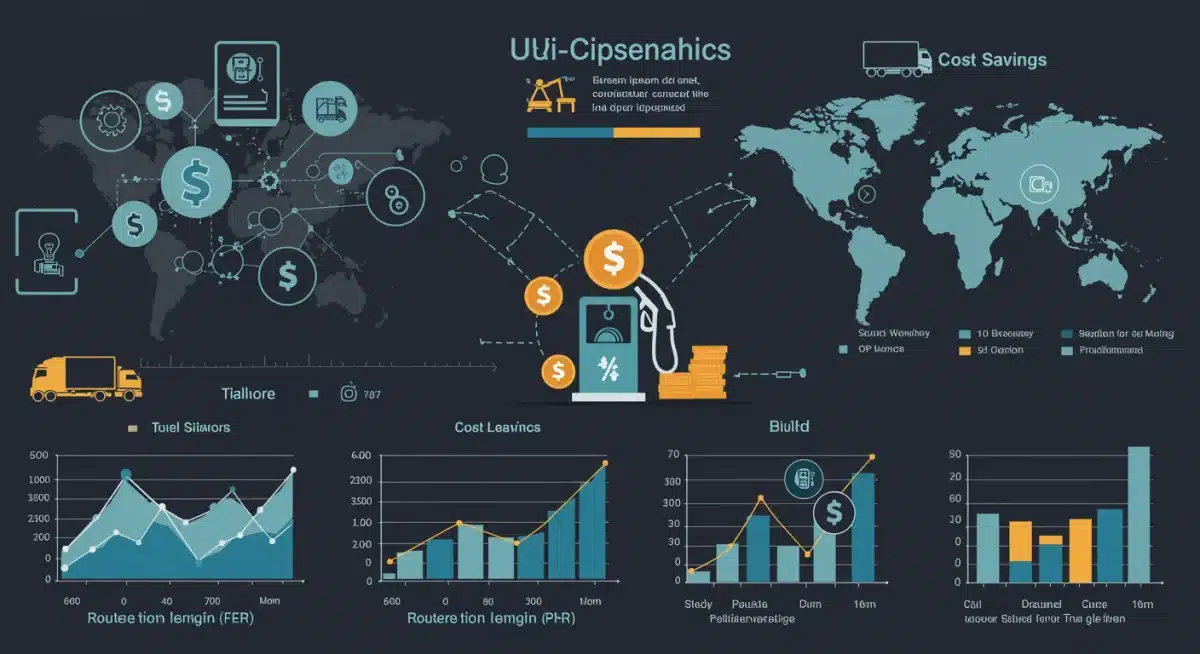

Predictive Maintenance and Extended Vehicle Lifespan
By reducing unnecessary mileage and optimizing driving patterns, AI routing contributes to less wear and tear on vehicles. This allows for more effective predictive maintenance schedules, addressing potential issues before they become major, costly breakdowns.
- Reduced Component Stress: Smoother routes with fewer sudden stops extend brake and tire life.
- Optimized Service Intervals: Data-driven insights suggest the best time for vehicle maintenance.
- Lower Depreciation: Less mileage and better maintenance slow down vehicle depreciation.
Extending the operational lifespan of a vehicle postpones capital outlays for new purchases, representing a significant long-term financial saving. This foresight in maintenance also minimizes unexpected downtime, ensuring that the fleet remains operational and productive.
Ultimately, AI-driven route optimization transforms fleet management from a reactive process into a proactive, data-driven strategy. It ensures that every asset is utilized to its fullest potential, contributing to both operational efficiency and substantial financial savings.
Environmental Impact and Brand Reputation
Beyond the immediate financial gains, AI-driven route optimization offers significant advantages in terms of environmental sustainability and enhancing a company’s brand reputation. In an era where corporate social responsibility (CSR) is increasingly important to consumers and investors, these benefits are becoming just as valuable as direct cost savings.
Reduced fuel consumption and optimized routes directly lead to a smaller carbon footprint, positioning U.S. logistics firms as environmentally conscious leaders.
Reducing Carbon Emissions and Fuel Consumption
Fewer miles driven and more efficient engine operation directly translate to a reduction in greenhouse gas emissions. For logistics companies, this is a powerful narrative to share with stakeholders and customers, aligning with global efforts to combat climate change.
A 10% reduction in fuel consumption is not just a financial metric; it’s also a 10% reduction in carbon emissions, a tangible contribution to a greener planet. This environmental benefit resonates well with a growing segment of the market.
Building a Sustainable and Responsible Brand Image
Companies that publicly commit to and achieve environmental goals through technology like AI route optimization often see a boost in their brand image. Consumers are increasingly favoring businesses that demonstrate a commitment to sustainability.
- Enhanced Public Perception: Position a company as a leader in sustainable logistics.
- Customer Loyalty: Attract and retain environmentally conscious clients.
- Regulatory Compliance: Easier adherence to evolving environmental regulations.
Moreover, a strong sustainability record can also attract top talent, as many professionals prefer to work for companies that align with their values. This creates a virtuous cycle where financial benefits, environmental responsibility, and talent acquisition reinforce each other.
The environmental and reputational benefits of AI-driven route optimization are not merely secondary advantages; they are integral components of a modern, forward-thinking business strategy. They provide a competitive edge that extends beyond pricing, fostering long-term growth and resilience.
Challenges and Implementation Hurdles
While the benefits of AI-driven route optimization are clear, the path to implementation is not without its challenges. U.S. logistics firms considering this technology must be prepared to navigate various hurdles, from initial investment costs to integrating new systems with existing infrastructure.
Addressing these challenges proactively is crucial for a successful transition and for realizing the full financial and operational potential of AI.
Initial Investment and ROI Justification
The upfront cost of implementing AI route optimization software and integrating it into existing systems can be substantial. This includes software licenses, hardware upgrades, data migration, and training for personnel.
Logistics firms need to conduct thorough cost-benefit analyses to clearly articulate the return on investment (ROI). Highlighting the 10% fuel savings and other efficiencies is key to justifying this initial expenditure to stakeholders.
Data Integration and Quality Concerns
AI models are only as good as the data they are fed. Many logistics companies operate with disparate data systems or have data that is not standardized or clean. Integrating this data into a unified platform for AI analysis can be a complex and time-consuming process.
- Legacy System Compatibility: Ensuring new AI systems can communicate with older software.
- Data Standardization: Cleaning and formatting data for AI consumption.
- Real-time Data Feeds: Establishing reliable sources for live traffic, weather, and delivery updates.
Poor data quality can lead to suboptimal routes and undermine the entire optimization effort. Therefore, investing in data infrastructure and data governance is as important as investing in the AI software itself.
Overcoming these challenges requires a strategic approach, a willingness to invest in both technology and talent, and a clear vision for how AI will transform the company’s operations. With careful planning and execution, these hurdles can be successfully navigated, leading to significant long-term gains.
The Future Outlook: Expansion and Evolution of AI in Logistics
The current impact of AI-driven route optimization, while significant, is just the beginning. The future promises even greater integration and more sophisticated applications of artificial intelligence within U.S. logistics, extending its financial and operational benefits across the entire supply chain.
As technology evolves, so too will the capabilities of AI in transforming how goods are transported, delivered, and managed.
Integration with Other AI Technologies
Future AI route optimization will not operate in isolation. It will increasingly integrate with other emerging AI technologies, creating a more comprehensive and intelligent logistics ecosystem.
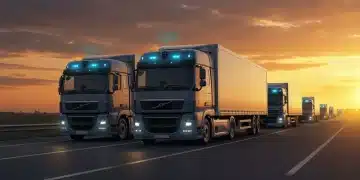
- Autonomous Vehicles: AI routing will be crucial for managing fleets of self-driving trucks.
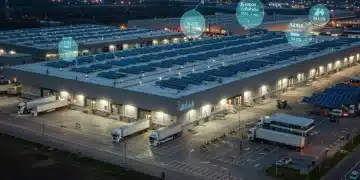
- Warehouse Automation: Seamless coordination between optimized routes and automated loading/unloading.
- Demand Forecasting: AI-powered predictions will inform route planning for future needs.
This convergence of technologies will lead to unprecedented levels of efficiency, where every step of the supply chain is optimized and interconnected, further reducing costs and improving delivery times.
Broader Supply Chain Optimization
The principles of AI-driven optimization will expand beyond just last-mile delivery or inter-city transport. They will be applied to optimize entire supply chain networks, from raw material sourcing to manufacturing and final distribution.
This holistic approach will enable companies to identify bottlenecks, predict disruptions, and create more resilient and agile supply chains. The financial implications of such widespread optimization are enormous, potentially unlocking efficiencies far beyond the current 10% fuel savings.
The evolution of AI in logistics paints a picture of a smarter, more efficient, and more sustainable future. U.S. logistics firms that embrace these advancements will be at the forefront of this transformation, reaping the rewards of innovation and securing a competitive edge for years to come.
| Key Aspect | Description |
|---|---|
| Fuel Savings | U.S. logistics firms can save up to 10% annually on fuel costs through AI optimization. |
| Operational Efficiency | Reduced labor costs, increased deliveries per shift, and minimized vehicle wear and tear. |
| Environmental Impact | Significant reduction in carbon emissions, enhancing corporate social responsibility. |
| Future Growth | Integration with other AI tech and broader supply chain optimization for greater gains. |
Frequently Asked Questions About AI Route Optimization
AI-driven route optimization uses advanced algorithms and machine learning to analyze real-time data, such as traffic and weather, to create the most efficient and cost-effective delivery routes for logistics fleets, reducing travel time and fuel consumption.
U.S. logistics firms can achieve significant fuel savings, typically up to 10% annually. This reduction stems from shorter routes, less idle time, and more consistent driving patterns, directly impacting operational costs and profitability.
Beyond fuel savings, benefits include reduced labor costs due to increased efficiency, lower vehicle maintenance expenses, extended vehicle lifespan, a smaller carbon footprint, and an improved brand reputation for sustainability and reliability.
Implementation challenges include the initial investment costs for software and integration, ensuring compatibility with existing legacy systems, and managing data quality and standardization across various platforms to feed accurate information to the AI models.
By reducing fuel consumption and mileage, AI route optimization significantly lowers greenhouse gas emissions, contributing to a smaller carbon footprint. This enhances a company’s environmental responsibility and supports global sustainability goals.
Conclusion
The profound Financial Impact of AI-Driven Route Optimization: Saving U.S. Logistics Firms Up to 10% on Fuel Annually is undeniable. This technology is not merely an incremental upgrade but a transformative force, reshaping the economic landscape of the logistics sector. By intelligently analyzing complex data and adapting to real-time conditions, AI solutions deliver substantial fuel savings, optimize operational efficiencies, and enhance asset utilization. Furthermore, the environmental benefits and improved brand reputation underscore its holistic value. As U.S. logistics firms continue to navigate an increasingly competitive and cost-sensitive market, embracing AI-driven route optimization will be paramount for sustained growth, profitability, and leadership in the future of transportation.