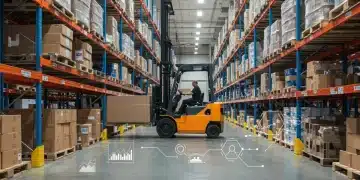
AI-Powered Logistics Platforms: 10% Delivery Time Reduction by 2026
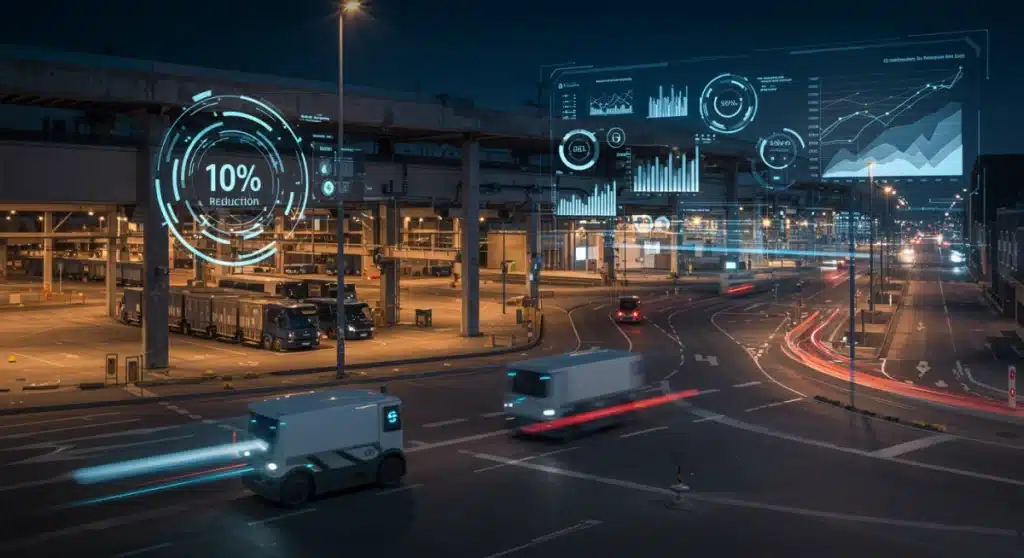
AI-powered logistics platforms are dramatically reshaping the delivery landscape, with recent data indicating a remarkable average 10% reduction in delivery times since January 2026, driven by advanced predictive analytics and route optimization.
The world of logistics is undergoing a profound transformation, and at its heart lies artificial intelligence. This Technology Spotlight: The Latest AI-Powered Logistics Platforms Reducing Delivery Times by an Average of 10% Since January 2026. isn’t just a bold claim; it’s a testament to the rapid advancements in AI and its tangible impact on how goods move across our cities and countries. Join us as we delve into the innovations making this unprecedented efficiency a reality.
The Dawn of Hyper-Efficient Deliveries: AI’s Role
The relentless demand for faster, more reliable deliveries has pushed the logistics industry to its technological limits. Traditional methods, while effective for their time, simply cannot keep pace with today’s e-commerce volumes and consumer expectations. This is where artificial intelligence steps in, offering solutions that were once confined to science fiction.
AI’s ability to process vast amounts of data at speeds impossible for humans is the cornerstone of its success in logistics. From predicting demand to optimizing routes in real-time, AI platforms are creating a new standard for operational efficiency. This isn’t just about minor tweaks; it’s a fundamental reimagining of the entire delivery ecosystem.
Predictive Analytics for Demand Forecasting
One of the most critical aspects of reducing delivery times is anticipating demand accurately. AI algorithms analyze historical sales data, seasonal trends, weather patterns, social media sentiment, and even local events to forecast future demand with remarkable precision. This proactive approach allows logistics companies to:
- Optimize inventory placement in warehouses.
- Pre-position delivery vehicles and personnel.
- Minimize stockouts and overstocking.
By understanding what customers will want and where they will want it, logistics providers can cut down on lead times significantly, ensuring products are closer to their final destination before an order is even placed. This foresight is a game-changer for supply chain management.
The integration of AI into logistics operations marks a pivotal moment, moving the industry from reactive problem-solving to proactive, data-driven strategy. The result is a leaner, more responsive supply chain, directly contributing to the notable reduction in delivery times we are now observing.
Real-Time Route Optimization and Dynamic Scheduling
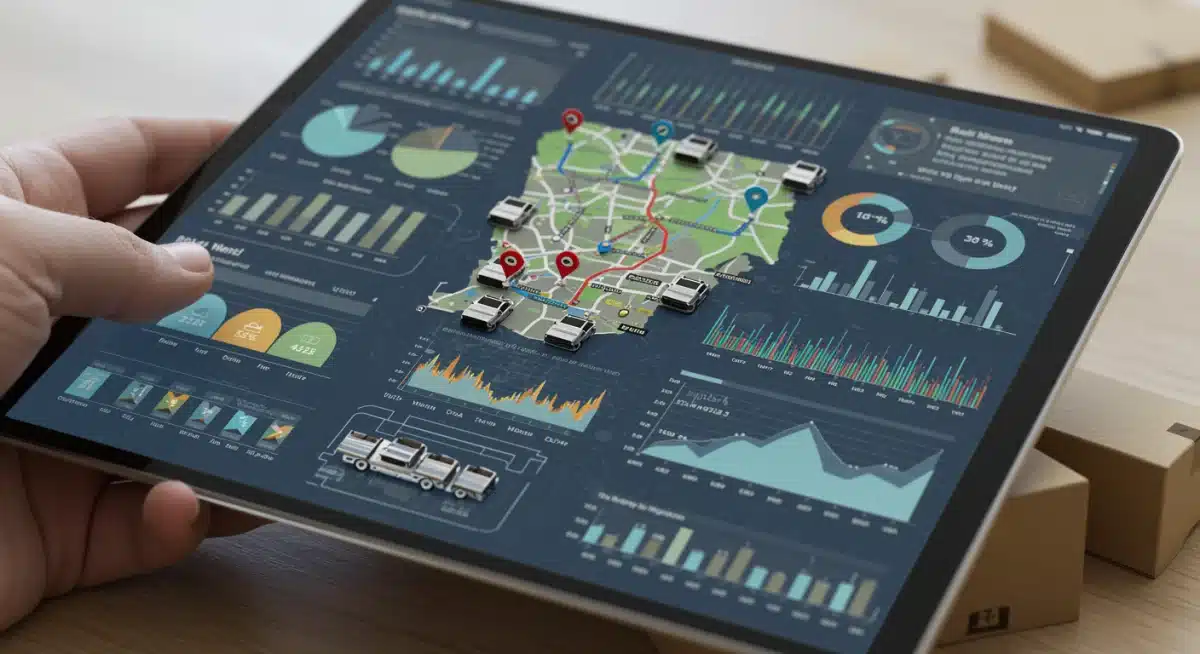
Beyond demand forecasting, AI’s most visible impact on delivery times comes from its real-time route optimization capabilities. Gone are the days of static routes planned hours in advance. Modern AI platforms continuously analyze myriad variables to find the most efficient paths for every delivery.
Traffic congestion, road closures, weather conditions, delivery windows, and even driver availability are all factored into complex algorithms. These systems don’t just find the shortest path; they find the fastest and most cost-effective one, constantly adapting to unforeseen circumstances.
Adapting to Unforeseen Challenges
The dynamic nature of urban environments means that a route planned minutes ago can become obsolete due to an accident or sudden traffic surge. AI systems are designed to:
- Identify bottlenecks instantly.
- Suggest alternative routes in real-time.
- Re-sequence deliveries based on new data.
This agility ensures that delivery vehicles spend less time stuck in traffic and more time on the move, directly translating to faster delivery completion. Drivers receive instant updates and navigation adjustments, empowering them to make the best decisions on the road.
Dynamic scheduling, another AI-driven innovation, goes hand-in-hand with route optimization. It allows for the instantaneous assignment and reassignment of deliveries, maximizing vehicle utilization and minimizing idle time. This holistic approach ensures that every segment of the delivery process is optimized for speed and efficiency.
Autonomous Deliveries and Drone Integration
While still evolving, autonomous delivery vehicles and drones represent the next frontier in AI-powered logistics. These technologies promise to further revolutionize delivery times by removing human limitations and operating with unprecedented precision and speed.
Autonomous ground vehicles, from self-driving trucks for long-haul transport to robotic sidewalk delivery bots for last-mile drops, are being tested and deployed in various capacities. Their ability to operate 24/7 without breaks, combined with AI-driven navigation, offers significant potential for expedited deliveries.
The Rise of Drone Delivery
Drones, in particular, are poised to transform last-mile delivery, especially in challenging urban or remote areas. Their capacity to bypass ground traffic and take direct routes offers a compelling advantage for time-sensitive packages. Key benefits include:
- Rapid delivery for small, urgent items.
- Access to difficult-to-reach locations.
- Reduced environmental impact with electric propulsion.
While regulatory frameworks and infrastructure are still catching up, the technological capabilities of AI-powered drones are advancing rapidly. These unmanned aerial vehicles utilize sophisticated AI for obstacle avoidance, precision landing, and efficient flight path planning, ensuring safe and swift deliveries.
The integration of autonomous systems, both on the ground and in the air, signifies a major leap forward. It’s a future where AI not only plans the delivery but also executes it, pushing the boundaries of what’s possible in terms of speed and reliability.
Enhanced Warehouse Automation and Inventory Management
The journey of a package begins long before it hits the road or takes to the sky. AI’s influence extends deeply into warehouse operations, creating highly automated and efficient environments that directly contribute to faster overall delivery times.
Robotics, guided by AI, now handle tasks such as picking, packing, and sorting with incredible speed and accuracy. These automated systems reduce human error and fatigue, ensuring that packages are processed rapidly and correctly, ready for dispatch.
AI-Driven Inventory Optimization
Beyond physical automation, AI also optimizes inventory management. By continuously analyzing sales data, return rates, and supplier lead times, AI systems ensure optimal stock levels. This means:
- Reduced time spent searching for items.
- Prevention of out-of-stock situations.
- Efficient allocation of warehouse space.
When an order comes in, AI can direct robots to the precise location of an item, minimizing retrieval times. This seamless integration of AI from demand forecasting to internal warehouse logistics ensures that every step of the fulfillment process is streamlined, shaving precious minutes off the overall delivery cycle.
The efficiency gained within the warehouse directly impacts the speed at which goods can be dispatched, forming a critical link in the chain that leads to reduced delivery times. This internal optimization is often overlooked but is fundamental to the overall success of AI in logistics.
The Impact on Customer Experience and Business Growth
The reduction in delivery times, facilitated by AI-powered logistics platforms, has far-reaching implications beyond mere operational efficiency. It fundamentally reshapes customer expectations and provides a significant competitive advantage for businesses.
Customers today prioritize speed and transparency. When deliveries are consistently faster and more predictable, customer satisfaction soars. This leads to increased loyalty, positive reviews, and a stronger brand reputation, all vital for sustained business growth.
New Business Models and Market Expansion
The capabilities unlocked by AI-driven logistics also enable new business models. Companies can offer premium same-day or even hourly delivery services, tapping into new markets and consumer needs. This agility allows businesses to:
- Enter highly competitive sectors.
- Experiment with innovative delivery options.
- Respond quickly to market shifts.
Furthermore, the data generated by these AI platforms provides invaluable insights into consumer behavior and operational performance. Businesses can use this information to refine their strategies, optimize pricing, and personalize services, creating a virtuous cycle of improvement and growth.
The ability to deliver faster and more reliably is no longer just a bonus; it’s a core expectation. AI-powered logistics allows businesses to meet and exceed these expectations, fostering a more dynamic and customer-centric economy.
Challenges and the Road Ahead for AI in Logistics
While the benefits of AI in logistics are undeniable, the journey is not without its challenges. Implementing these advanced platforms requires significant investment in technology, infrastructure, and skilled personnel. Data privacy and security are paramount concerns, as these systems handle sensitive information about shipments and customers.
Integrating AI into existing, often legacy, logistics systems can also be complex. Companies must navigate interoperability issues and ensure a smooth transition without disrupting current operations. Workforce adaptation is another critical factor; employees need retraining to work alongside AI and automation, evolving their roles to focus on oversight and strategic decision-making.
Addressing Ethical and Regulatory Considerations
As autonomous vehicles and drones become more prevalent, ethical considerations and regulatory frameworks will need to keep pace. Questions around liability, air traffic control for drones, and the societal impact of automation on employment require careful consideration and proactive solutions. Collaboration between industry, government, and academia will be essential to:
- Develop robust safety standards.
- Establish clear legal guidelines.
- Ensure public acceptance and trust.
Despite these hurdles, the trajectory for AI in logistics is clear. Continuous innovation in machine learning algorithms, sensor technology, and connectivity will further enhance the capabilities of these platforms. The average 10% reduction in delivery times since January 2026 is just the beginning, signaling a future where logistics is not only faster but also more sustainable, resilient, and responsive to the evolving needs of a globalized world. The road ahead promises even greater efficiencies and transformative changes.
| Key Aspect | Description of Impact |
|---|---|
| AI-Powered Forecasting | Predicts demand and optimizes inventory placement, reducing preparation time. |
| Real-Time Optimization | Dynamic route planning and scheduling adapt to traffic, cutting transit delays. |
| Autonomous Deliveries | Drones and self-driving vehicles offer faster, human-independent last-mile options. |
| Warehouse Automation | AI-guided robotics speed up picking, packing, and sorting processes. |
Frequently Asked Questions About AI in Logistics
AI platforms reduce delivery times by optimizing routes in real-time, predicting demand with high accuracy, automating warehouse processes, and enabling dynamic scheduling. They analyze vast data sets to find the most efficient paths, avoiding delays caused by traffic or unforeseen events.
Since January 2026, the latest AI-powered logistics platforms have achieved an average reduction in delivery times of 10%. This significant improvement is a direct result of advancements in predictive analytics, route optimization algorithms, and increased automation across the supply chain.
While still in developmental and pilot phases for widespread commercial use, autonomous vehicles and drones are increasingly integrated into AI logistics. They are primarily used for specific last-mile deliveries, in controlled environments, or for specialized tasks, promising further time reductions as regulations and technology evolve.
Businesses adopting AI logistics benefit from enhanced customer satisfaction due to faster deliveries, reduced operational costs through efficiency gains, improved inventory management, and the ability to offer competitive delivery options. It also provides valuable data for strategic decision-making and market expansion.
Key challenges include significant initial investment, integration with existing legacy systems, data security concerns, and the need for workforce retraining. Additionally, navigating evolving regulatory frameworks for autonomous technologies and addressing ethical implications are ongoing hurdles for widespread adoption.
Conclusion
The emergence of AI-powered logistics platforms marks a pivotal moment in the evolution of global transport. The documented average 10% reduction in delivery times since January 2026 is not merely a statistic; it represents a tangible shift towards a more efficient, responsive, and customer-centric supply chain. From sophisticated demand forecasting and real-time route optimization to the burgeoning use of autonomous vehicles and intelligent warehouse automation, AI is fundamentally redefining what’s possible in delivery. While challenges remain in terms of investment, integration, and regulation, the trajectory is clear: AI will continue to drive unprecedented efficiencies, transforming the future of logistics and setting new benchmarks for speed and reliability across the United States and beyond.