5G-enabled public safety networks: transforming emergency response
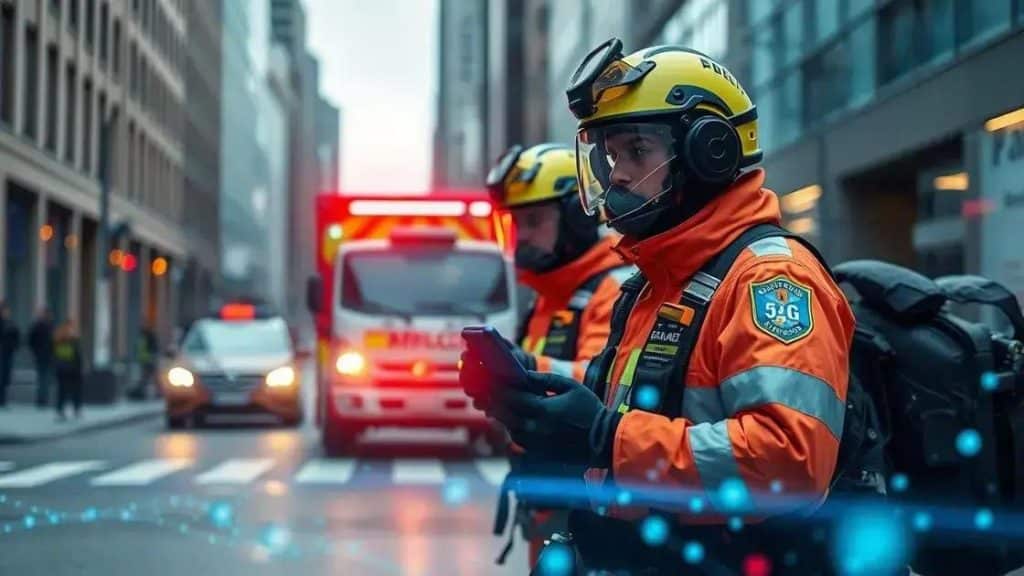
5G-enabled public safety networks enhance emergency response by providing high-speed connectivity, real-time data sharing, and improved situational awareness, while also posing challenges in infrastructure and data security.
5G-enabled public safety networks are set to change the landscape of emergency response. Imagine a world where connectivity enhances the efficiency and speed at which first responders can act—curious about how this technology will shape the future of safety?
Understanding 5G-enabled public safety networks
Understanding 5G-enabled public safety networks involves exploring how this cutting-edge technology supports emergency services. With the ability to transmit data more quickly and reliably, 5G impacts various aspects of public safety.
Key Features of 5G Networks
5G technology introduces several features that enhance public safety networks:
- High-speed connectivity: Ensures rapid data transfer, allowing for instant communication between devices.
- Low latency: Enables real-time responses, essential for life-saving operations.
- Massive device connectivity: Supports a greater number of devices simultaneously, essential for large-scale emergency situations.
This improved connectivity allows emergency responders to access real-time data and share it instantly. Imagine a first responder using streaming video footage from a drone to assess a situation before arriving on the scene. Such capabilities can drastically improve decision-making.
Benefits for Emergency Services
The integration of 5G into public safety has multiple benefits:
- Enhanced situational awareness: Provides comprehensive data for informed choices during crises.
- Improved coordination: Emergency teams can communicate seamlessly, which is vital during disasters.
- Support for smart city initiatives: Integrating sensors and devices into a cohesive network supports public safety assets.
As 5G continues to develop, it will offer even more opportunities for innovation in public safety. Emergency services can implement augmented reality training for responders, allowing them to prepare for various scenarios safely and effectively.
In light of these advancements, understanding how 5G-enabled public safety networks function is crucial. By leveraging new technologies, agencies can optimize their operations while ensuring enhanced public safety.
Key technologies powering public safety enhancements
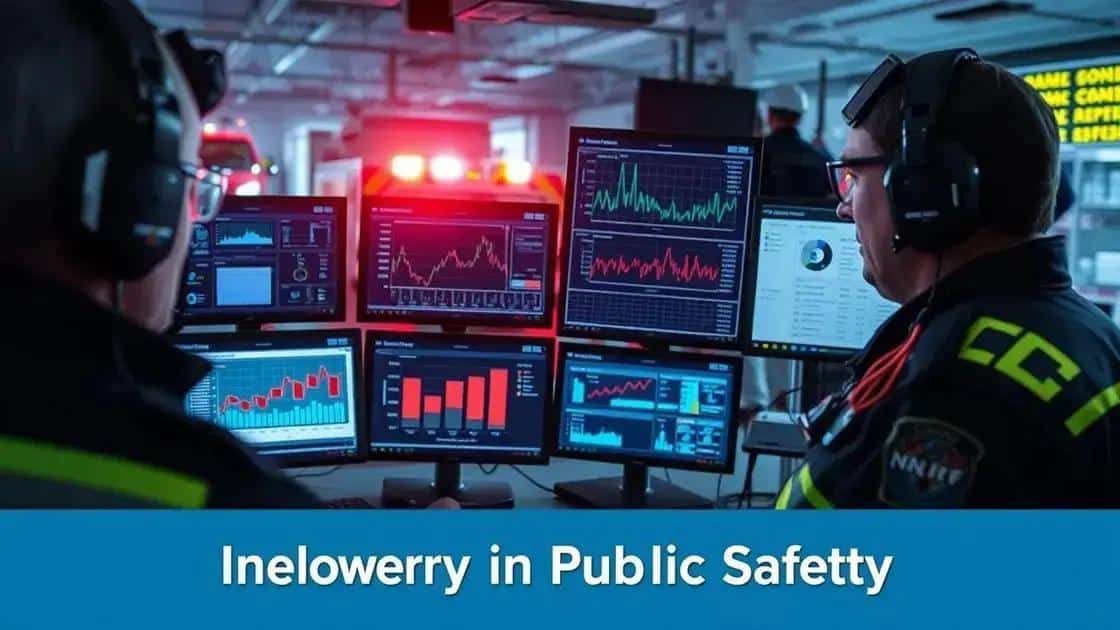
Key technologies powering public safety enhancements are crucial for the effective operation of emergency services. Various innovations enable responders to perform their tasks more efficiently, ensuring community safety.
Advanced Communication Tools
Modern-day emergency services rely heavily on communication tools that allow for instant contact. This technology includes:
- Push-to-talk devices: These allow immediate connection among first responders.
- Satellite communications: They ensure connectivity, even in remote areas.
- Mobile apps: Many agencies use apps for real-time alerts and updates.
This connectivity allows responders to collaborate better, sharing vital information on the go. Imagine a situation where a police officer can send a live video feed of an incident to a dispatcher.
Data Analytics and AI
Another significant advancement is the use of data analytics and artificial intelligence (AI) in public safety. These technologies can:
- Predict criminal activities: By analyzing historical data, agencies can forecast where crimes are likely to occur.
- Optimize resource allocation: AI can help determine where resources will be needed most during emergencies.
- Enhance situational awareness: Providing a comprehensive overview during critical incidents.
The combination of data and AI allows agencies to anticipate problems before they escalate. Such foresight can greatly reduce response times.
Integrating these technologies has transformed public safety approaches. 5G-enabled public safety networks leverage these advancements to create a more efficient and responsive emergency service framework, ensuring communities remain safe.
Real-world applications of 5G in emergency services
Real-world applications of 5G in emergency services showcase how this technology enhances safety and efficiency in responding to crises. As agencies adopt 5G, various groundbreaking applications emerge.
Live Video Streaming
One significant application is live video streaming. First responders can transmit high-quality video from the field, which allows dispatchers and command centers to assess situations in real time. This not only improves decision-making but also enhances coordination among teams.
Connected Drones
Drones, equipped with 5G connectivity, play a vital role in emergency operations. They can:
- Survey disaster areas: Providing critical information post-natural disasters.
- Deliver supplies: Transporting medical supplies or equipment to remote locations swiftly.
- Support search and rescue missions: Offering aerial views to locate missing persons.
Such capabilities can make a huge difference in time-sensitive situations.
Smart Sensors
5G also facilitates the use of smart sensors in urban environments. These sensors can monitor:
- Traffic patterns: Helping to optimize the routes of emergency vehicles.
- Environmental changes: Detecting hazards like gas leaks or fires early on.
- Crowd movements: Assisting in managing large gatherings during emergencies.
The integration of these sensors creates a safer environment for communities. By leveraging data collected from different sources, emergency services can respond more effectively and proactively.
Ultimately, the shift to 5G is not just about faster internet; it’s about revolutionizing how emergency services operate. With real-world applications making a tangible impact, the future of public safety looks promising.
Challenges and considerations for implementation
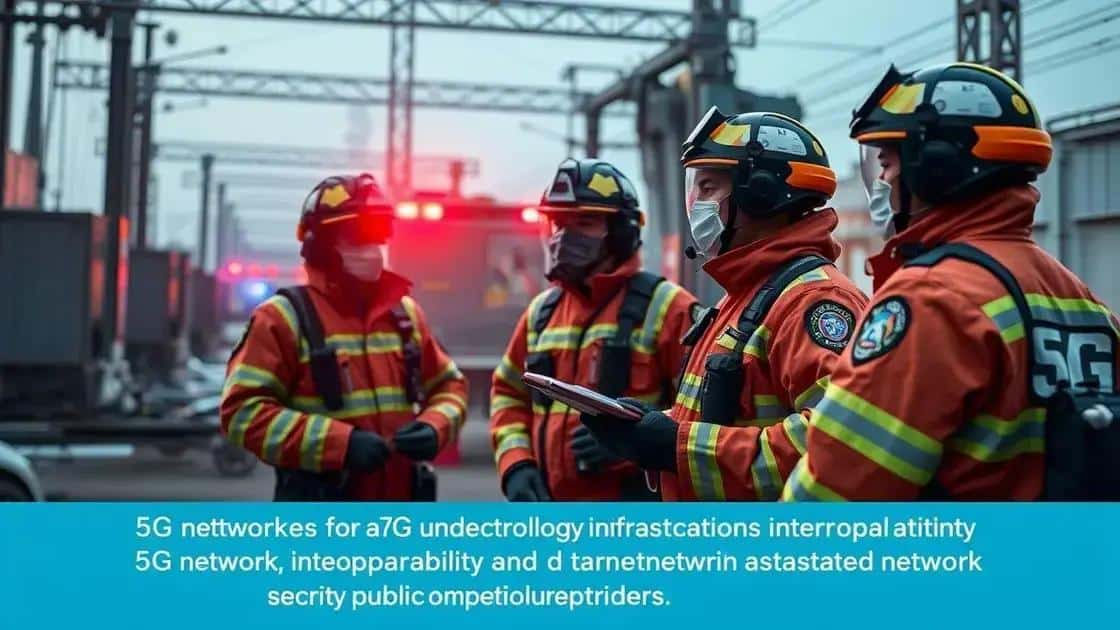
Challenges and considerations for implementation of 5G-enabled public safety networks are vital to understand for successful deployment. While the technology offers significant benefits, there are obstacles that agencies must address.
Infrastructure Development
One major challenge is the need for robust infrastructure. Installing 5G networks requires new cell towers and equipment, which can be costly and time-consuming. Agencies must secure funding and plan the rollout carefully.
Interoperability
Another critical factor is interoperability. Different departments often use various communication systems. For successful integration, these systems must be able to communicate effectively with each other. This can involve:
- Significant software updates: Ensuring compatibility across platforms.
- Training personnel: Educating responders on how to use new technology and systems.
- Standardizing equipment: Using the same technology across agencies to streamline communication.
The complexity of aligning varying technologies can lead to delays and frustrations among teams.
Data Security and Privacy
With enhanced connectivity comes increased risk. As agencies adopt 5G technology, they must consider data security. This includes:
- Protecting sensitive information: Ensuring that personal data remains confidential.
- Mitigating cyber threats: Instituting strong cybersecurity measures to protect networks.
- Establishing protocols: Creating guidelines for data sharing and access permissions.
Addressing these challenges is crucial for maintaining public trust. As agencies navigate these issues, they must also balance operational efficiency with the need for security measures.
By recognizing these challenges, public safety organizations can develop strategies to implement 5G solutions effectively. Through careful planning and collaboration, they can leverage 5G technology to enhance public safety services while overcoming potential obstacles.
5G-enabled public safety networks present an exciting opportunity to transform how emergency services operate. While many benefits exist, such as improved communication and faster response times, challenges like infrastructure needs and data security must be addressed. By understanding these aspects, agencies can implement 5G technology successfully, ultimately enhancing public safety and building stronger communities.
FAQ – Frequently Asked Questions about 5G-enabled Public Safety Networks
What are 5G-enabled public safety networks?
These are advanced communications systems that utilize 5G technology to improve emergency response capabilities and public safety.
How does 5G improve emergency response times?
5G offers high-speed connectivity and low latency, allowing responders to communicate and share data in real time, leading to faster decision-making.
What are some real-world applications of 5G in emergency services?
Live video streaming, connected drones for surveillance, and smart sensors for monitoring are just a few applications enhancing public safety.
What challenges do agencies face in implementing 5G networks?
Challenges include the need for new infrastructure, interoperability of existing systems, and ensuring data security and privacy.