
Navigating the Future: Policy and Regulatory Shifts for Autonomous Electric Vehicles in the US for 2026
The convergence of autonomous driving technology and electric vehicle (EV) propulsion is rapidly reshaping the transportation landscape. As we approach 2026, businesses operating within or looking to enter the US market for autonomous electric vehicles (AEVs) face an intricate web of evolving policies and regulations. Understanding these shifts is not merely about compliance; it’s about strategic positioning, risk mitigation, and unlocking new opportunities. This comprehensive guide delves into the crucial aspects businesses need to know to ensure they are prepared for the regulatory environment of 2026.
The Evolving Landscape of Autonomous EV Regulations
The journey towards widespread adoption of autonomous electric vehicles is paved with technological innovation, but equally defined by the legal and regulatory frameworks designed to ensure public safety, define liability, and foster innovation responsibly. The United States, with its complex interplay of federal and state jurisdictions, presents a unique challenge and opportunity for businesses in this sector. Recent legislative updates, particularly those over the past three months, signal a heightened focus on standardizing safety protocols, addressing cybersecurity concerns, and clarifying operational guidelines for AEVs.
For businesses, staying abreast of these developments is paramount. The absence of a single, overarching federal law for autonomous vehicles has historically led to a patchwork of state-level regulations, creating complexities for companies seeking to deploy AEVs across state lines. However, recent movements indicate a push towards greater harmonization, driven by industry demand and the recognition of the economic and societal benefits of a more unified approach to Autonomous EV Regulations.
Federal Initiatives and Their Impact on Autonomous EV Regulations
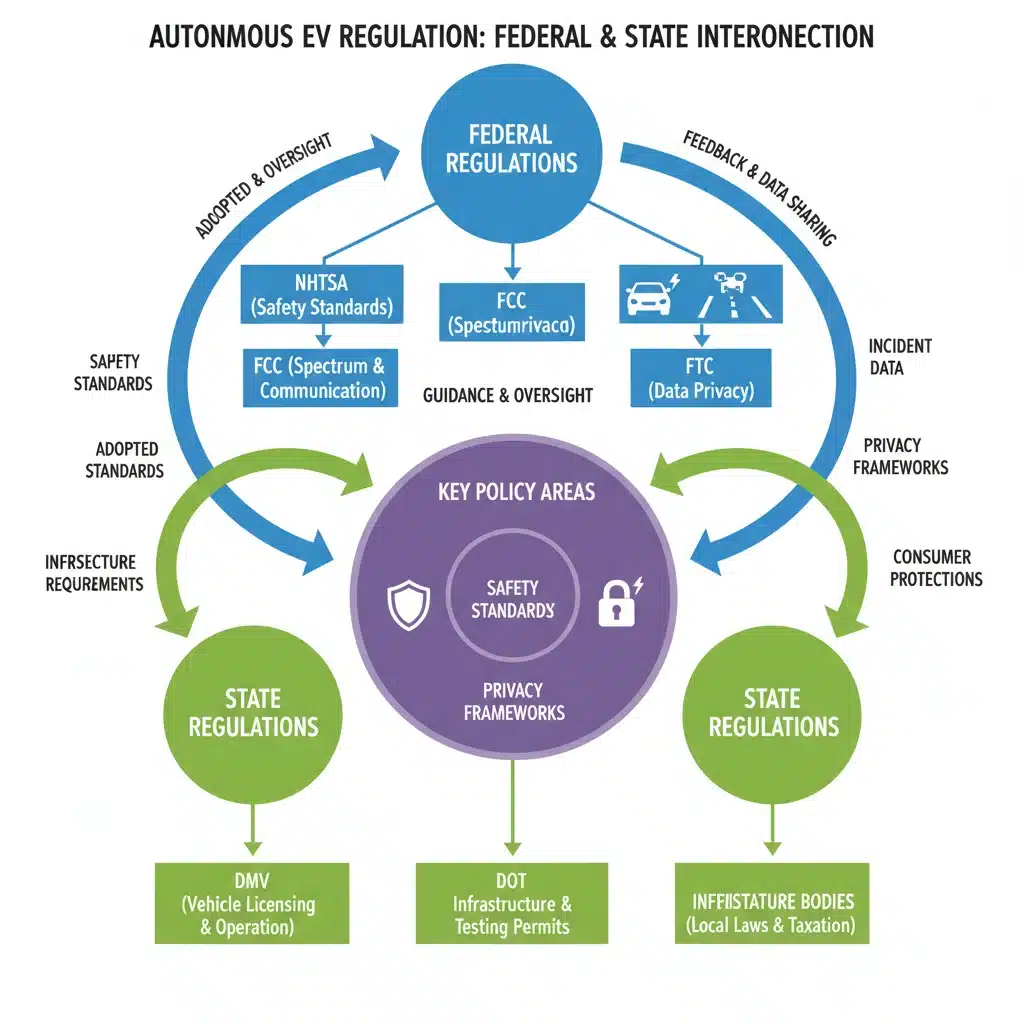
At the federal level, agencies like the National Highway Traffic Safety Administration (NHTSA) and the Department of Transportation (DOT) play pivotal roles. NHTSA is primarily responsible for vehicle safety standards, while the DOT oversees broader transportation policy. In recent months, NHTSA has continued to refine its approach to automated driving systems (ADS), moving towards performance-based safety standards rather than prescriptive design requirements. This shift is significant because it allows for greater flexibility in innovation while still holding manufacturers accountable for the safe operation of their vehicles.
Key federal actions and proposals include:
- Updated Safety Assessment Letters (SALs): NHTSA has been encouraging manufacturers to submit voluntary safety assessment letters, detailing how their ADS technologies meet existing safety principles. While voluntary, these submissions set a precedent for best practices and provide a framework for future mandatory reporting.
- Cybersecurity Guidelines: With AEVs being highly connected, cybersecurity is a critical concern. The DOT and other federal agencies have been collaborating on developing robust cybersecurity frameworks to protect AEVs from external threats and ensure data integrity. Businesses must integrate these guidelines into their vehicle design and operational protocols.
- Federal Automated Vehicles Policy (FAVP) Evolution: The FAVP, first introduced in 2016, continues to be updated. The ongoing revisions aim to provide a clearer roadmap for the development and deployment of AEVs, addressing issues such as testing, deployment, and post-crash data reporting. These updates are crucial for businesses to understand the federal government’s long-term vision for autonomous mobility and how it will influence future Autonomous EV Regulations.
These federal efforts, while sometimes incremental, are laying the groundwork for a more standardized and predictable regulatory environment. Businesses that proactively engage with these guidelines and participate in relevant industry forums will be better positioned to influence future policy and adapt to changes.
State-Level Divergence and Convergence
While federal agencies work on national frameworks, states continue to be laboratories for autonomous vehicle policy. Some states have adopted highly permissive laws, encouraging testing and deployment, while others have taken a more cautious approach. However, there’s a growing trend towards convergence, as states recognize the need for interoperability and the economic benefits of attracting AEV companies.
Recent state-level developments impacting Autonomous EV Regulations include:
- Permitting and Licensing: Many states are refining their permitting processes for AEV testing and deployment, often requiring specific insurance coverages, data reporting, and human operator presence (at least for initial phases). Businesses need to meticulously research and comply with the specific requirements of each state in which they plan to operate.
- Liability Frameworks: A critical area of development is liability. Who is responsible in the event of an accident involving an AEV? States are grappling with this question, considering frameworks that assign liability to the manufacturer, the operator, or a combination thereof. Understanding these evolving liability laws is crucial for risk management and insurance planning.
- Infrastructure Adaptation: Some states are also beginning to consider the infrastructure needs of AEVs, including dedicated lanes, smart road technology, and charging infrastructure for electric vehicles. While not direct regulations on AEVs themselves, these infrastructure developments can significantly impact operational efficiency and deployment strategies.
Businesses must adopt a multi-jurisdictional compliance strategy, understanding that a solution compliant in one state may not be in another. This requires dedicated legal and regulatory teams or partnerships with specialized consultants.
Key Areas of Focus for Businesses in 2026
As 2026 approaches, businesses must prioritize several key areas to ensure compliance and maximize efficiency in the face of evolving Autonomous EV Regulations.
Safety Standards and Performance Metrics
Safety remains the paramount concern for regulators and the public. Businesses developing or deploying AEVs must demonstrate an unwavering commitment to safety. This involves:
- Robust Testing Protocols: Implementing rigorous testing, both virtual and real-world, to validate the safety and reliability of ADS. This includes testing in diverse environments and under various conditions.
- Transparency in Reporting: Being transparent with regulators about safety incidents, near misses, and system performance data. This builds trust and helps inform future policy development.
- Adherence to Industry Best Practices: Beyond regulatory mandates, businesses should adopt industry best practices for safety, often developed by consortiums like SAE International, which provide valuable guidelines for ADS design and validation.
The push for performance-based standards means that simply meeting a checklist won’t suffice; companies must demonstrate that their AEVs operate safely in a wide range of scenarios. This requires continuous monitoring, data analysis, and iterative improvements to the ADS.
Data Privacy and Cybersecurity
Autonomous electric vehicles generate vast amounts of data, from sensor readings to passenger information. This data is invaluable but also poses significant privacy and cybersecurity risks. Regulators are increasingly scrutinizing how this data is collected, stored, used, and protected.
- Compliance with Privacy Laws: Businesses must comply with existing data privacy laws (e.g., CCPA, GDPR if applicable to global operations) and anticipate new regulations specifically targeting AEV data. This includes obtaining explicit consent for data collection, anonymizing data where possible, and providing users with control over their personal information.
- Implementing Robust Cybersecurity Measures: Protecting AEVs from cyberattacks is critical. This involves secure software development lifecycles, over-the-air (OTA) update security, intrusion detection systems, and regular vulnerability assessments. A single security breach could have devastating consequences, both for public safety and corporate reputation.
- Data Governance Policies: Establishing clear data governance policies that define who has access to AEV data, for what purpose, and under what conditions. This is essential for maintaining trust and demonstrating responsible data stewardship in the context of Autonomous EV Regulations.
The proactive implementation of strong data privacy and cybersecurity measures will not only ensure compliance but also build consumer confidence, which is vital for the long-term success of AEV technologies.

Liability and Insurance Frameworks
The question of liability in AEV accidents remains a complex and evolving area. Traditional liability models, which typically assign fault to a human driver, are often inadequate for situations involving autonomous systems. Businesses must therefore prepare for new liability frameworks.
- Understanding State-Specific Liability Laws: As mentioned, states are developing their own approaches to AEV liability. Businesses need to understand these nuances and how they might impact their operations.
- Adequate Insurance Coverage: Securing comprehensive insurance policies that specifically address AEV-related risks, including product liability for the ADS, operational liability, and cybersecurity insurance. The insurance market for AEVs is maturing, but specialized coverage is still developing.
- Data for Accident Reconstruction: Ensuring that AEVs are equipped to collect and store relevant data for accident reconstruction. This data will be crucial for determining fault and resolving claims efficiently.
The clarity around liability will significantly influence the pace of AEV deployment. Businesses that actively contribute to the development of fair and effective liability frameworks will benefit in the long run.
Ethical Considerations and Public Acceptance
Beyond legal and technical compliance, ethical considerations and public acceptance are critical for the successful integration of AEVs. Regulators are increasingly taking these factors into account when formulating policies.
- Ethical AI Design: Designing ADS with ethical principles in mind, particularly concerning decision-making in unavoidable accident scenarios (e.g., the ‘trolley problem’). While regulators are not yet dictating specific ethical algorithms, the broader societal expectation for ethical AI is growing.
- Transparency and Education: Educating the public about AEV capabilities, limitations, and safety features. Addressing public concerns and misconceptions can foster greater trust and acceptance, which can, in turn, influence policy.
- Accessibility and Equity: Considering how AEVs can enhance accessibility for diverse populations and contribute to equitable transportation solutions. Regulators may increasingly look for AEV deployments to address societal needs.
Businesses that demonstrate a commitment to ethical deployment and actively engage with public concerns will be viewed more favorably by both consumers and policymakers.
Maximizing Efficiency Through Proactive Compliance
Compliance with Autonomous EV Regulations should not be viewed as a burden, but rather as an opportunity to build a more robust, efficient, and trustworthy operation. Proactive compliance can lead to several competitive advantages:
Streamlined Operations and Reduced Risk
By integrating regulatory requirements into the design and operational phases from the outset, businesses can avoid costly retrofits and delays. A well-defined compliance strategy helps to identify and mitigate risks early, reducing the likelihood of fines, legal challenges, and reputational damage. This proactive approach ensures smoother deployment and operation of AEV fleets.
Enhanced Innovation and Market Access
While regulations might seem restrictive, they often provide a clear framework within which innovation can flourish. By understanding the boundaries and expectations, companies can focus their R&D efforts more effectively. Furthermore, demonstrating a strong commitment to compliance can accelerate regulatory approvals and open doors to new markets and partnerships, as regulators and potential partners will have greater confidence in the company’s products and practices.
Building Trust and Brand Reputation
In a nascent industry like autonomous vehicles, trust is currency. Companies that are transparent about their safety protocols, adhere strictly to data privacy laws, and navigate the regulatory landscape responsibly will build a stronger brand reputation. This trust will be a significant differentiator in attracting customers, investors, and top talent, ultimately contributing to long-term success and market leadership in the AEV sector.
Recent Legislative Updates (Past 3 Months)
While the pace of legislative change can vary, the past three months have seen several notable developments that businesses should be aware of:
- NHTSA’s Renewed Emphasis on Data Collection: There’s been a clear signal from NHTSA that it will be increasing its demands for data from companies testing and deploying AEVs. This includes more detailed reporting on disengagements, crashes, and operational design domain (ODD) limitations. Businesses should prepare for more stringent data submission requirements and ensure their data collection systems are robust and standardized.
- State-Level Pilot Programs for Commercial AEVs: Several states have either initiated or expanded pilot programs for commercial autonomous electric vehicles, particularly in logistics and delivery sectors. These programs often come with specific operational restrictions and reporting mandates but offer valuable opportunities for businesses to gain real-world operating experience and influence future state-level Autonomous EV Regulations.
- Discussions on Federal Preemption: While not yet concrete legislation, there have been renewed discussions in Congress regarding the possibility of federal preemption over state laws for certain aspects of AEV regulation, particularly concerning safety standards. This could significantly simplify the regulatory landscape if enacted, but businesses should monitor these discussions closely as the outcome remains uncertain.
- Focus on Charging Infrastructure Standards: With the ‘electric’ component of AEVs, recent legislative discussions have also touched upon standardizing EV charging infrastructure. While not directly about autonomous driving, consistent charging standards are crucial for the efficient operation and scalability of AEV fleets. Businesses involved in AEV deployment should ensure their vehicles are compatible with evolving charging standards.
- Cybersecurity Advisory Updates: The Department of Homeland Security (DHS) and other agencies have issued updated advisories related to critical infrastructure cybersecurity, which increasingly includes transportation systems. AEV operators are being encouraged to review and implement enhanced cybersecurity protocols to protect against evolving threats.
These recent updates underscore the dynamic nature of the regulatory environment. Businesses must maintain agile compliance frameworks that can rapidly adapt to new requirements and leverage emerging opportunities.
Preparing for 2026 and Beyond
The journey to fully integrate autonomous electric vehicles into daily life is ongoing, and 2026 represents a significant milestone in this evolution. For businesses, preparation involves more than just reacting to new laws; it requires a forward-looking strategy that anticipates regulatory trends and actively shapes the future of mobility.
Strategic Partnerships and Collaboration
No single entity can navigate this complex landscape alone. Businesses should consider forming strategic partnerships with:
- Technology Providers: Collaborating with companies specializing in sensor technology, AI, and cybersecurity can enhance the safety and reliability of AEVs.
- Academic Institutions: Partnering with universities for research and development can help address complex technical and ethical challenges.
- Government Agencies and Industry Associations: Engaging with regulators and industry groups allows businesses to stay informed, share insights, and advocate for practical and effective Autonomous EV Regulations.
These collaborations foster a shared understanding of challenges and opportunities, leading to more robust solutions and a more harmonized regulatory environment.
Investment in Talent and Training
The complexity of AEV technology and its regulatory framework demands a highly skilled workforce. Businesses need to invest in:
- Specialized Engineering Talent: Hiring and training engineers with expertise in autonomous systems, AI, robotics, and electrical engineering.
- Regulatory Compliance Experts: Building internal teams or engaging external consultants with deep knowledge of automotive law, transportation policy, and data privacy.
- Cybersecurity Professionals: Ensuring a strong cybersecurity posture requires dedicated experts who can continuously monitor, detect, and respond to threats.
A well-trained and knowledgeable team is an invaluable asset in navigating the rapidly changing landscape of Autonomous EV Regulations.
Flexible Business Models and Scalability
The AEV market is still in its early stages, and business models will continue to evolve. Companies should adopt flexible strategies that can adapt to technological advancements, market demands, and regulatory shifts. Scalability is also key; solutions developed for pilot programs must be designed with an eye towards broader deployment, ensuring they can meet future regulatory demands at scale.
This includes:
- Modular System Architectures: Designing AEV systems with modularity allows for easier updates and compliance with new standards without a complete overhaul.
- Cloud-Based Data Management: Utilizing scalable cloud solutions for data storage and processing, which can handle the vast amounts of data generated by AEVs and facilitate regulatory reporting.
- Adaptive Operational Strategies: Developing operational plans that can be easily modified to accommodate changes in local ordinances, road conditions, or technological upgrades.
By embracing adaptability, businesses can remain competitive and resilient in the face of future challenges and opportunities presented by evolving Autonomous EV Regulations.
Conclusion
The landscape of policy and regulatory shifts for autonomous electric vehicles in the US for 2026 is complex, dynamic, and full of both challenges and immense potential. For businesses, success in this transformative era hinges on a proactive, informed, and strategic approach to compliance. By meticulously addressing safety standards, data privacy, cybersecurity, liability, and ethical considerations, and by staying attuned to recent legislative updates, companies can not only meet regulatory mandates but also unlock efficiencies, build trust, and establish themselves as leaders in the future of mobility.
The path forward requires continuous monitoring, collaboration, and a commitment to responsible innovation. Businesses that embrace these principles will be well-positioned to thrive in the exciting, autonomous, and electric future of transportation, ensuring compliance and maximizing efficiency in the evolving world of Autonomous EV Regulations.