2025 Infrastructure Bill: U.S. Logistics & Smart Highways
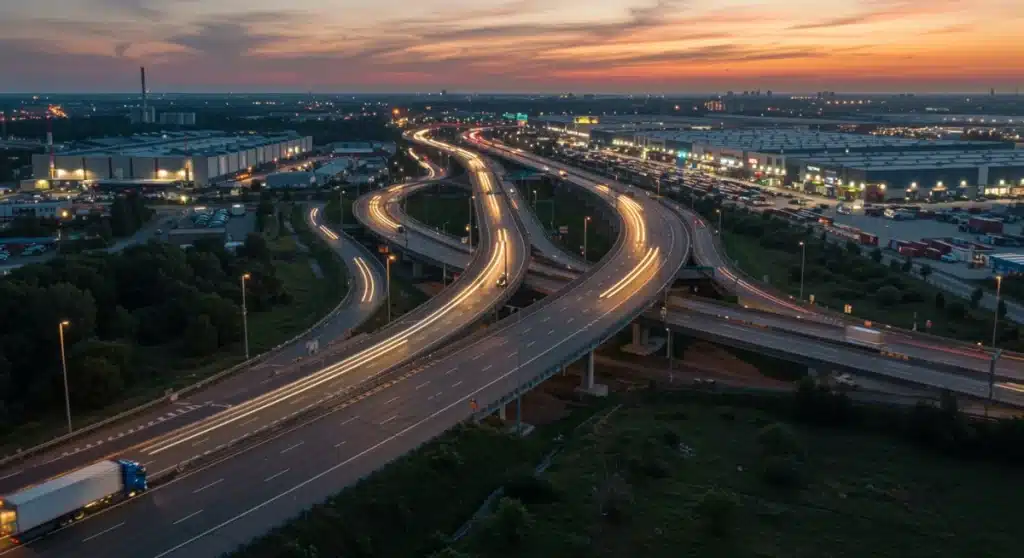
The 2025 Infrastructure Bill is poised to revolutionize U.S. logistics by allocating 15% increased funding to smart highway development, promising enhanced efficiency and sustainability across the national supply chain.
The landscape of transportation and commerce in the United States is constantly evolving, driven by technological advancements and shifting economic demands. A significant catalyst for change is the impending 2025 Infrastructure Logistics Bill, a landmark piece of legislation promising to inject substantial funding into the nation’s transportation networks. This bill is not just about repairing old roads; it’s a strategic investment, particularly with its 15% increase in funding for smart highways, designed to fundamentally reshape U.S. logistics. What does this mean for businesses, consumers, and the future of supply chains across the country?
Understanding the 2025 Infrastructure Bill’s Core
The 2025 Infrastructure Bill represents a monumental commitment from the federal government to modernize America’s foundational systems. Beyond traditional road and bridge maintenance, a significant portion of its budget is earmarked for innovative projects, specifically targeting the integration of advanced technologies into transportation. This forward-thinking approach aims to address long-standing inefficiencies and prepare the U.S. for future economic and environmental challenges.
At its heart, the bill seeks to foster economic growth by creating a more robust and resilient supply chain. By improving the speed and reliability of goods movement, it supports industries ranging from manufacturing to retail. The focus on smart infrastructure ensures that these investments are not just about immediate fixes but about building a sustainable and technologically advanced future for the nation’s logistics network.
Key Pillars of the Legislation
The bill is structured around several critical areas, each designed to enhance different facets of the national infrastructure. While roads and bridges remain a priority, the emphasis on digital integration sets this bill apart from previous initiatives.
- Digital Connectivity: Expanding broadband access along transportation corridors to support smart infrastructure.
- Sustainable Materials: Promoting the use of eco-friendly materials in construction and maintenance.
- Workforce Development: Investing in training programs for new infrastructure technologies.
- Resilience Planning: Incorporating climate change considerations into infrastructure design.
Ultimately, the 2025 Infrastructure Bill is more than just a financial allocation; it’s a strategic blueprint for a more connected, efficient, and future-ready America. Its impact will be felt across various sectors, with logistics standing out as a primary beneficiary of these transformative changes.
The Rise of Smart Highways: A 15% Funding Boost
One of the most exciting and impactful provisions of the 2025 Infrastructure Bill is the 15% increase in funding specifically allocated to smart highways. This substantial investment signals a clear shift towards intelligent transportation systems (ITS) that leverage technology to improve safety, reduce congestion, and optimize traffic flow. Smart highways are not merely roads; they are complex networks of sensors, communication devices, and data analysis tools designed to create a more dynamic and responsive transportation environment.
This funding boost will accelerate the deployment of technologies that were once considered futuristic. From real-time traffic management systems to vehicle-to-infrastructure (V2I) communication, these advancements will fundamentally alter how goods are transported across the country. The anticipated benefits include significant reductions in travel times, fuel consumption, and accident rates, all of which directly impact the efficiency and cost-effectiveness of logistics operations.
Technologies Driving Smart Highways
The concept of a smart highway encompasses a range of sophisticated technologies working in concert. These innovations are designed to collect and disseminate information, allowing for proactive management of road conditions and traffic patterns.
- Embedded Sensors: Devices that monitor traffic volume, speed, weight, and even road surface conditions.
- Dynamic Message Signs: Digital displays that provide real-time information on traffic, weather, and incidents.
- V2I Communication: Systems that allow vehicles to communicate with roadside infrastructure for safety and efficiency.
- Advanced Traffic Management Systems (ATMS): Centralized platforms that analyze data to optimize signal timing and route guidance.
The enhanced funding for smart highways is a game-changer for U.S. logistics. It paves the way for a more intelligent, safer, and ultimately more productive transportation network, setting a new standard for infrastructure development nationwide.
Impact on U.S. Logistics Operations
The implications of the 2025 Infrastructure Bill, especially with its focus on smart highways, for U.S. logistics operations are profound and far-reaching. Businesses engaged in freight transportation will experience direct benefits through improved efficiency, predictability, and reduced operational costs. The enhanced infrastructure will alleviate many of the bottlenecks that currently plague supply chains, leading to more streamlined and reliable delivery schedules.
Imagine a scenario where trucks can navigate routes with real-time congestion data, avoiding delays and optimizing fuel consumption. This is the promise of smart highways. Furthermore, the integration of V2I communication can facilitate platooning – where trucks travel in close convoys, reducing aerodynamic drag and improving fuel efficiency – and ultimately pave the way for more widespread autonomous vehicle deployment in commercial logistics.
Efficiency and Cost Savings
The direct correlation between improved infrastructure and operational efficiency cannot be overstated. For logistics companies, time is money, and smart highways are designed to save both.
- Reduced Transit Times: Faster movement of goods due to less congestion and optimized routes.
- Lower Fuel Costs: Improved traffic flow and potential for platooning lead to significant fuel savings.
- Enhanced Predictability: Real-time data allows for more accurate delivery estimates and better planning.
- Decreased Maintenance: Smoother roads and better managed traffic can reduce wear and tear on vehicles.
These improvements translate directly into a more competitive and robust U.S. logistics sector, benefiting businesses of all sizes and ultimately the end consumer through more efficient and potentially lower-cost goods.

Enhanced Safety and Sustainability in Freight Transport
Beyond efficiency, the 2025 Infrastructure Bill’s investment in smart highways also brings significant advancements in safety and environmental sustainability for U.S. logistics. Intelligent transportation systems are inherently designed to mitigate risks associated with human error and adverse road conditions, leading to a safer environment for truck drivers and all road users. Features like early warning systems for hazards, dynamic speed limits, and improved visibility can dramatically reduce accident rates.
From an environmental perspective, smart highways contribute to sustainability by optimizing traffic flow, which in turn reduces idling times and fuel consumption – key factors in lowering greenhouse gas emissions. The bill also encourages the use of sustainable construction materials and practices, further embedding environmental responsibility into the very fabric of the nation’s infrastructure. This dual focus on safety and sustainability aligns with global efforts to create greener and more secure transportation systems.
Safety Innovations for Trucking
The integration of advanced technologies directly addresses many of the common challenges faced by the trucking industry, enhancing safety for drivers and cargo alike.
- Collision Avoidance Systems: Enhanced by V2I communication, providing earlier warnings of potential hazards.
- Driver Alert Systems: Monitoring driver fatigue and alerting them to take breaks.
- Automated Emergency Braking: Systems that can intervene to prevent or mitigate collisions.
- Real-time Weather Alerts: Providing localized, immediate information on dangerous road conditions.
By making roads safer and operations more environmentally friendly, the bill not only protects lives but also positions the U.S. logistics sector as a leader in responsible and forward-thinking transportation.
Economic Opportunities and Job Creation
The substantial funding allocated by the 2025 Infrastructure Bill, especially the 15% increase for smart highways, is set to unlock significant economic opportunities and spur job creation across various sectors. The immediate impact will be felt in the construction industry, where new projects will require a large workforce, from engineers and project managers to skilled laborers and technicians. This influx of public works will stimulate local economies and provide stable employment.
Beyond direct construction jobs, the modernization of U.S. logistics infrastructure will foster growth in related industries. Technology companies specializing in sensors, AI, and data analytics will see increased demand for their products and services. Furthermore, the efficiency gains in supply chains will empower businesses nationwide, leading to expansion, innovation, and ultimately, more jobs in manufacturing, retail, and e-commerce. It’s a ripple effect that extends far beyond the asphalt and concrete.
New Skill Demands and Workforce Development
The shift towards smart infrastructure also means a demand for new skills, prompting investment in workforce development and training programs.
- Data Scientists: To analyze the vast amounts of data generated by smart highways.
- Cybersecurity Specialists: To protect the integrity and security of interconnected systems.
- ITS Technicians: For installation, maintenance, and repair of smart highway components.
- Autonomous Vehicle Engineers: To develop and manage the next generation of logistics vehicles.
This economic stimulus and focus on upskilling will create a more dynamic and adaptable workforce, ensuring the U.S. remains competitive in the global economy and fully leverages the benefits of advanced infrastructure.
Challenges and Future Outlook for Implementation
While the 2025 Infrastructure Bill presents an optimistic vision for U.S. logistics, its implementation will undoubtedly face challenges. Integrating advanced technologies across a vast and diverse national highway system requires meticulous planning, coordination among various stakeholders, and overcoming potential technical and regulatory hurdles. Cybersecurity, for instance, will be paramount as more infrastructure becomes interconnected, demanding robust defenses against potential threats.
Funding allocation, even with a 15% increase for smart highways, will need careful management to ensure projects are completed on time and within budget, delivering maximum impact. Furthermore, public perception and adoption of new technologies, particularly autonomous vehicles, will play a crucial role in the successful rollout of these smart infrastructure initiatives. Despite these challenges, the long-term outlook remains overwhelmingly positive, promising a more efficient, safer, and sustainable future for U.S. logistics.
Overcoming Implementation Hurdles
Addressing potential obstacles proactively will be key to realizing the full potential of the bill’s provisions.
- Inter-agency Collaboration: Ensuring seamless cooperation between federal, state, and local entities.
- Standardization: Developing common protocols for smart highway technologies to ensure interoperability.
- Public-Private Partnerships: Leveraging private sector expertise and investment to accelerate development.
- Cybersecurity Protocols: Implementing advanced security measures to protect critical infrastructure from cyber threats.
The journey to a fully integrated smart highway system will be complex, but with strategic foresight and collaborative efforts, the U.S. is poised to build a world-class logistics infrastructure that will serve generations to come.
| Key Aspect | Brief Description |
|---|---|
| Increased Funding | 15% more funding specifically for smart highway development. |
| Smart Highway Technologies | Deployment of sensors, V2I communication, and ATMS for optimized traffic. |
| Logistics Impact | Reduced transit times, lower fuel costs, enhanced safety, and greater predictability. |
| Economic Benefits | Job creation, growth in tech sectors, and overall economic stimulation. |
Frequently Asked Questions About the 2025 Infrastructure Bill
The primary goal is to modernize and enhance U.S. logistics infrastructure, particularly through significant investment in smart highways. This aims to improve efficiency, reduce congestion, enhance safety, and foster economic growth by creating a more robust and technologically advanced supply chain across the nation.
The 2025 Infrastructure Bill designates a 15% increase in funding specifically for the development and implementation of smart highway technologies. This substantial allocation underscores the federal government’s commitment to intelligent transportation systems and their role in future logistics.
Smart highways integrate various technologies including embedded sensors for real-time data collection, dynamic message signs for traffic alerts, vehicle-to-infrastructure (V2I) communication, and advanced traffic management systems (ATMS). These work together to optimize traffic flow and enhance safety.
By reducing congestion, optimizing routes, and potentially facilitating truck platooning, smart highways are expected to significantly lower fuel consumption and transit times. These efficiencies will translate into reduced operational costs for freight transporters, benefiting the entire supply chain.
Smart highways contribute to environmental sustainability by reducing vehicle idling and optimizing traffic flow, which decreases fuel consumption and greenhouse gas emissions. The bill also promotes the use of sustainable construction materials, further minimizing the ecological footprint of infrastructure development.
Conclusion
The 2025 Infrastructure Bill marks a pivotal moment for U.S. logistics, ushering in an era of unprecedented modernization. With its substantial 15% increase in funding for smart highways, the legislation is set to transform how goods move across the nation, driving efficiency, enhancing safety, and fostering sustainable practices. While implementation will present its own set of challenges, the long-term benefits – from reduced operational costs and improved delivery times to significant economic opportunities and job creation – promise a more resilient and technologically advanced supply chain for generations to come. This strategic investment underscores a national commitment to innovation, ensuring the U.S. remains at the forefront of global logistics.